
HUMAcoustic textiles from waste wool
…of shaping materials through process and craft
Selected projects across weave, surface design, craft and industry.
WorkStructure
Handwoven acoustic textiles from surplus British wool
Can cloth made from surplus British wool change what a room sounds like, and how a person listens in it?
HUM is a 15-month, practice-led research project in double-woven British wool. I clean surplus fleece by hand and enclose it between two woven layers, then ask how the cloth, the air held inside it and the room around it shape what people hear.
The work draws on fieldwork at farms and a small mill, about 25 woven samples, a self-built sound-comparison rig, and interviews with makers, technicians and material specialists. It resulted in three woven panels, Mandapam, Stambha and Jaal, named after elements of South Indian temple architecture, and a sound work made with Szymon Zdunek from recordings of my loom.
“What a waste of wool!”The Scottish Farmer, August 2021
My fieldwork began with a question about the value of materials. Shearing costs and processing requirements influence whether wool becomes a valuable resource or an unwanted by-product. Witnessing shearing and speaking directly with farmers challenged my understanding of waste. I began to see wool not as an isolated raw material, but as the outcome of relationships between labour and industry.
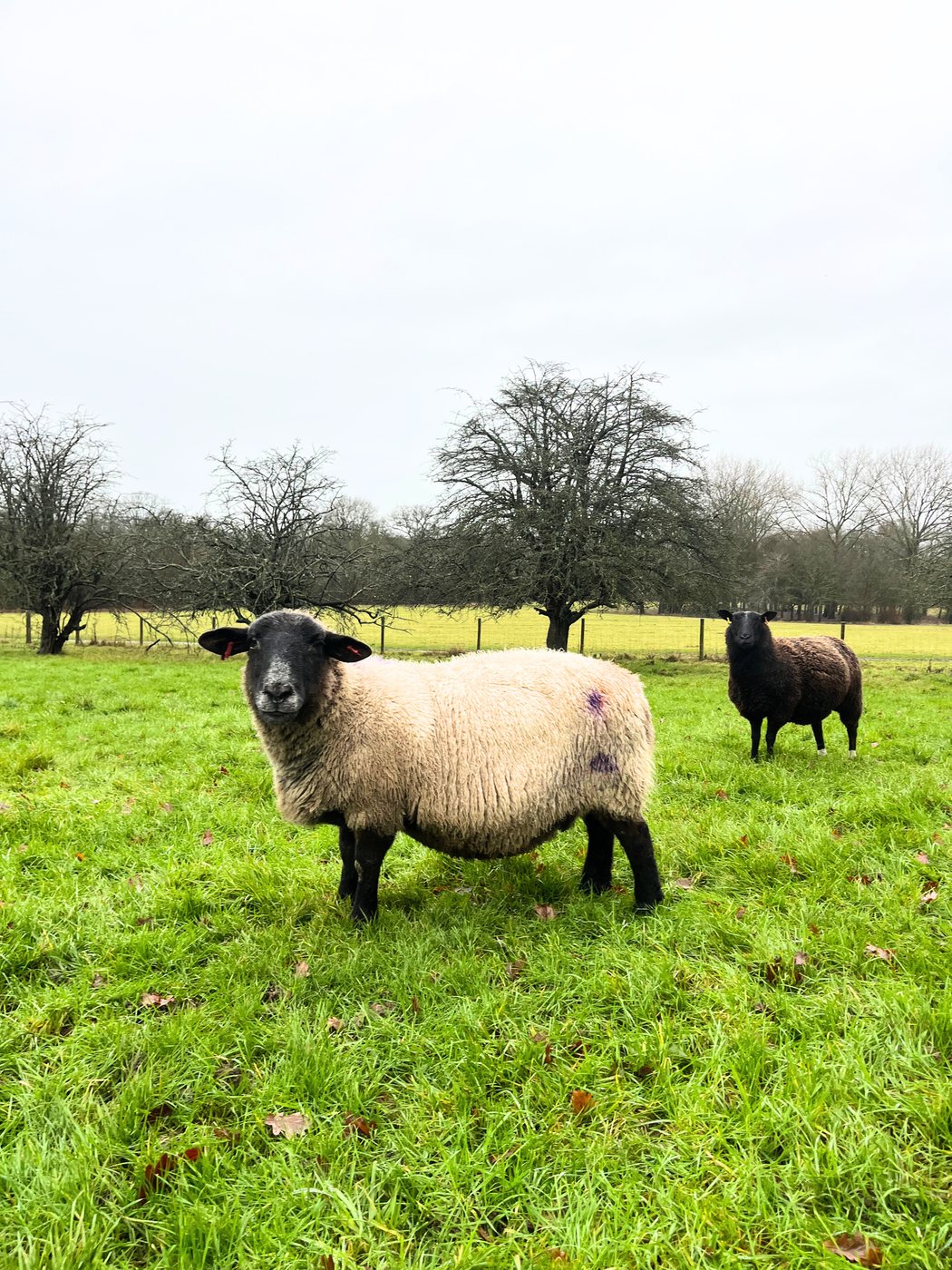
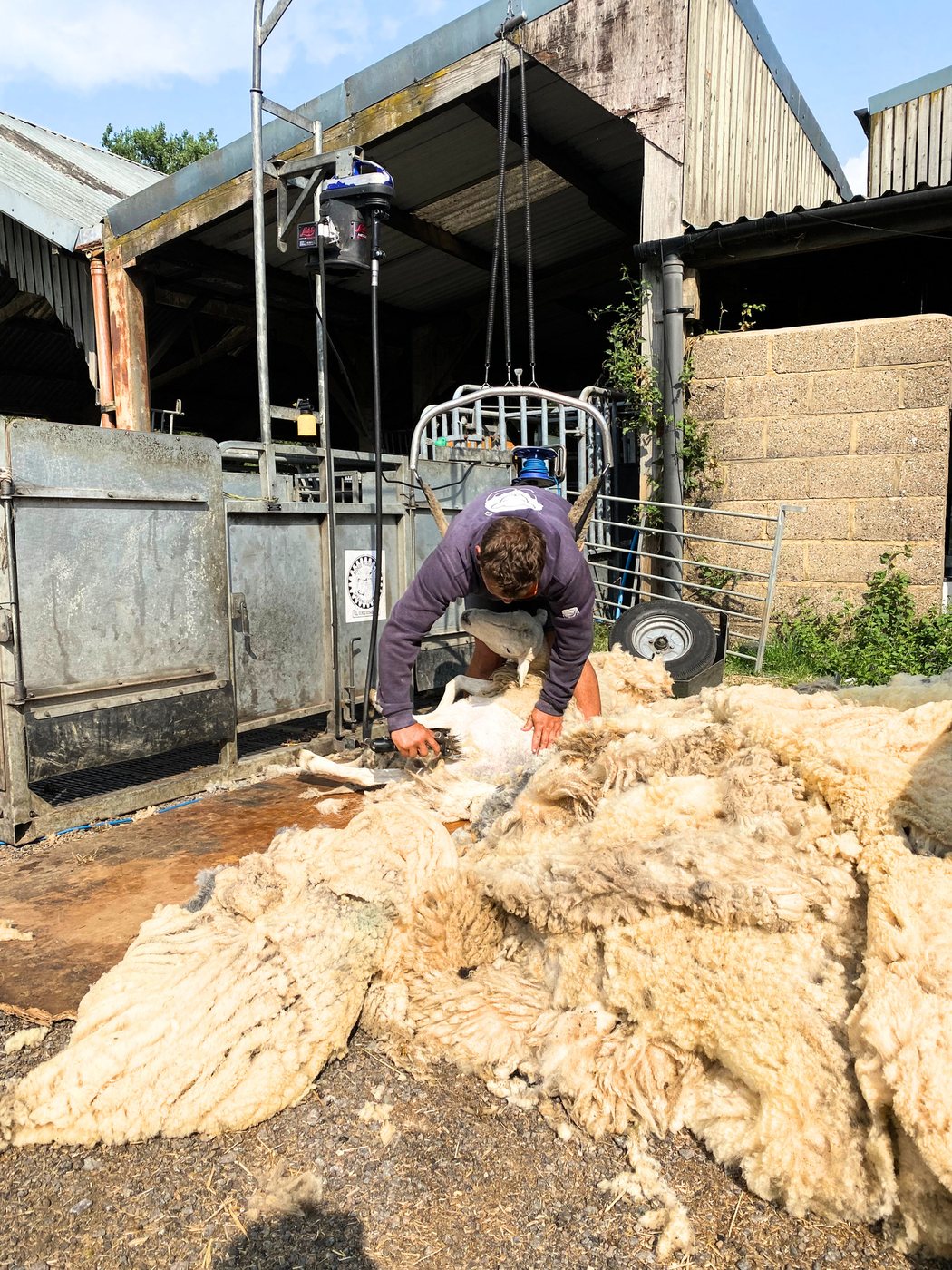
“Wool has lost its value, which if you look historically, it’s a real shame because 100 years ago, it would have been one of the most important sort of incomes for the UK.”Kristina Boulden, Romney Marsh Wools, interview, 13 January 2026
Shearing day with David, the project manager: sorting and discarding fleece by hand.
A visit to understand the waste wool system, with Robert carding fleece.
Interview on daggings, British Wool and lanolin.
Working with Wool seminar, with Fibershed, The Great British Wool Revival and British Wool.
The wool collected through fieldwork arrived in different conditions, from loose fleece and short fibres to more compacted and tangled material. I began examining how their individual characteristics could inform textile construction.
This stage established a distinction between materials suitable for weaving and those that might serve other purposes. Short fibres and irregular fleece could be difficult to transform into conventional yarn, but their behaviour as a filling material remained worth exploring.
At Woodlands Farm Trust, Aldenham Country Park Farm and Diamond Fibres in Horam, “waste wool” turned out to describe three different problems: a clean fleece with no buyer, a short fibre a mill cannot spin, and a soiled or mixed batch that needs careful handling. I now collect and clean selectively, because not every discarded fibre suits the same use.
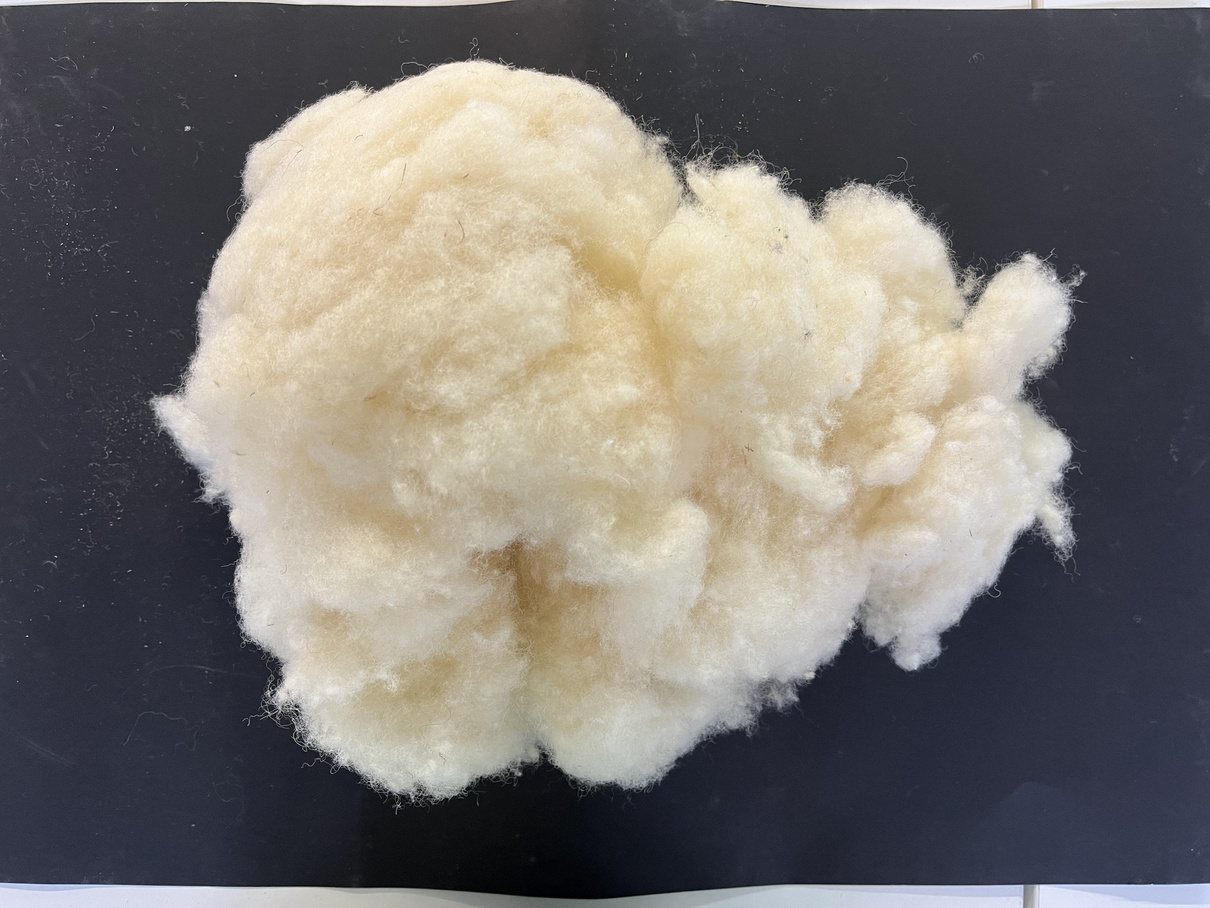
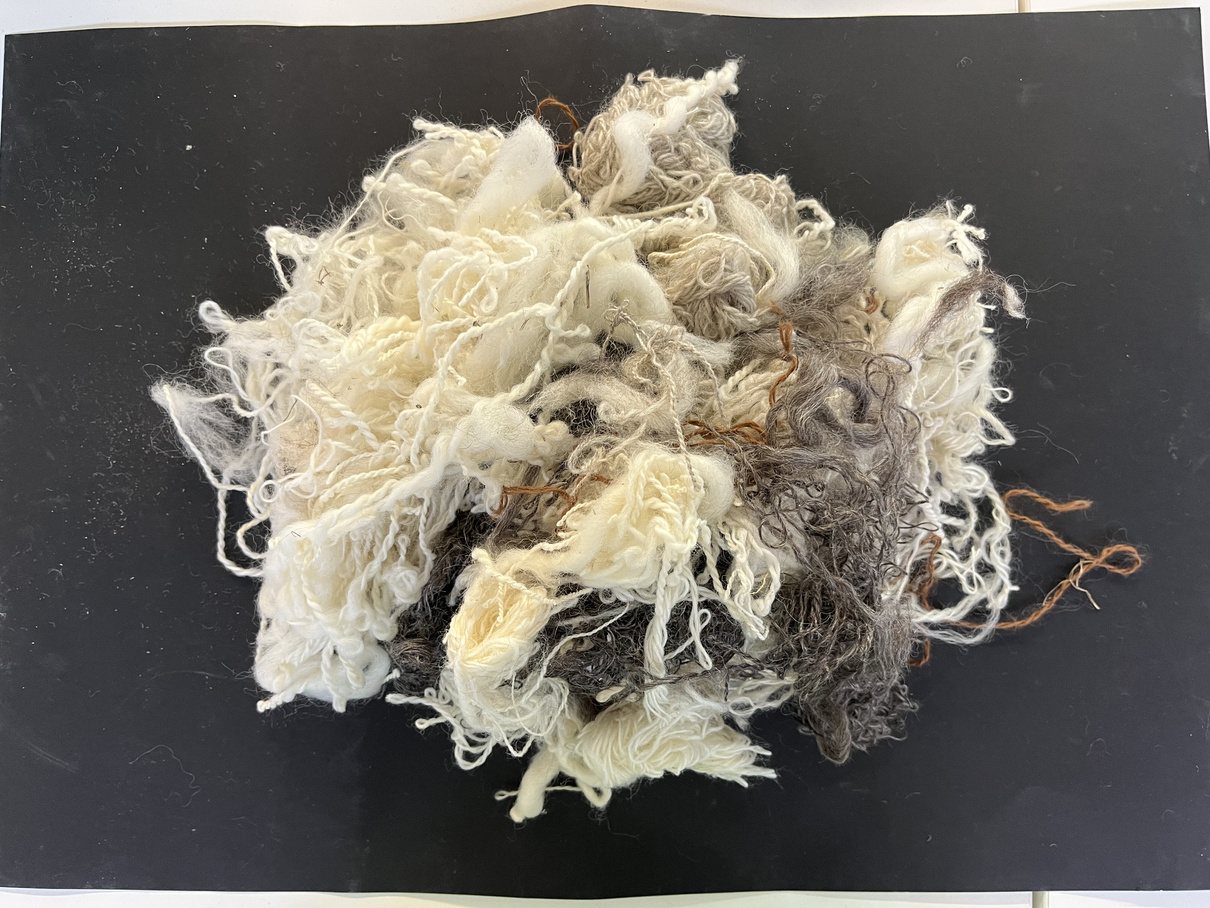
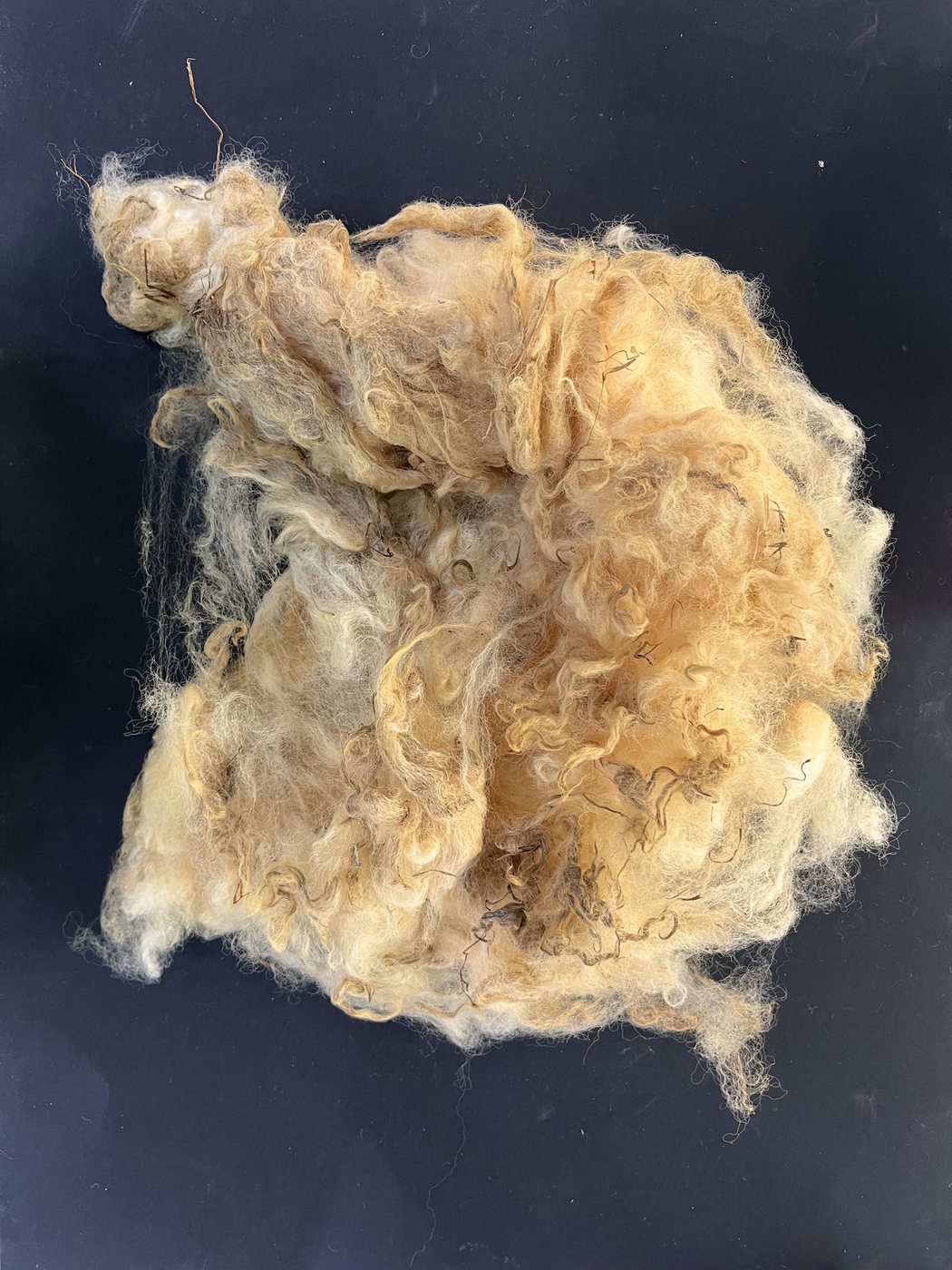
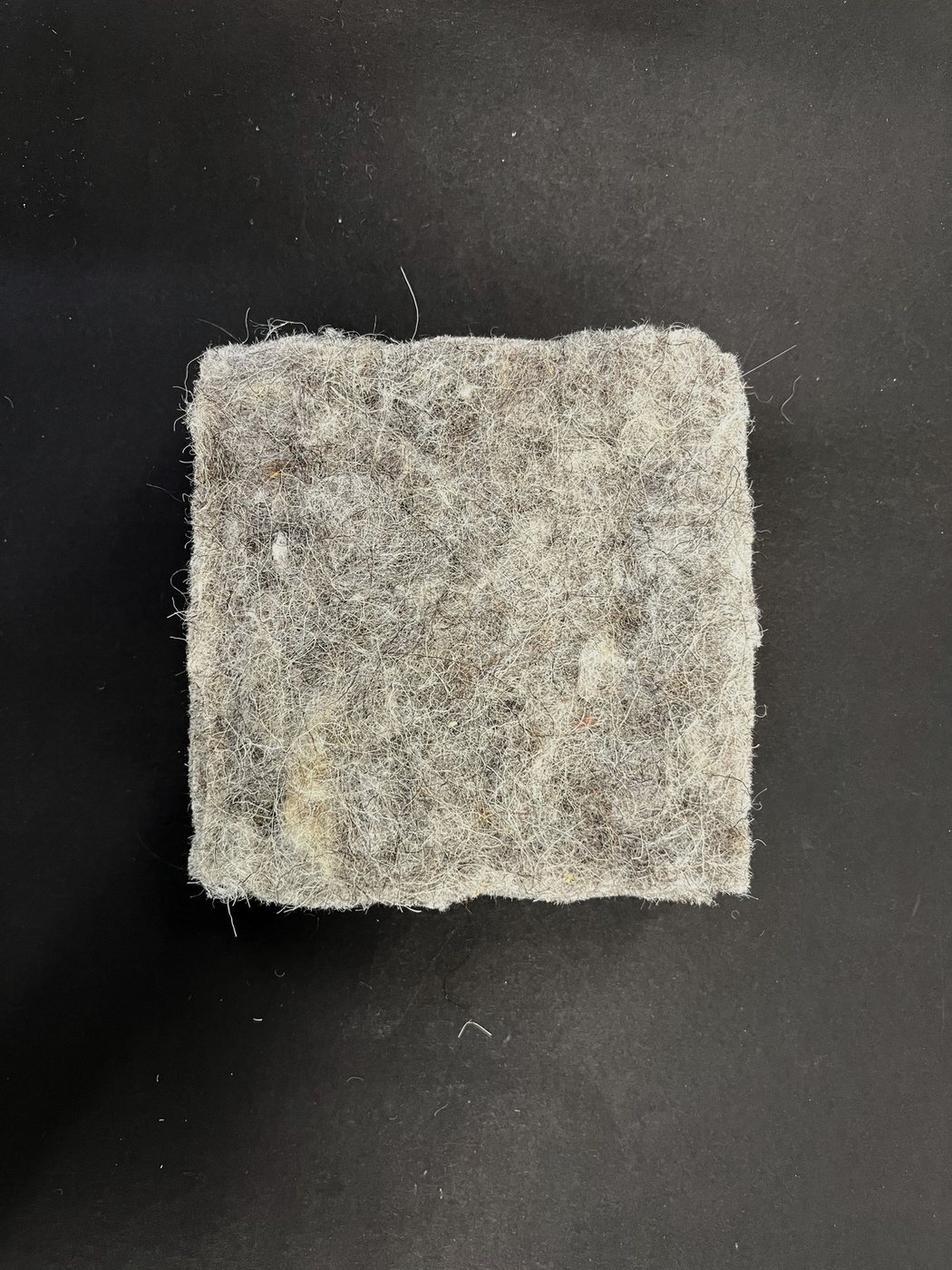
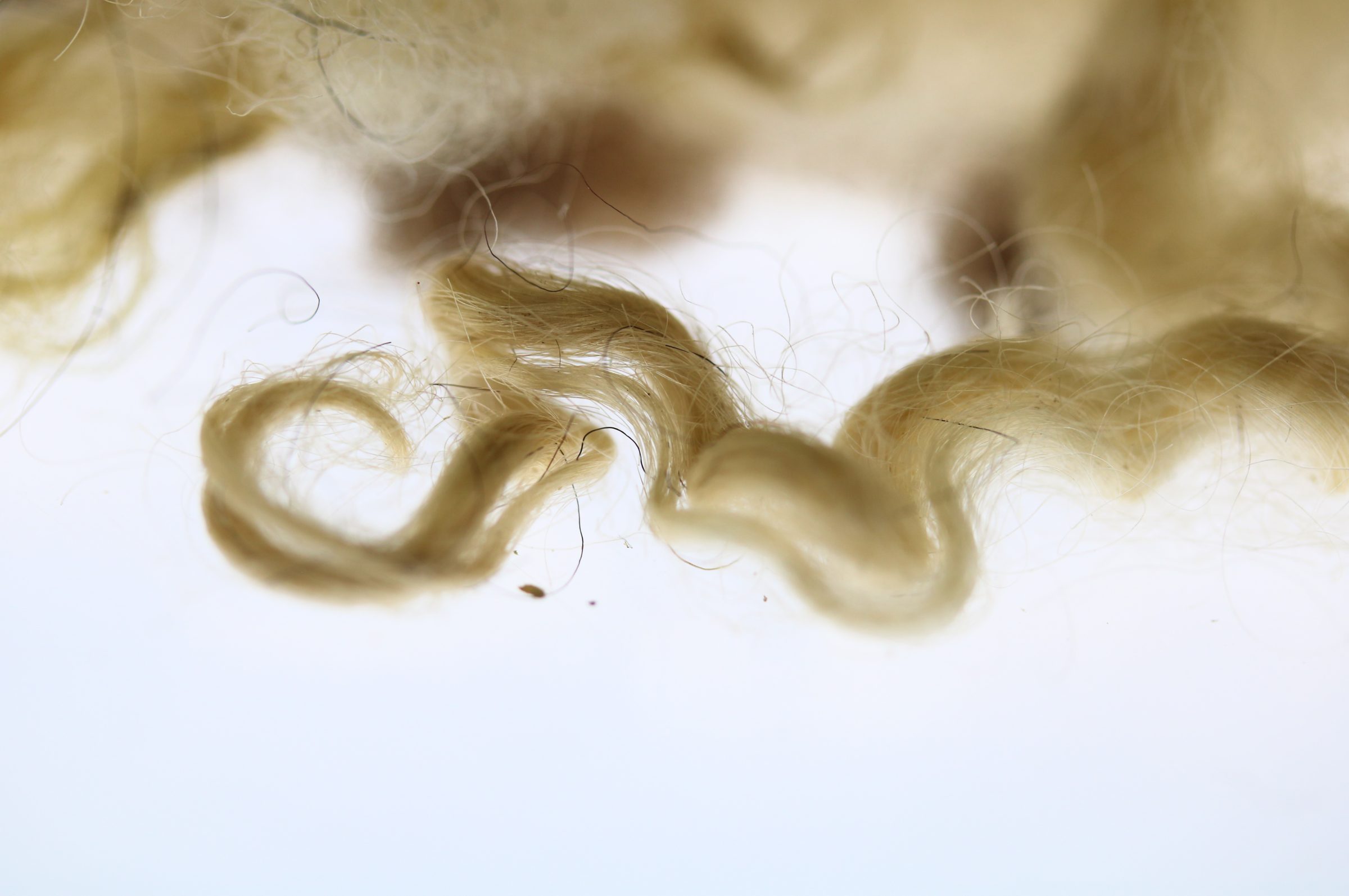
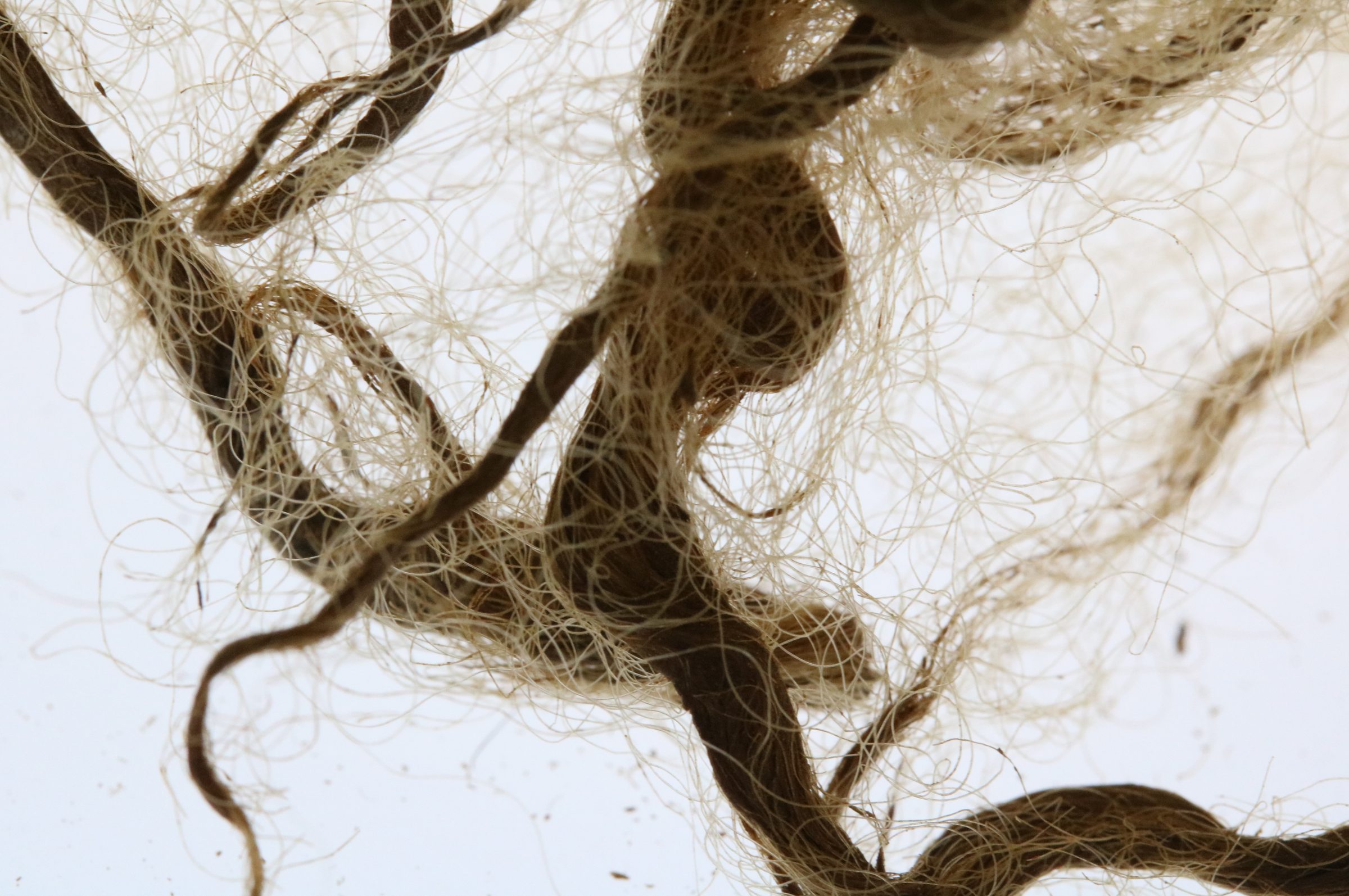
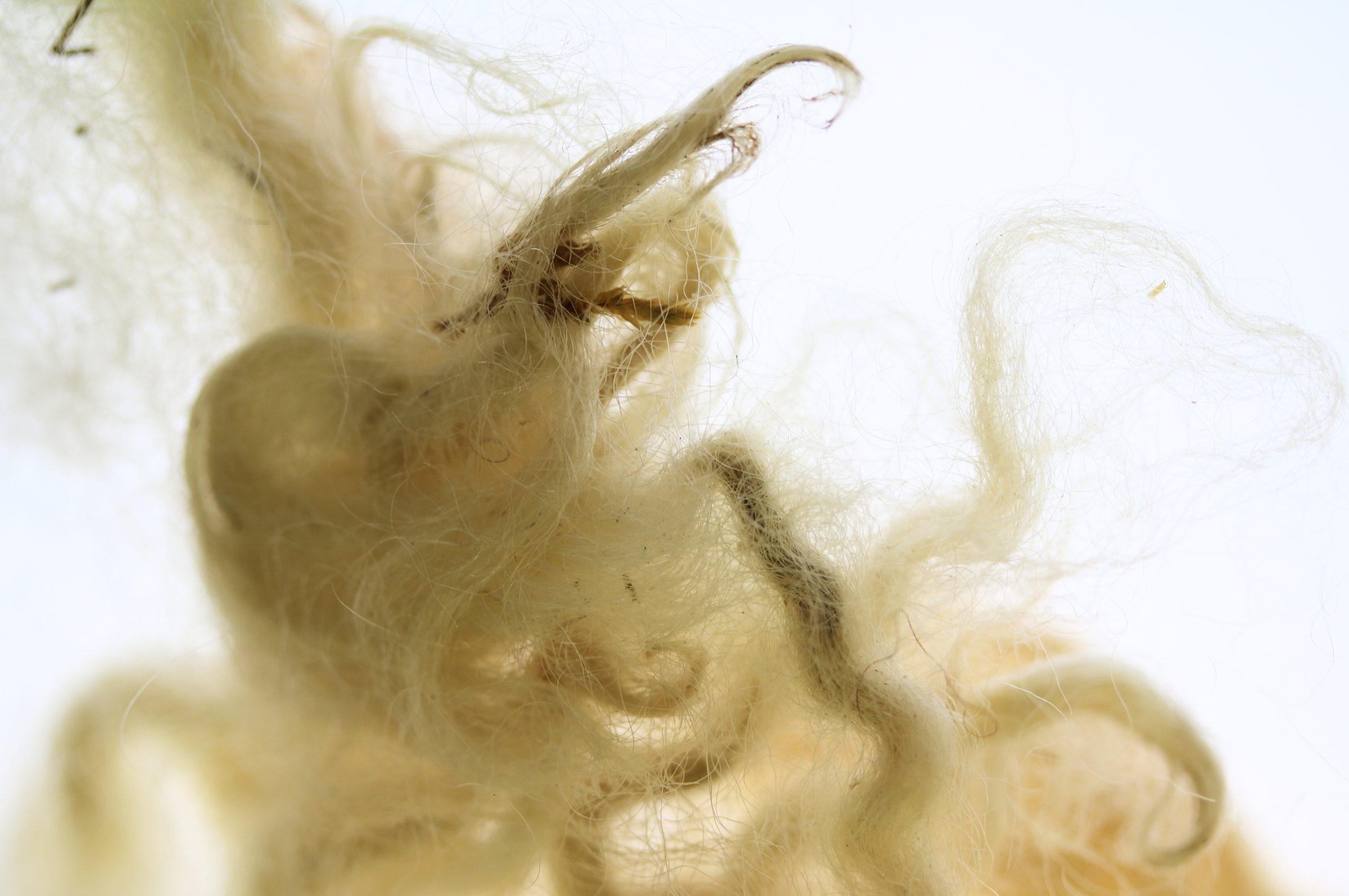
The process began with sorting the raw wool and removing visible dirt and vegetable matter. I then washed the fleece gently, air-dried it and opened the fibres by hand to recover their natural loft.
Maintaining this volume was an important design consideration. Wool’s crimped fibres create irregular spaces between individual strands, and the way the fleece is compressed or distributed changes the internal structure of a filled textile. Working directly with the material allowed me to observe differences between fleece types and understand the labour involved in preparing a resource usually encountered only after industrial processing.
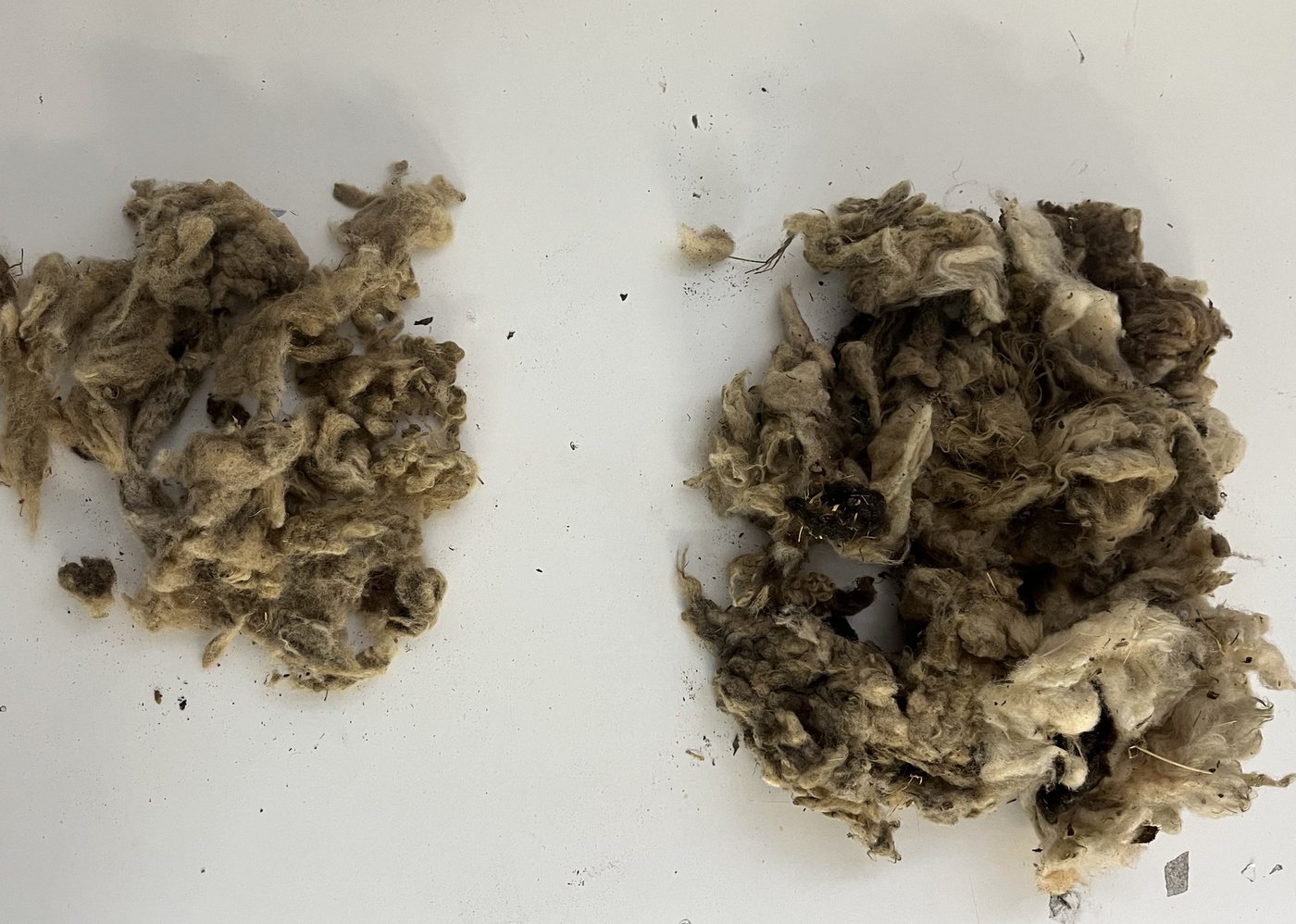
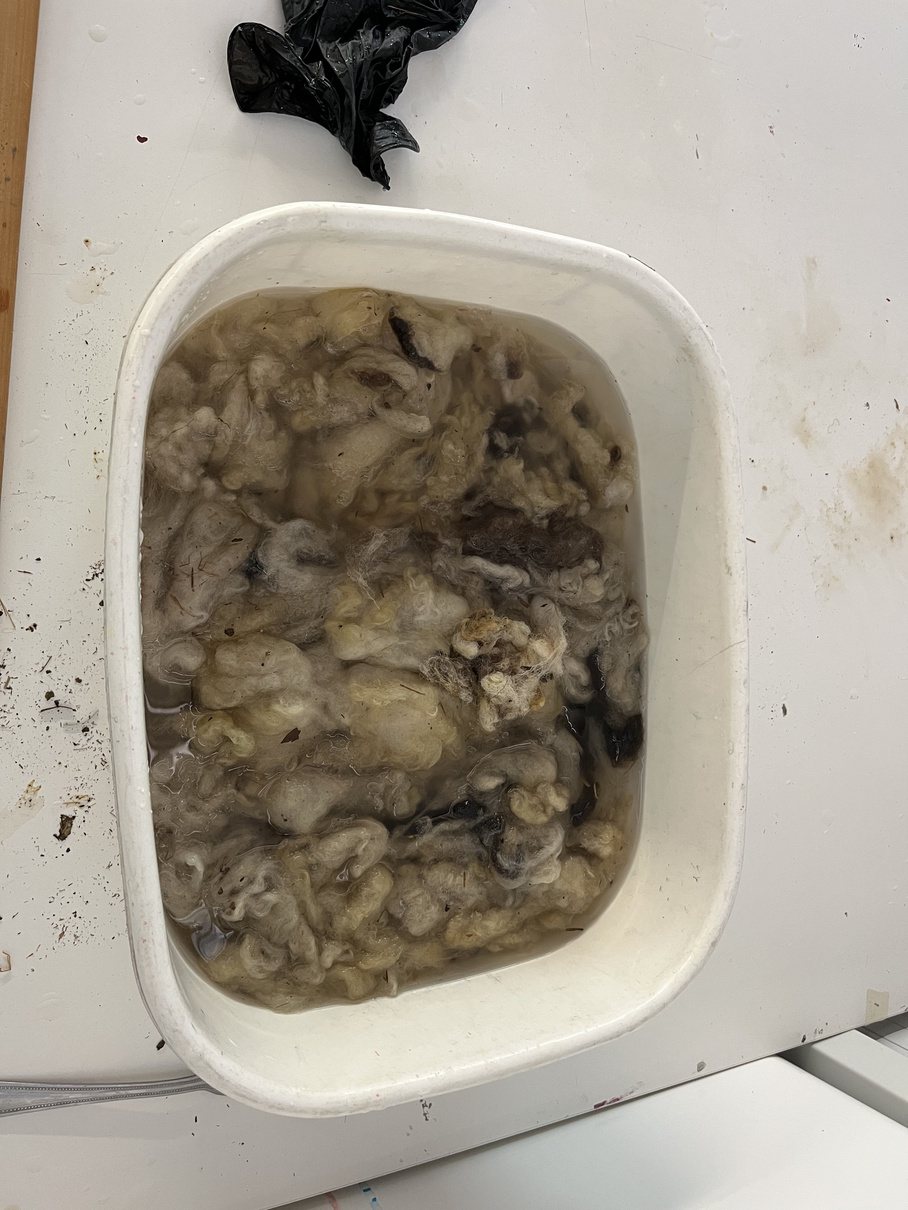
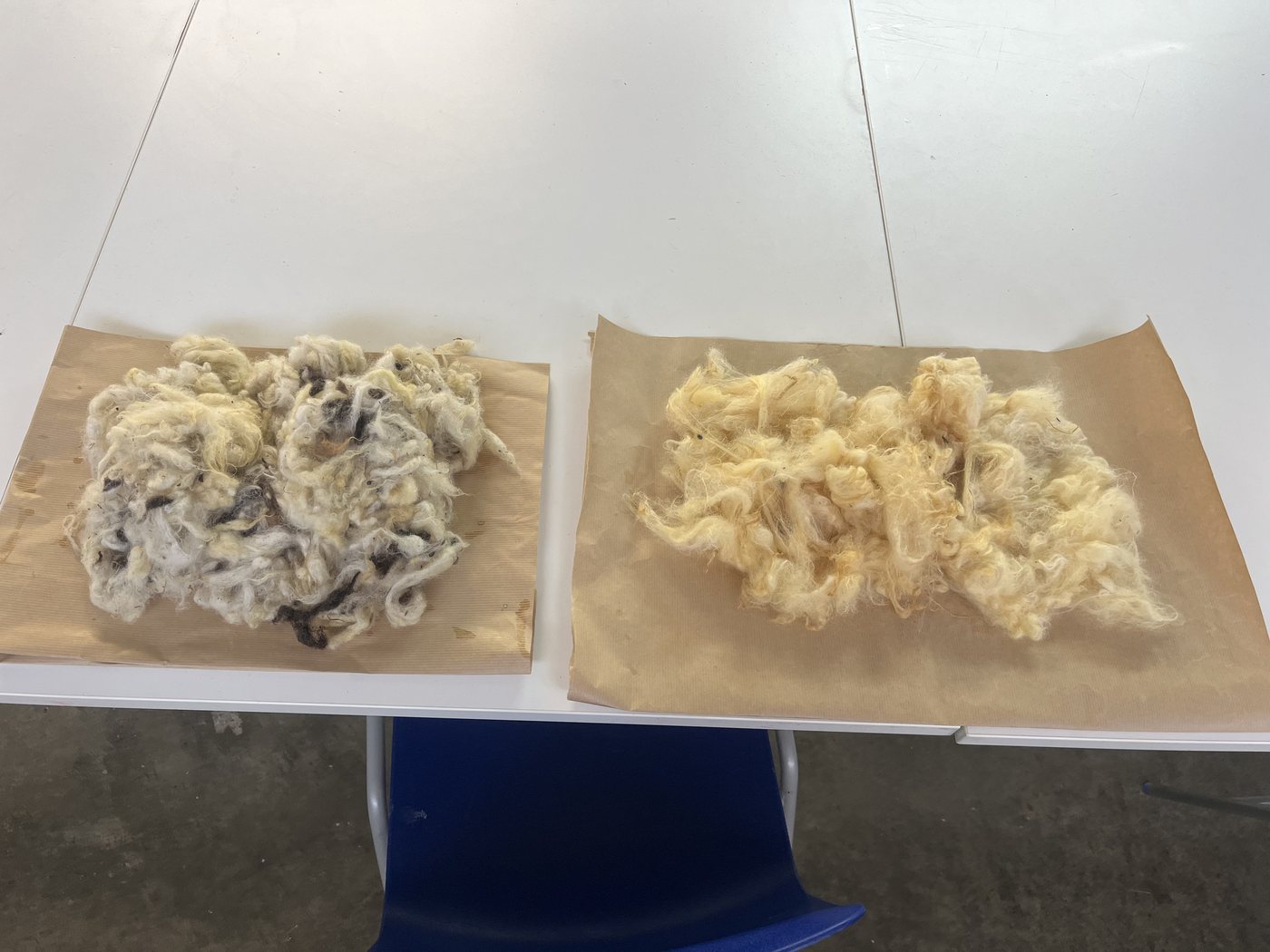
Sorted, washed, dried and opened by hand

ChimesMantrasBellsPrayersConch shellGongsChants
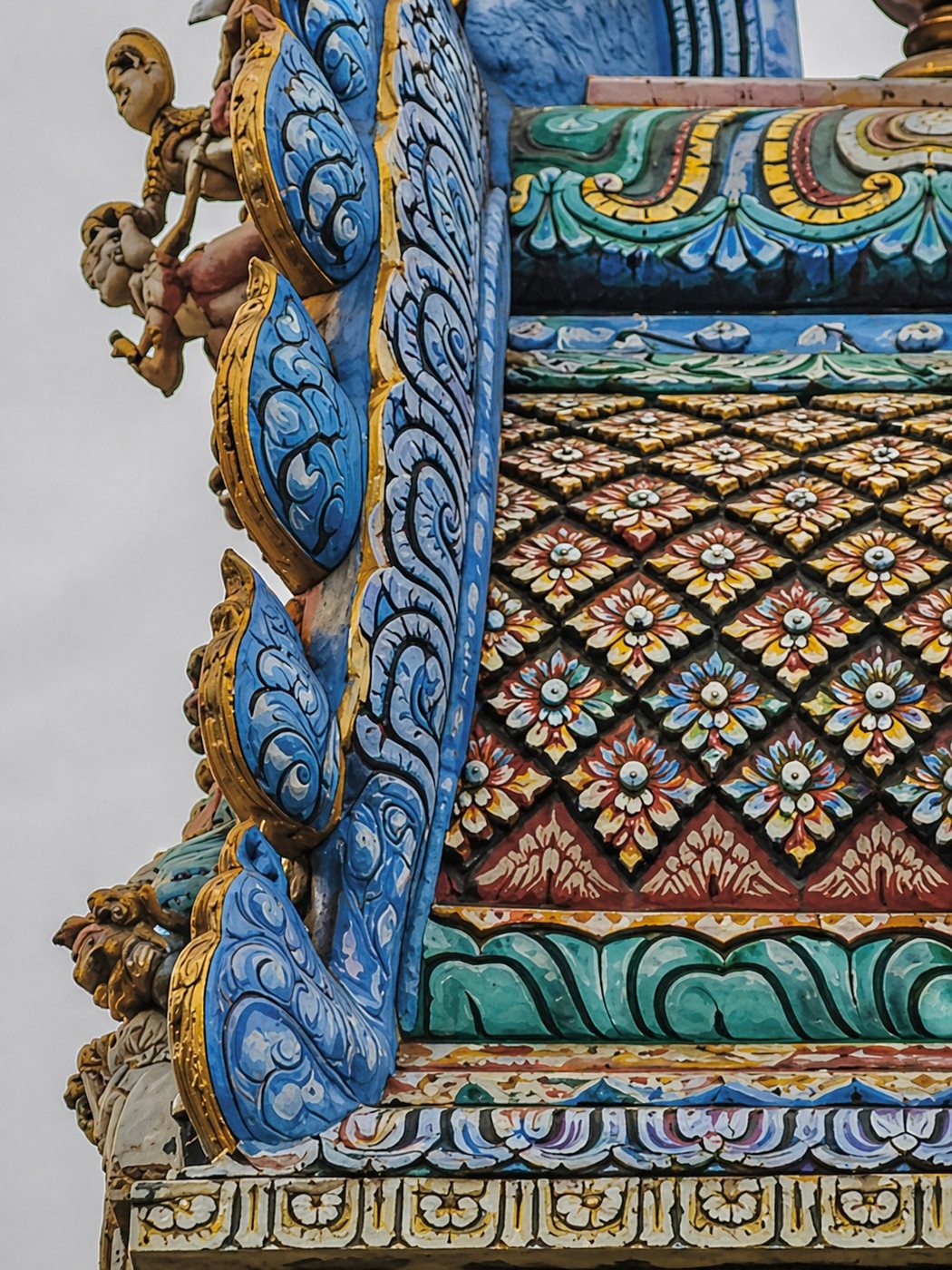
The formal direction of HUM emerged from my personal relationship with Indian temple architecture. Growing up in India, I associated temple spaces with moments of stillness, repetition and sensory attention. Returning to these memories during my research encouraged me to examine how architecture shapes the experience of sound.
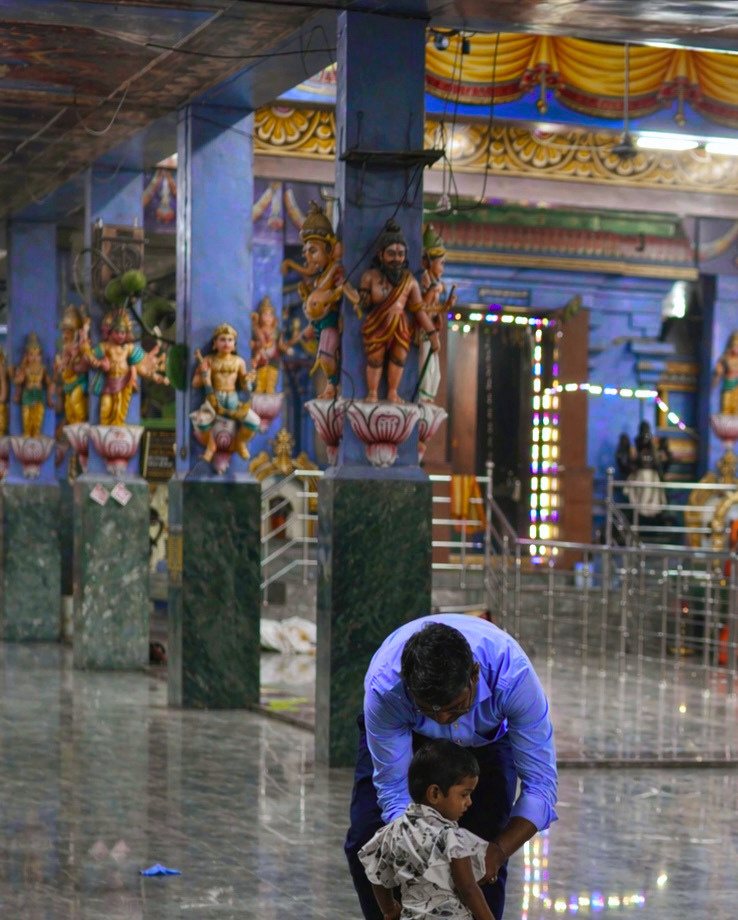
At Sri Balamurugan Devasthanam in Ahmedabad, architectural elements such as pillars, halls and decorative lattices create a sequence of spaces through which people move, gather and participate in ritual. Chanting, bells, footsteps and pauses are experienced in relation to stone surfaces, architectural proportions and collective activity.
Stone and wool behave in nearly opposite ways. Stone prolongs sound through reflection, while porous wool dissipates some of it. So I am not imitating a temple’s reverberation. I am translating its ability to gather attention: the double weave makes an interior space within the cloth, and the recorded loom rhythm gives a visitor a sense of repetition and duration.
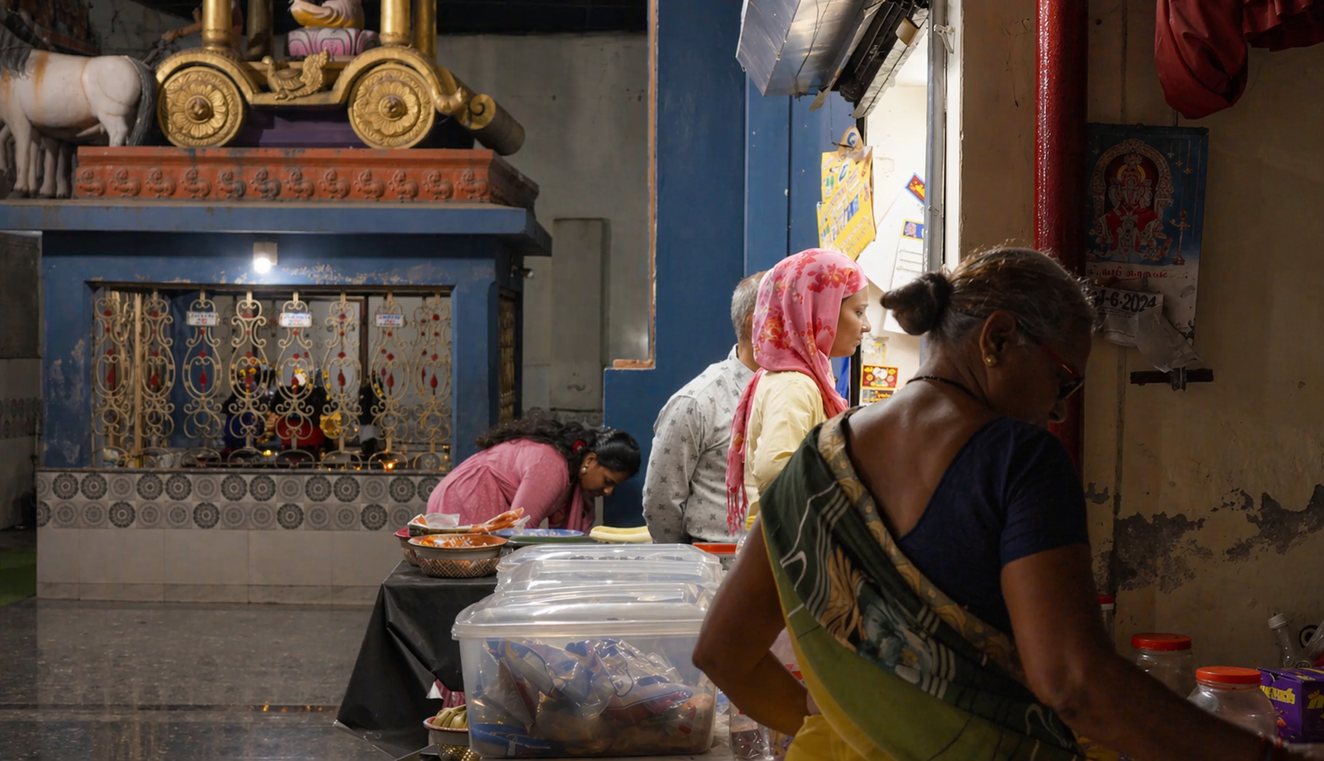
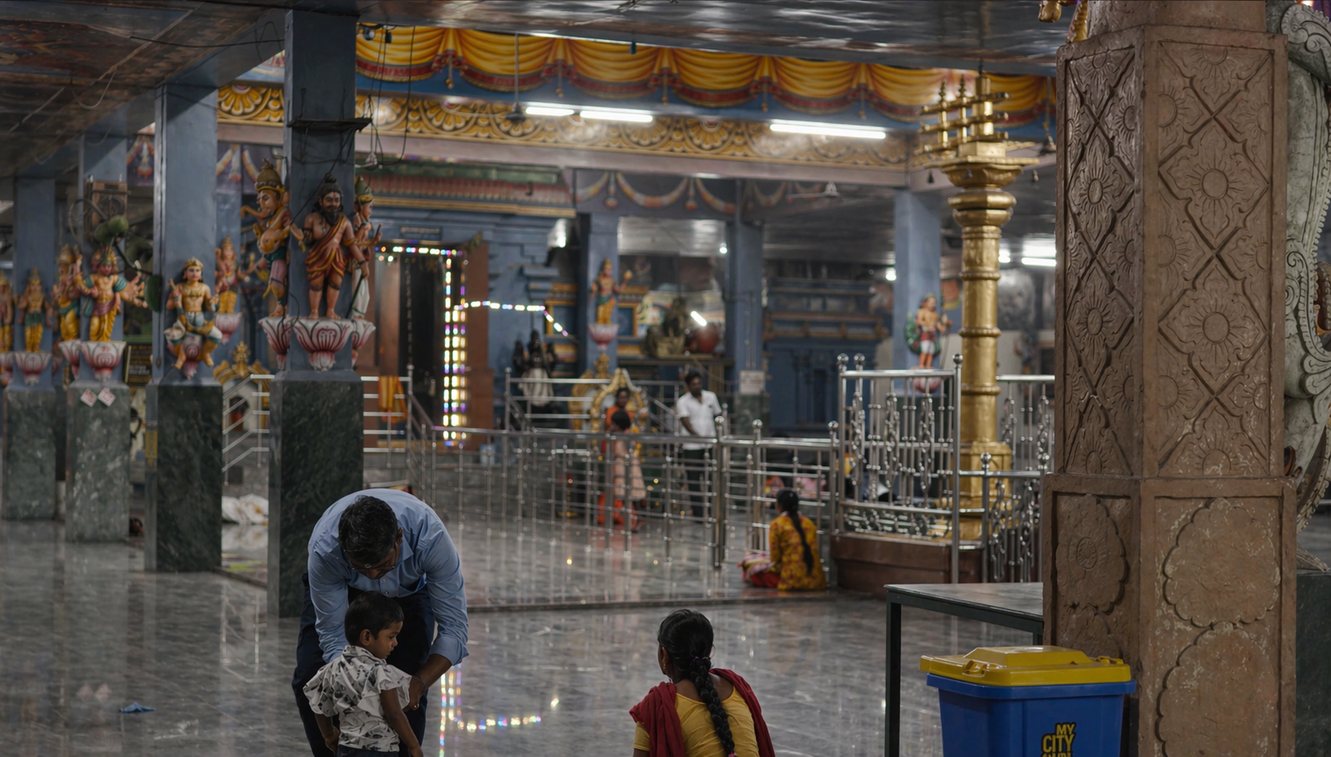
Sri Balamurugan Devasthanam, Ahmedabad
“We often say you weave with your ears.”Rosie Green, weave technician, Chelsea College of Arts, 2026
A loom has a rhythm. A weaver who works with noise-cancelling headphones misses the click that says it is ready for the next pick. I learnt this at the National Institute of Design in Ahmedabad, where I came to hear a missed beat before I could see the error in the cloth. I wanted the finished cloth to carry some of that attention.
Interviews changed the brief. Adriano Di Gadio, who manages degree shows, described how a crowded private view can energise one person and exhaust another. I had assumed a quieter room was a better room. HUM now aims to give people some choice over how closely they take part in a sound, not to deliver a universal calm.
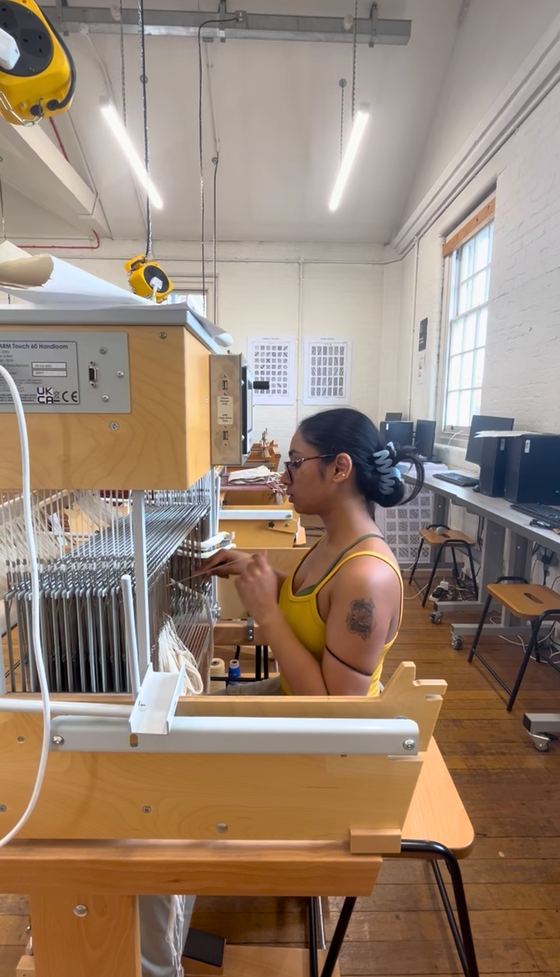
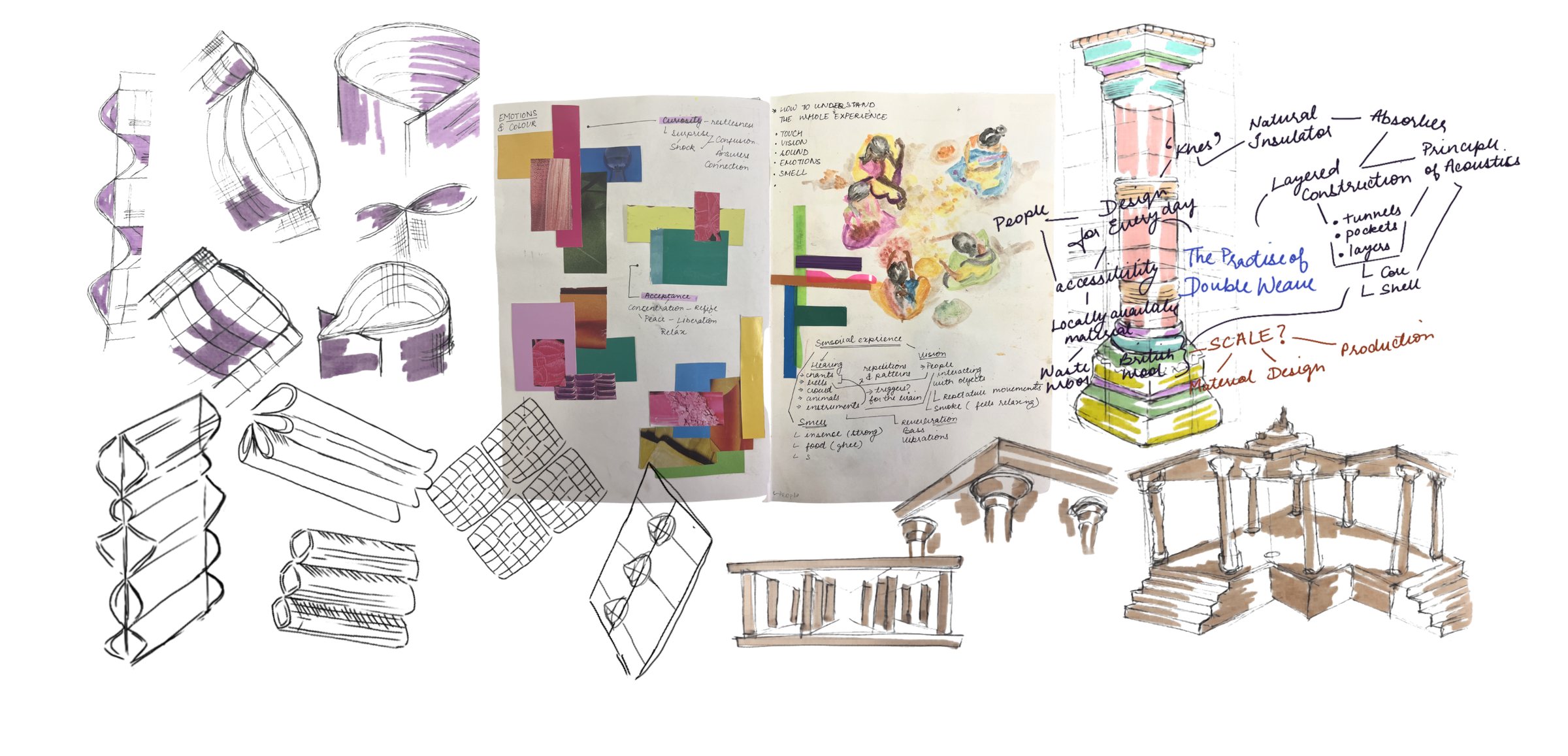
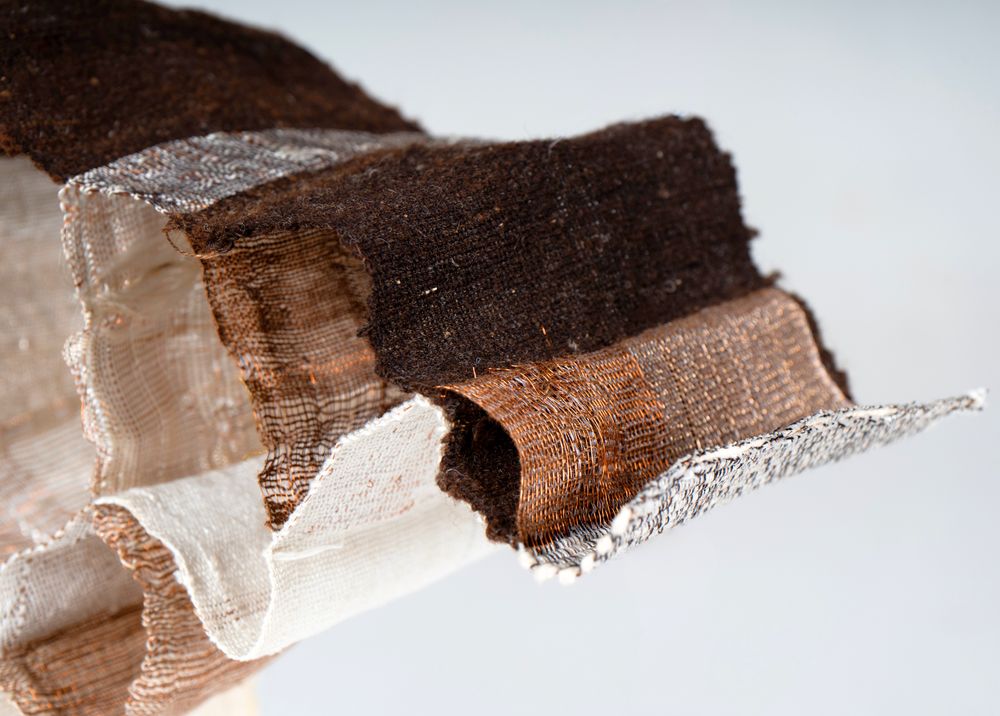
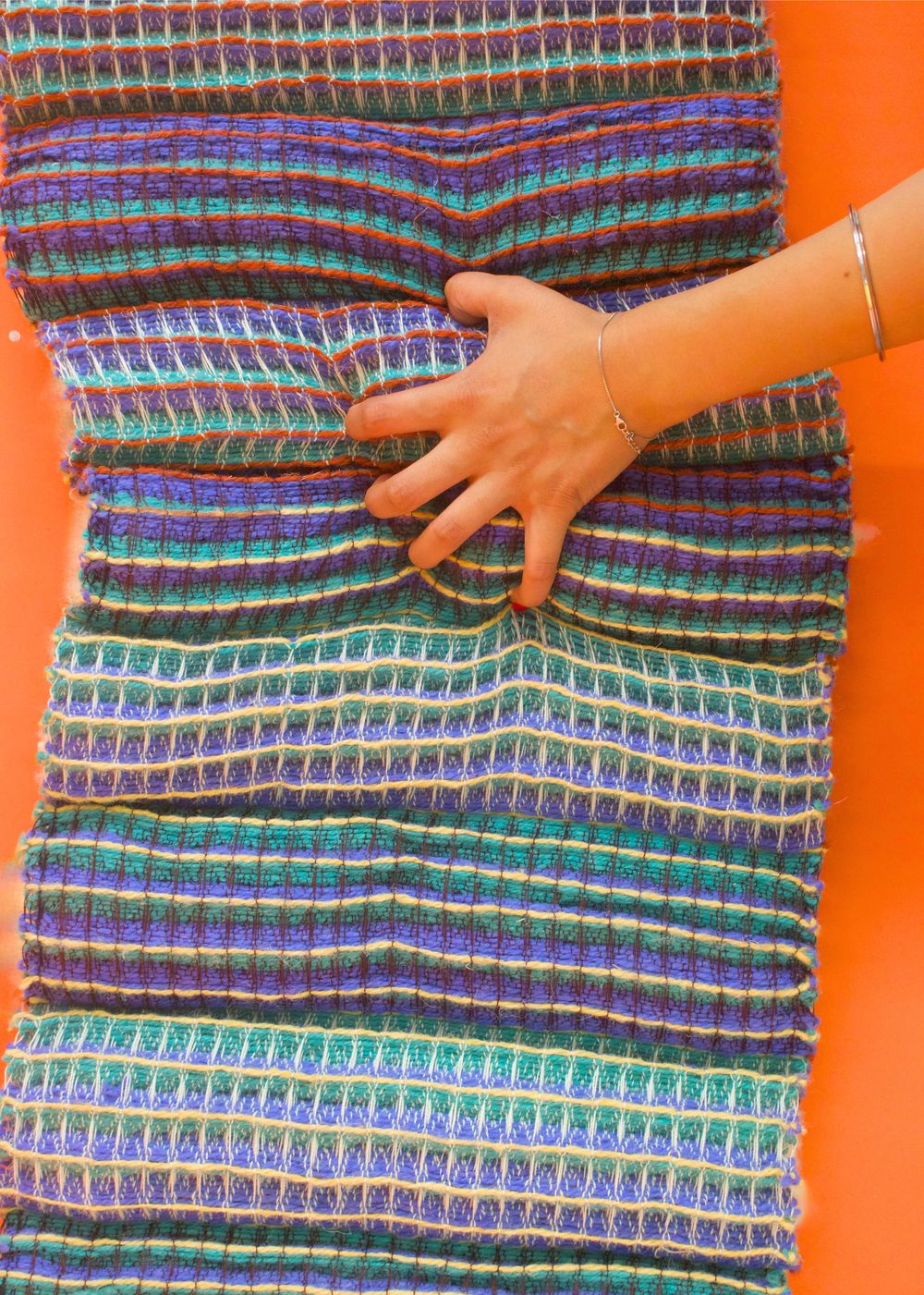
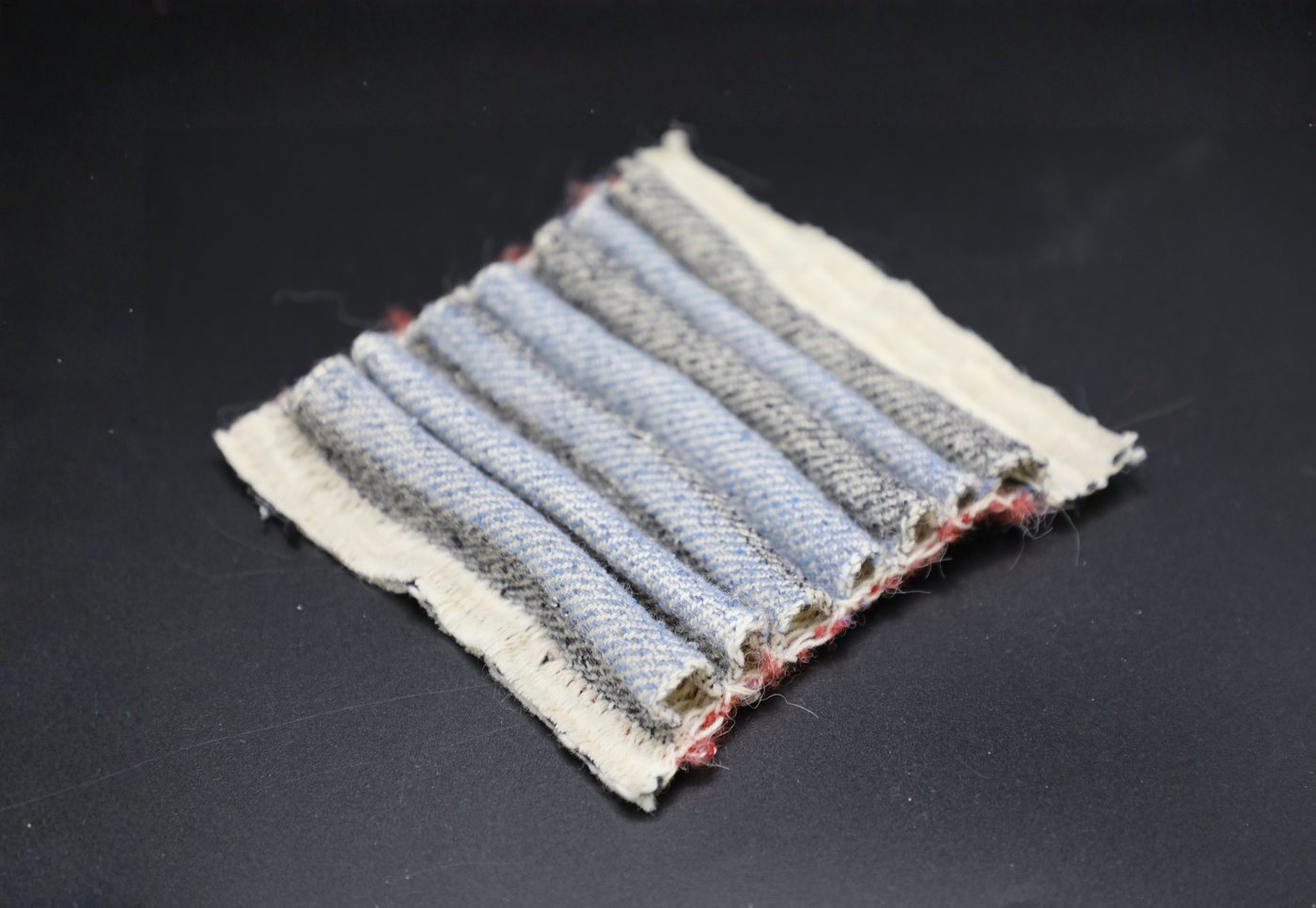
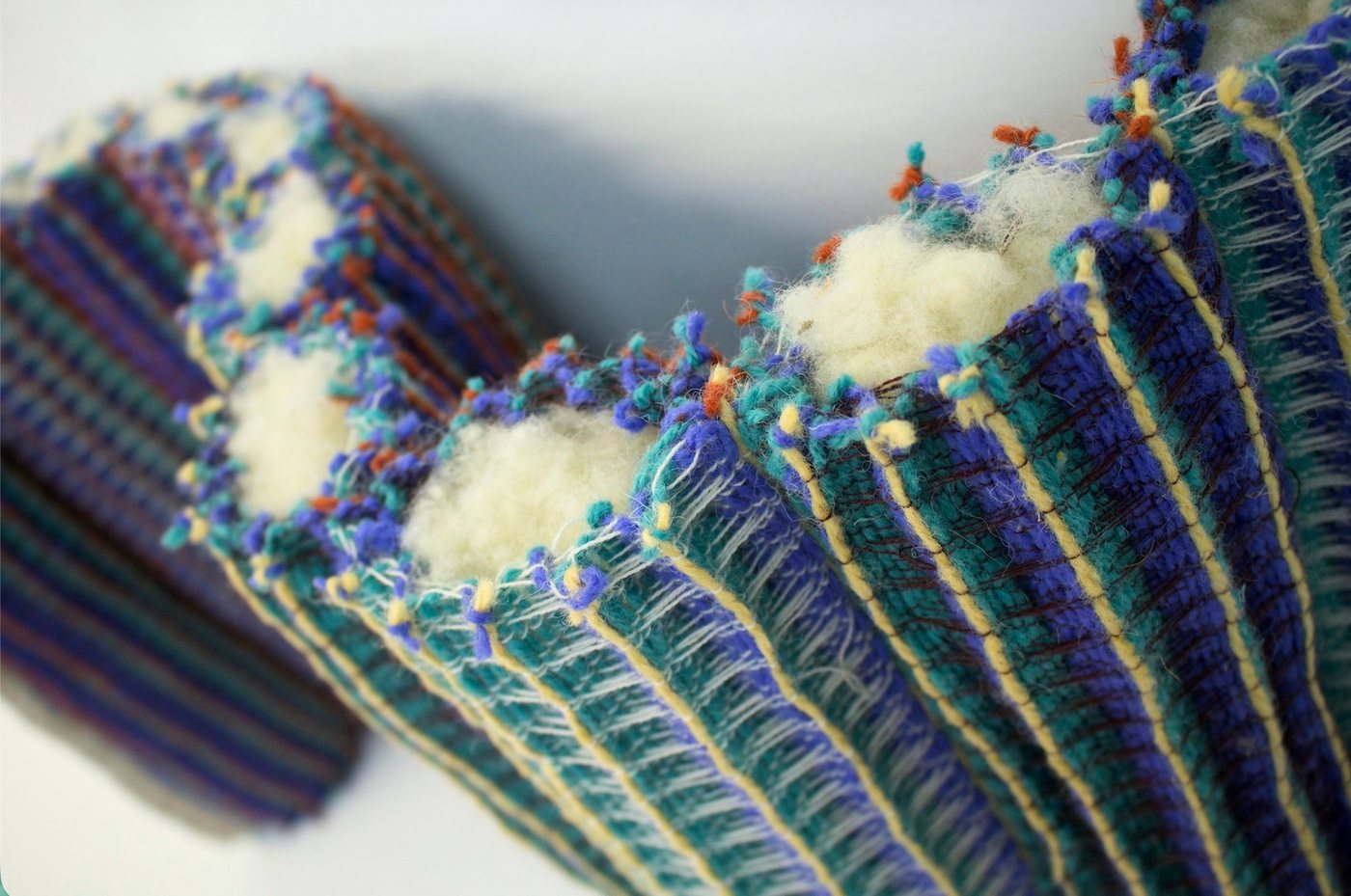
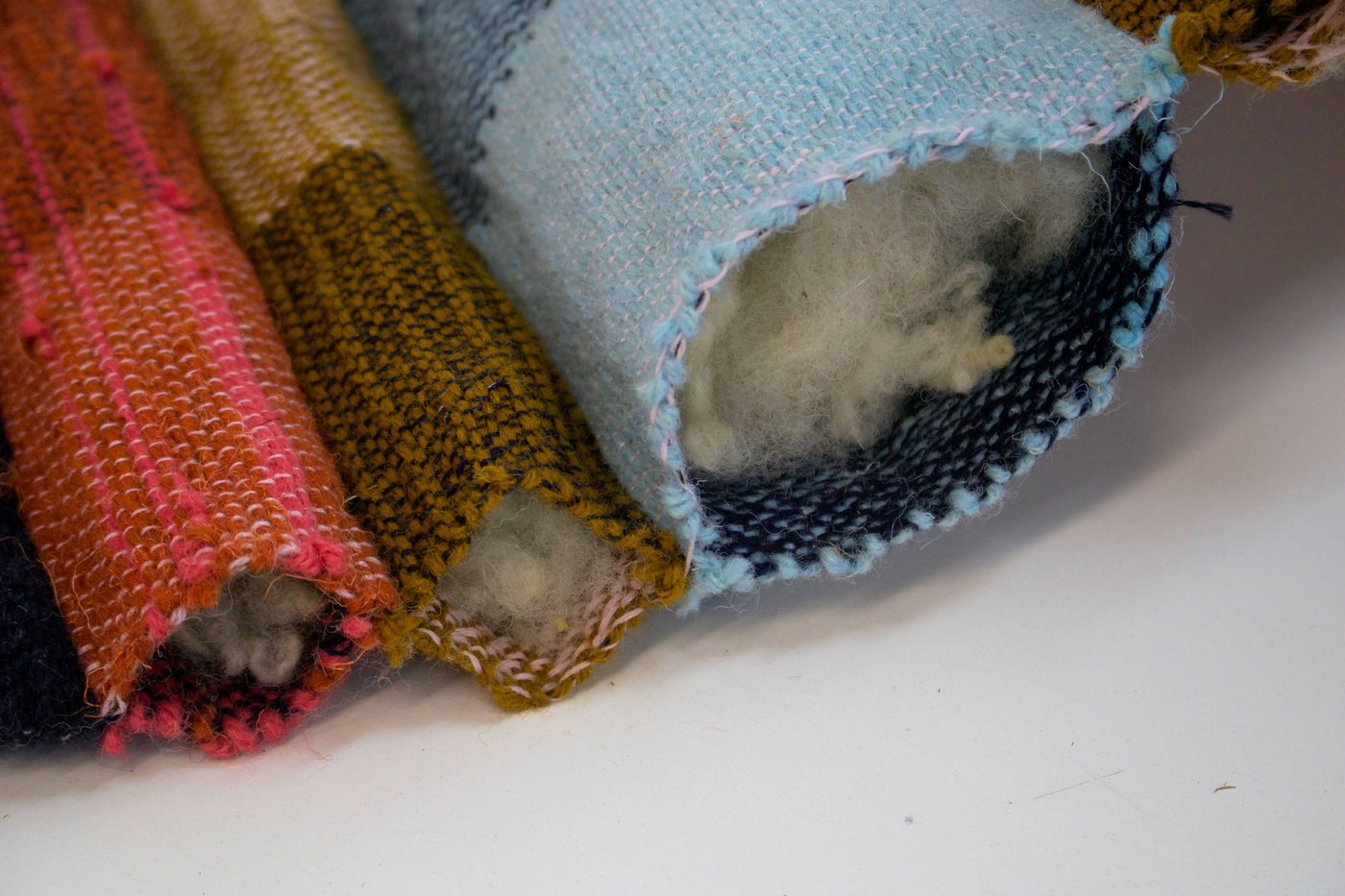
Double weave became the structural foundation of HUM because it allowed me to construct two interconnected textile layers on the loom. By controlling where these layers separate and reconnect, I could create enclosed pockets and tubular forms without relying on a separately assembled outer shell.
These cavities offered a way to incorporate prepared waste wool directly into the construction. The woven surfaces provide an enclosure, while the fleece introduces volume, softness and irregular air spaces within the textile. Through double weave, I began investigating how the arrangement of yarn, the depth of cavities and the amount of filling could generate different tactile, visual and potentially acoustic behaviours.
I use the mass–spring–mass model from acoustic engineering (two layers with a springy gap between them) as an analogy for what to vary, such as tube width and the amount of fleece. It does not predict how a flexible textile will perform.
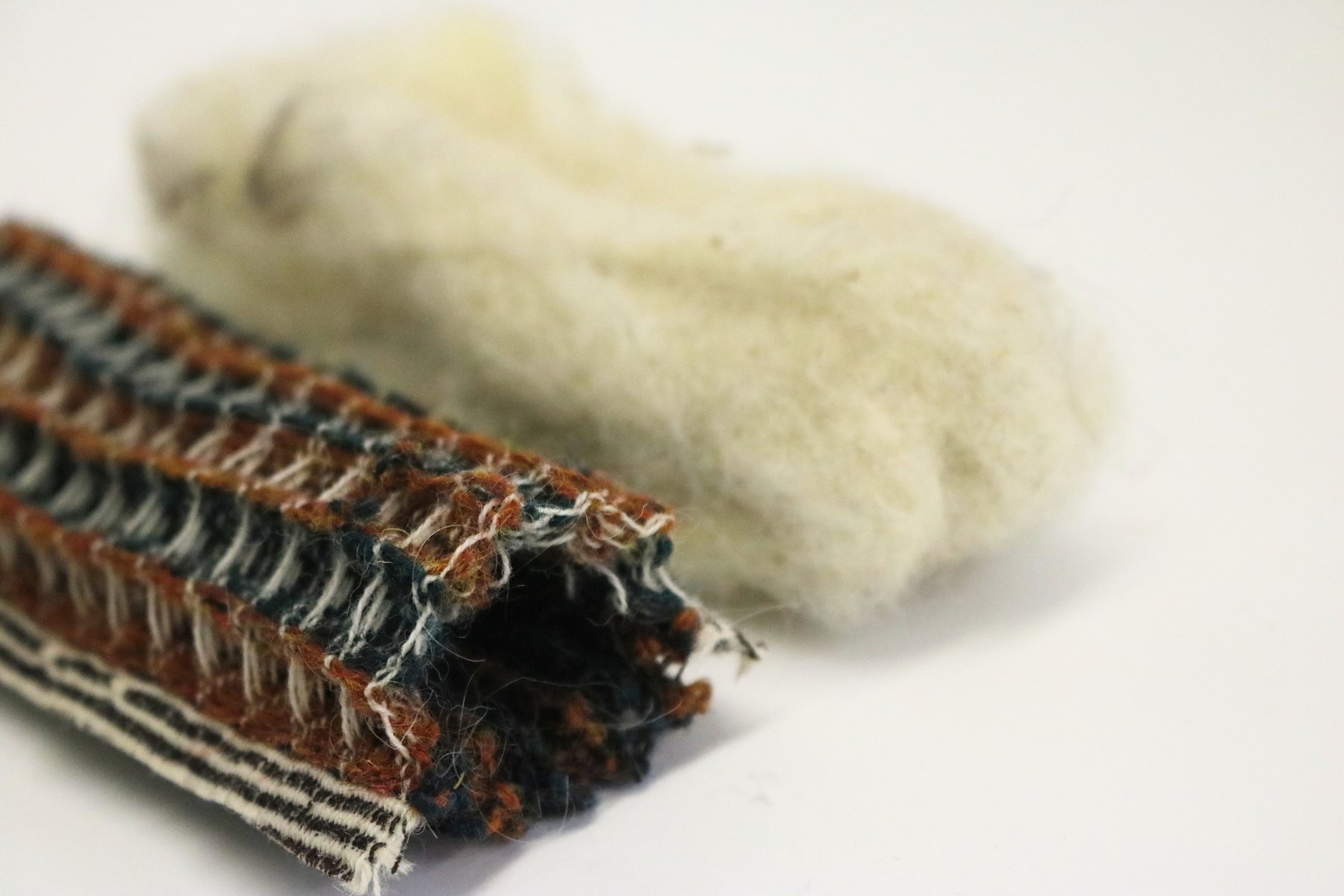
Traditionally developed for hard-wearing carpets, Axminster rug yarn is valued for its strength, durability and ability to withstand repeated use. In HUM, I repurpose deadstock Axminster yarn, sourced from Fairfield Yarns, as the structural foundation of my double-woven textiles. Its relatively coarse, robust character allows me to develop dense woven surfaces and defined tubular structures capable of enclosing cleaned waste wool. While the rug yarn provides stability and a tactile outer shell, the loose fleece introduces softness, volume and irregular air-filled spaces within the construction.
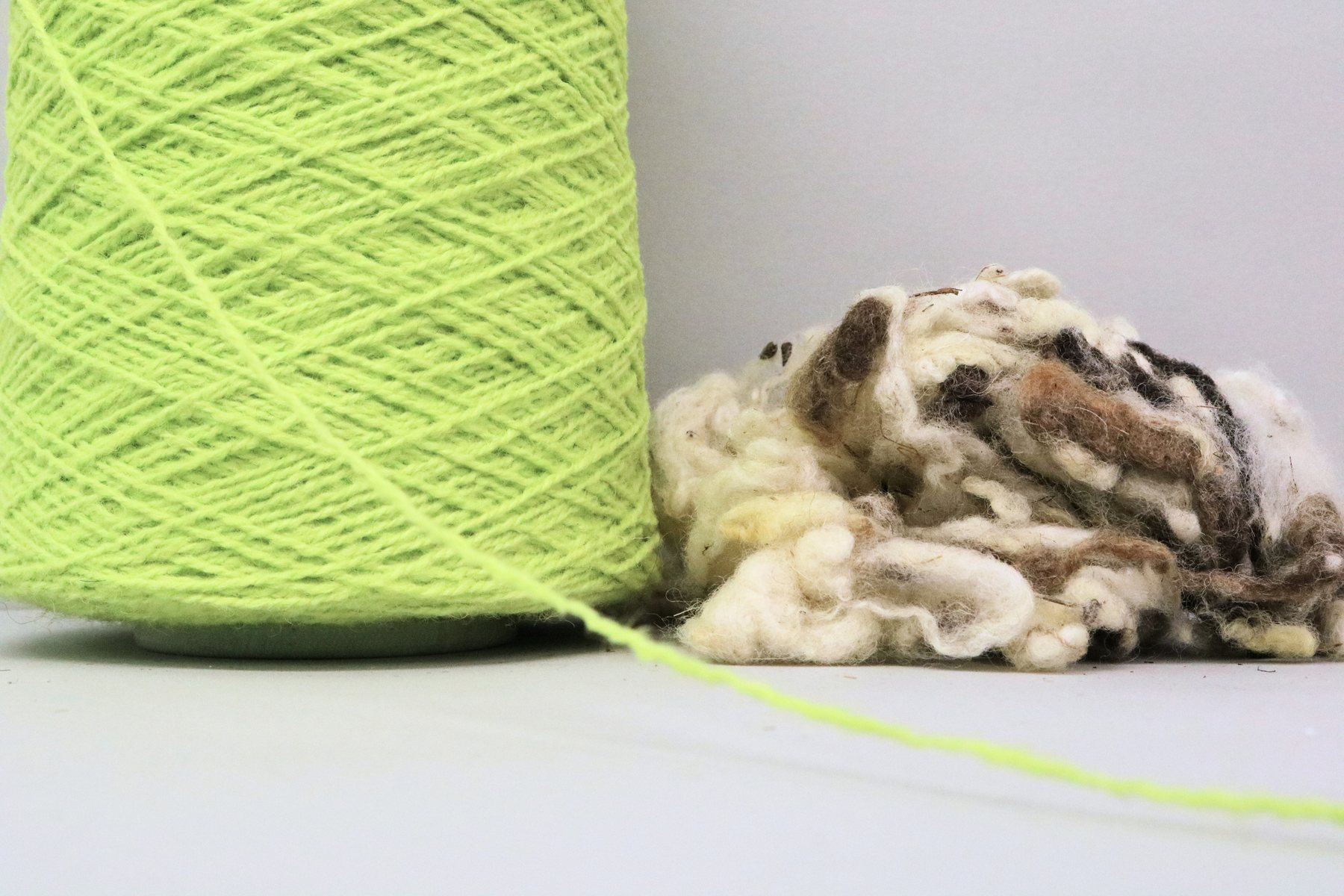
Medium-grade fleece waste.
High natural crimp, 8–12 per inch, which creates tiny air pockets.
Deadstock yarn from Fairfield Yarns, woven as the outer shell.
Scaled fibres trap air, absorb up to 30% of their weight in moisture, and keep their lanolin.
My sampling process investigated how different weave constructions could generate both surface texture and three-dimensional volume. Across approximately 25 exploratory samples, I worked with plain and twill double cloth, honeycomb structures, pleats, woven tubes and pulled-warp forms. Variations in yarn type, weave density, internal cavity and filling produced distinct material behaviours.
Some constructions created pronounced volume but lacked stability. Others were more structurally secure yet offered limited space for wool filling. Pleated samples introduced movement and flexibility, while tubular structures allowed the woven layers to enclose loose fibre.
Some samples were supported with copper wire. I removed it when those samples gave lower readings and felt less responsive in the hand, and returned to simple fleece-filled tubes. That was a design decision and a statement about the maker I want to be: one who looks for what the weave can do before reaching for another process.
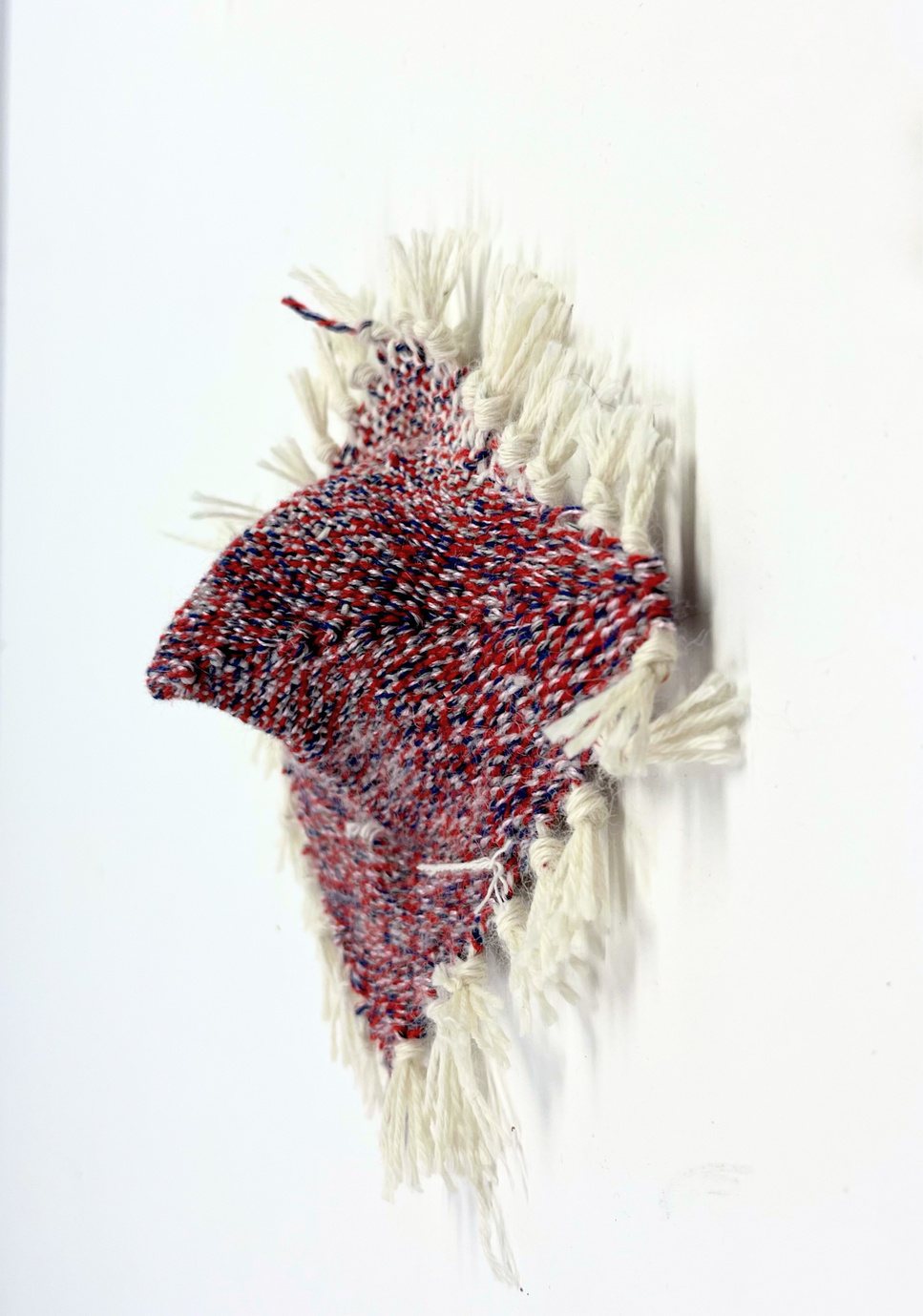
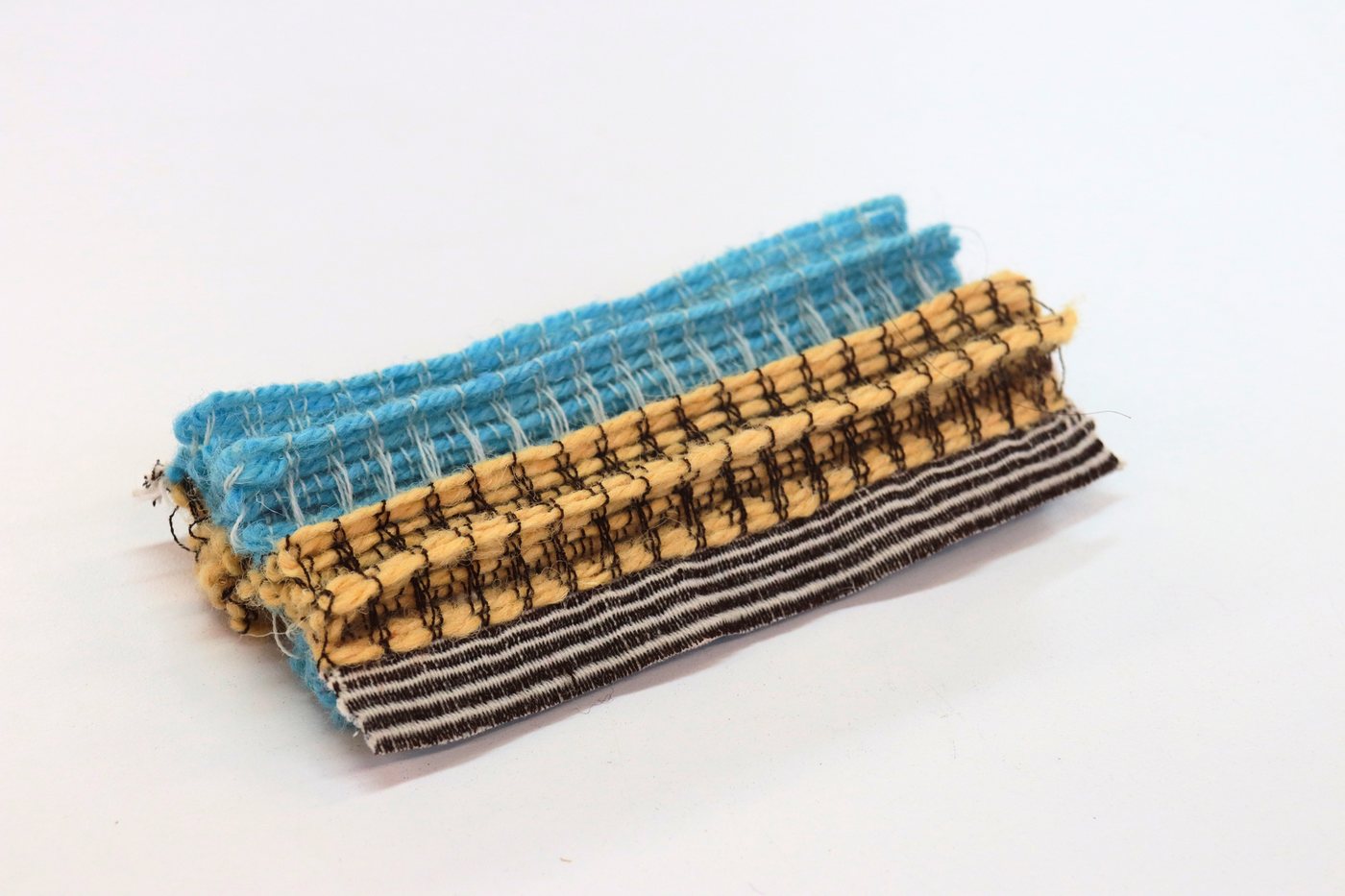
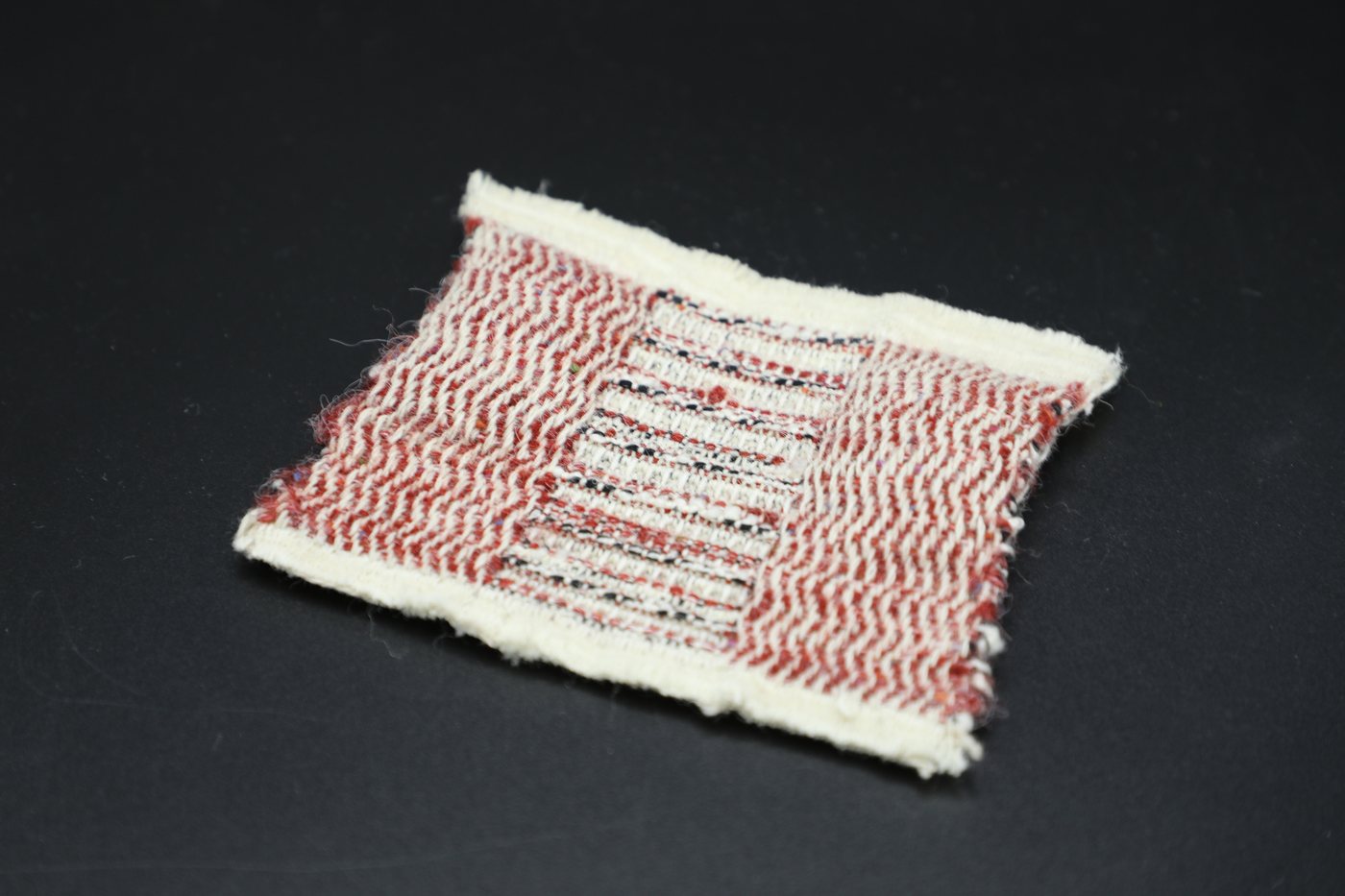
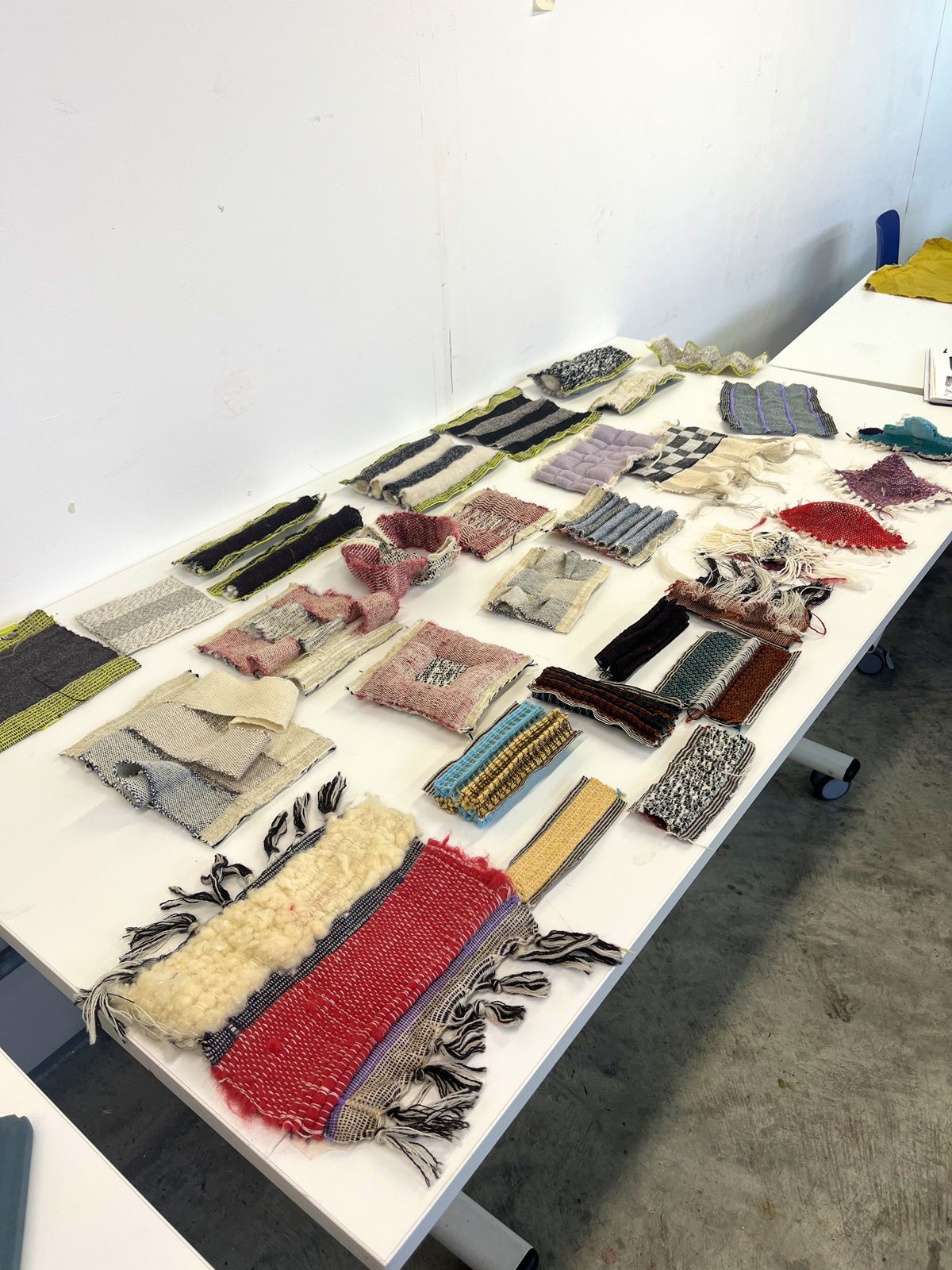
To investigate the acoustic potential of my woven samples, I developed a self-built comparative testing setup using a white-noise source, a testing tube and a sound-level meter. The aim was to observe differences in recorded sound levels when samples with different structures and fillings were placed under broadly similar conditions.
Three comparisons changed the design. Fleece-filled double cloth read around 7 dB, against 2 to 4 dB for several single-layer fabrics. A 45 g plain sample read 1 dB, while a 17 g fleece-filled honeycomb tube read 7 dB, so weight was not the guide I expected. Copper-wire samples gave some of the lowest readings.
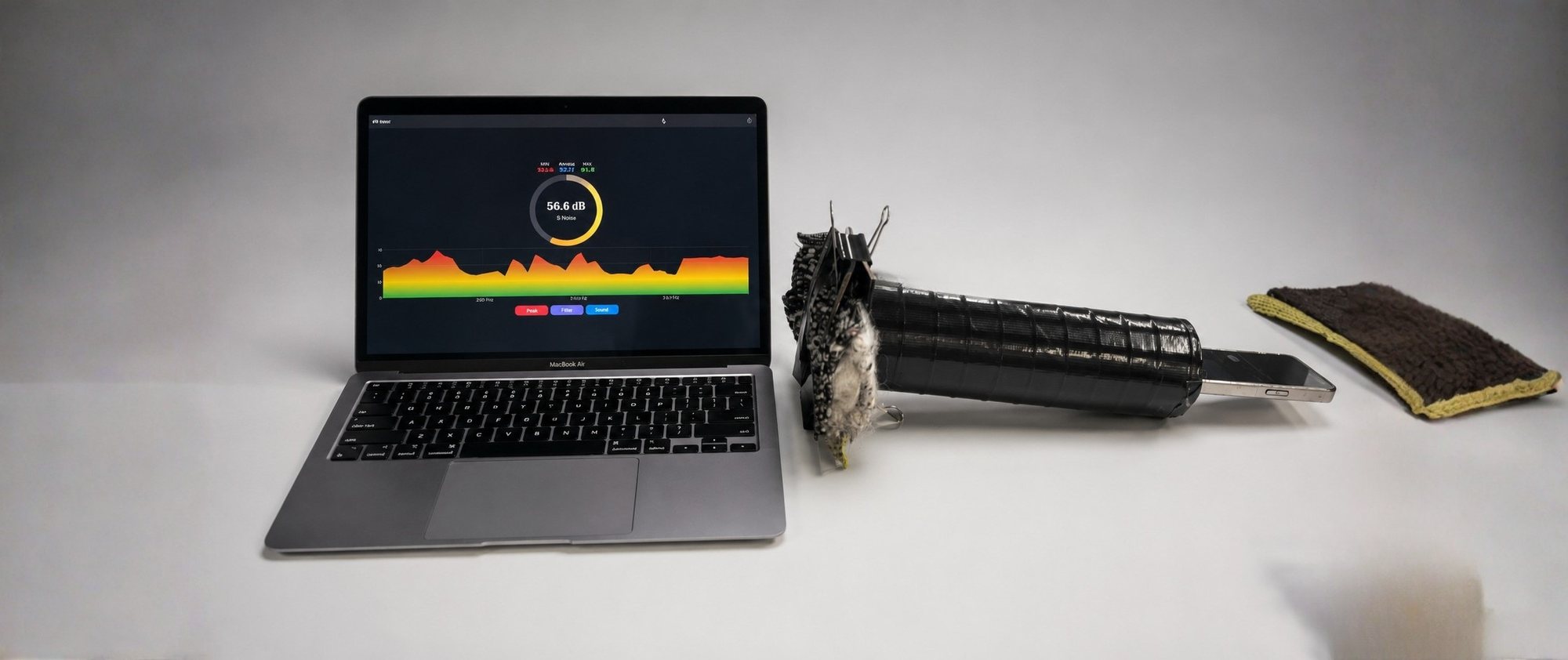
Testing became an iterative design tool. It allowed material experimentation and quantitative observation to inform one another while identifying questions for future laboratory assessment. The readings are comparative studio readings, not absorption coefficients. Each sample changed more than one variable, and several 3D samples were flattened to fit the tube, so I cannot isolate a cause.
The next series will change tube depth, weave density and fleece packing one at a time. If HUM becomes a permanent installation or a specified product, I will commission independent acoustic testing (reverberation-room or impedance-tube methods) and the relevant fire and installation assessments for that use.
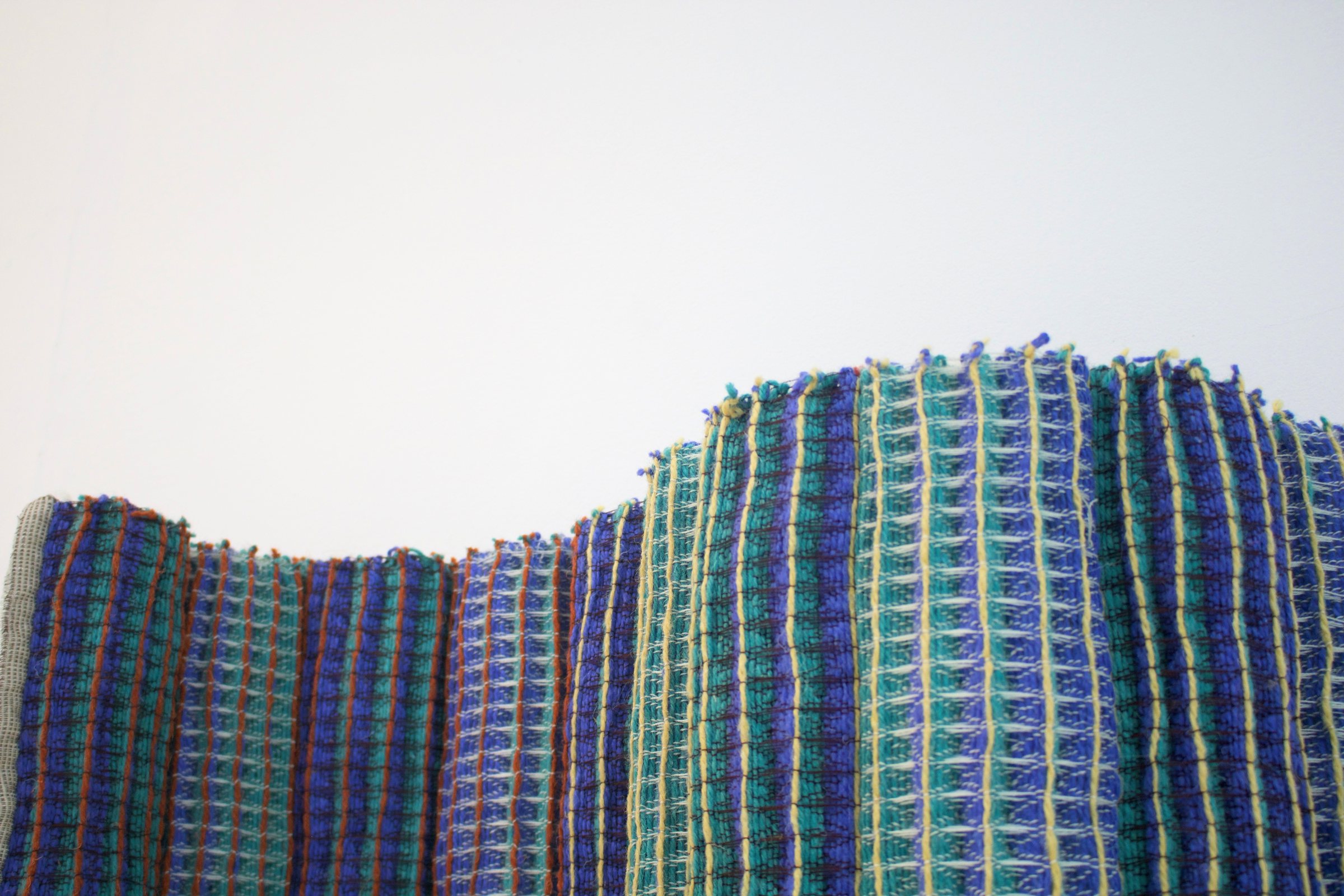
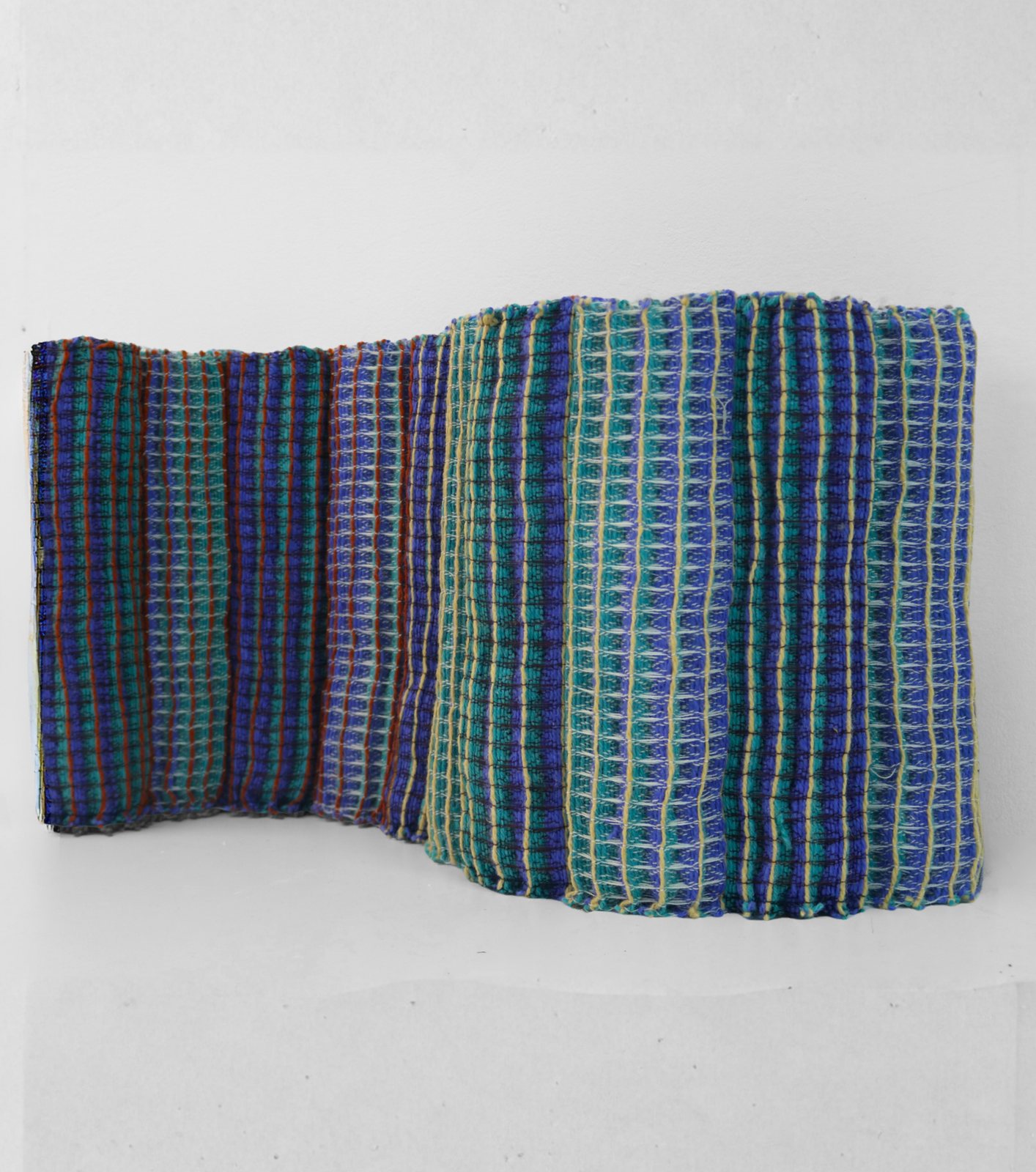
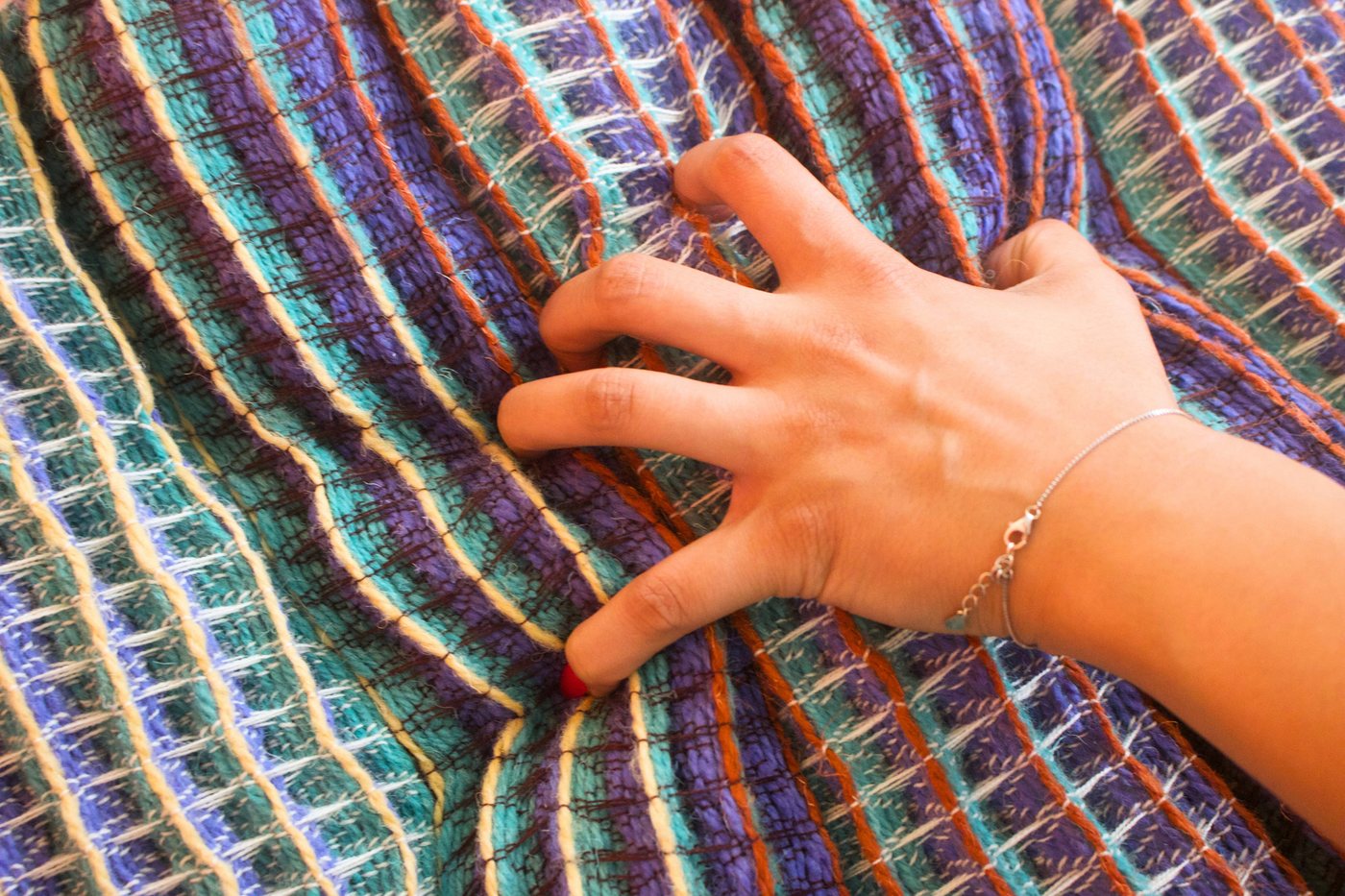
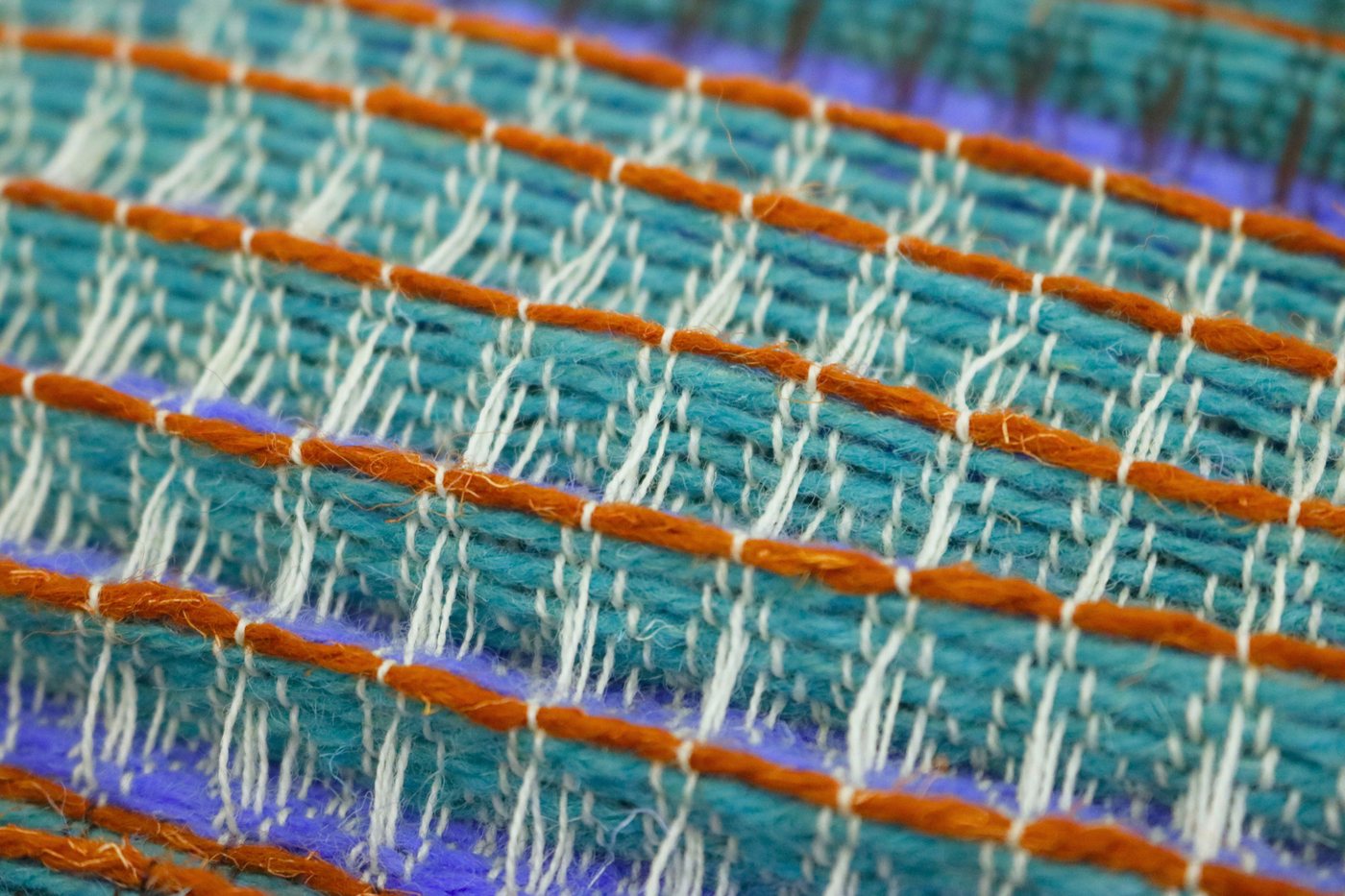
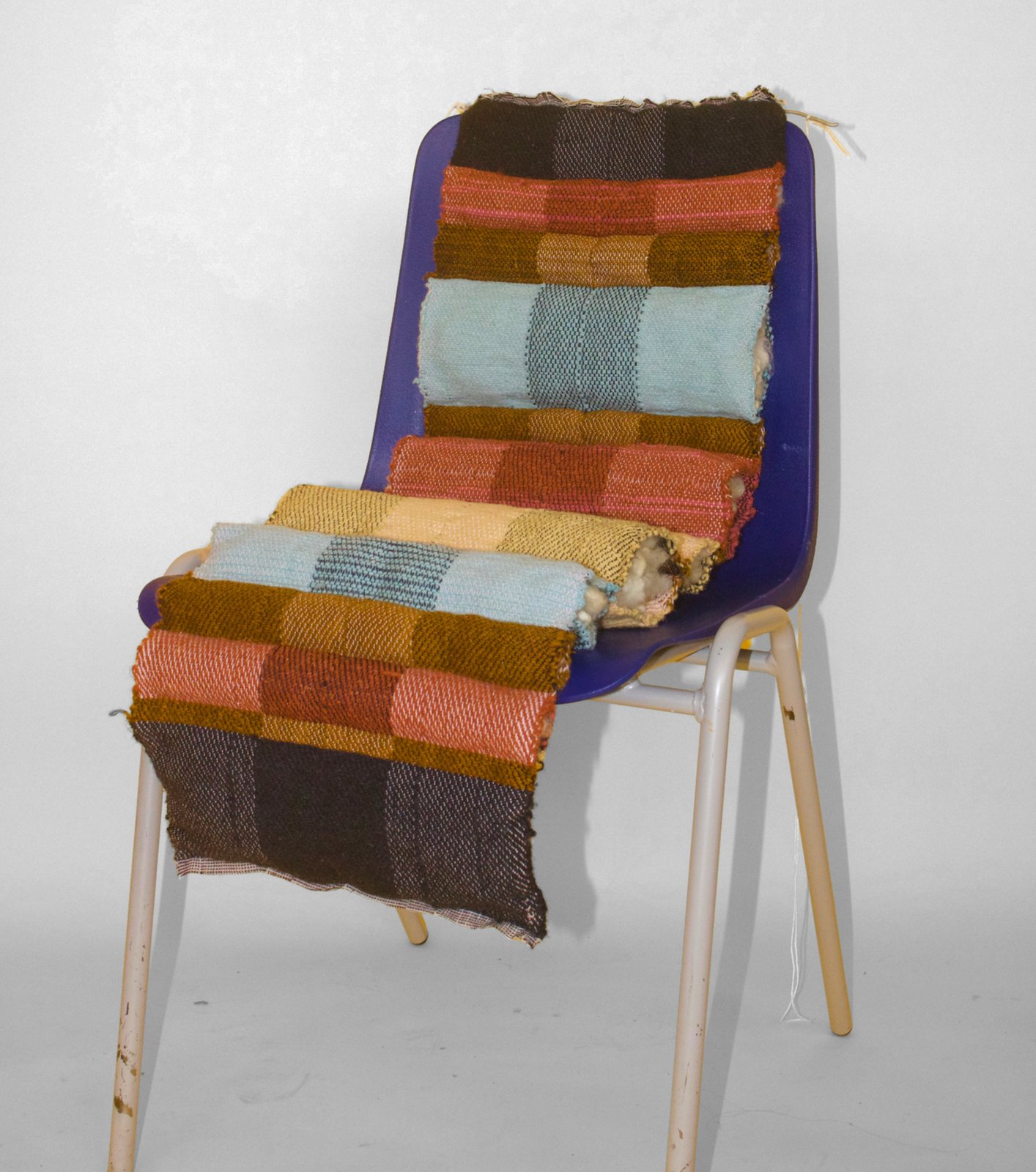
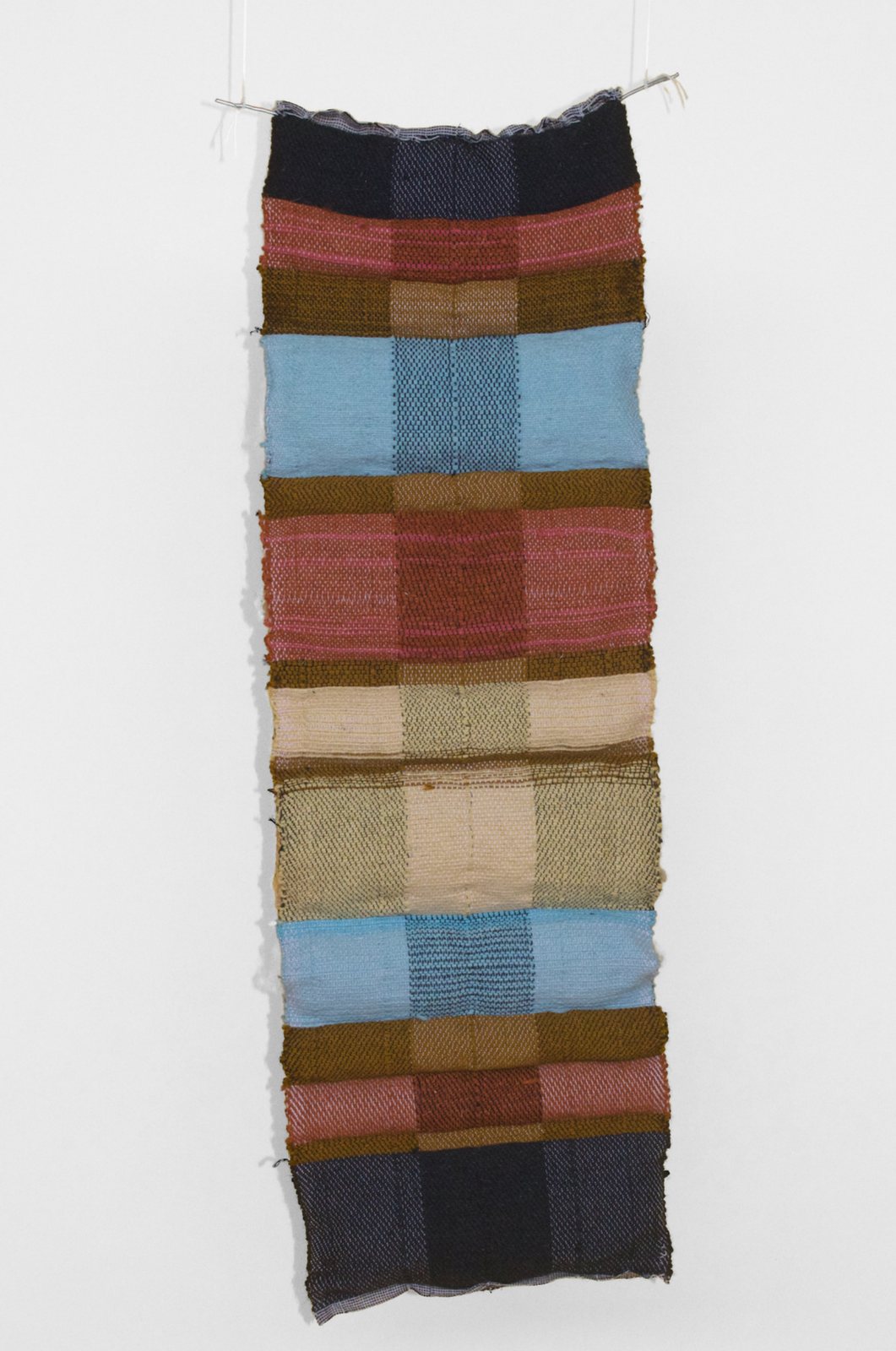
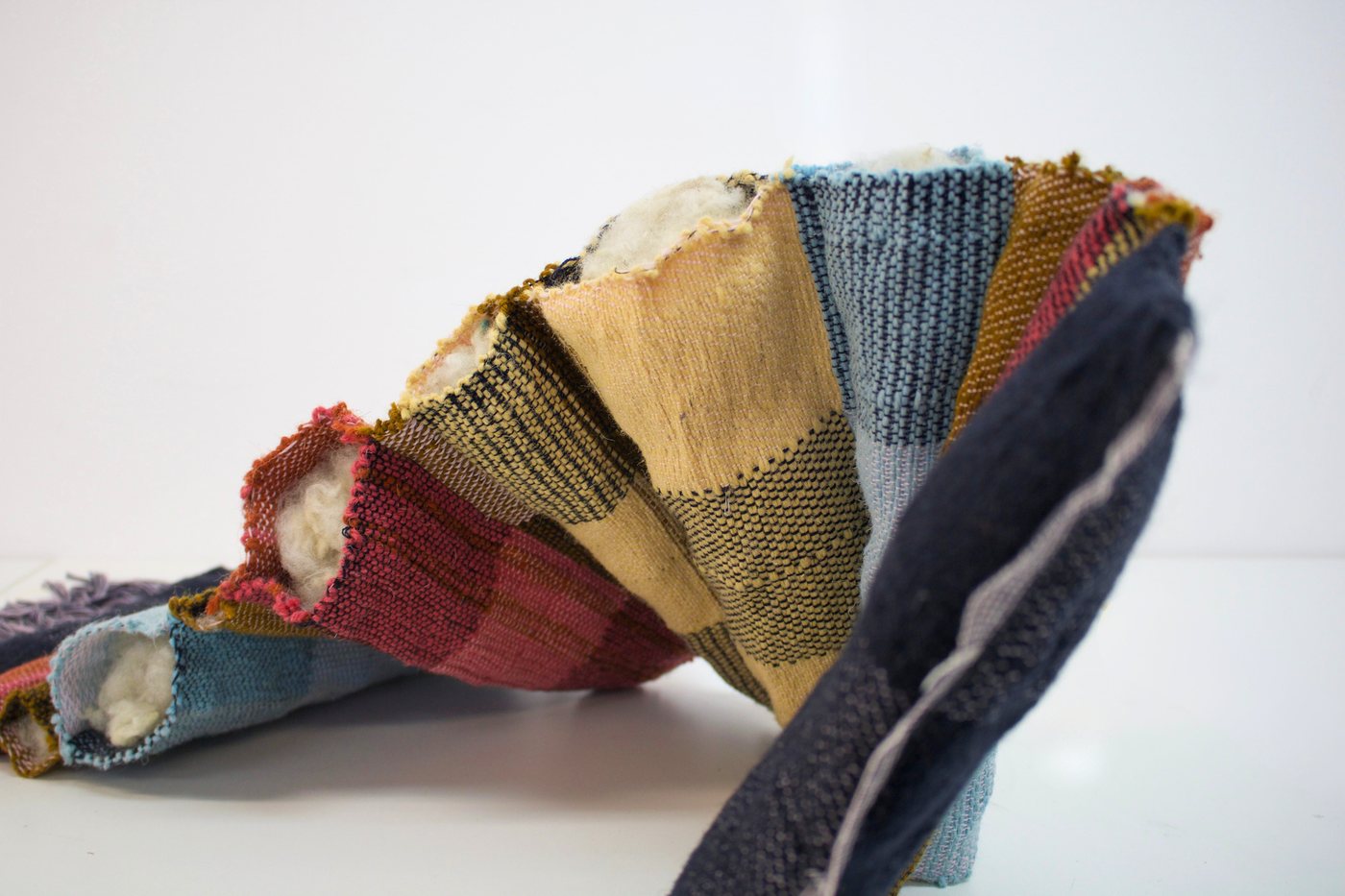
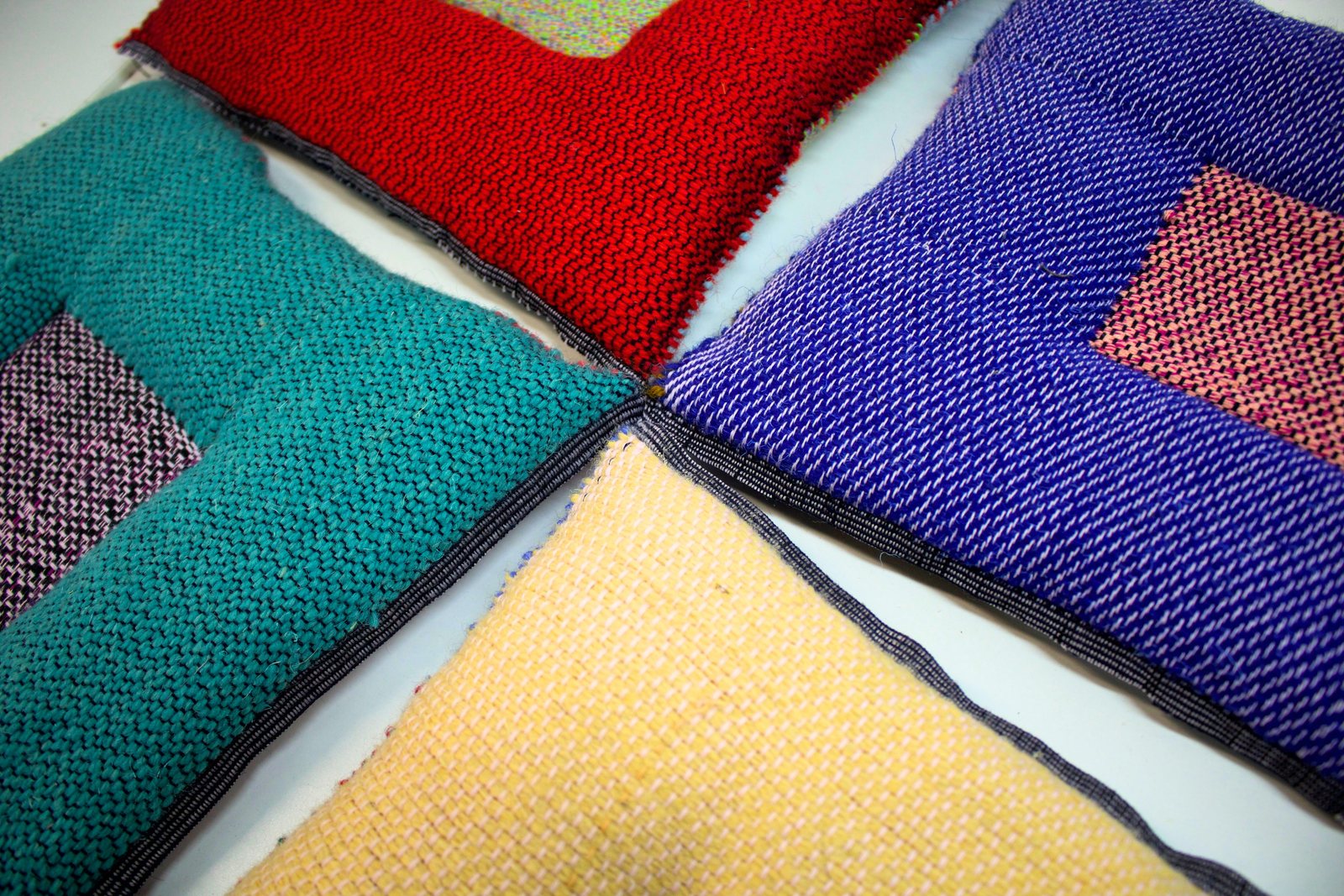
Three woven panels named after South Indian temple architecture. Each is built from double-woven tubes of Axminster rug yarn, filled with cleaned surplus fleece, in honeycomb and plain weave structures.
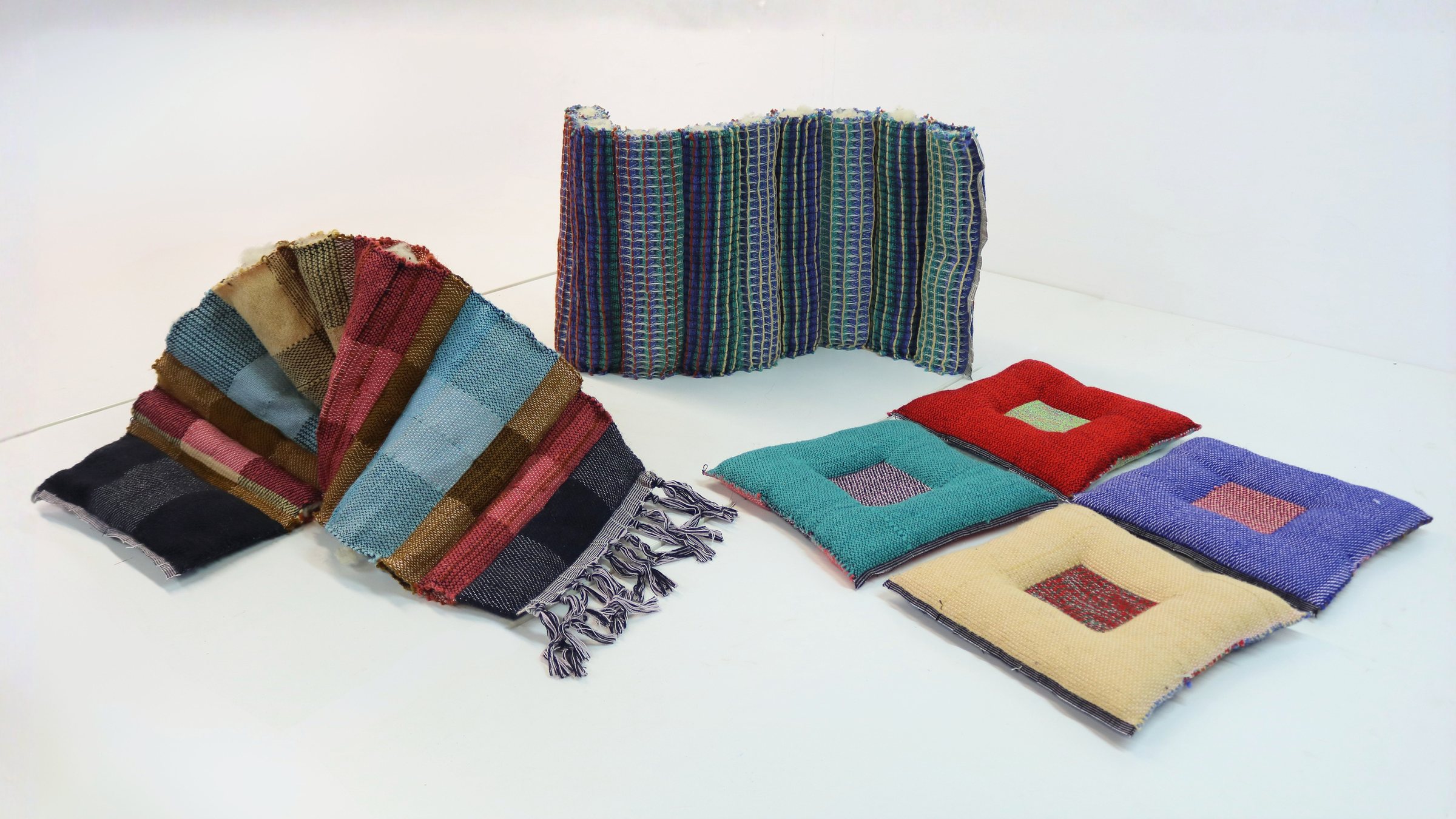
The hall.
Mandapam takes its name from the pillared halls found in South Indian temple spaces associated with gathering and ritual activity.
The woven form translates this architectural reference through repeated vertical structures in the form of honeycomb weave structures and a continuous arrangement of double-woven tube cavities.
The pillar.
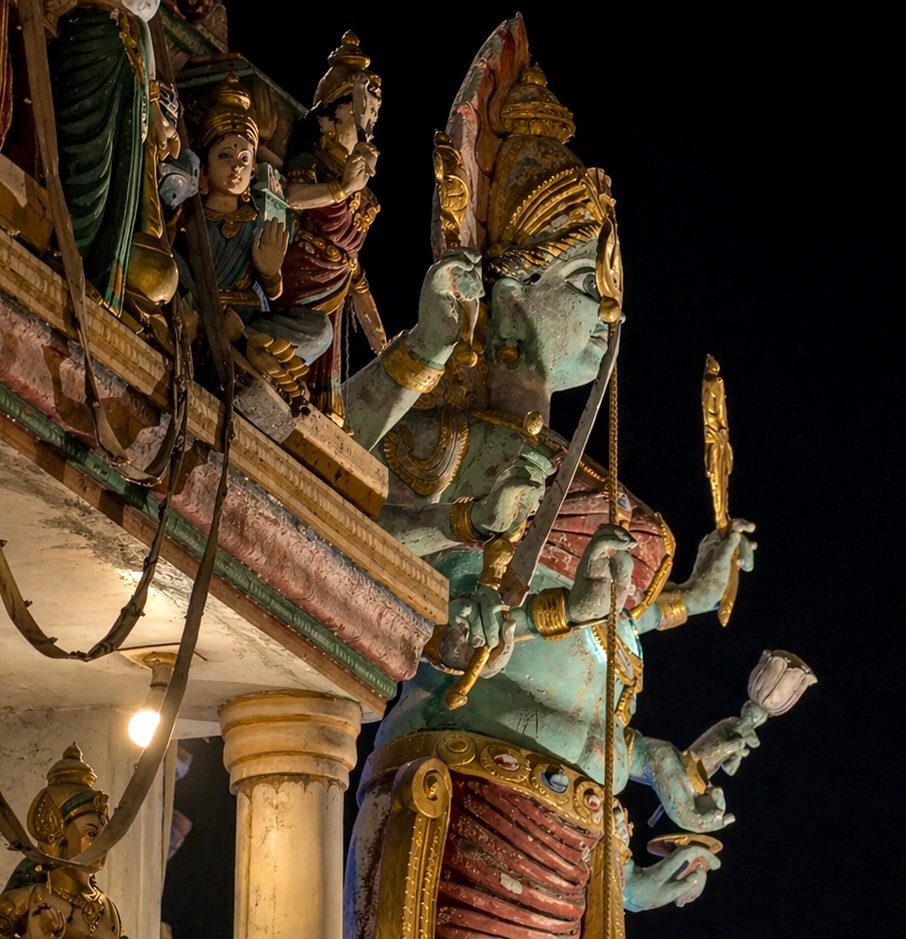
Stambha, meaning pillar, takes its inspiration from the repeated vertical supports and figurines of South Indian temple architecture.
I translated this reference into a woven form built around a sequence of connected sections, exploring how cloth might suggest architectural support while retaining flexibility.
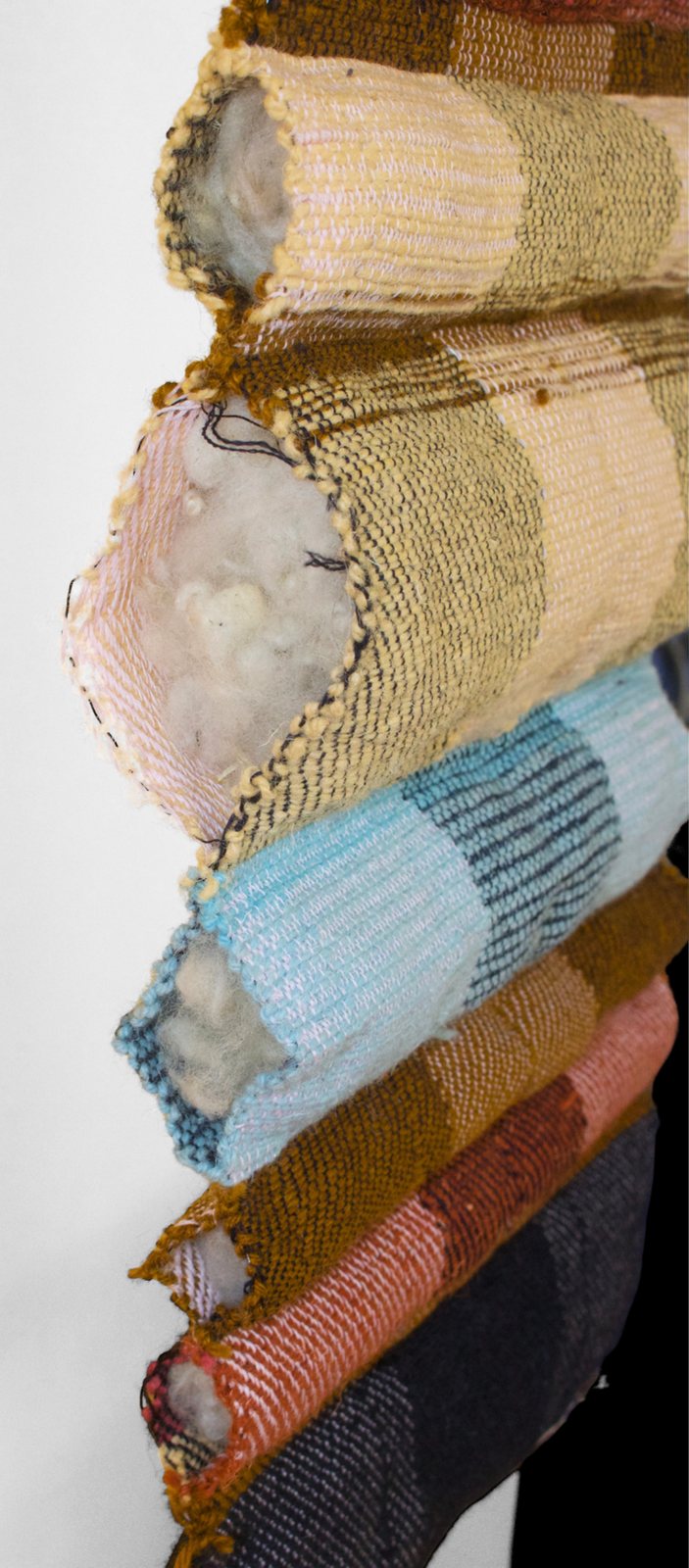
The lattice.
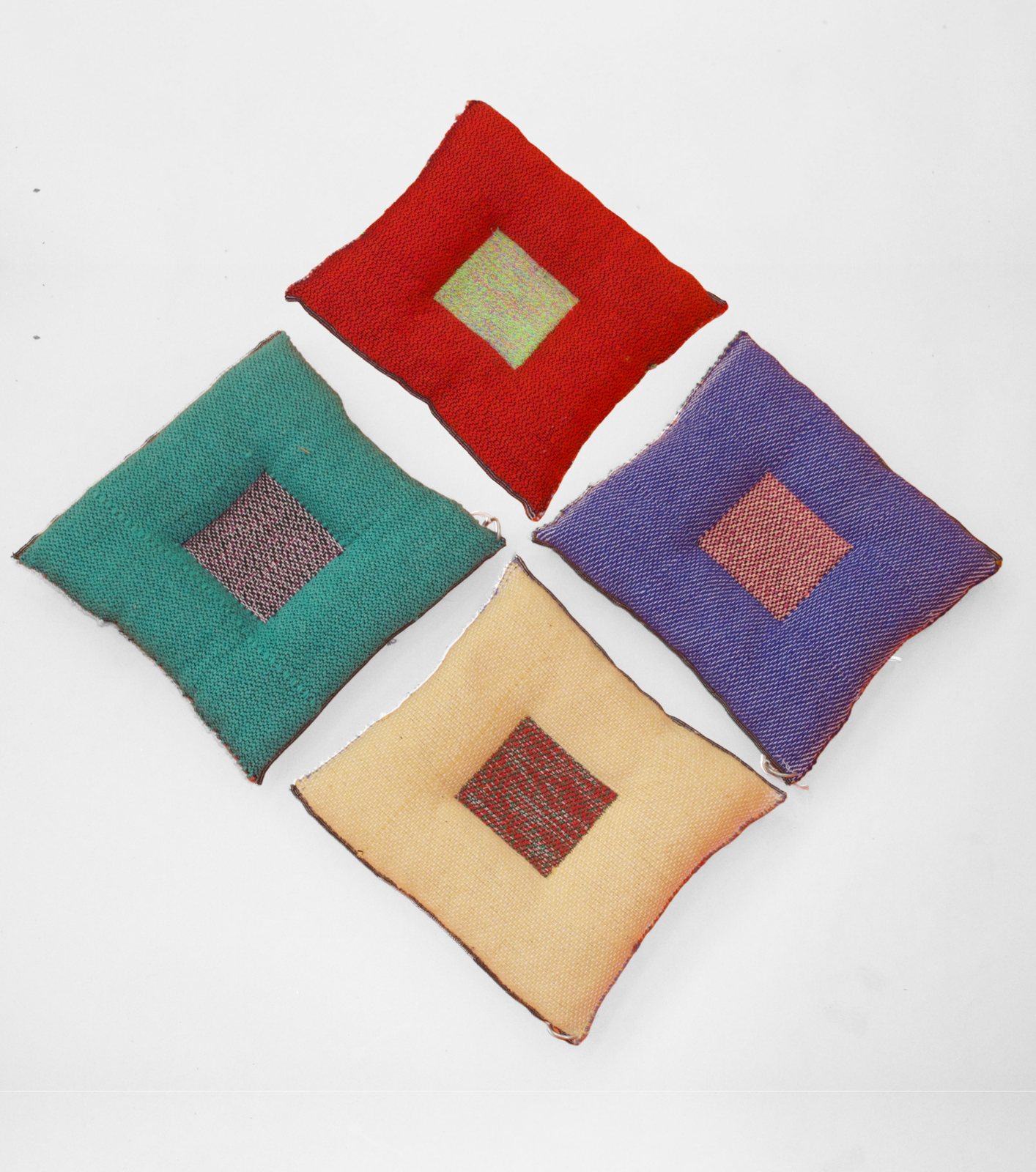
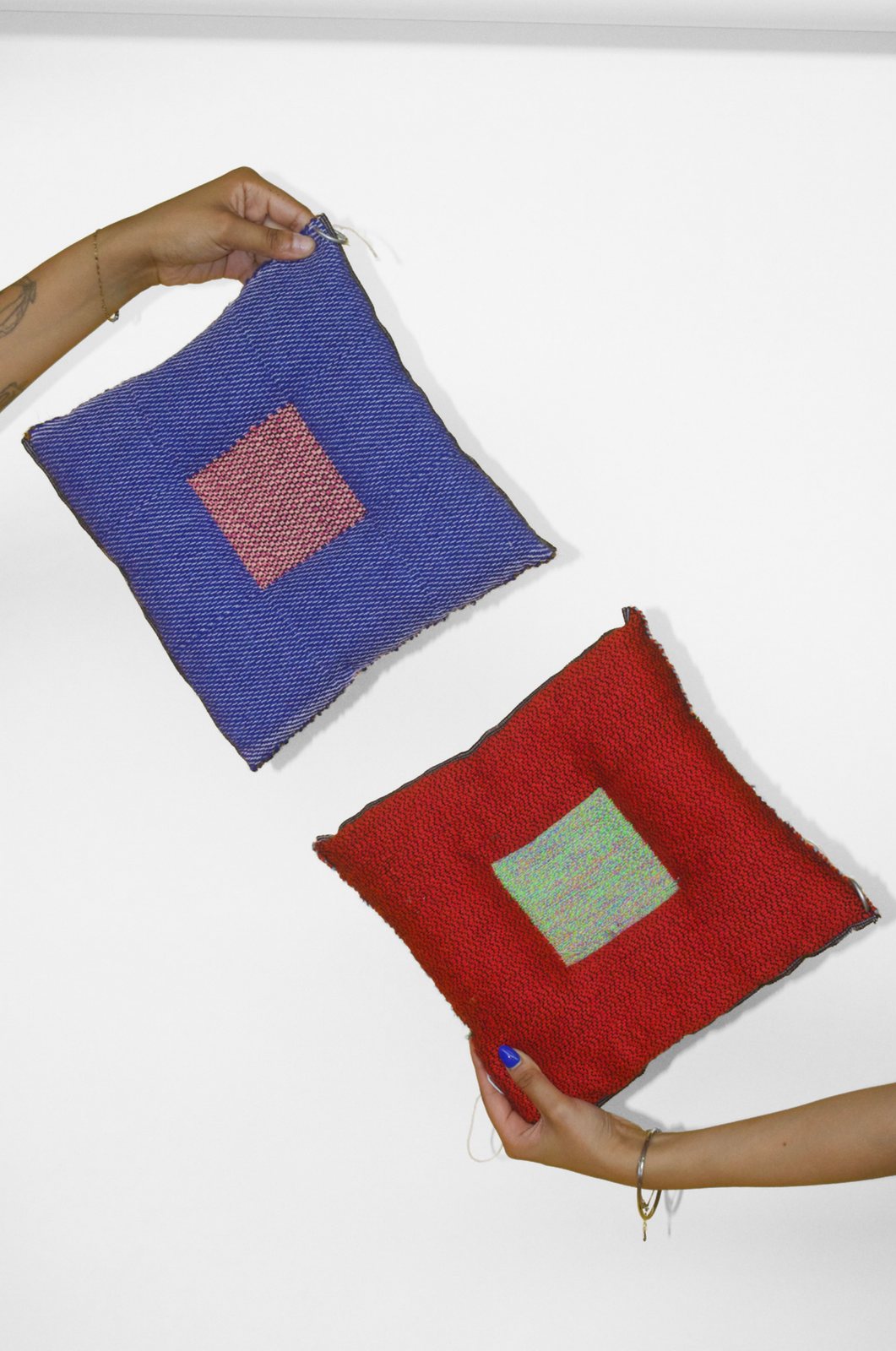
Jaal draws from the decorative lattices and geometric patterns found within South Indian temple architecture.
Its design translates the relationship between repetition and connection into a series of individual woven forms arranged as a larger composition. I explored how coloured surfaces, central openings and connected layers could produce a distinct geometric language, using double weave.
Szymon Zdunek, a UAL Sound Arts graduate, composed a piece from recordings of my loom, bringing the rhythm of making into the room.
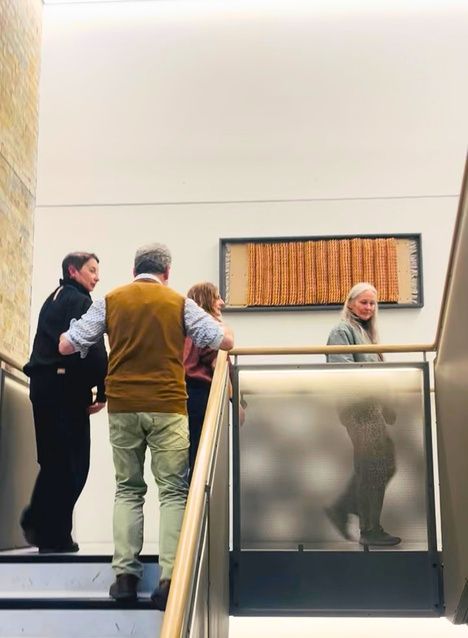
Blossom Yard was HUM’s first installation in an architectural setting. Seeing a panel in an existing interior showed me how much its scale and texture matter, and how a textile has to communicate its purpose to people who have not read the research.
For now I place HUM at the handcrafted, sensorial end of the field, where its strength is material enquiry, structure and encounter. Independent testing is how it can move toward certified performance.
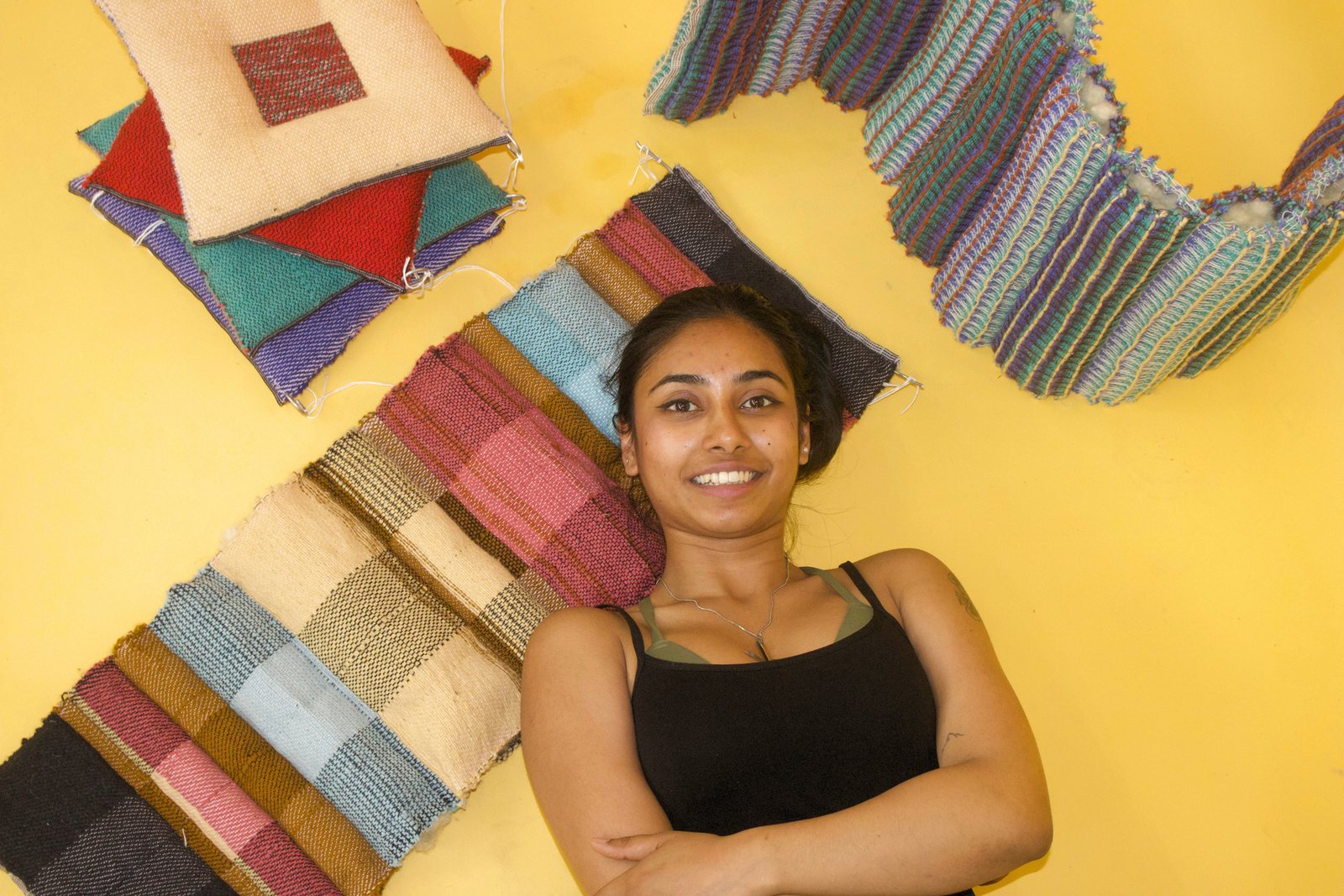
Material storyteller. Craft futures practitioner.
Throughout my MA, my practice has evolved from material exploration into a research-led approach that connects sustainable thinking, structural innovation and sensory wellbeing. HUM has shaped my identity as a designer who learns through making, questions established material values and draws connections between cultural heritage and contemporary spatial experiences.
WorkStructure
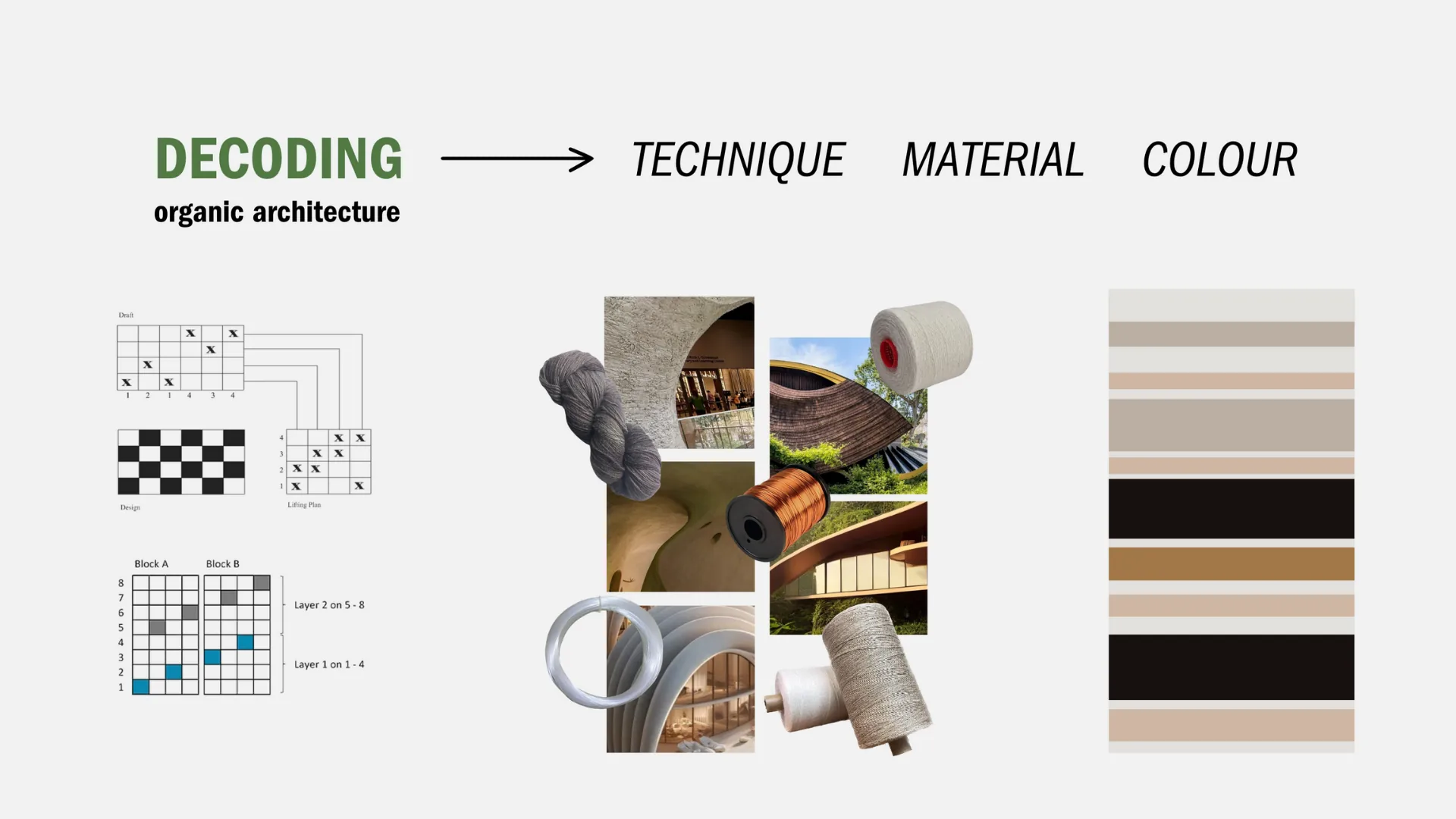
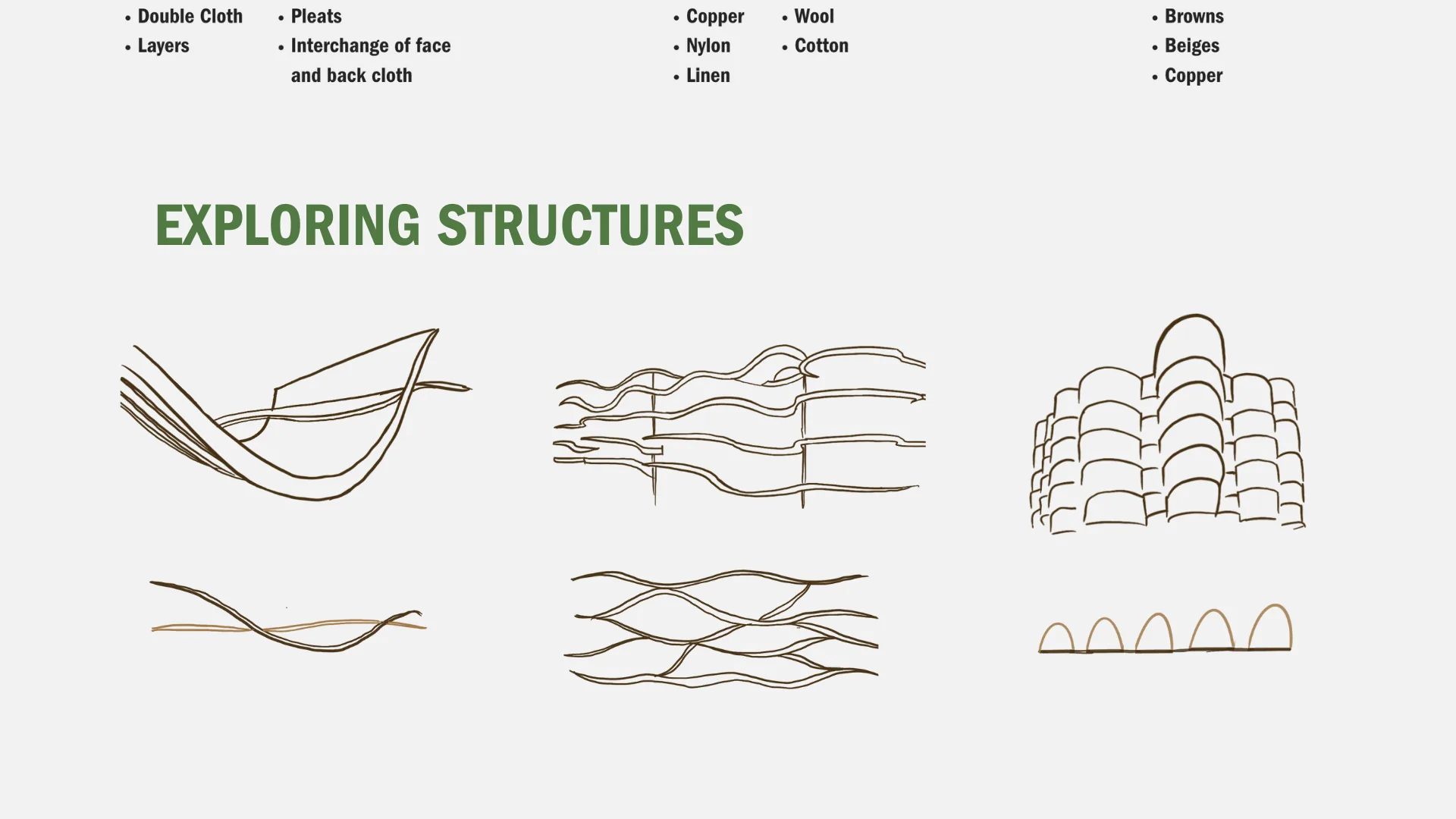
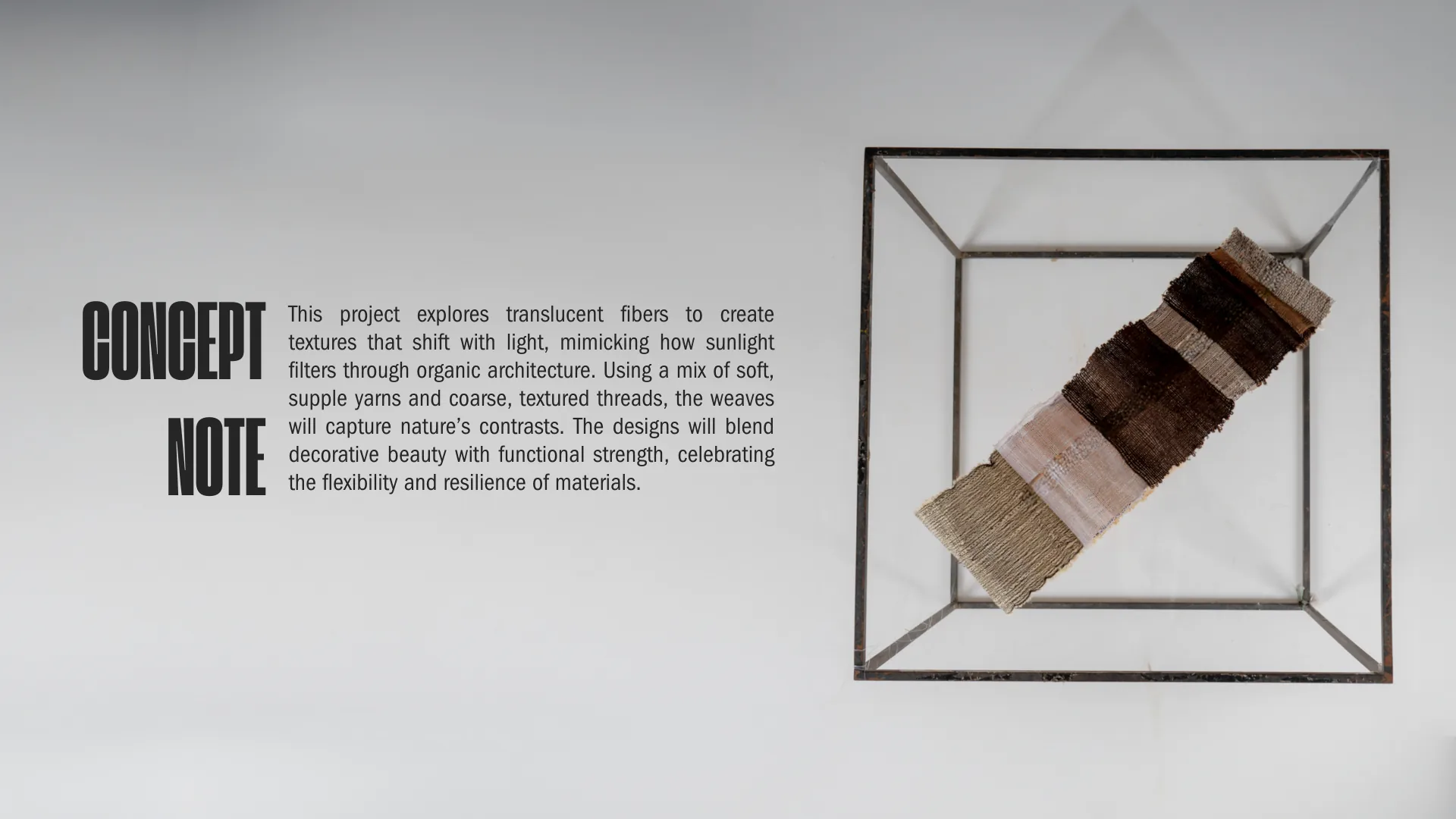
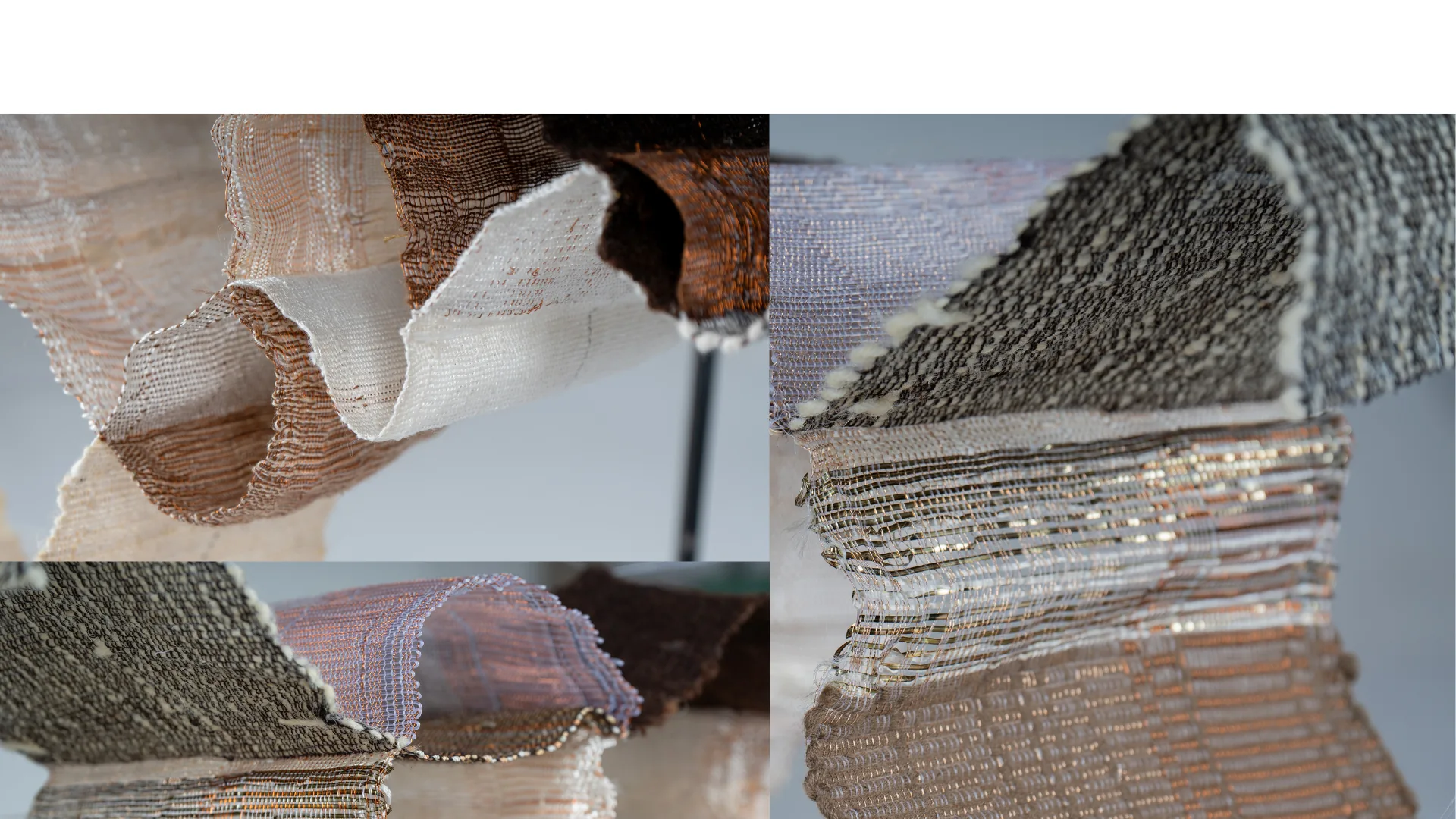
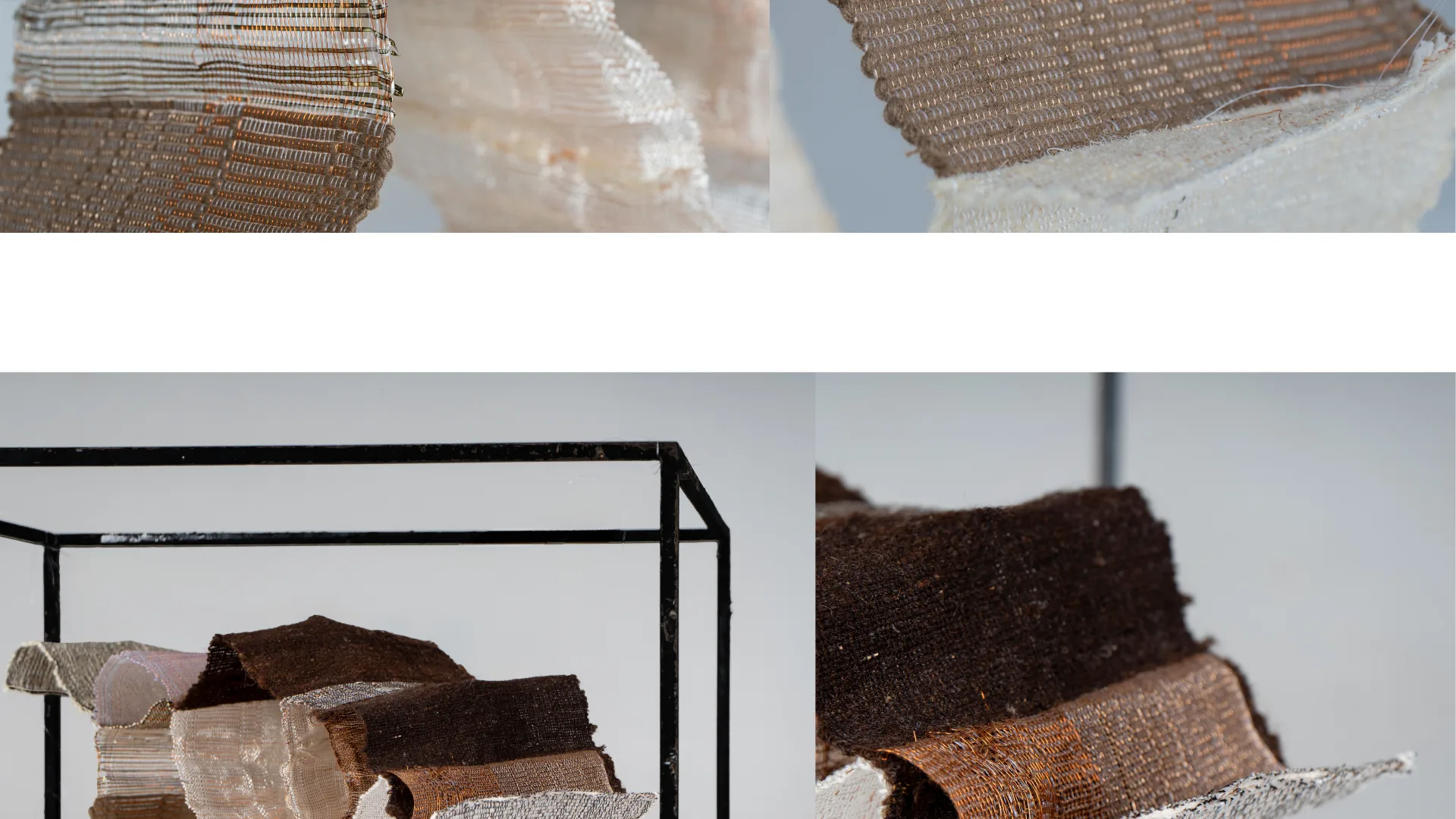
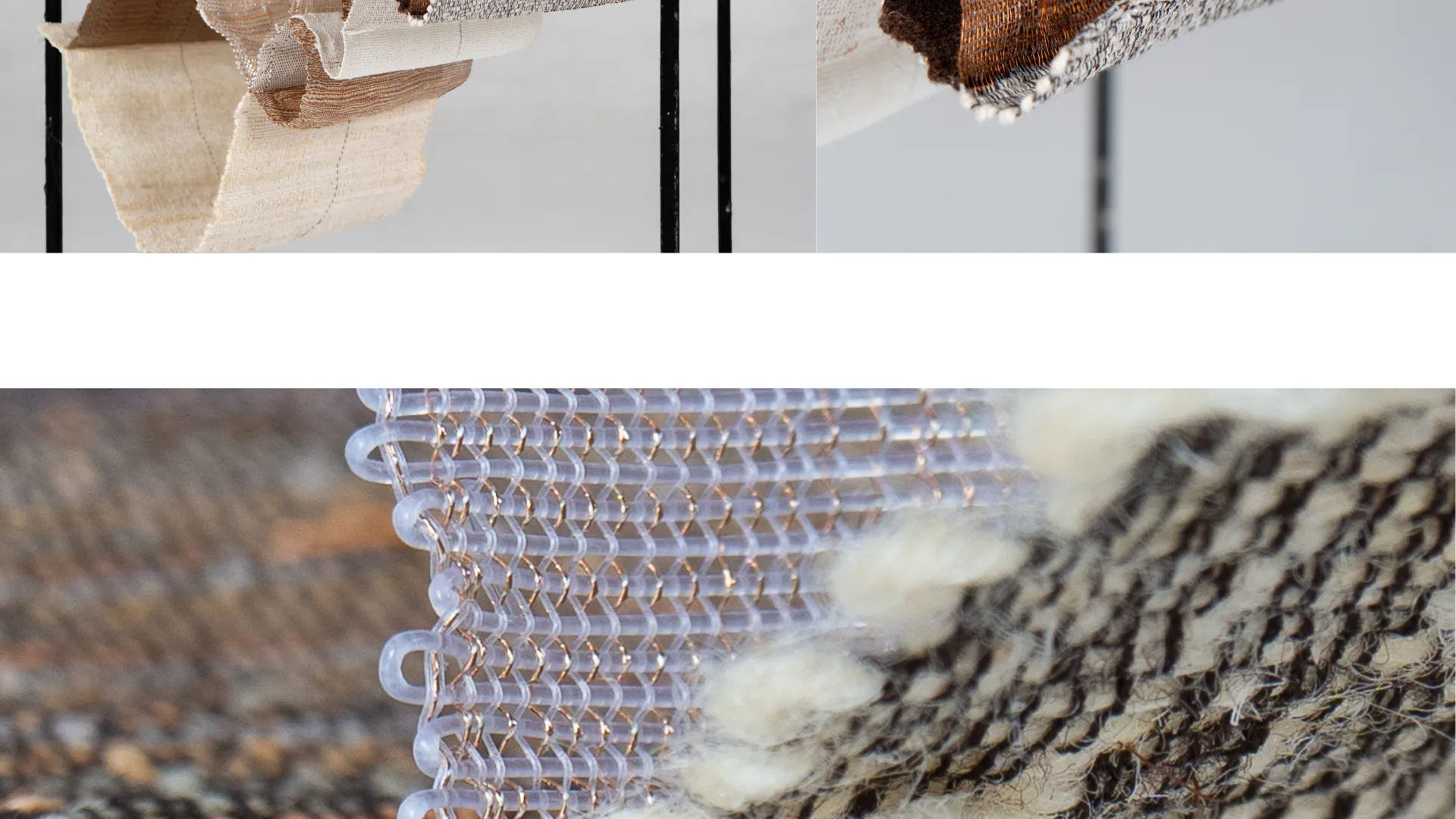
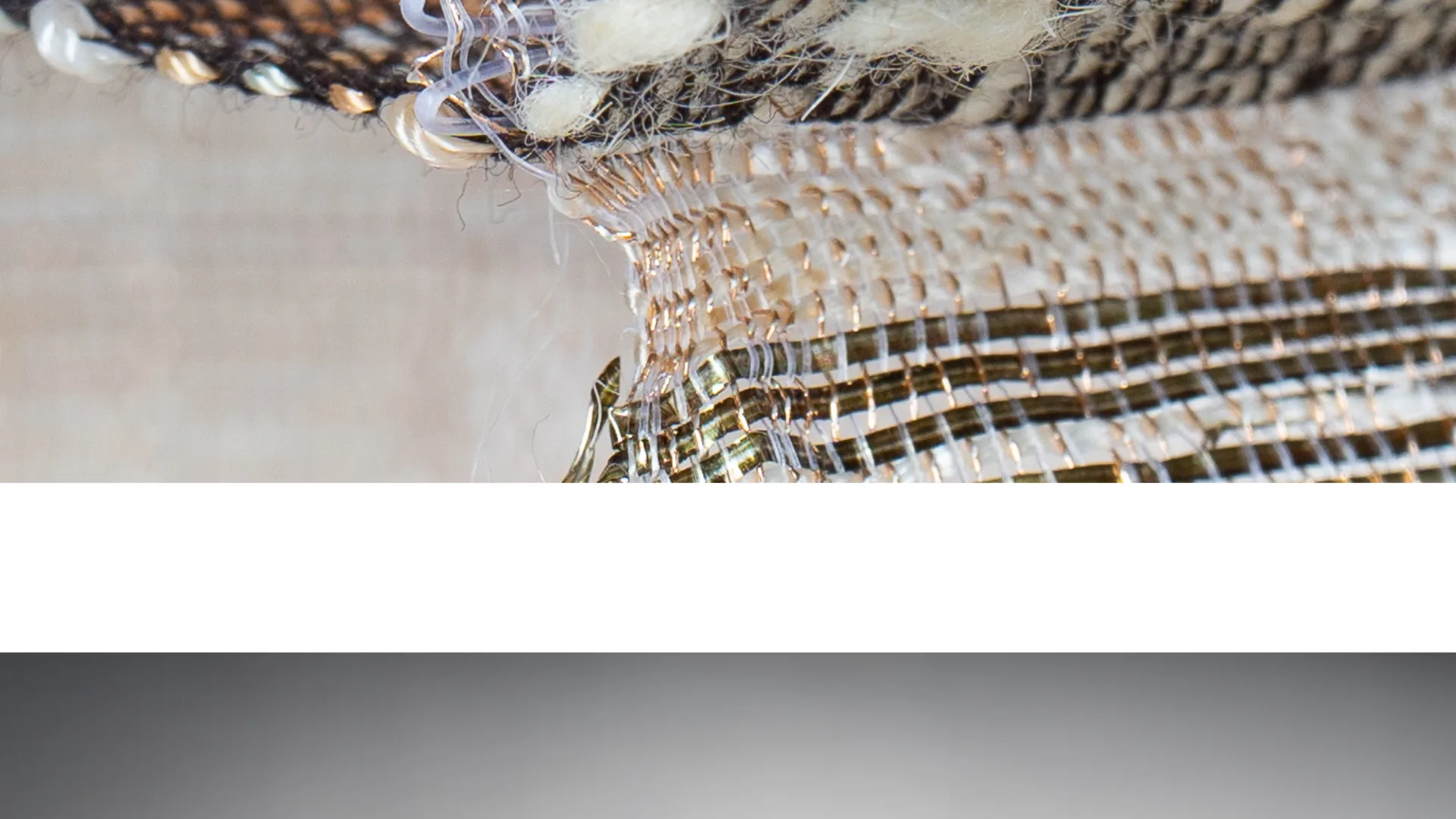
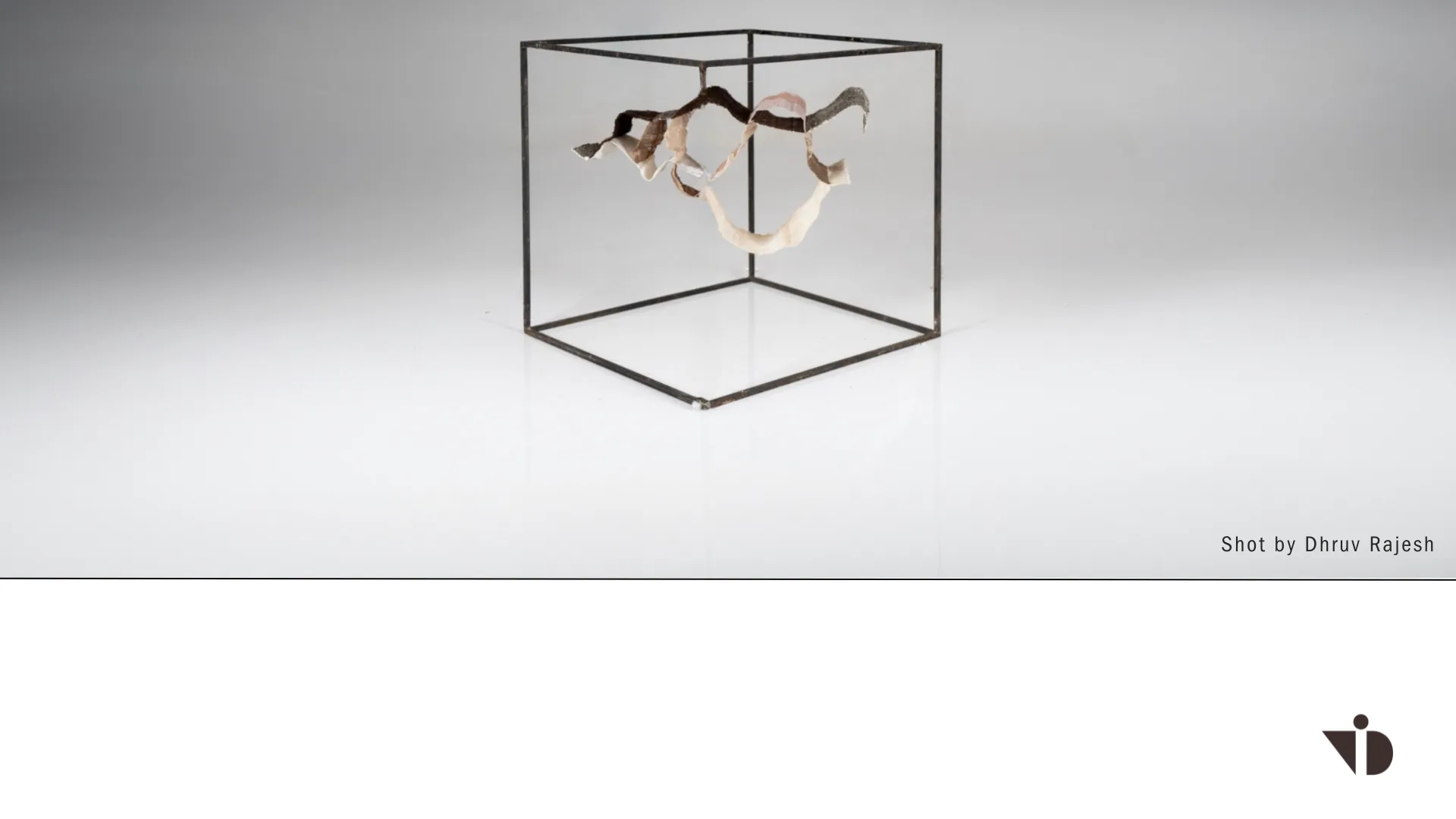
Double and treble cloth for organic architecture

WorkStructure
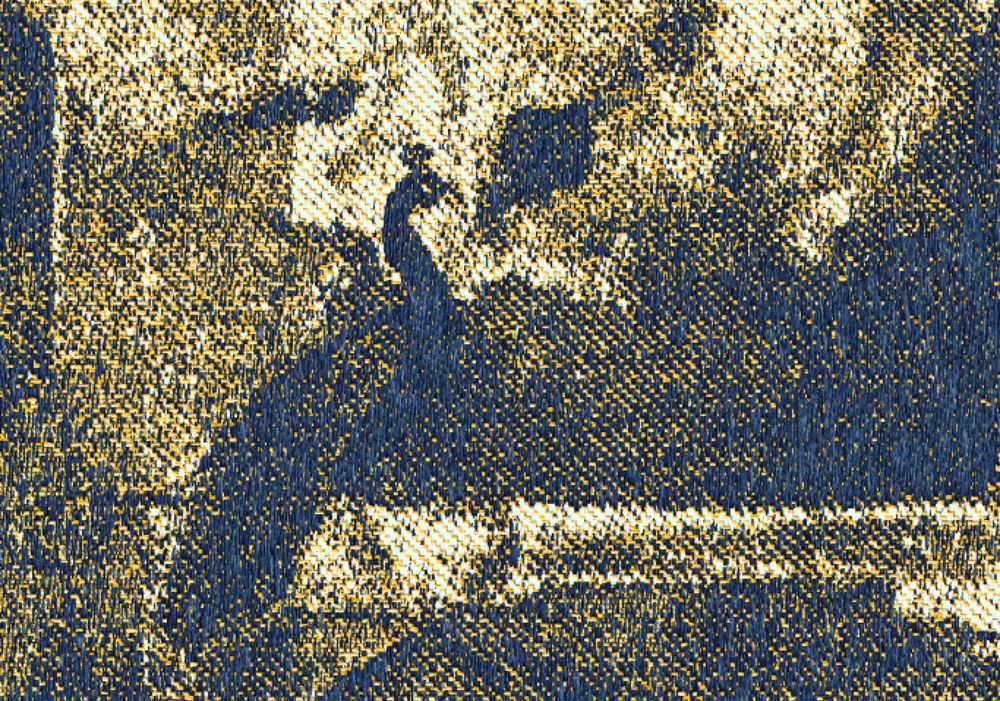
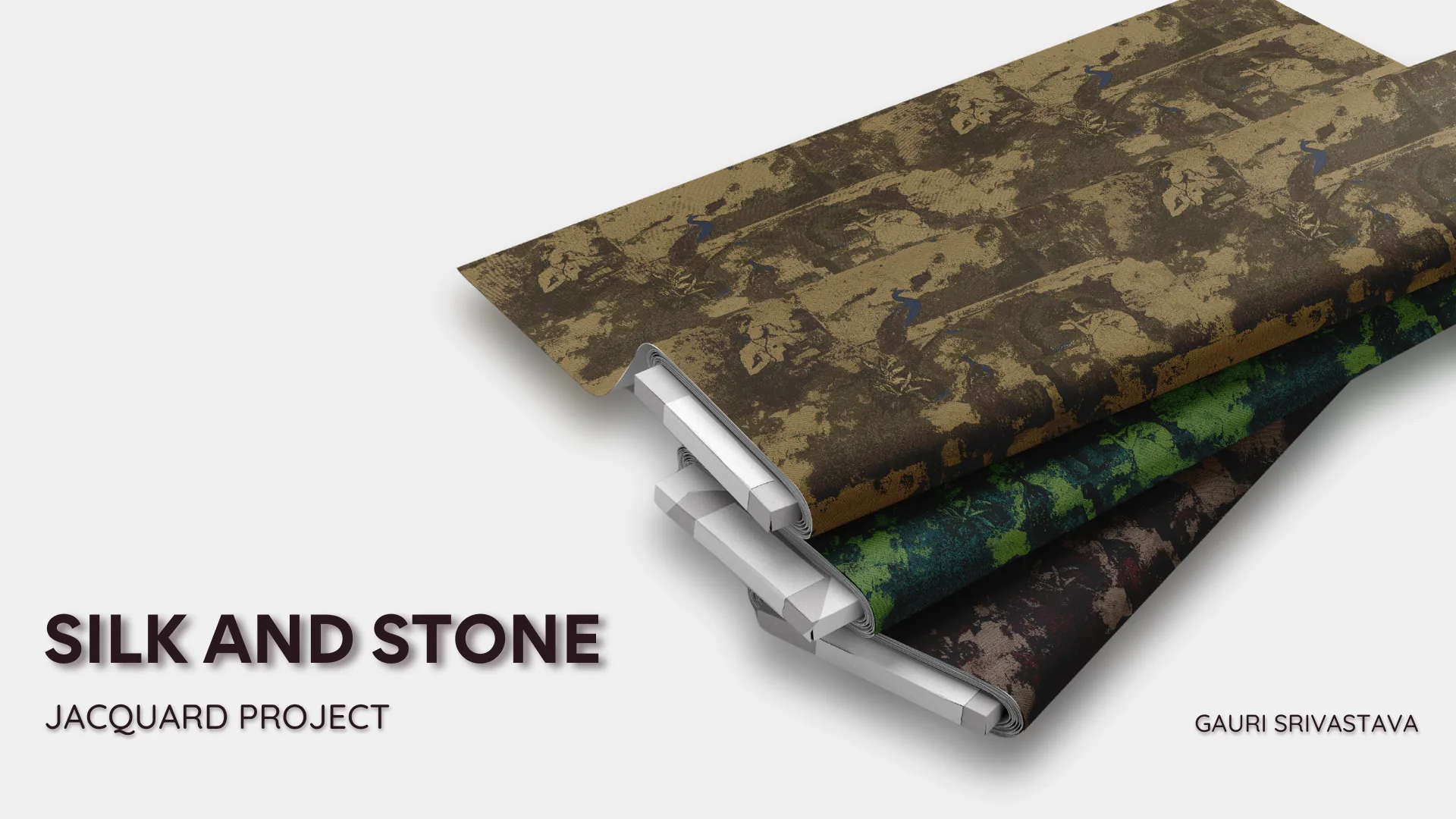
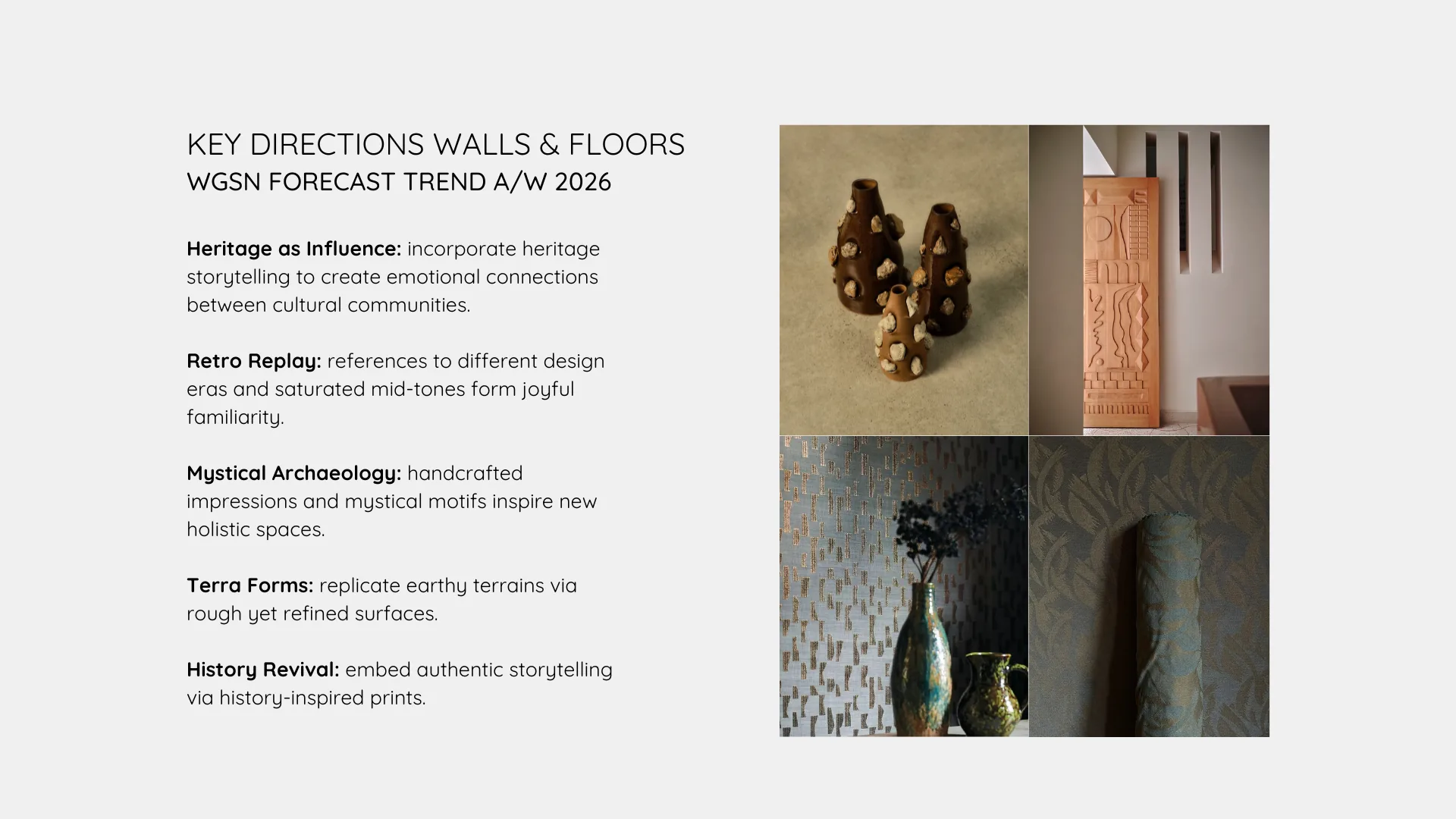
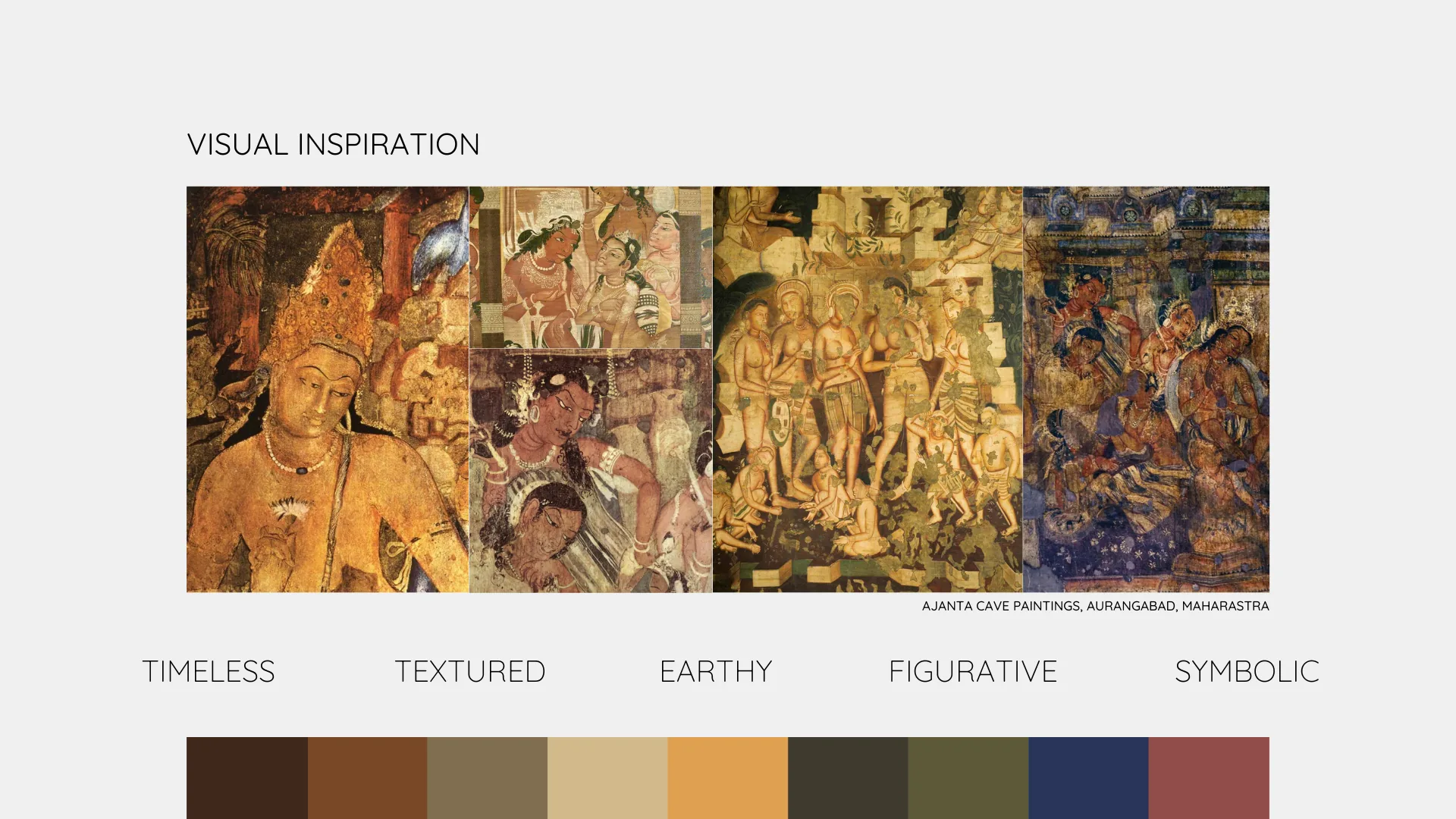
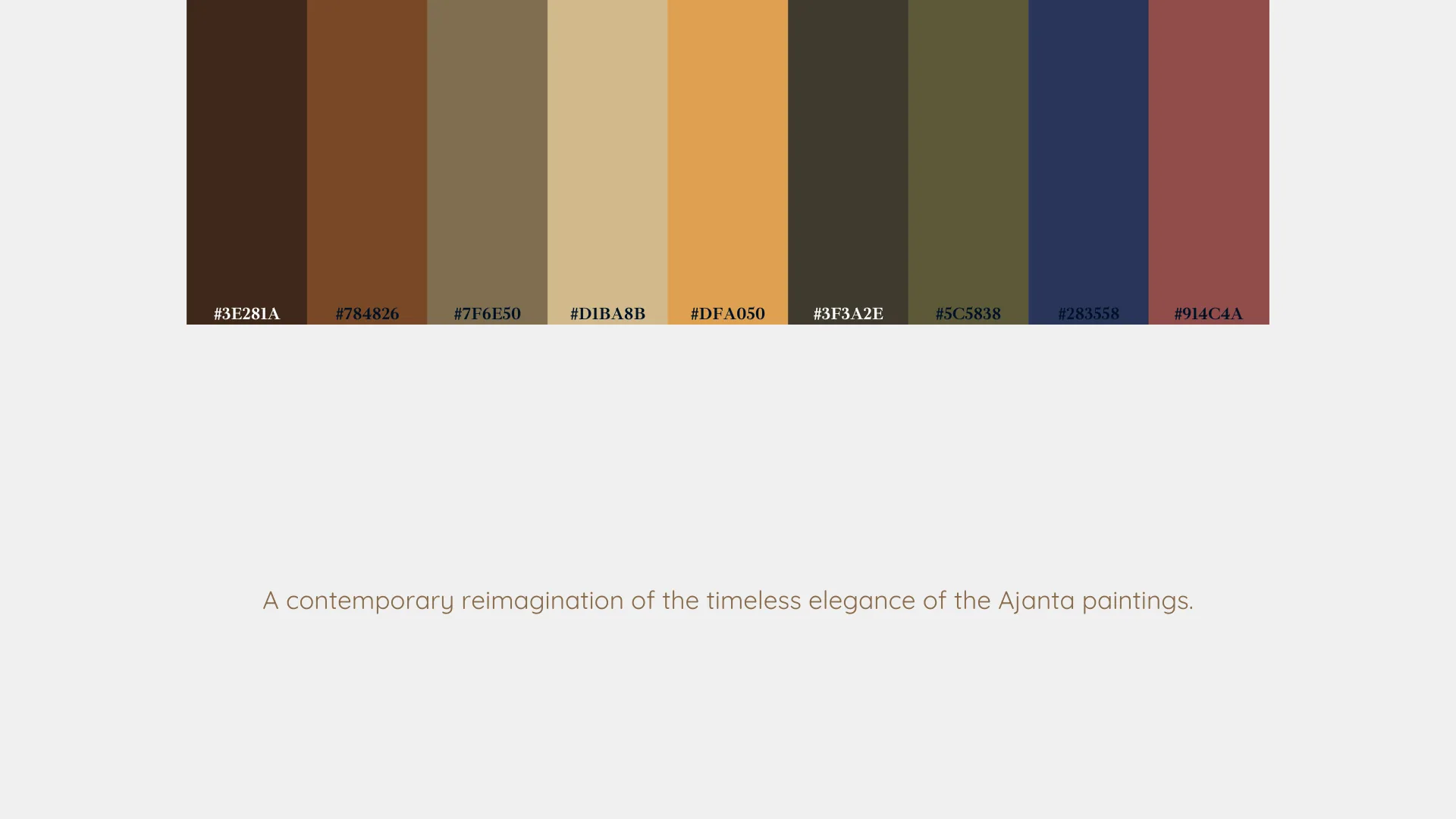
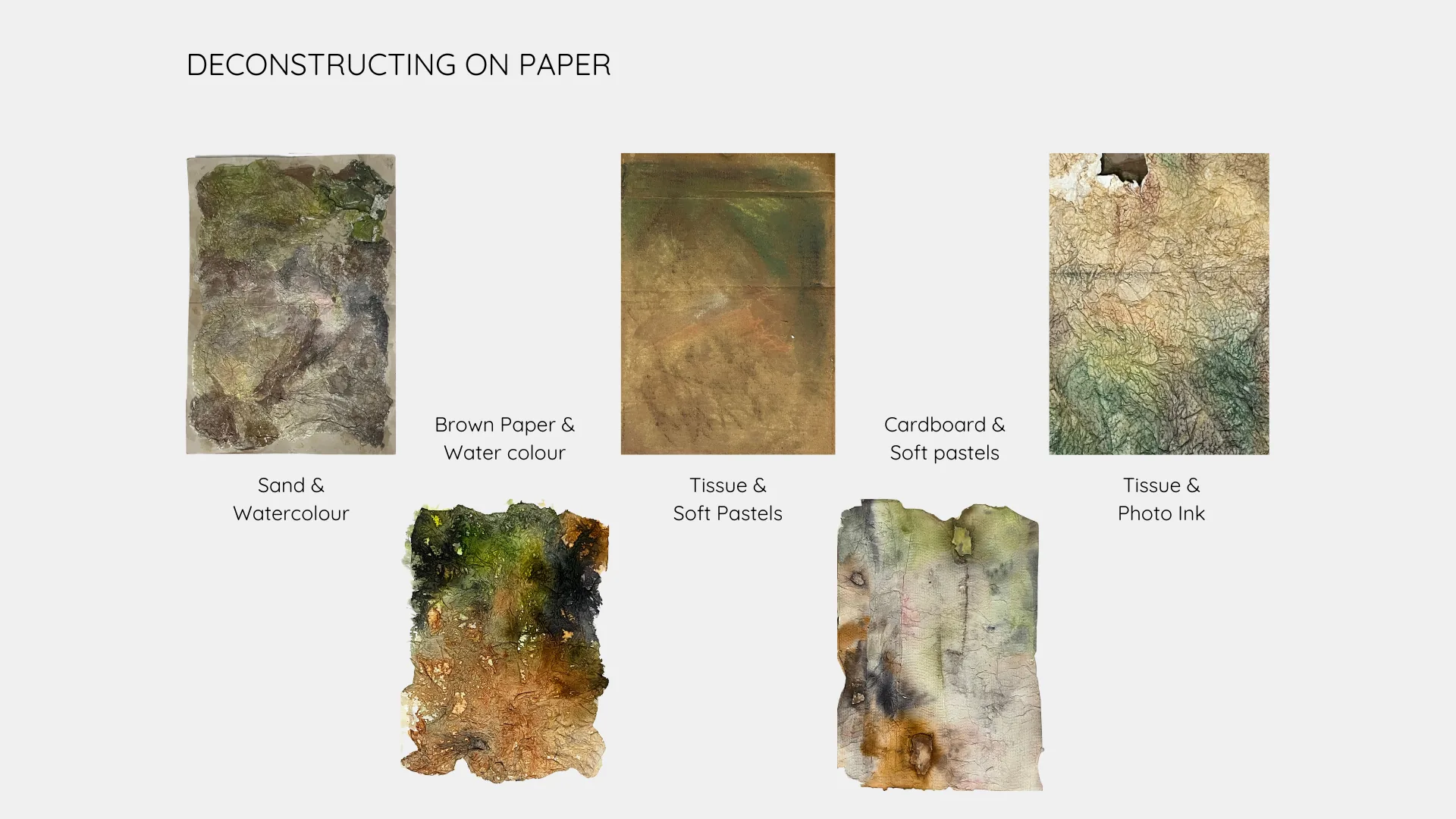
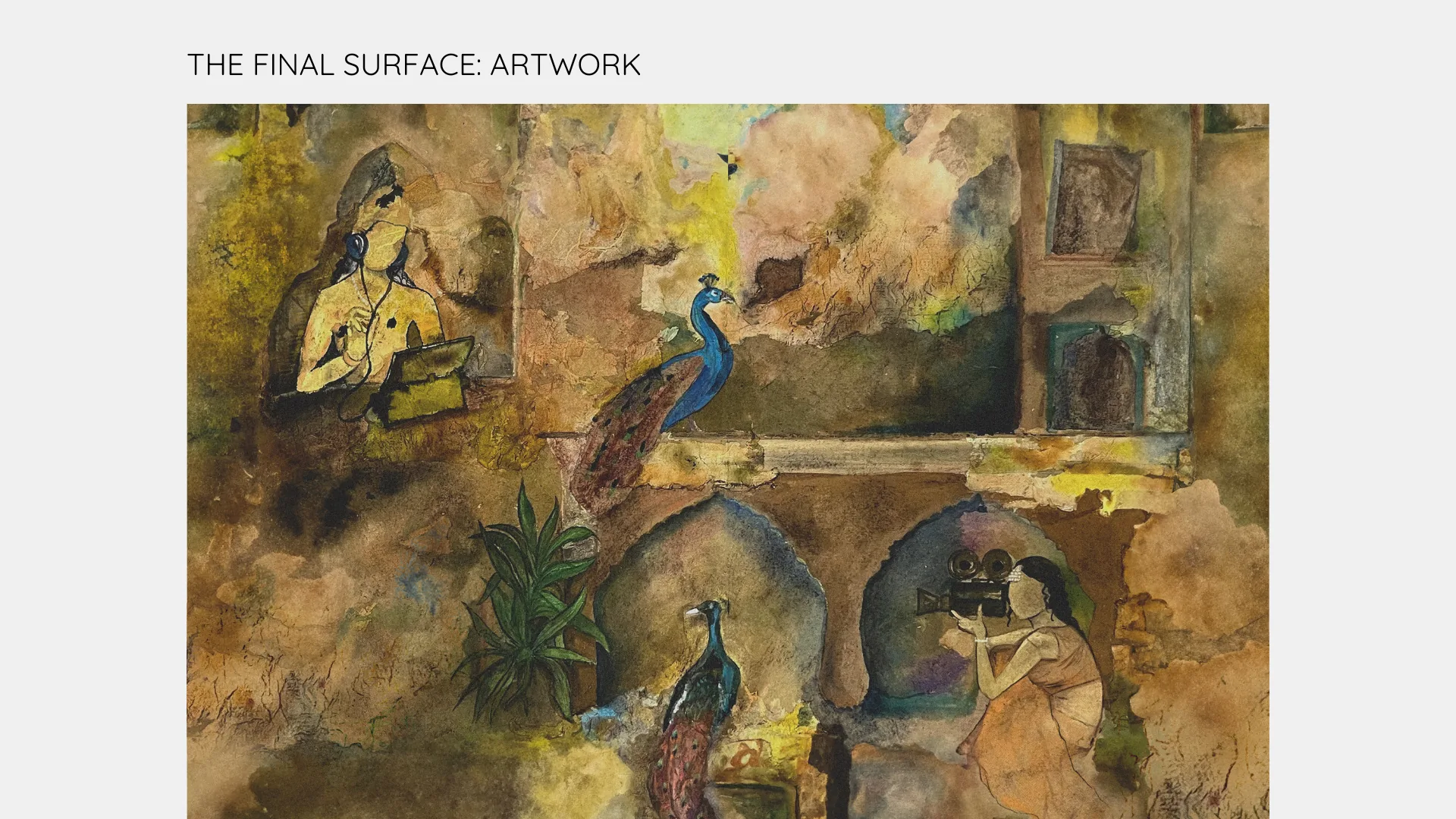
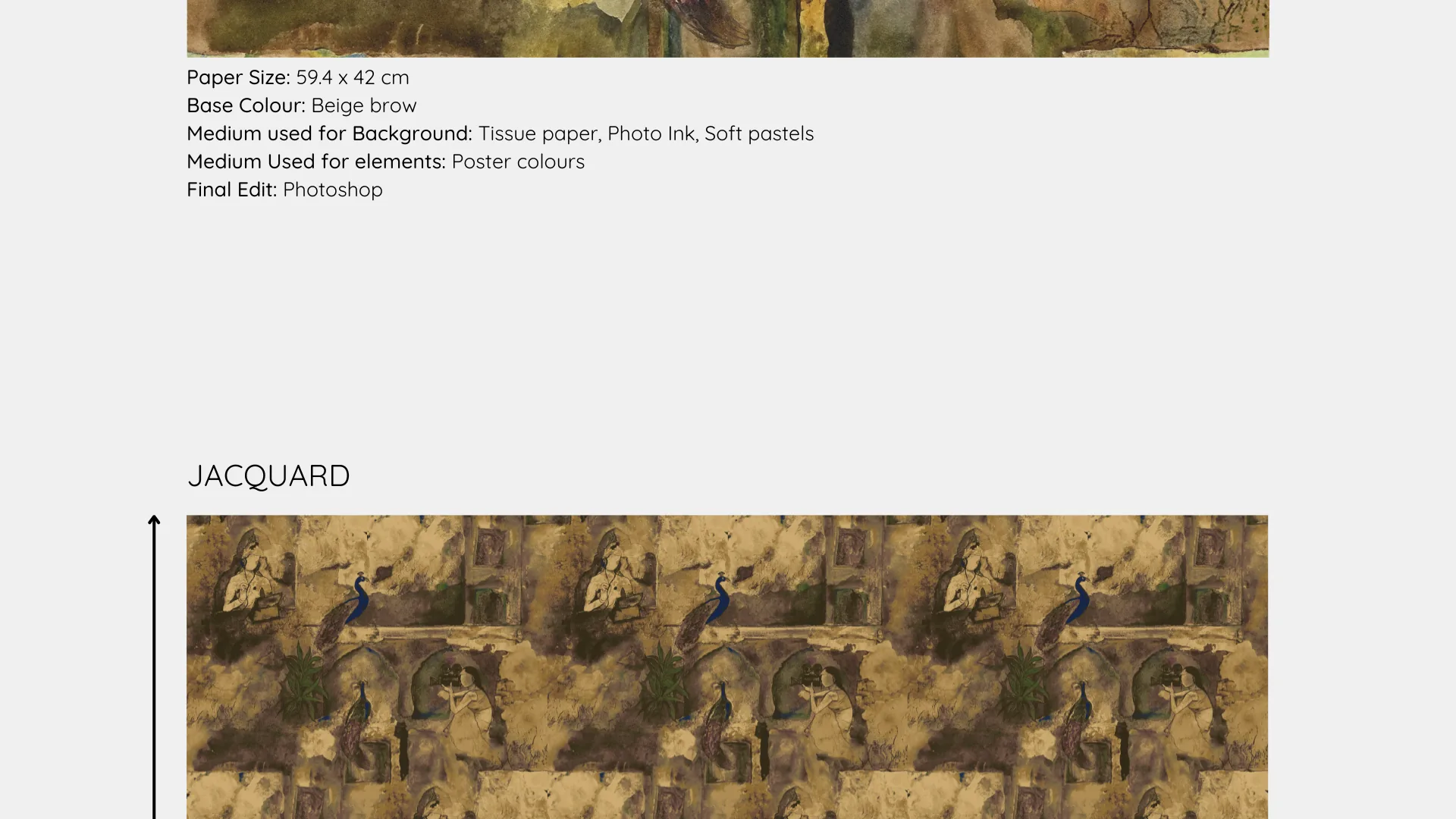
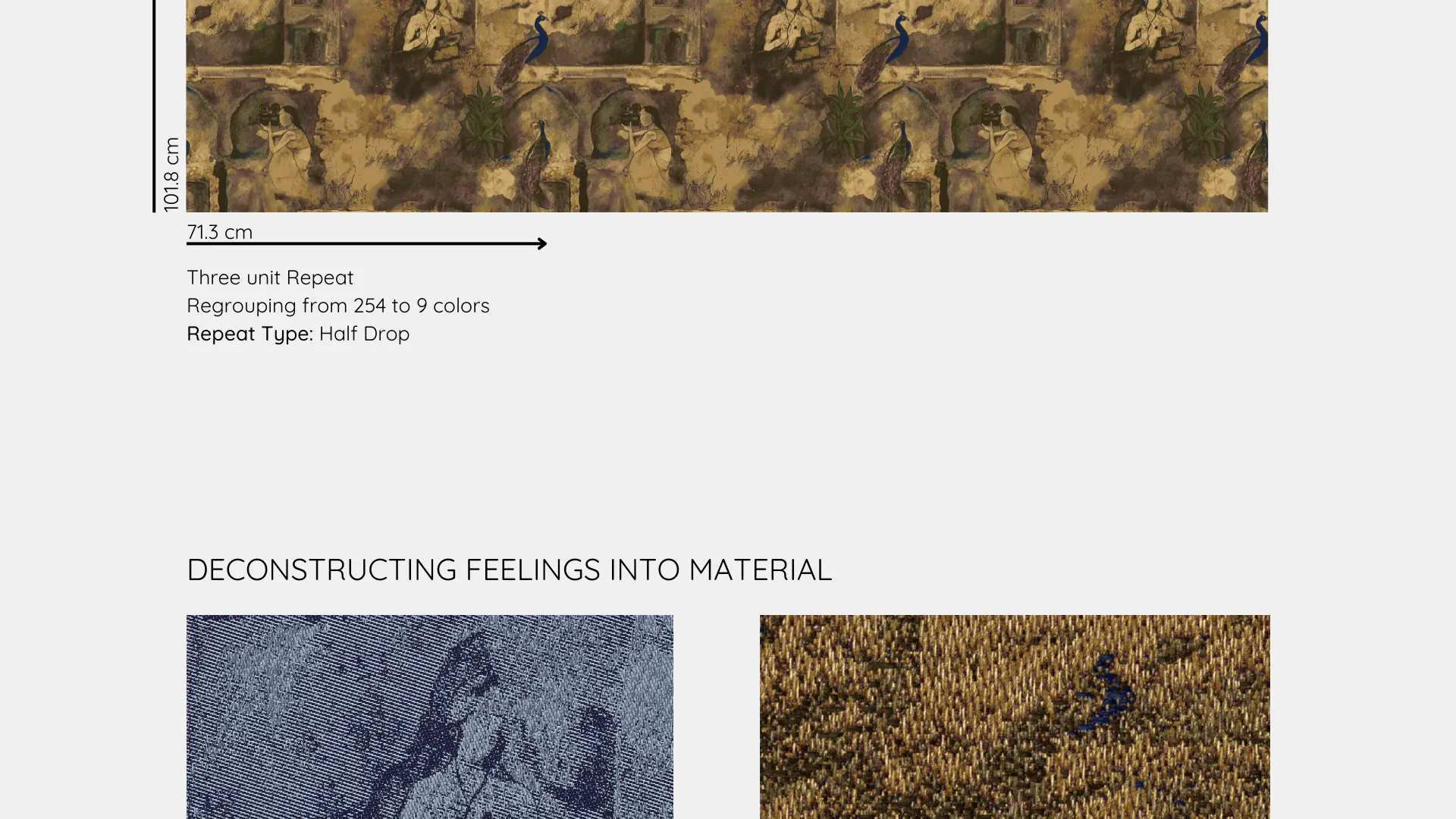
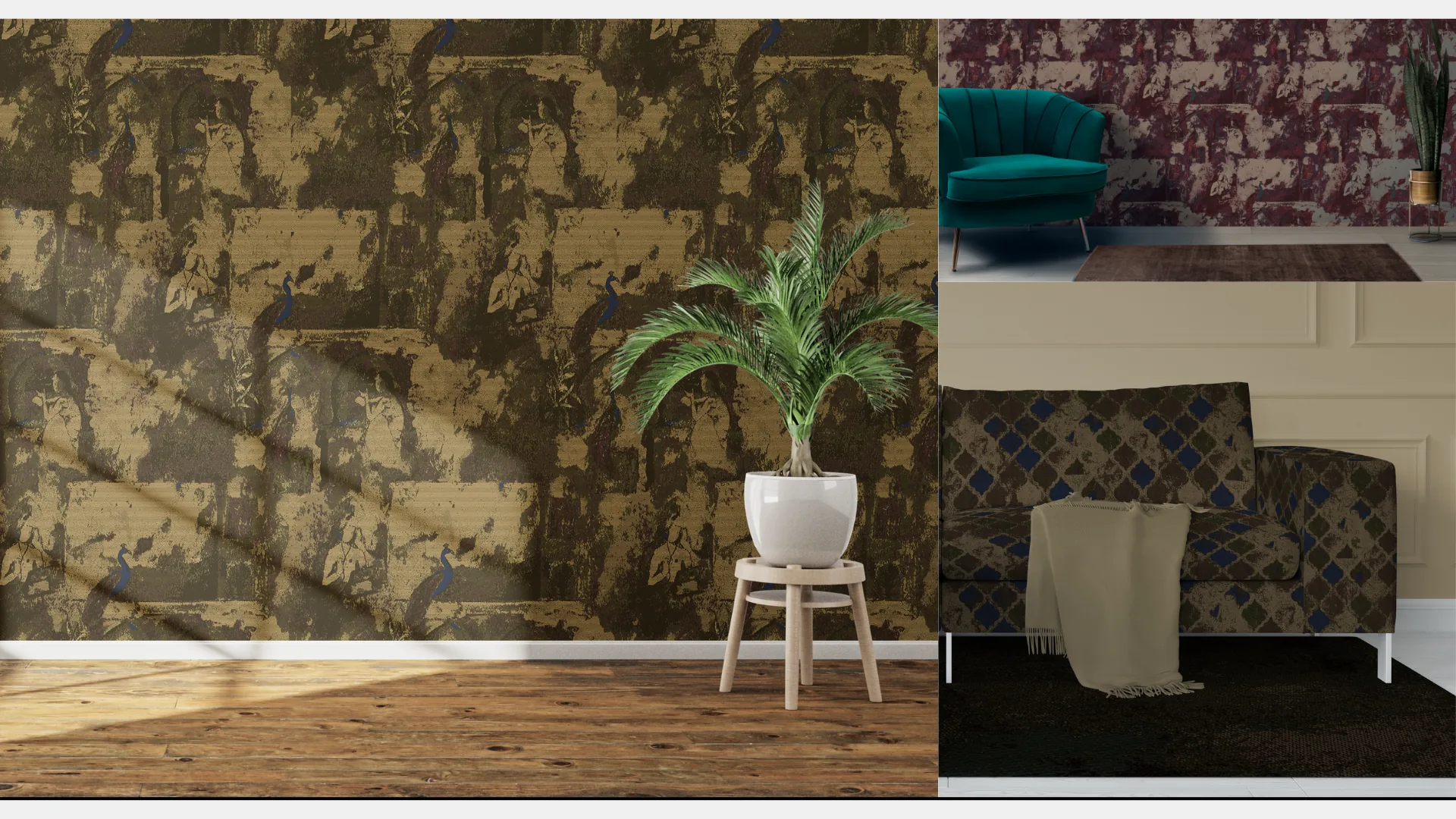
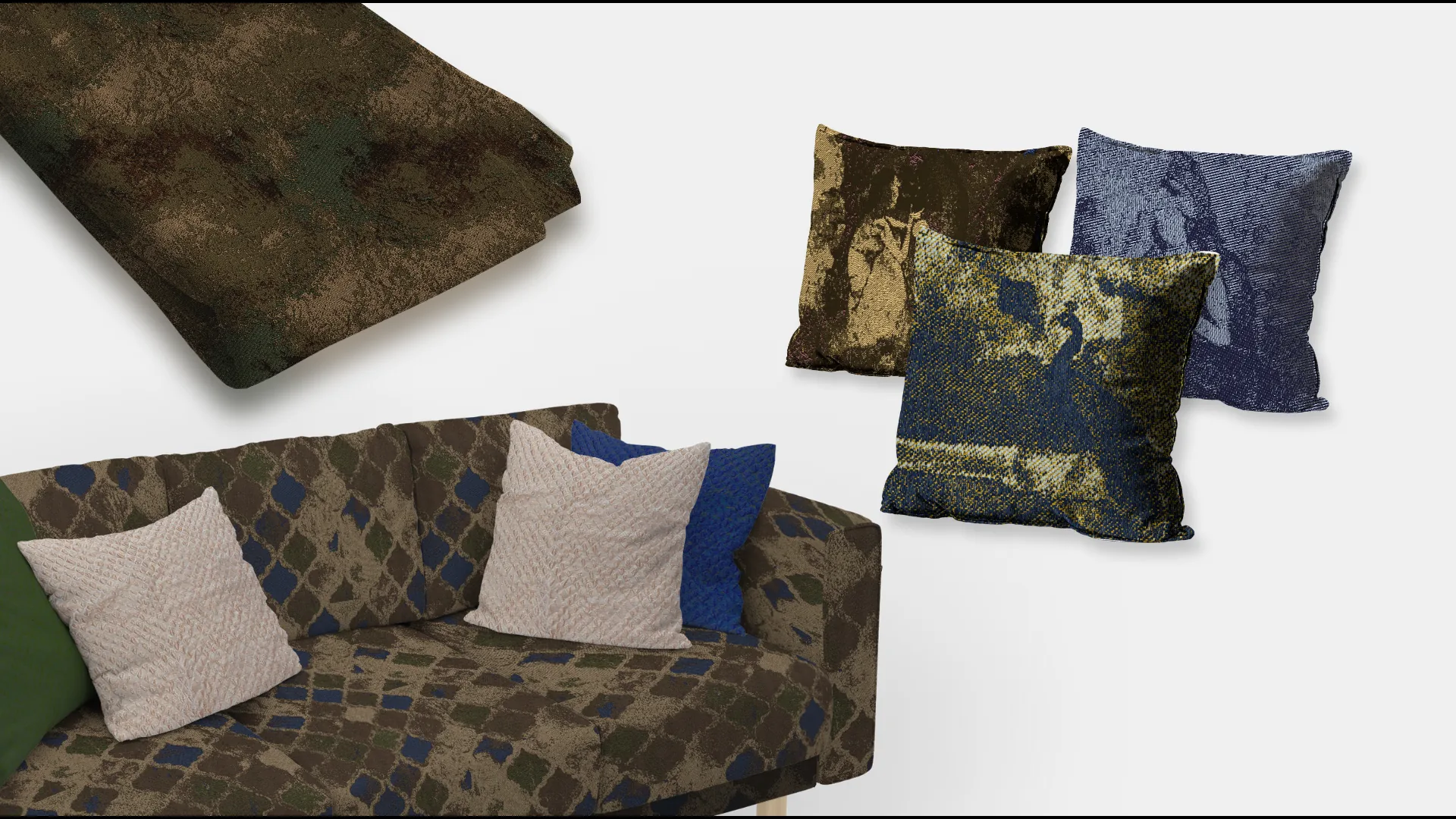
The Ajanta cave paintings re-imagined in jacquard
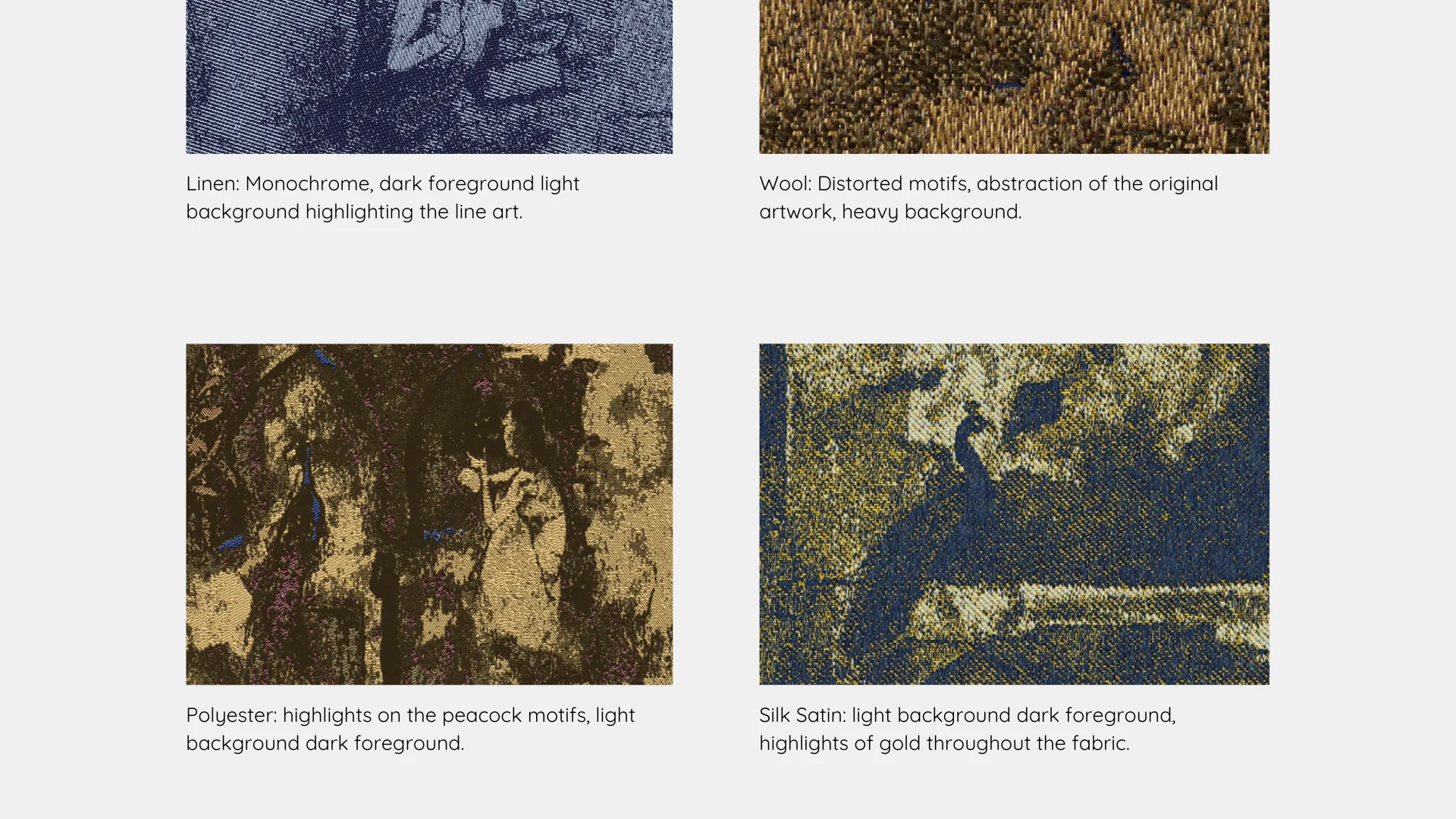
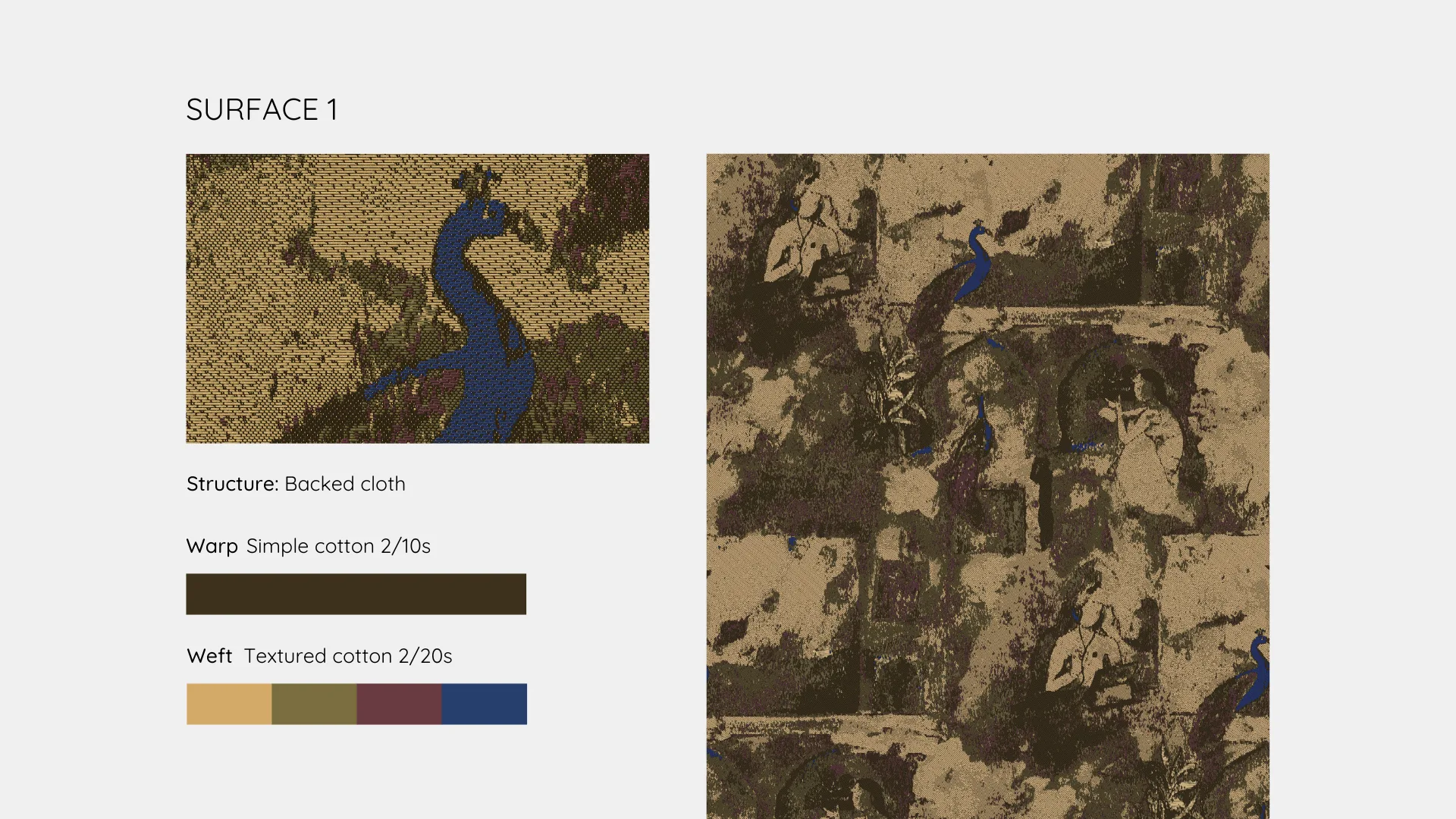
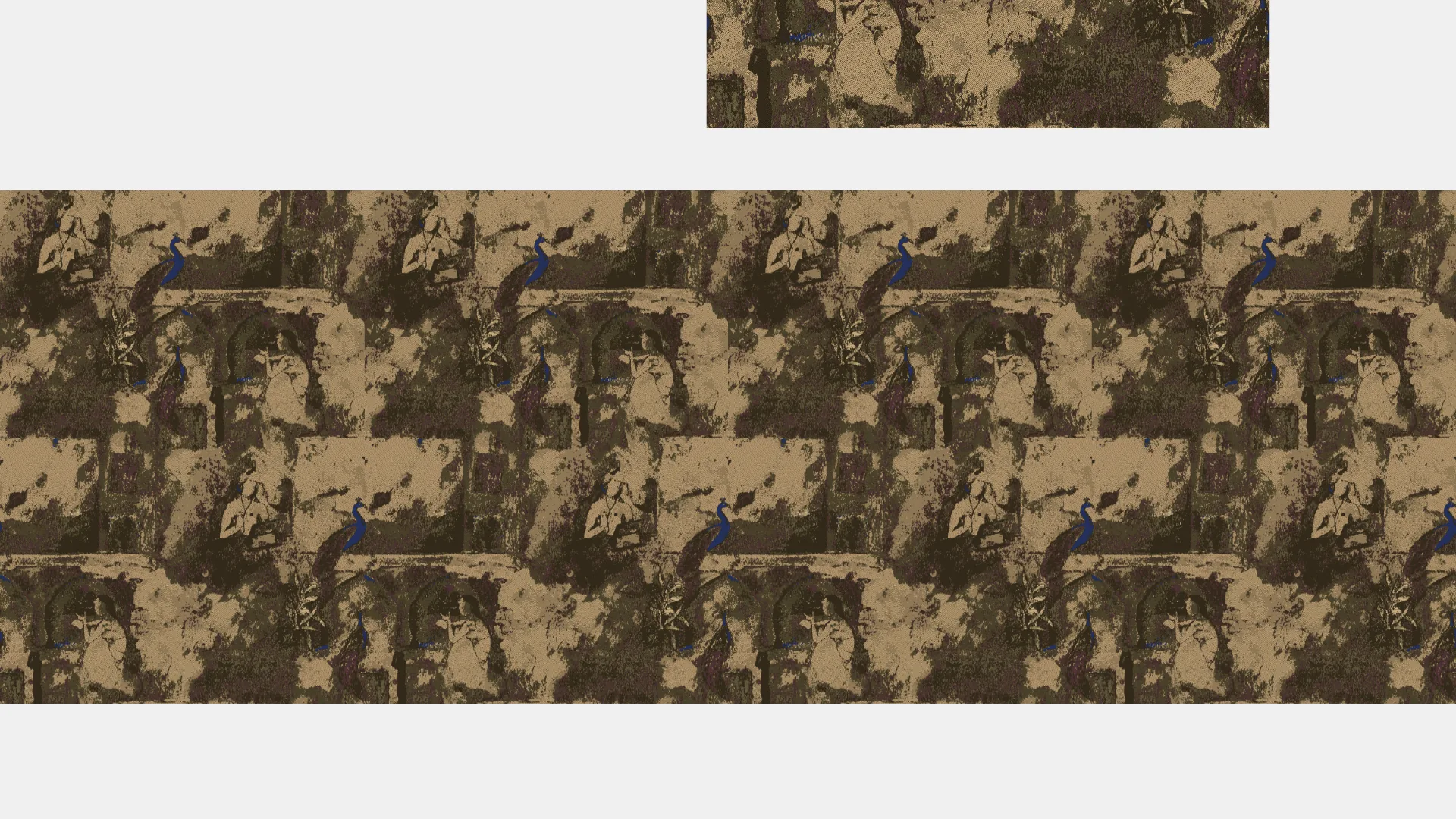
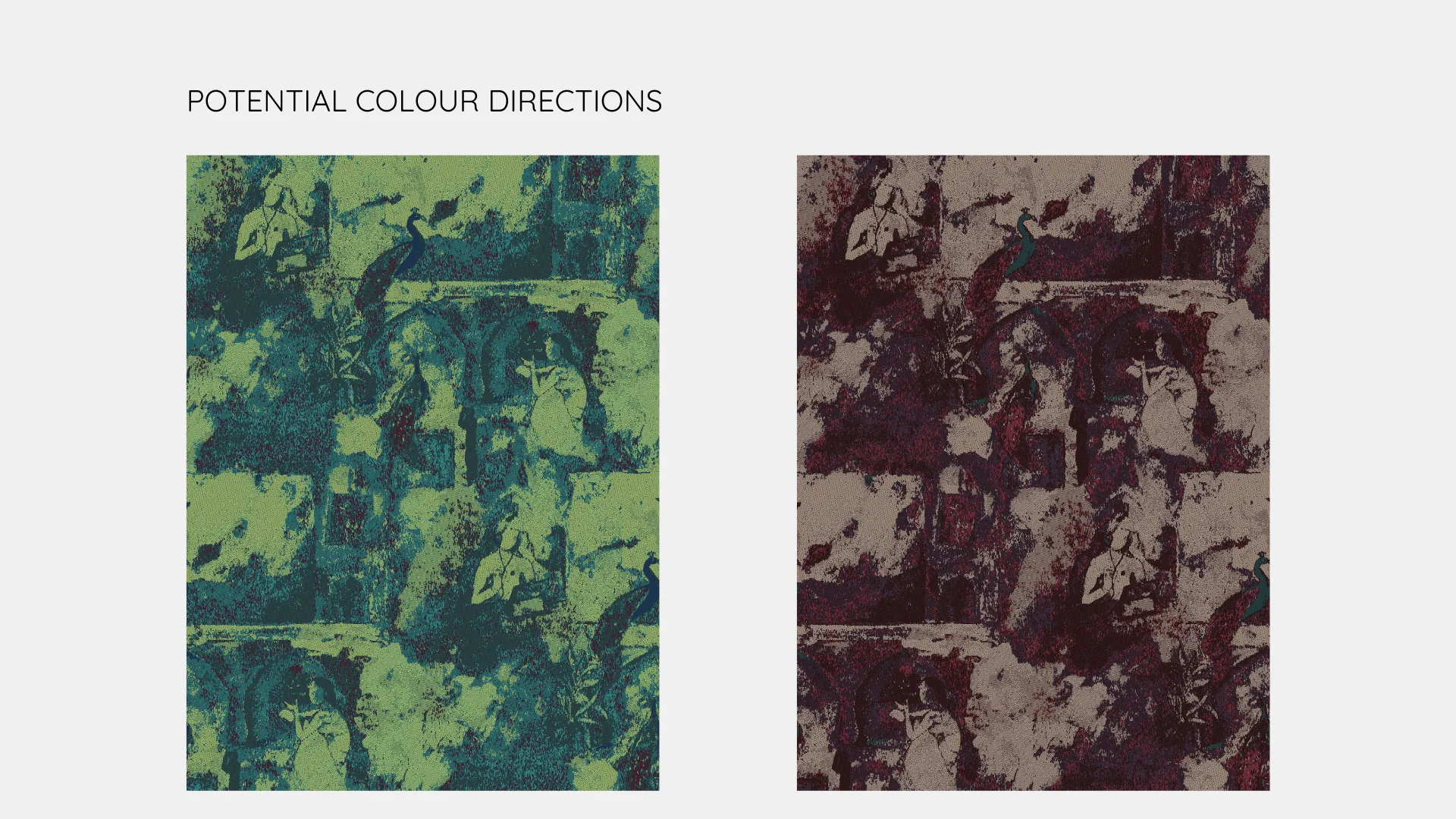
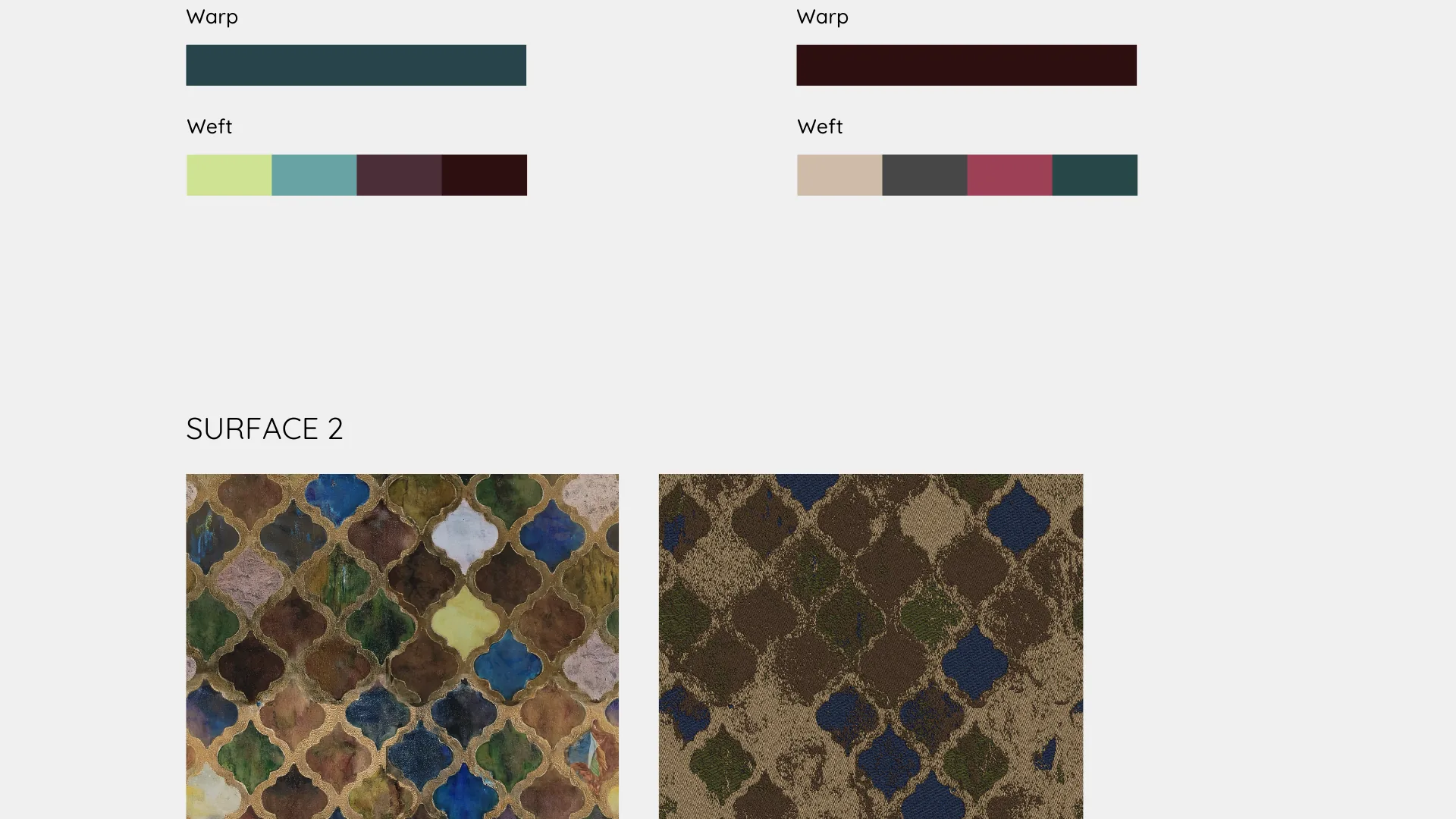
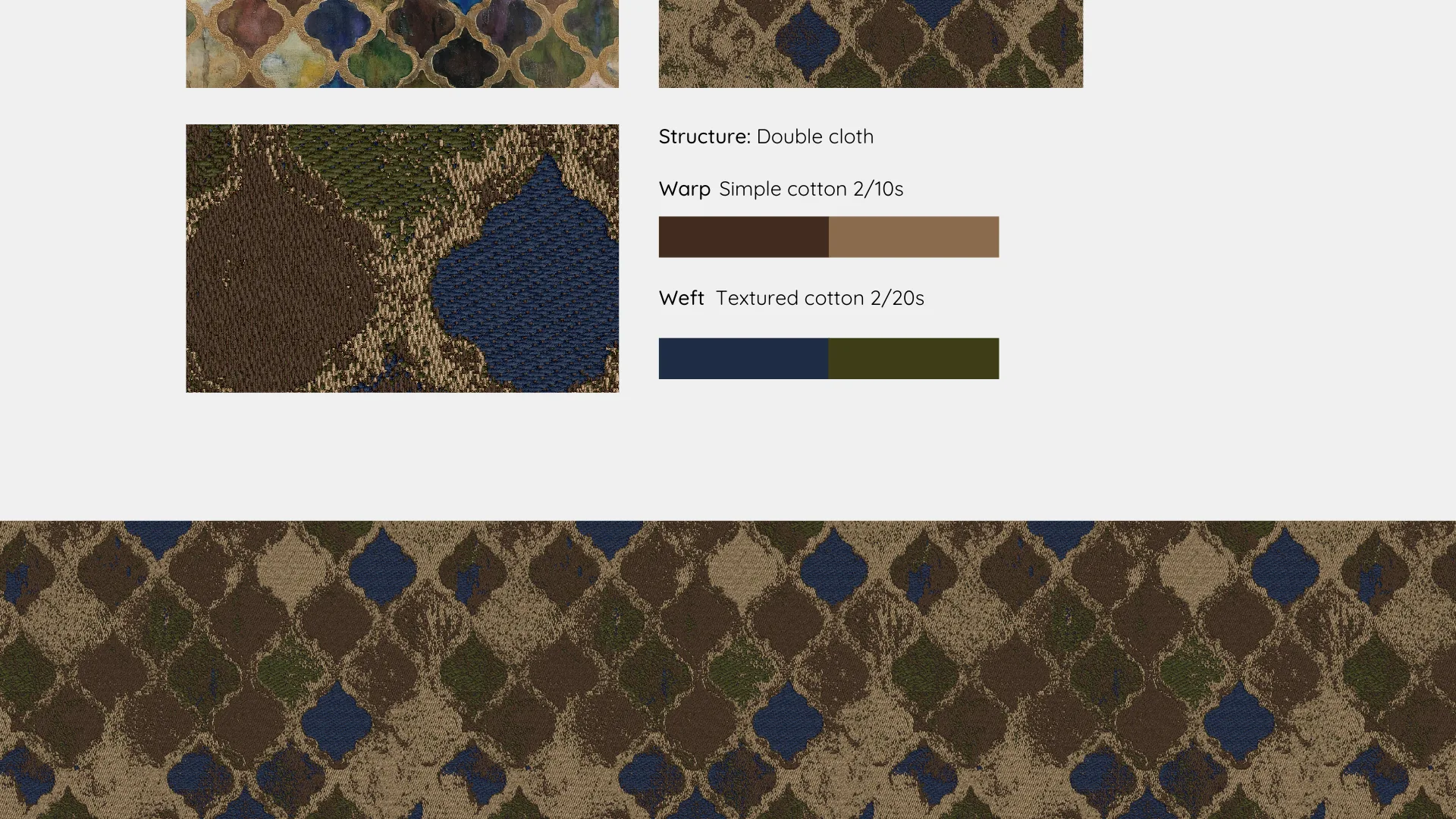
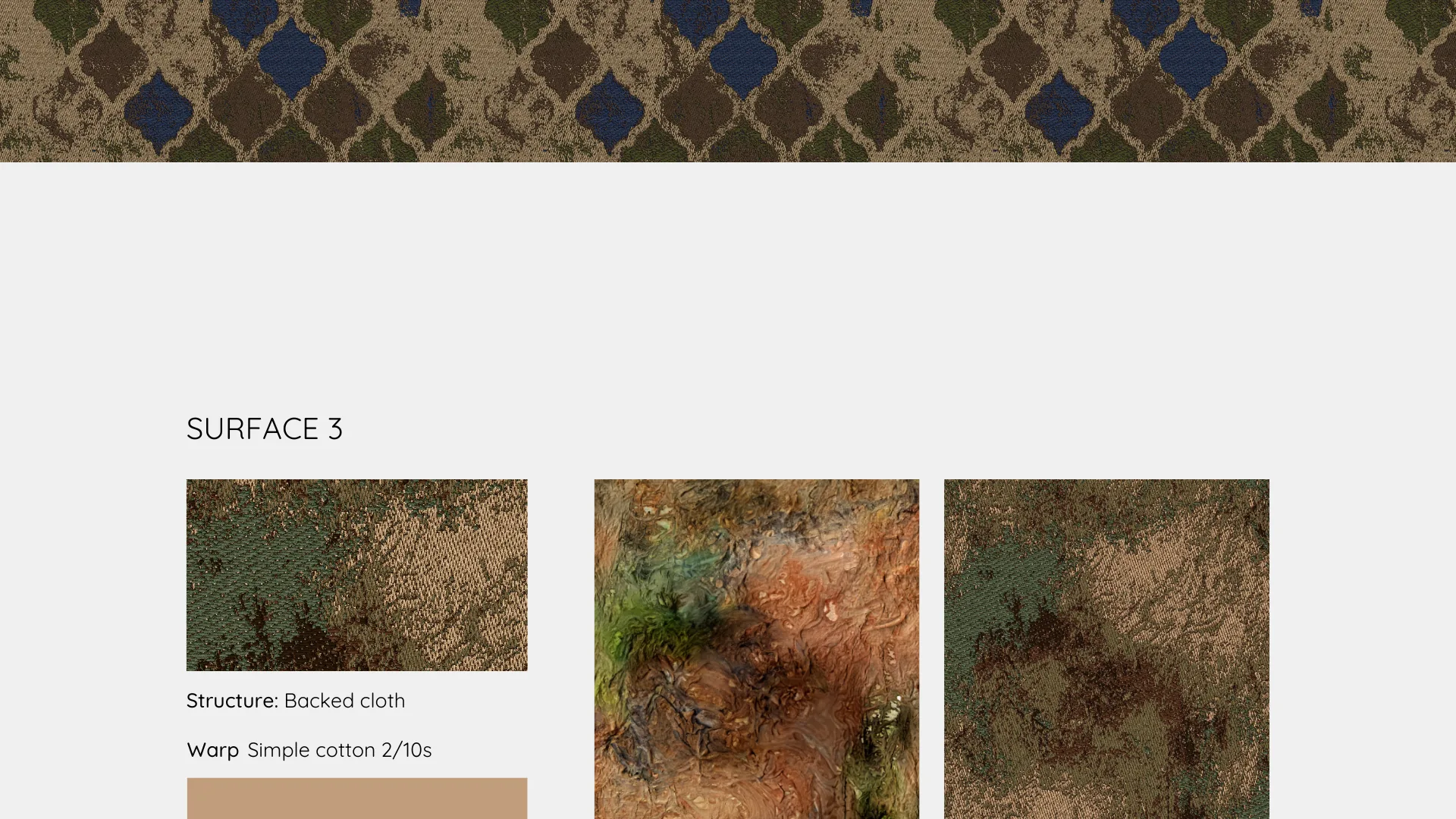
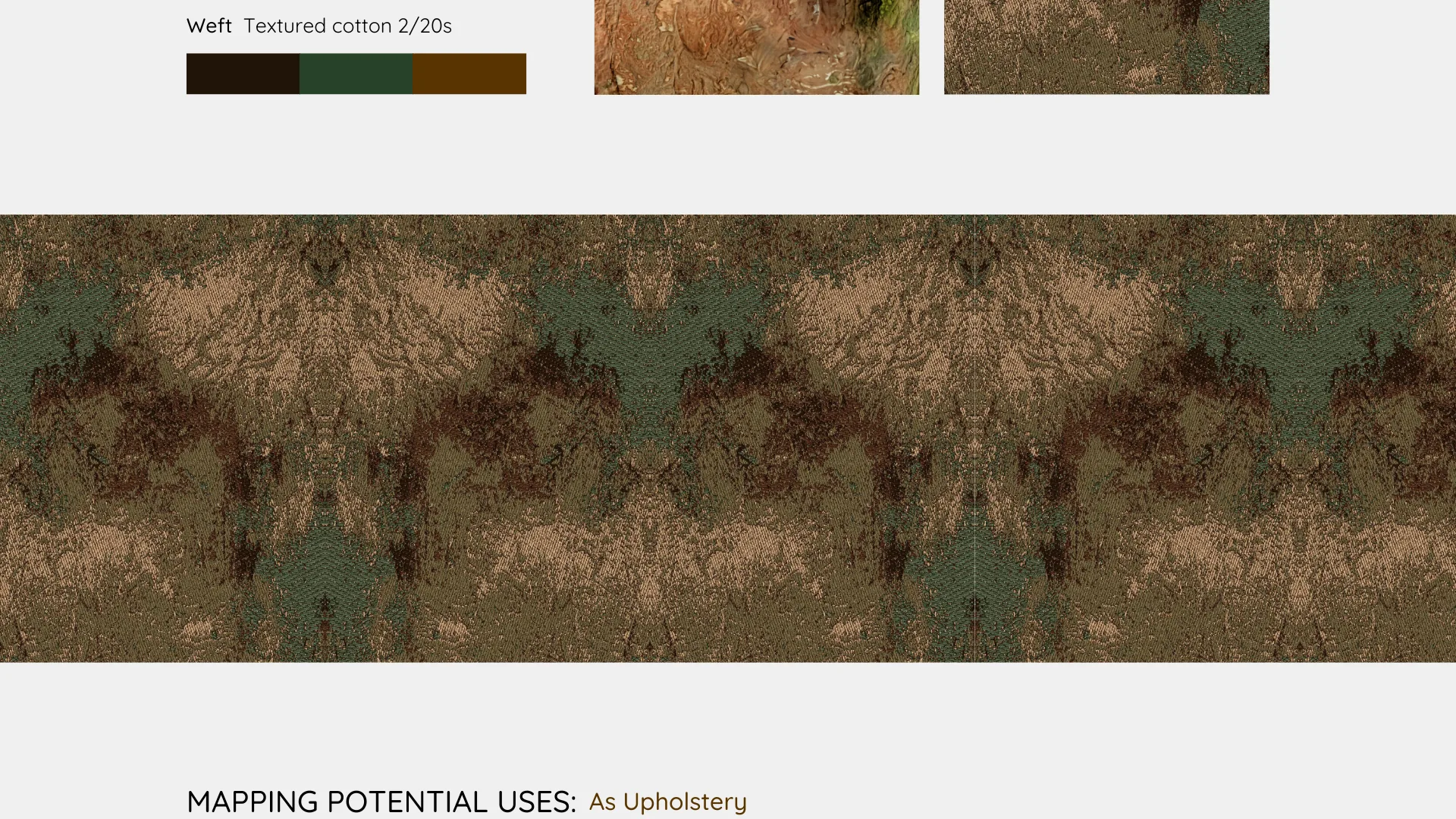
WorkCraft & Industry
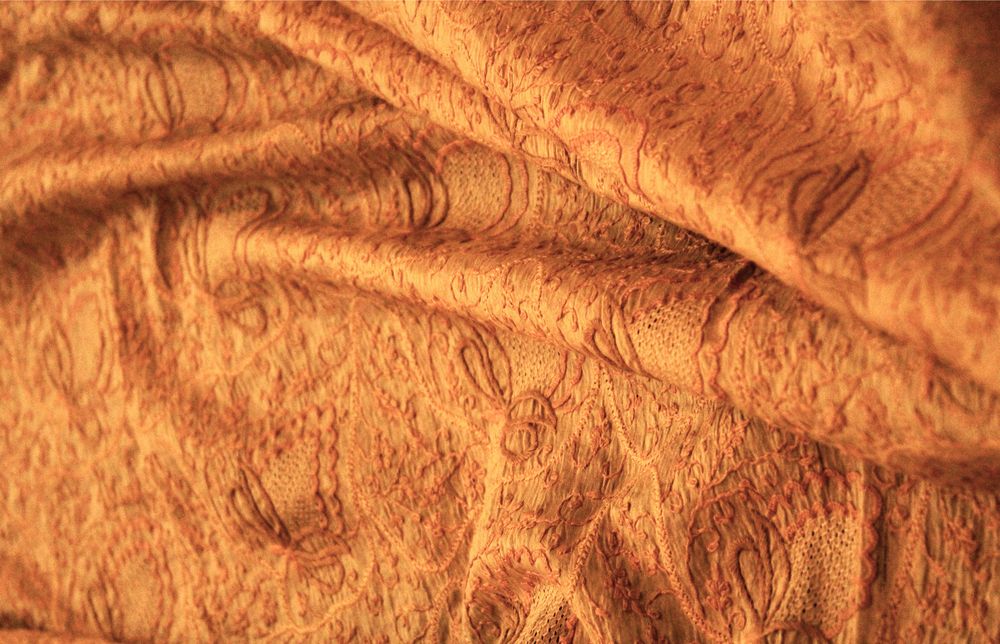
Documenting chikankari, the white embroidery of Lucknow
What has chikankari lost to commercialisation, and what did it once include?
As commercialisation grows, quantity rises and quality falls. Low-skill, labour-intensive work has become the norm, which deskills artisans and lowers the status of the work. New artisans repeat minor variations of the thick bakhia stitch, unaware that chikankari once included other hand-stitching techniques.
Chikankari is white work embroidery done with untwisted cotton thread on fine cotton muslin, an embodiment of Lucknow and its past as Awadh. The project set out to document the craft for the glory it once held.
By scooter across Qaiserbagh, Chowk and Hazratganj.
Artisans, wholesalers, shop owners, chhapai karigar, collectors, museums, art colleges, designers, members of the royal family, DCH offices and libraries.
Where each part of the craft happens across the city.
Mind maps that break down the layered chikankari market.
Commercial, export, high-end brands and ancient pieces.
Studying fine pieces with private collectors.
Chikankari revivalist, owner of Bhairvi's Chikan.
Collector of pieces passed down through the royal lineage, Sheesh Mahal.
Textile designer and filmmaker of Umrao Jaan.
Photographer, private textile collector, documentor of Lucknow Then and Now.
A documentation book and visual journey: cluster maps, the production cycle, and pieces from historic collections, including a stitched dopalli topi, a young boy's angarkha, men's angarkha and kurta, and chikankari in Kathak costume at the Kalka Bindadeen museum.
WorkCraft & Industry
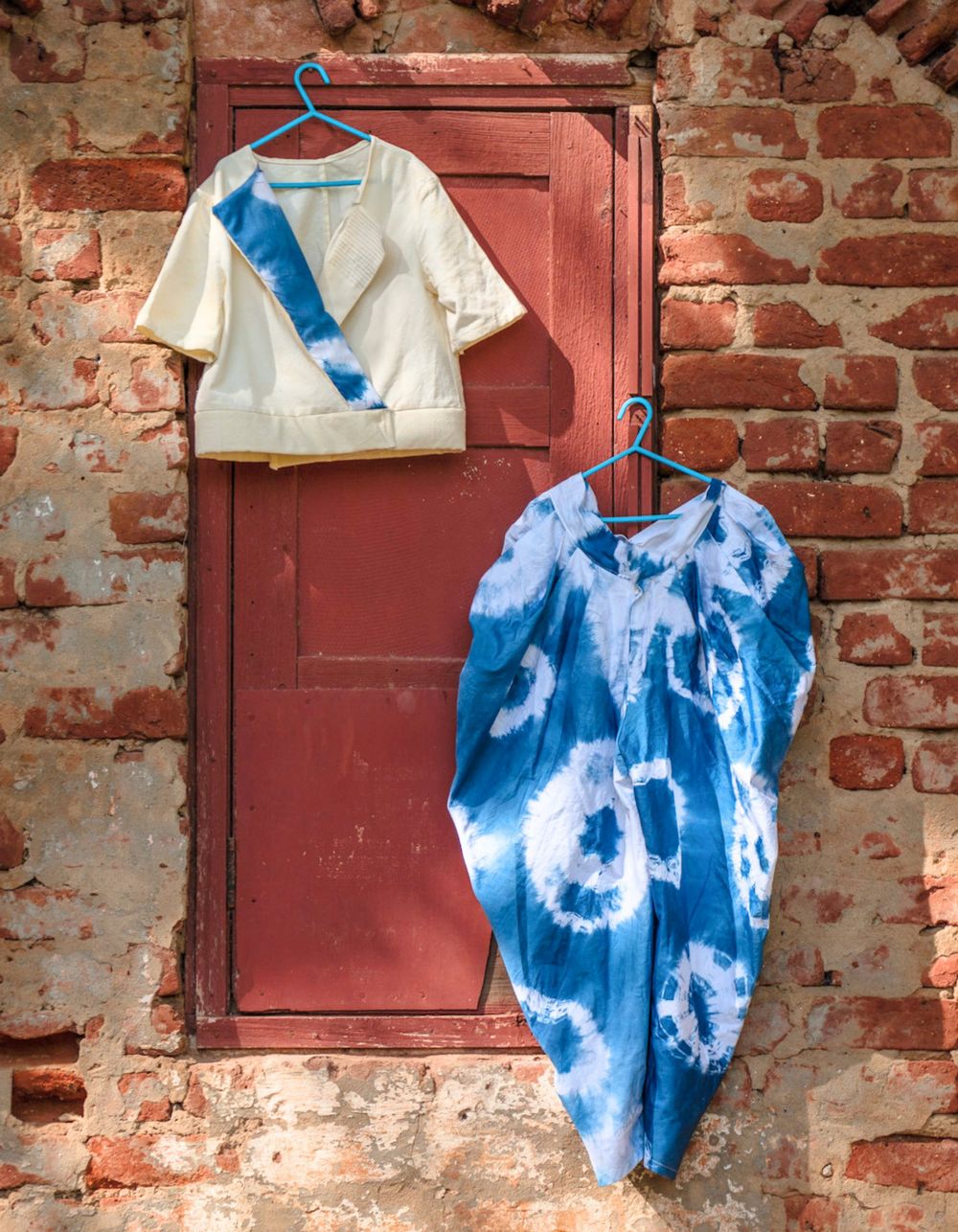
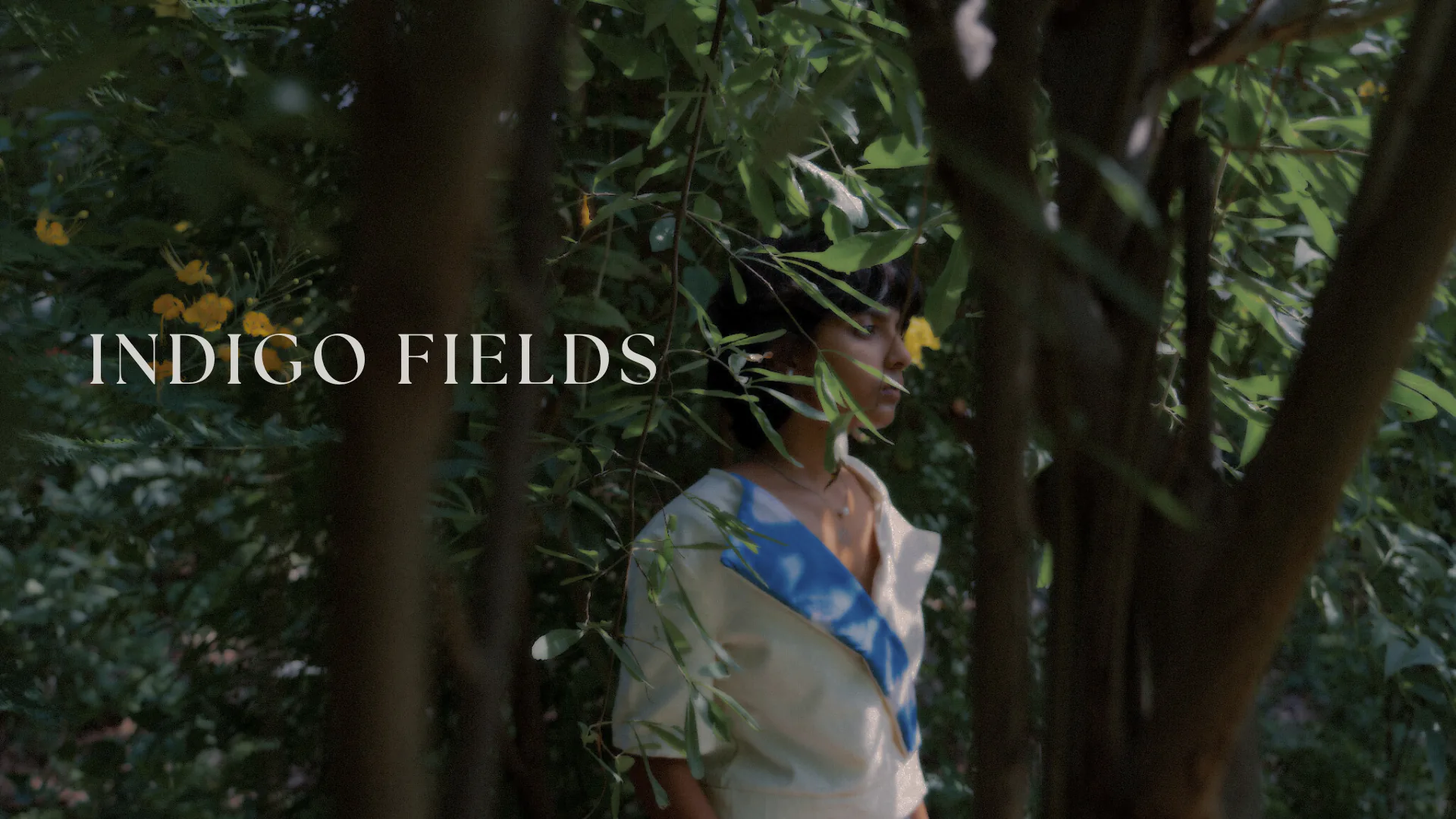
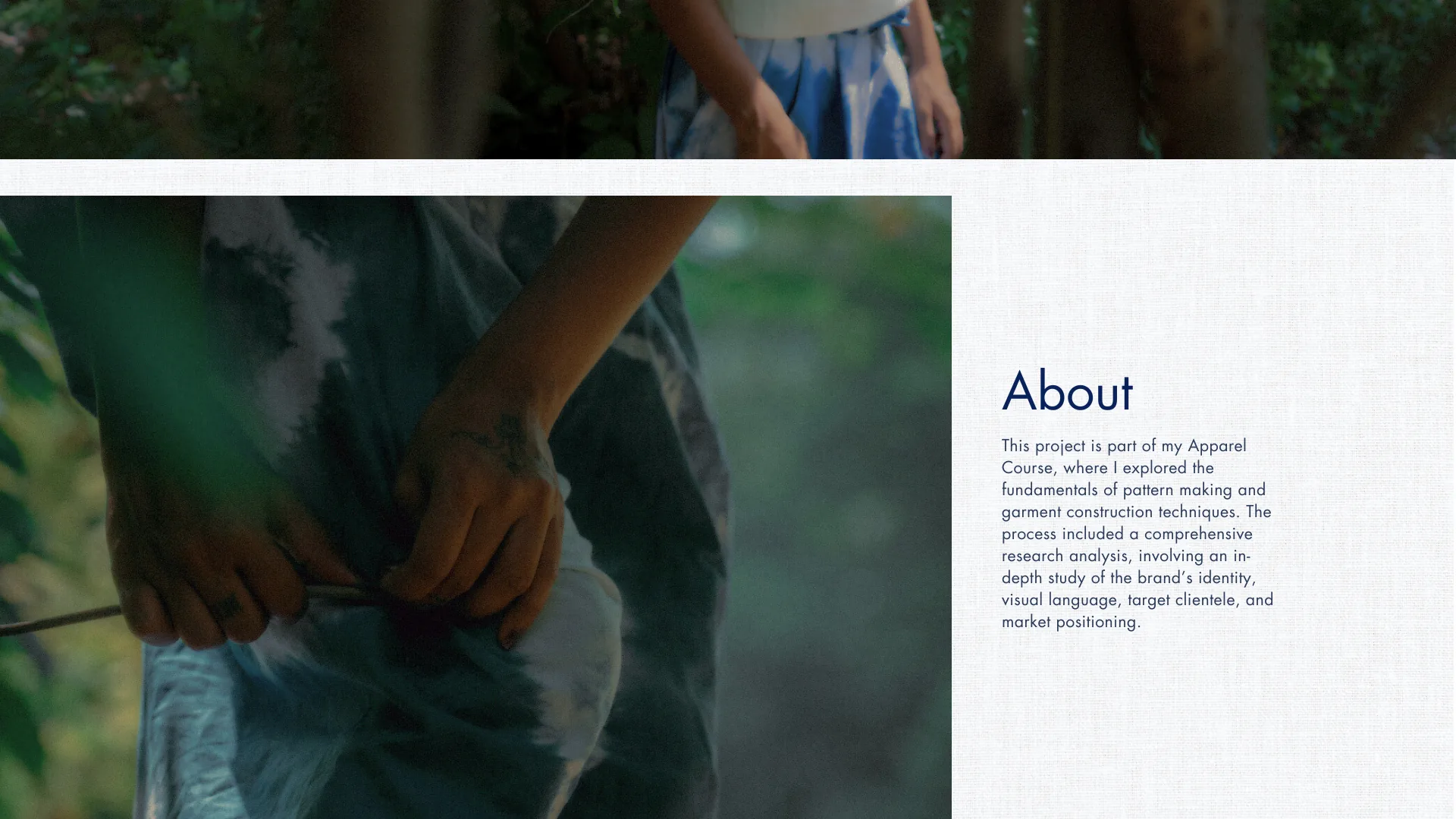
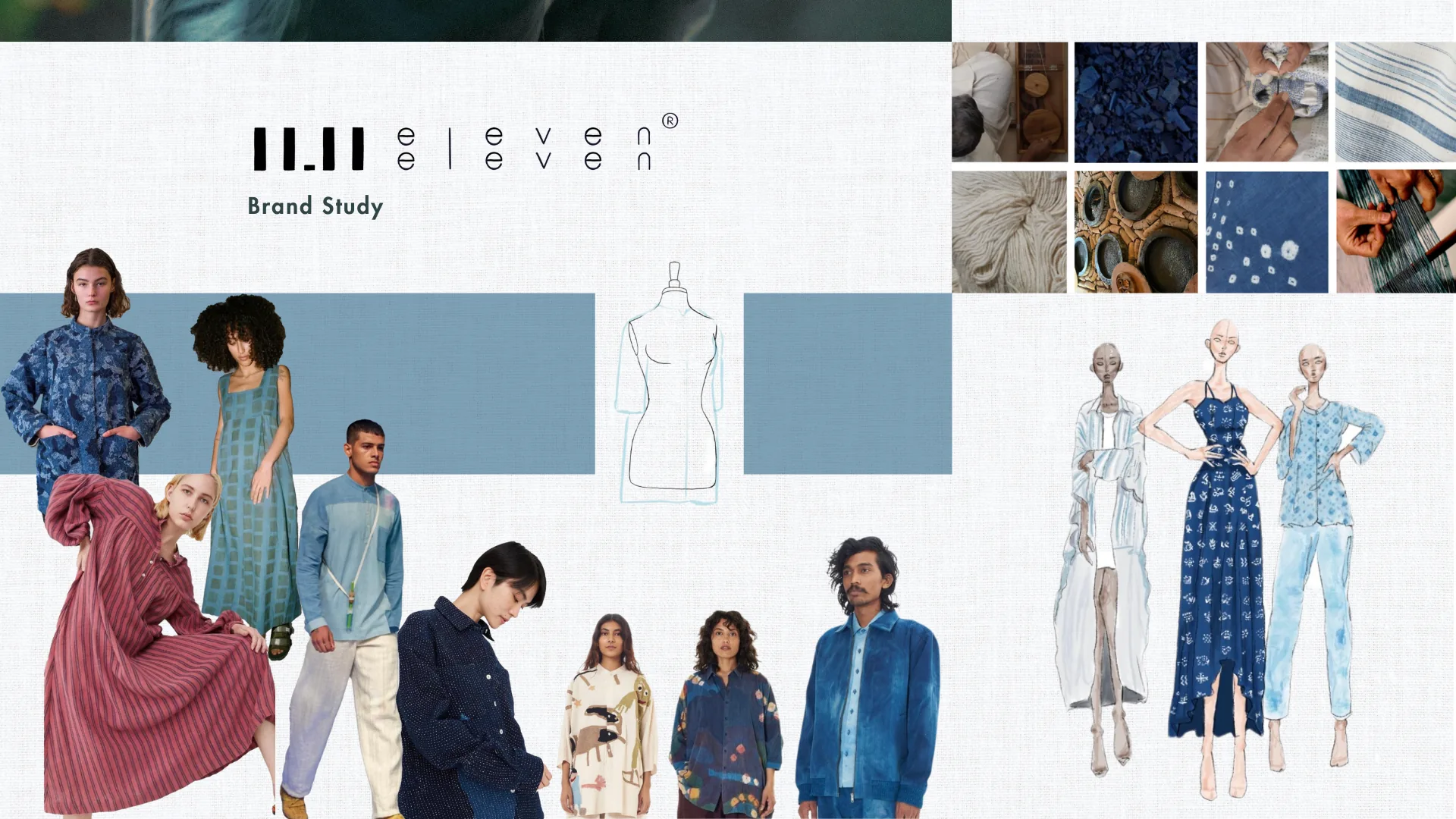
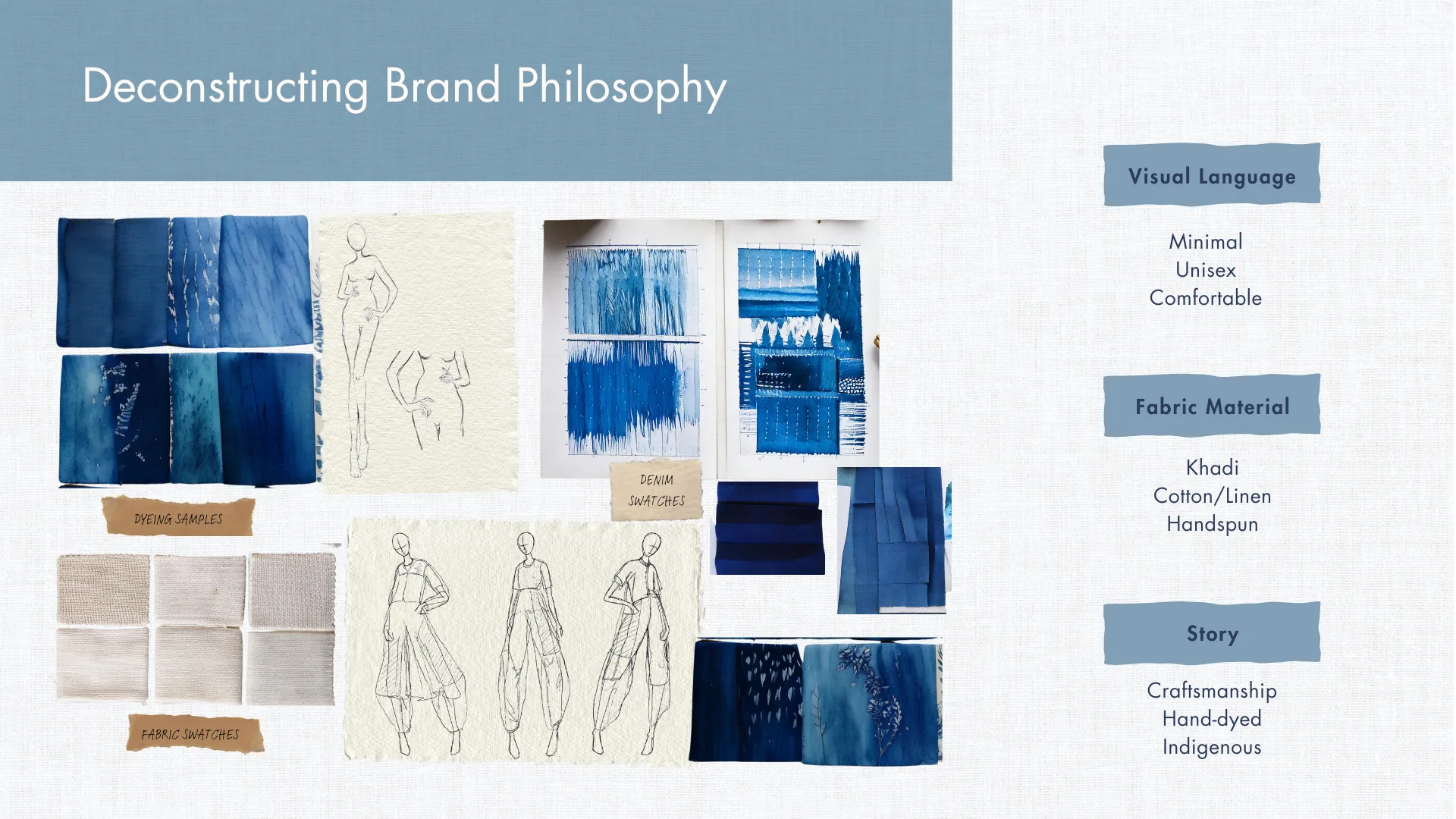
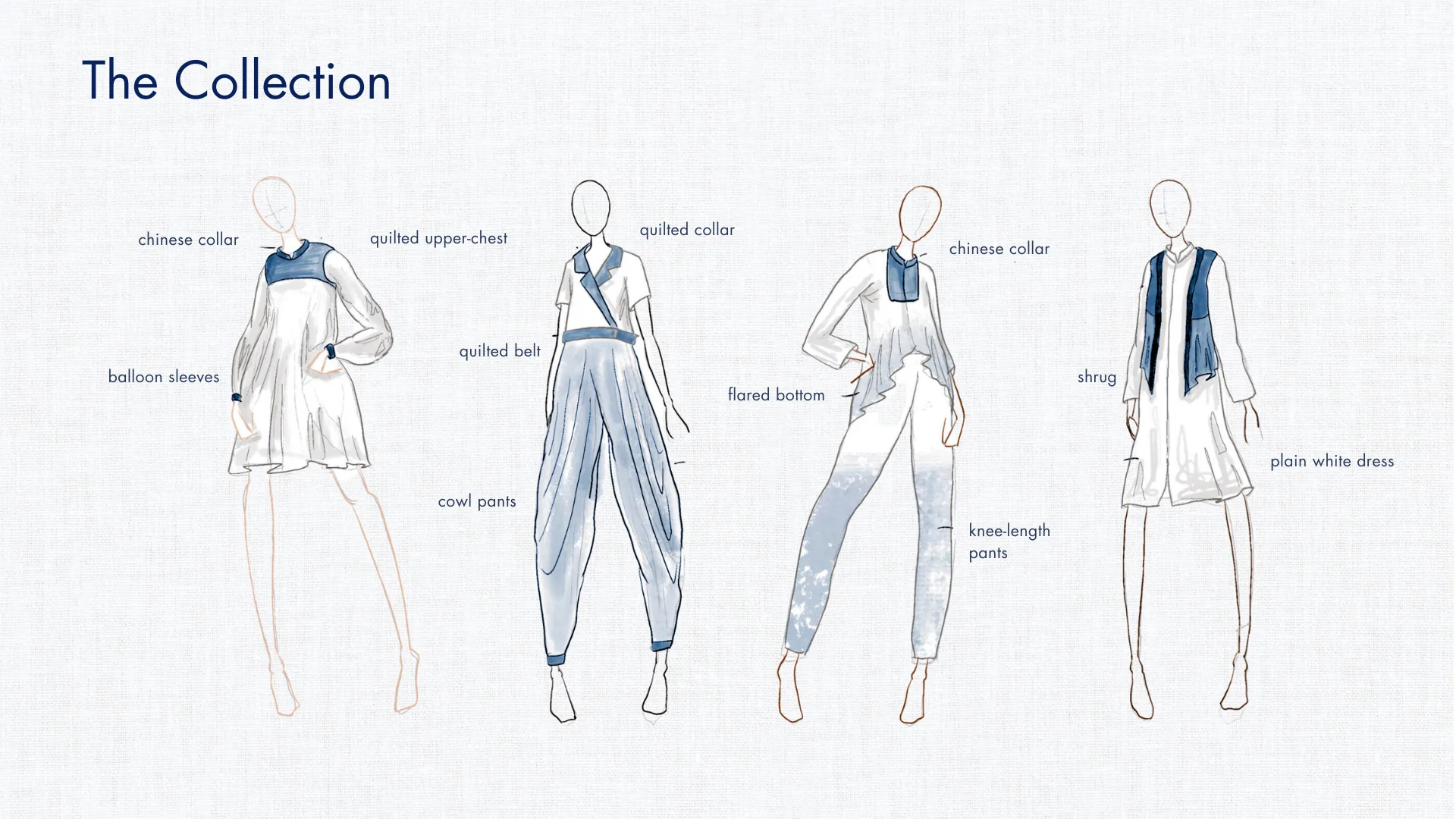
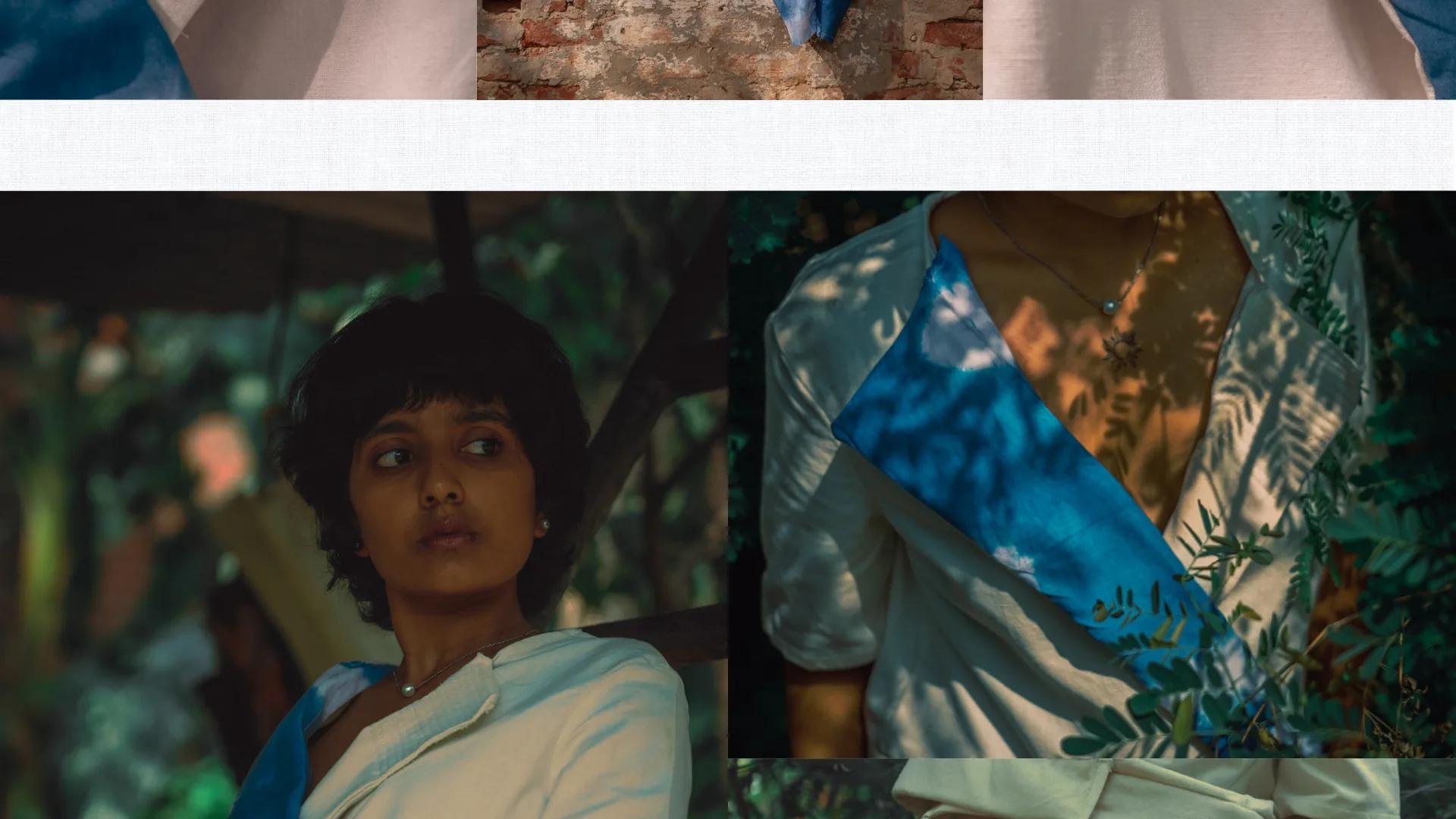
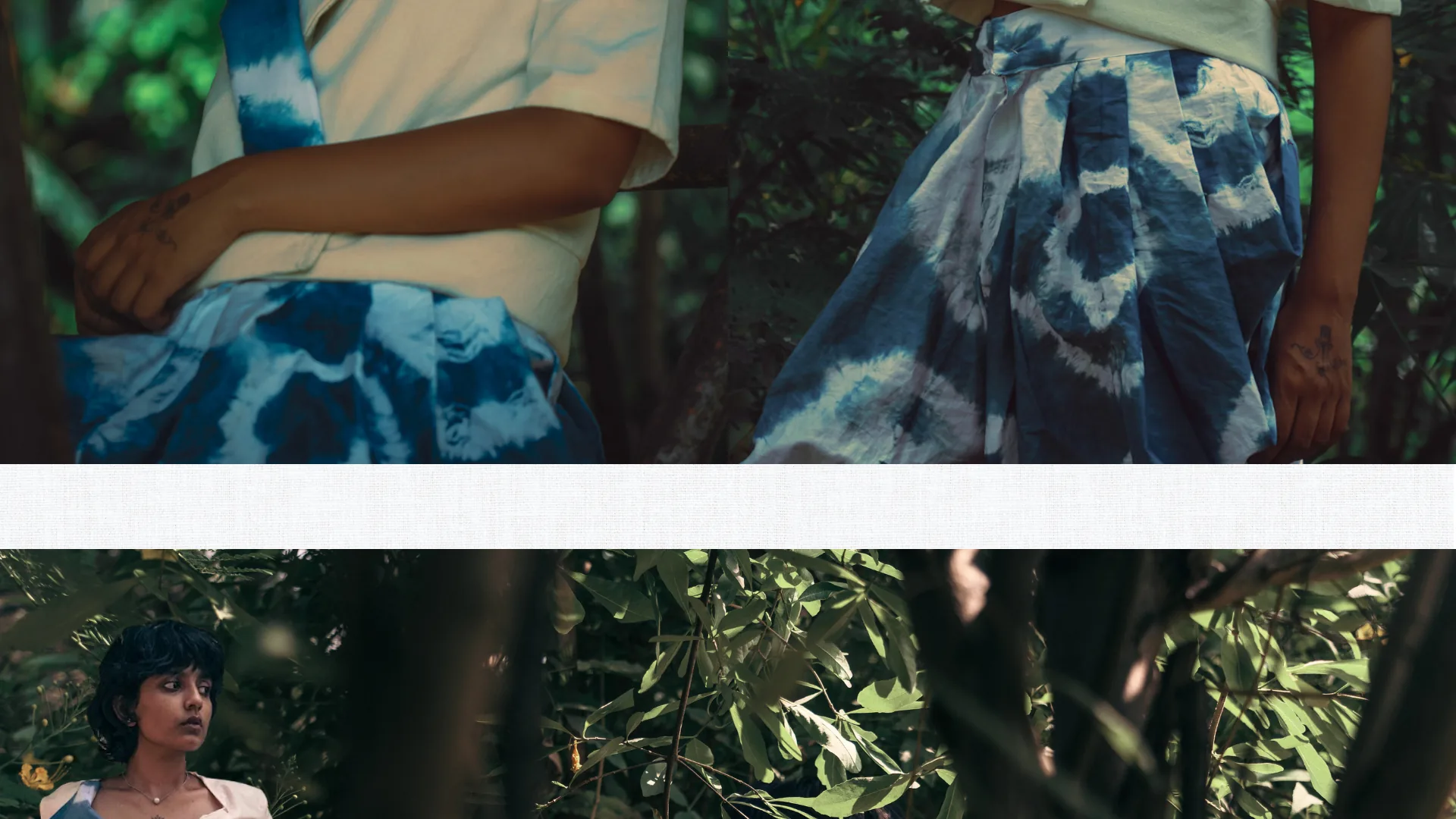
An indigo-dyed apparel collection from a brand study
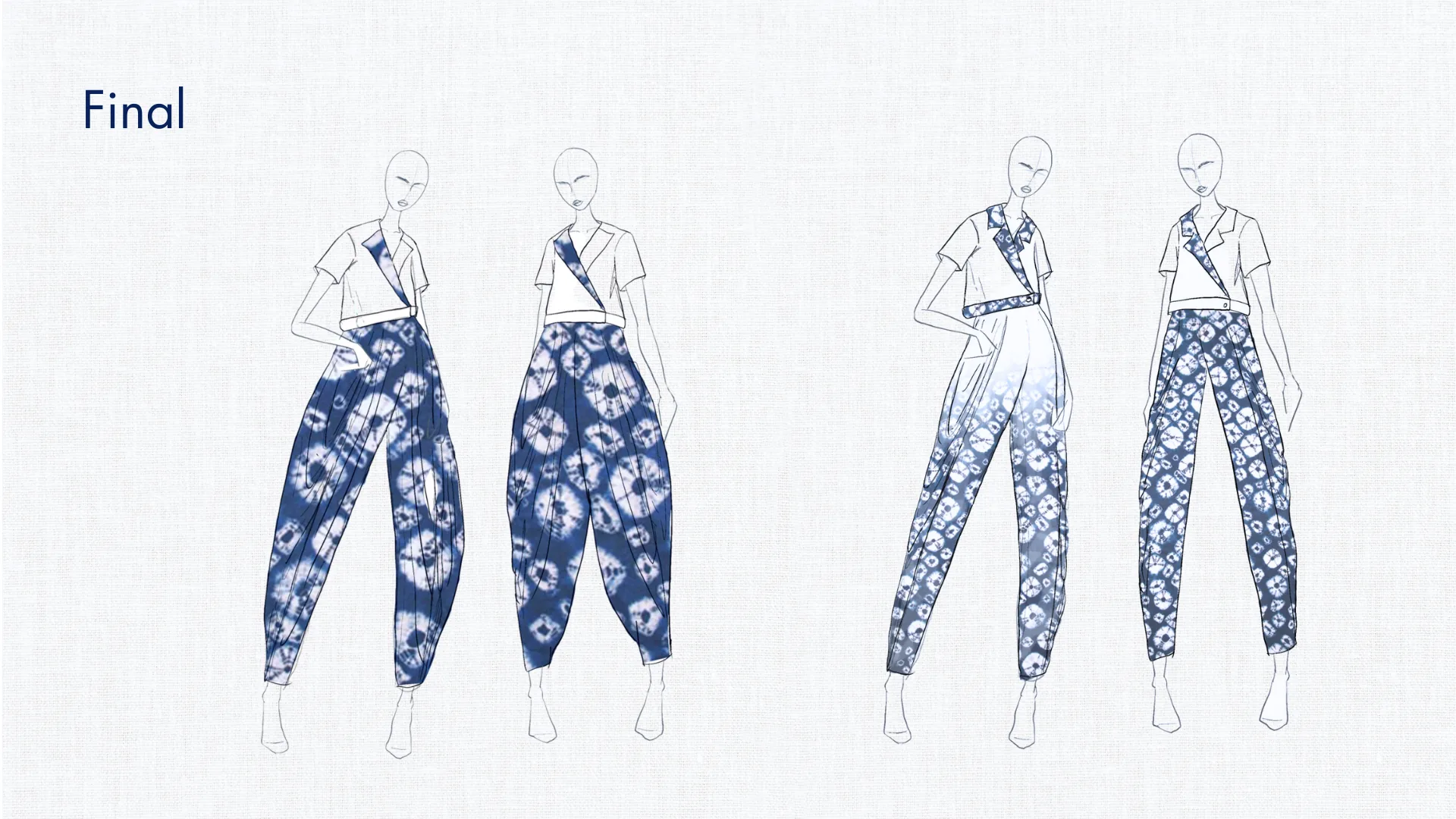
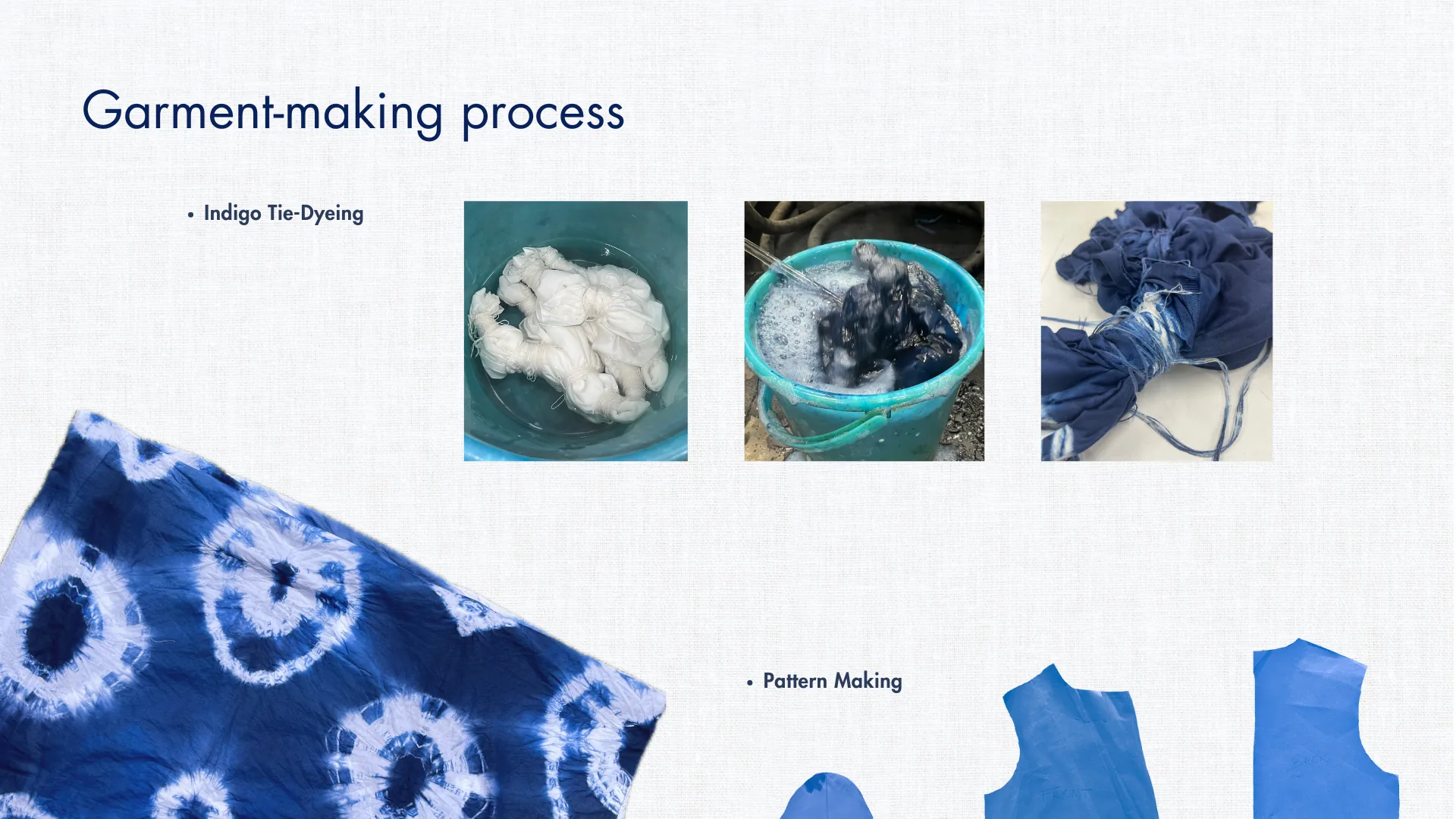
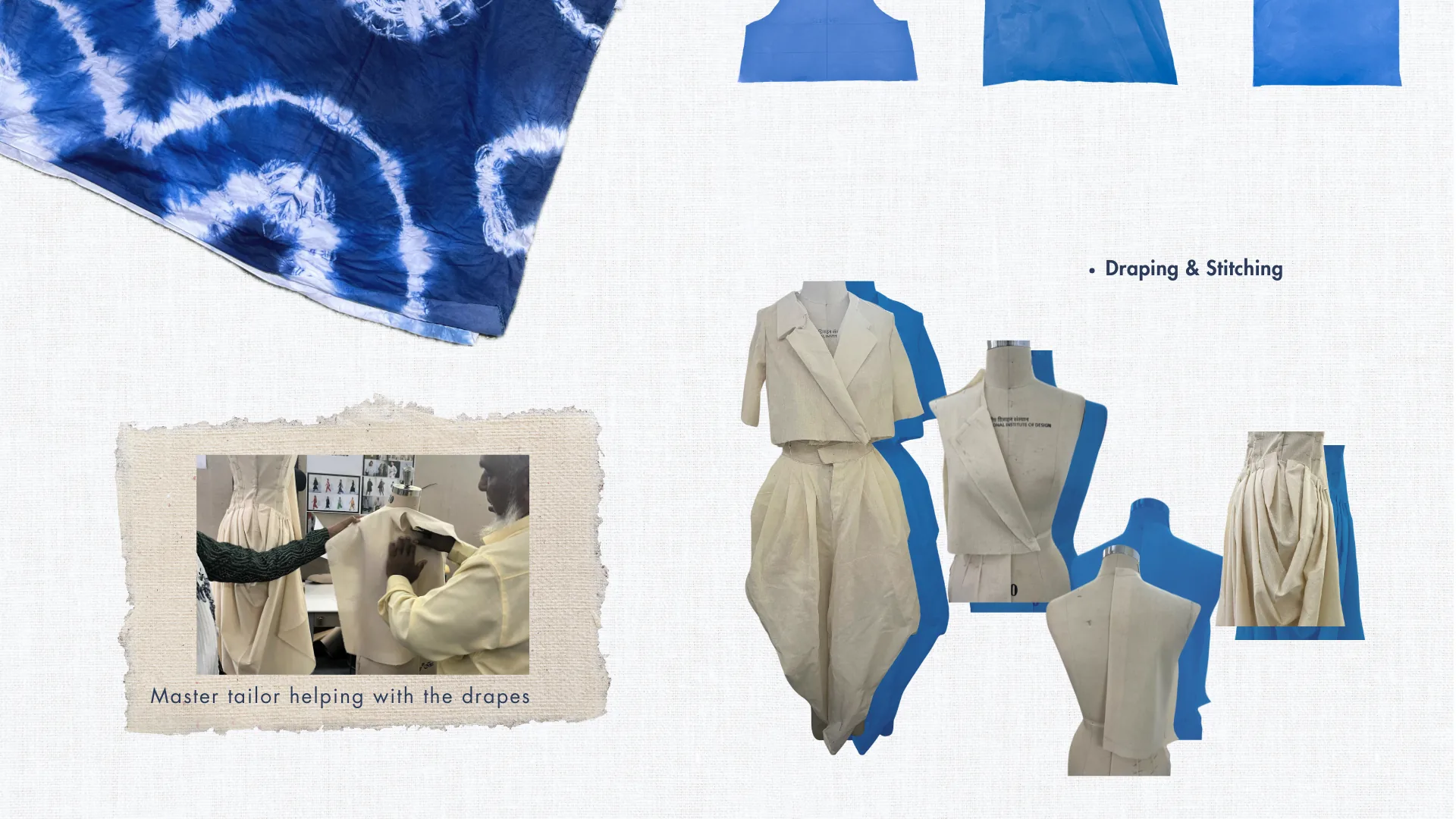
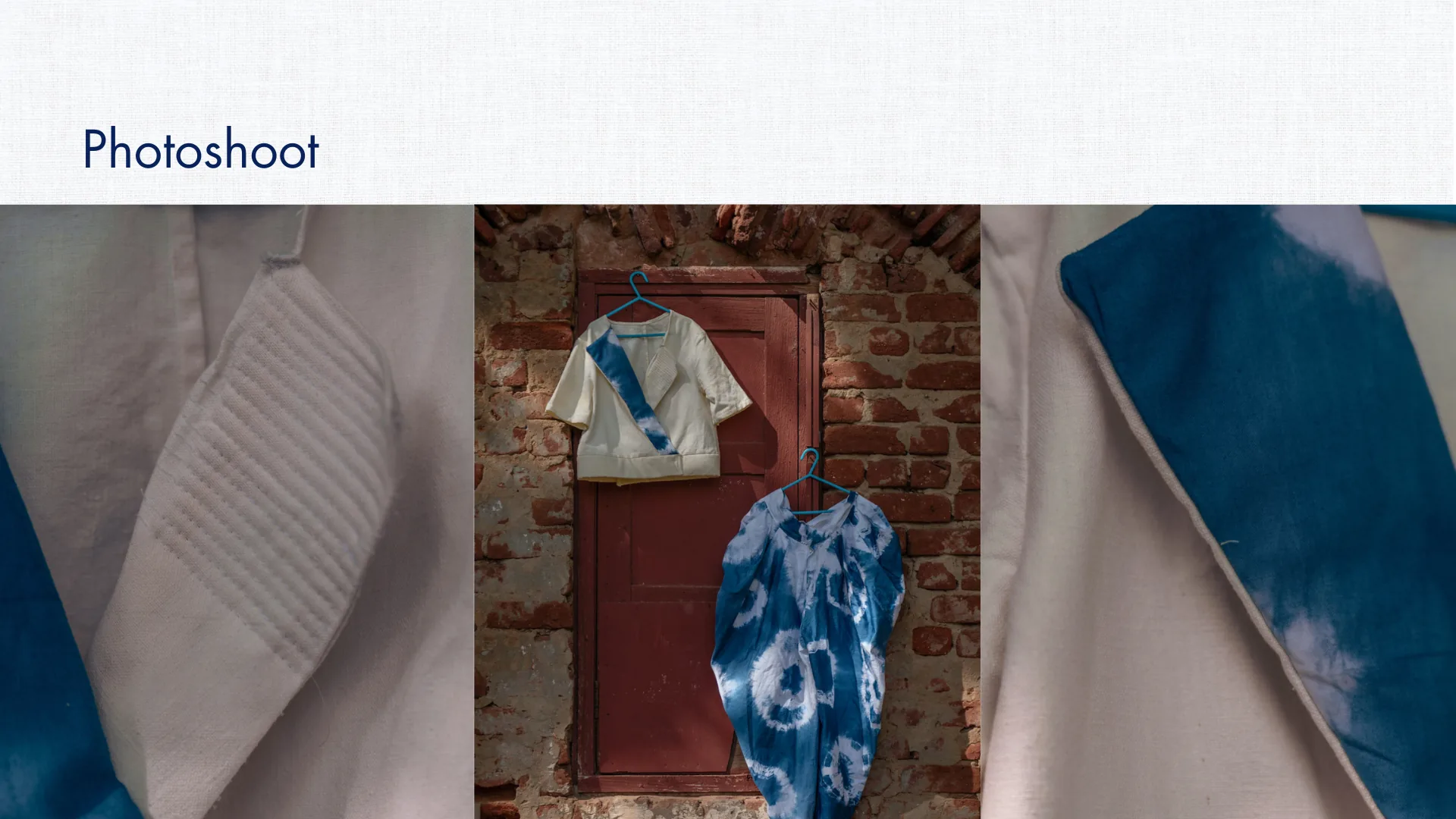

WorkCraft & Industry
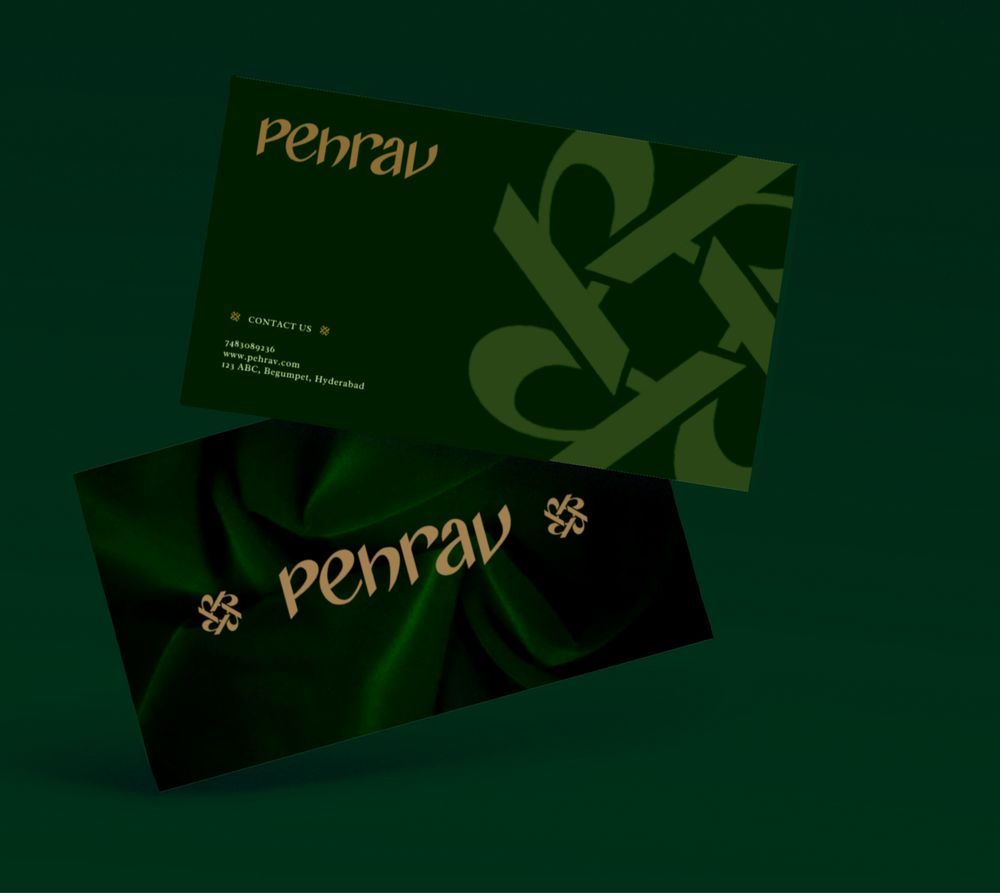
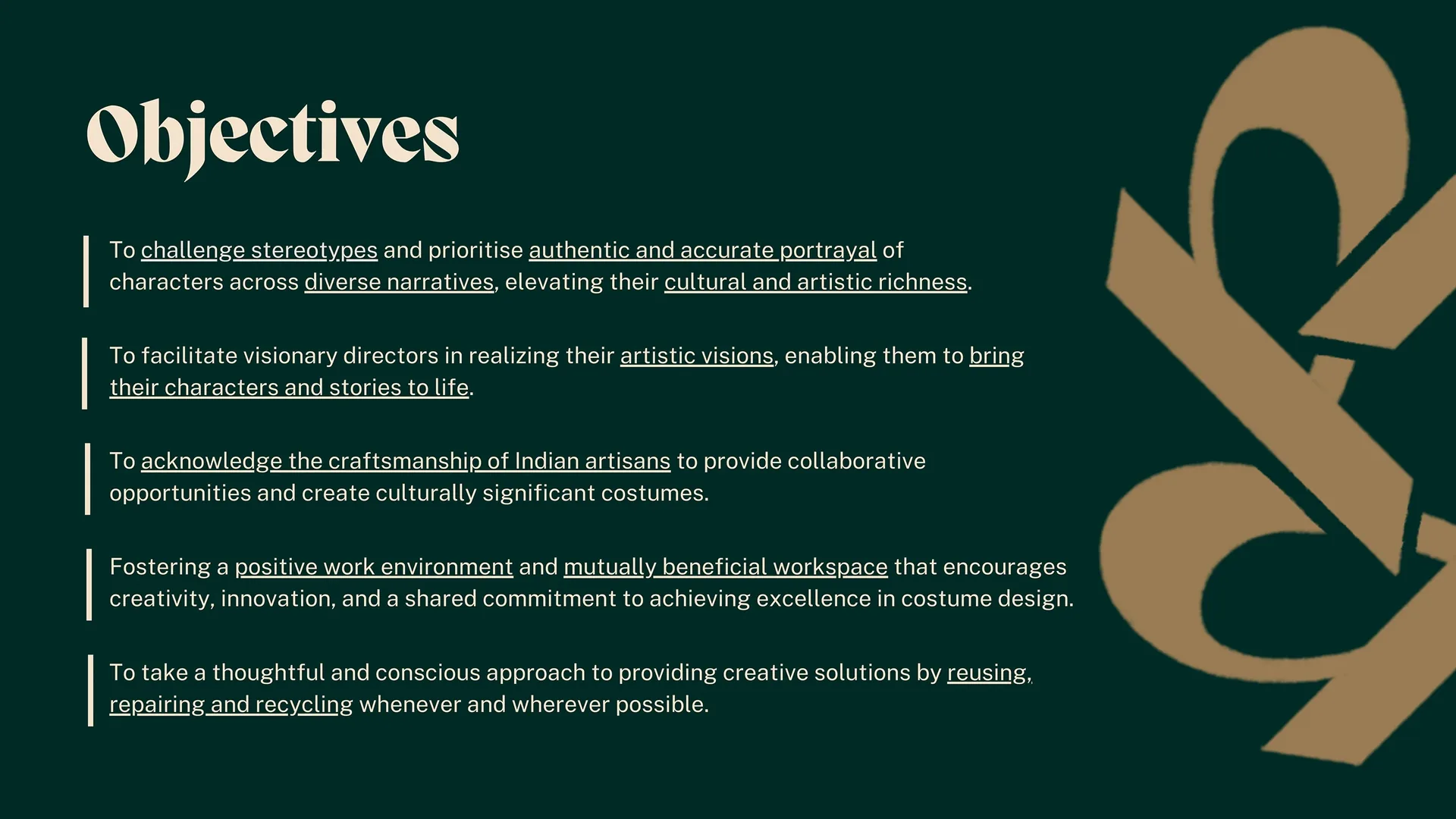
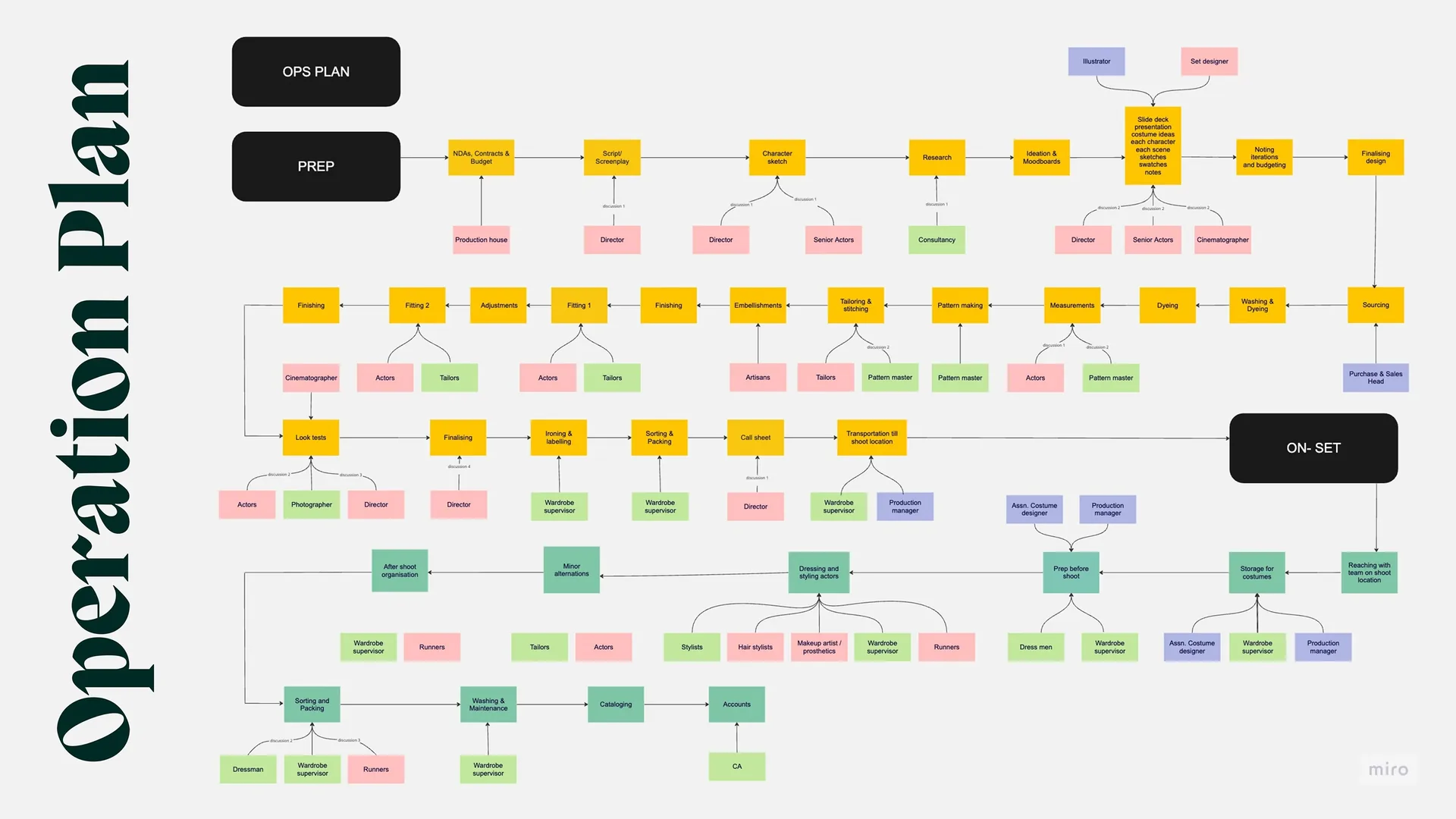
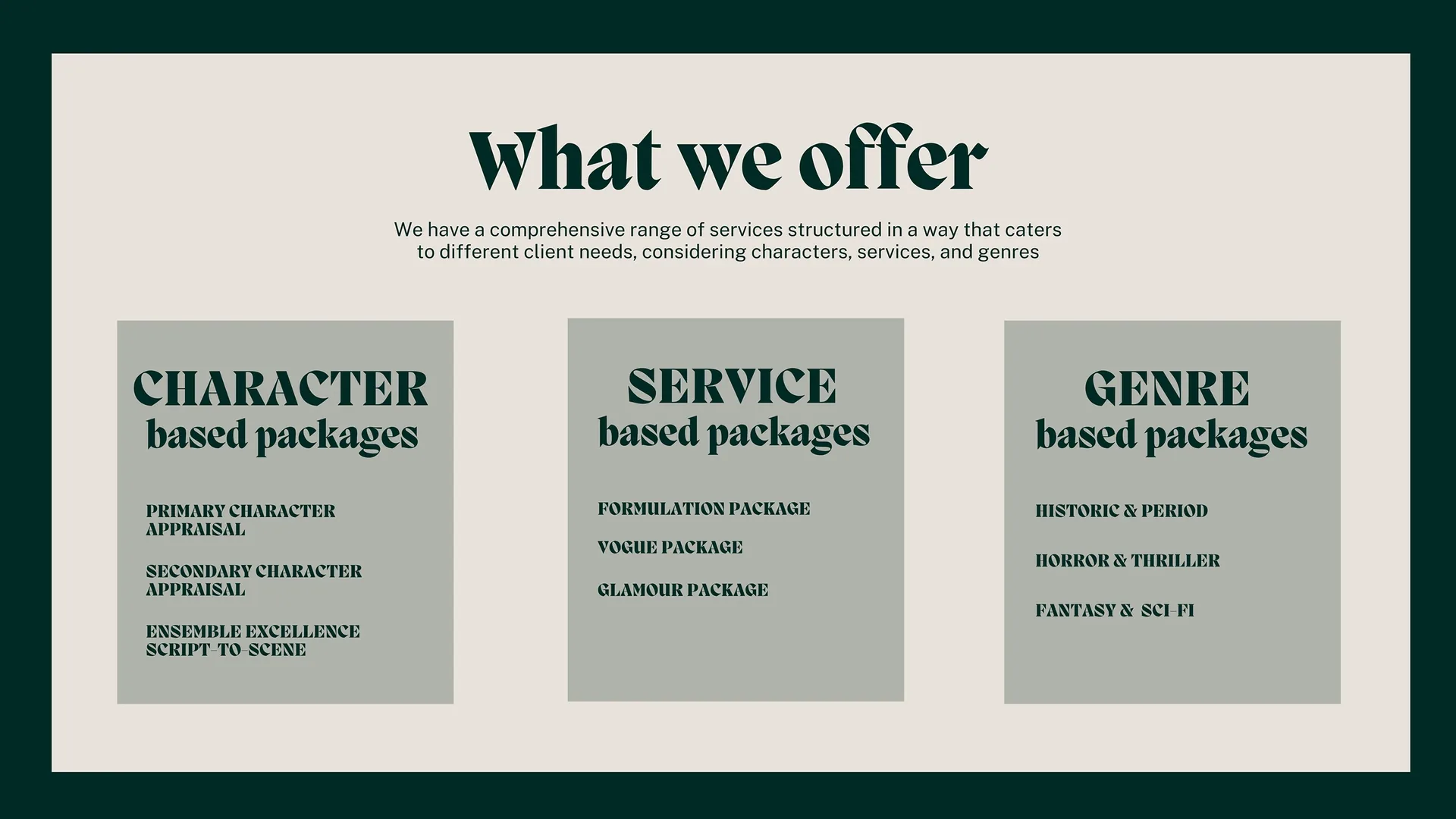
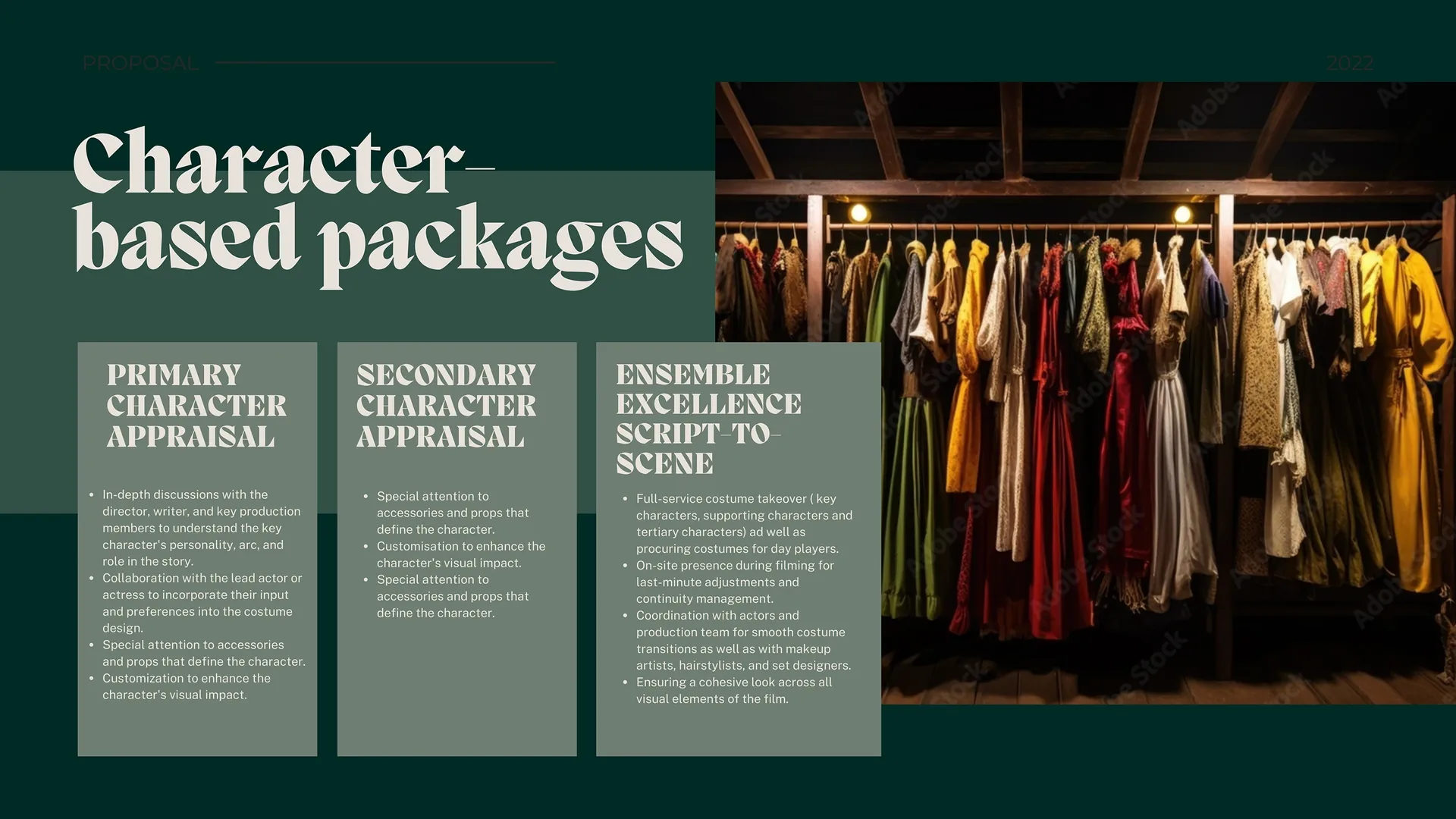
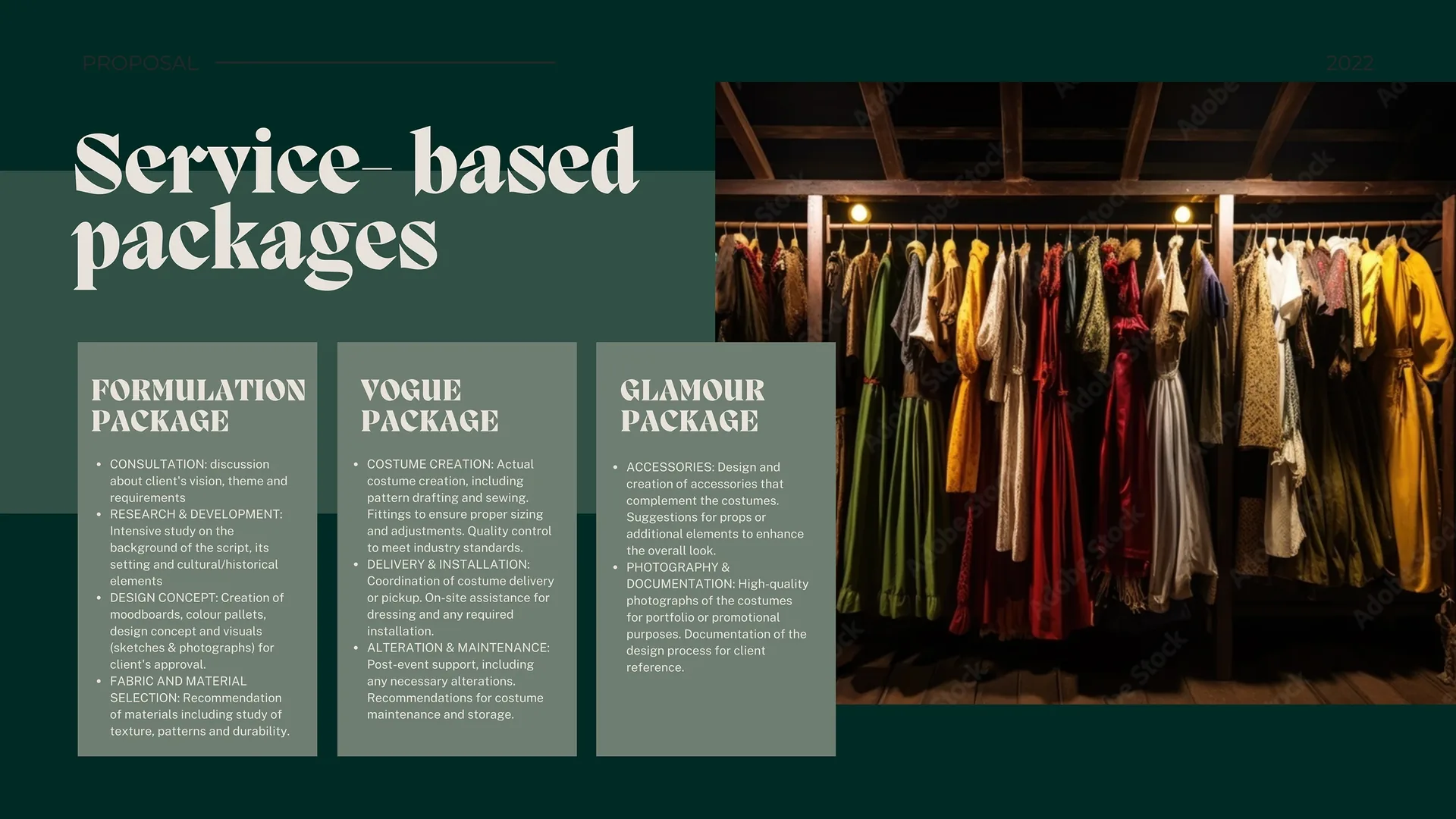
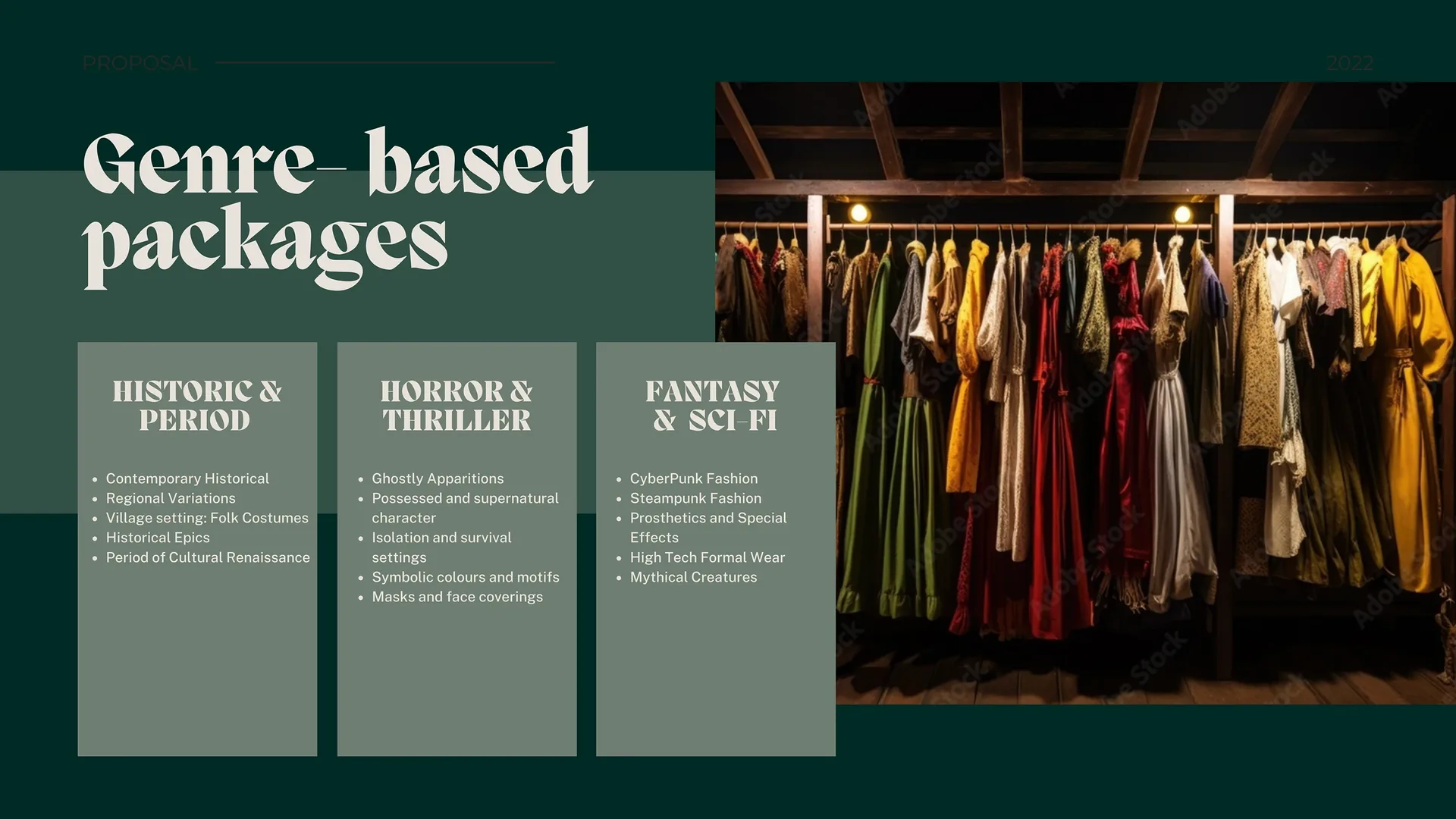
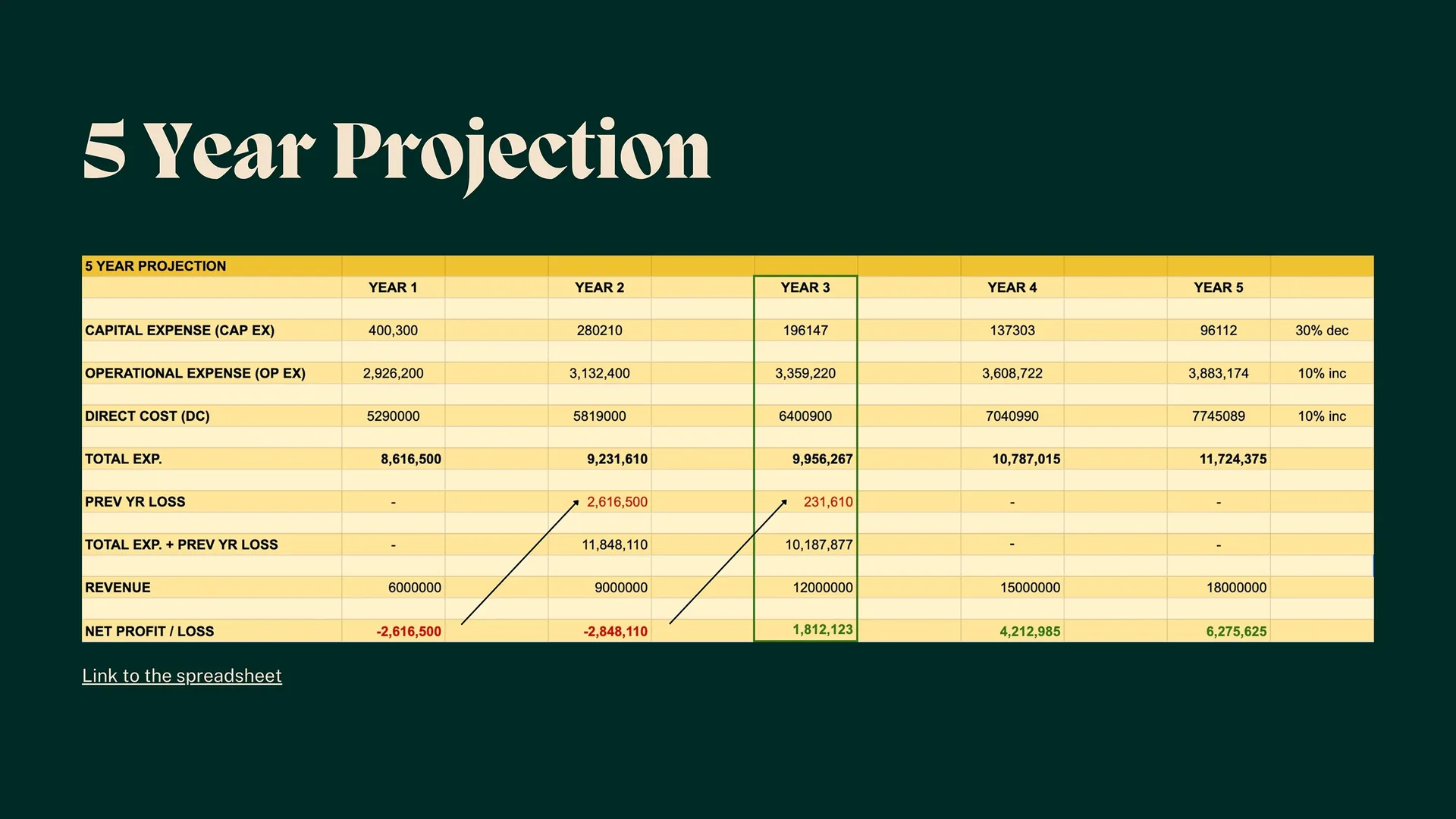
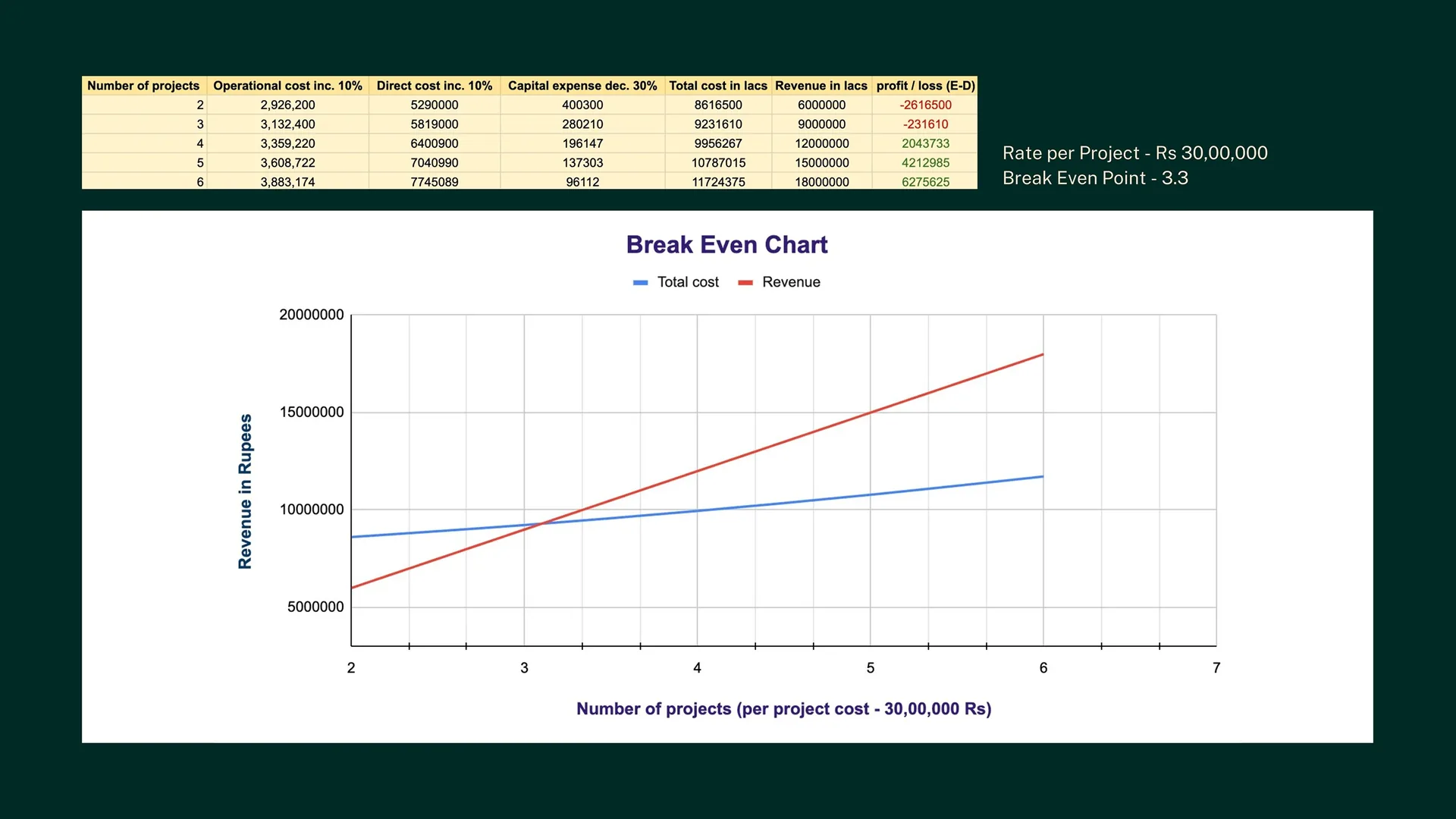
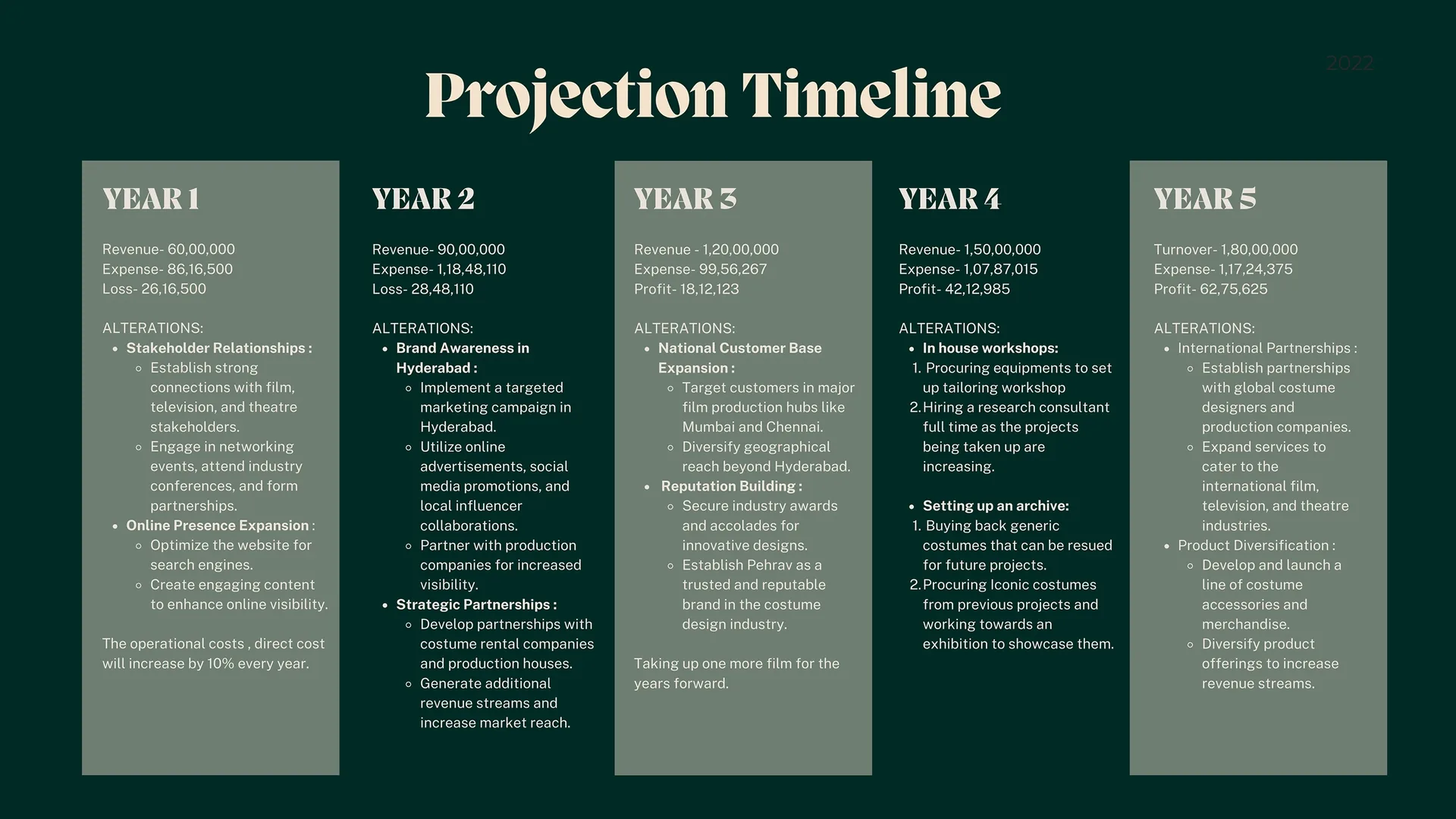
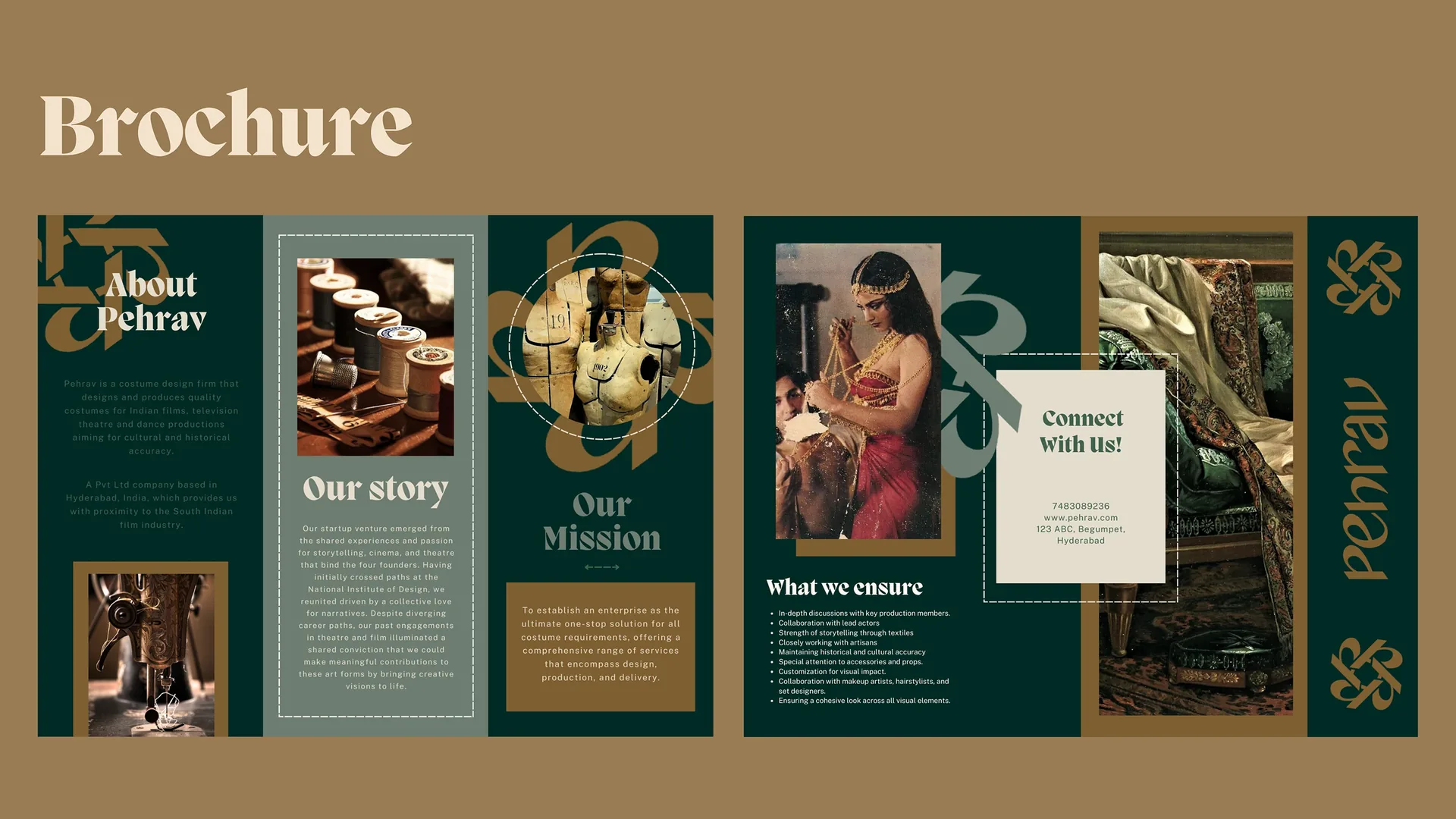
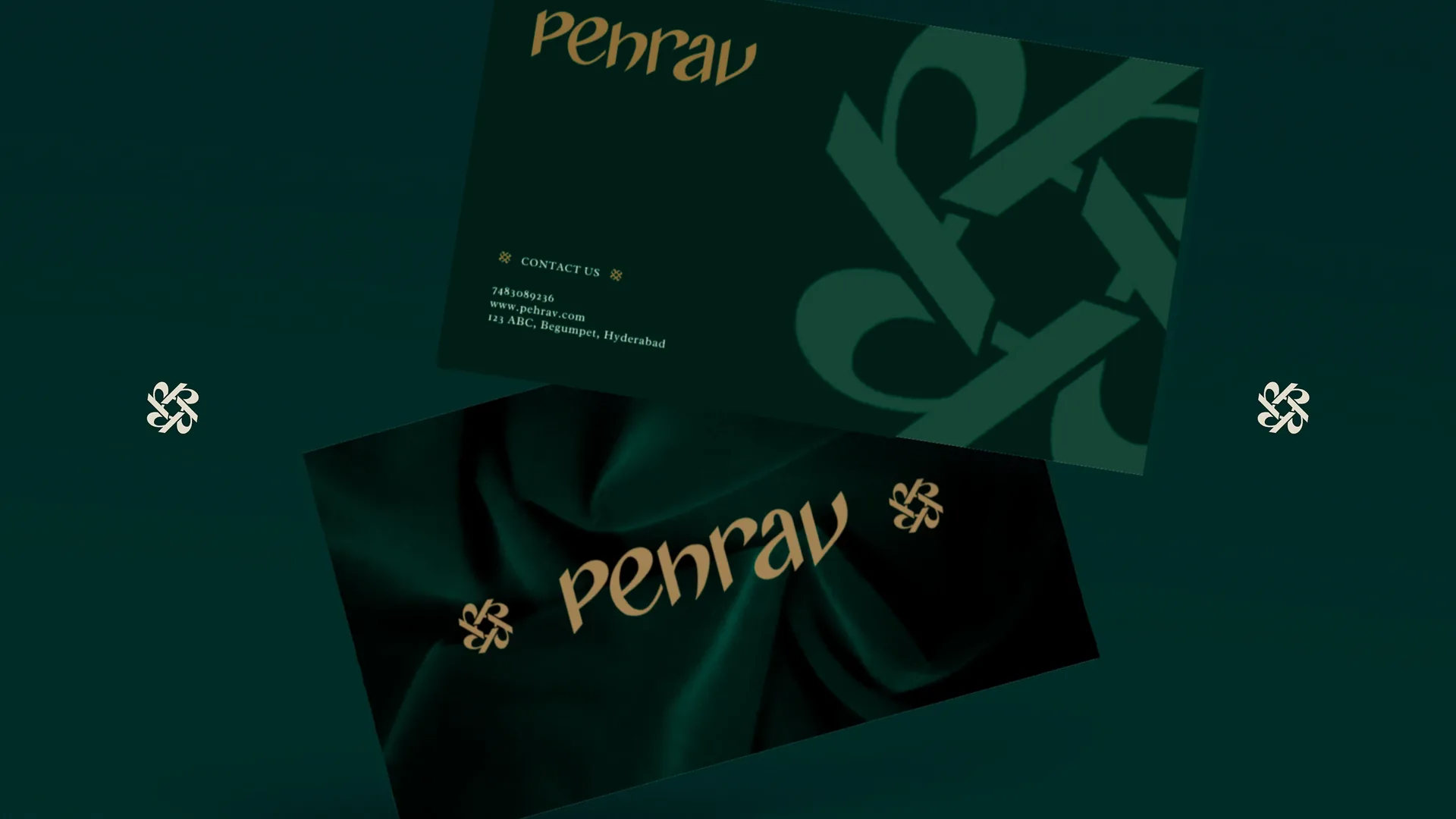
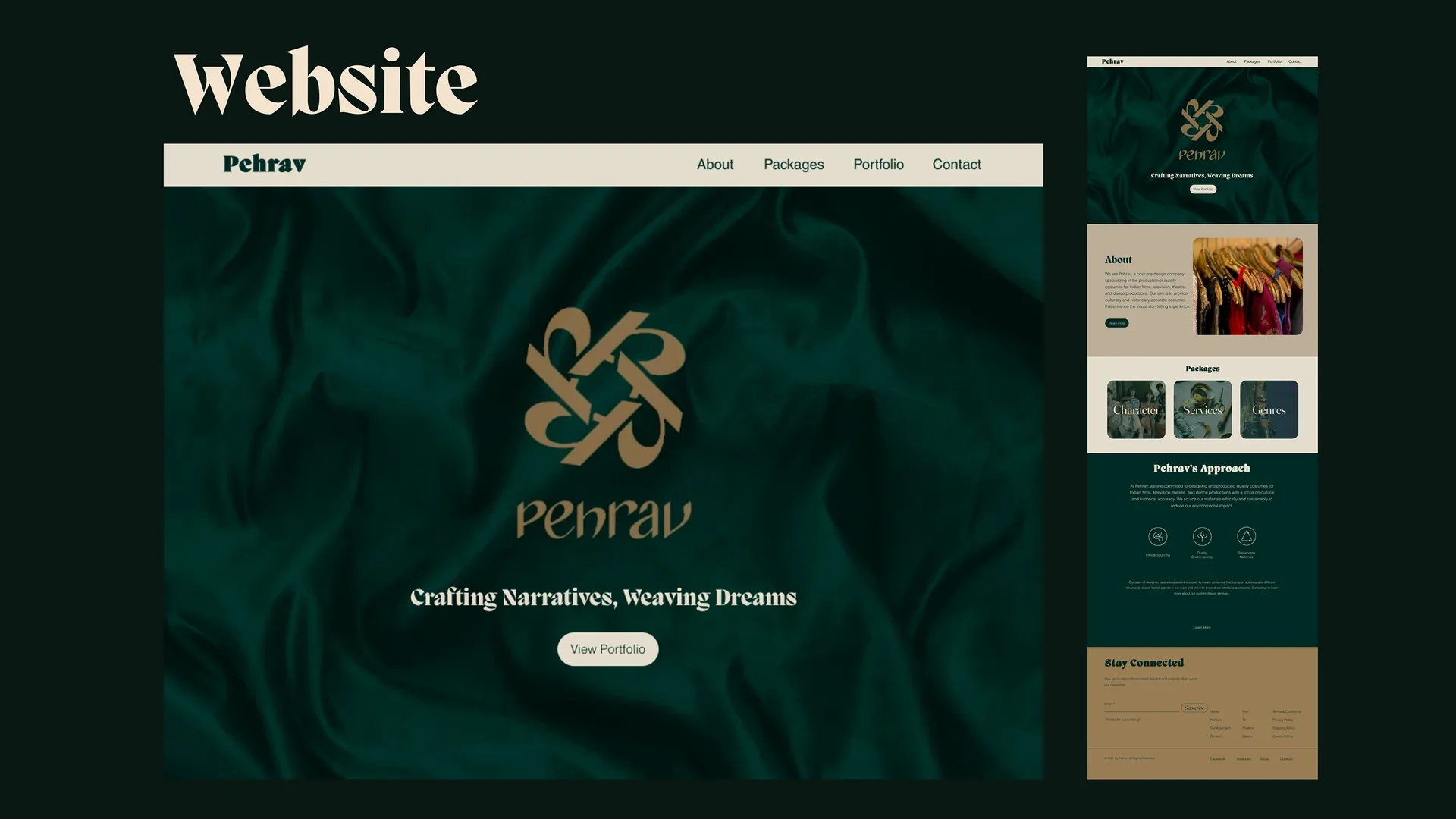
Pehrav: a costume design studio for Indian film and theatre



WorkSurface
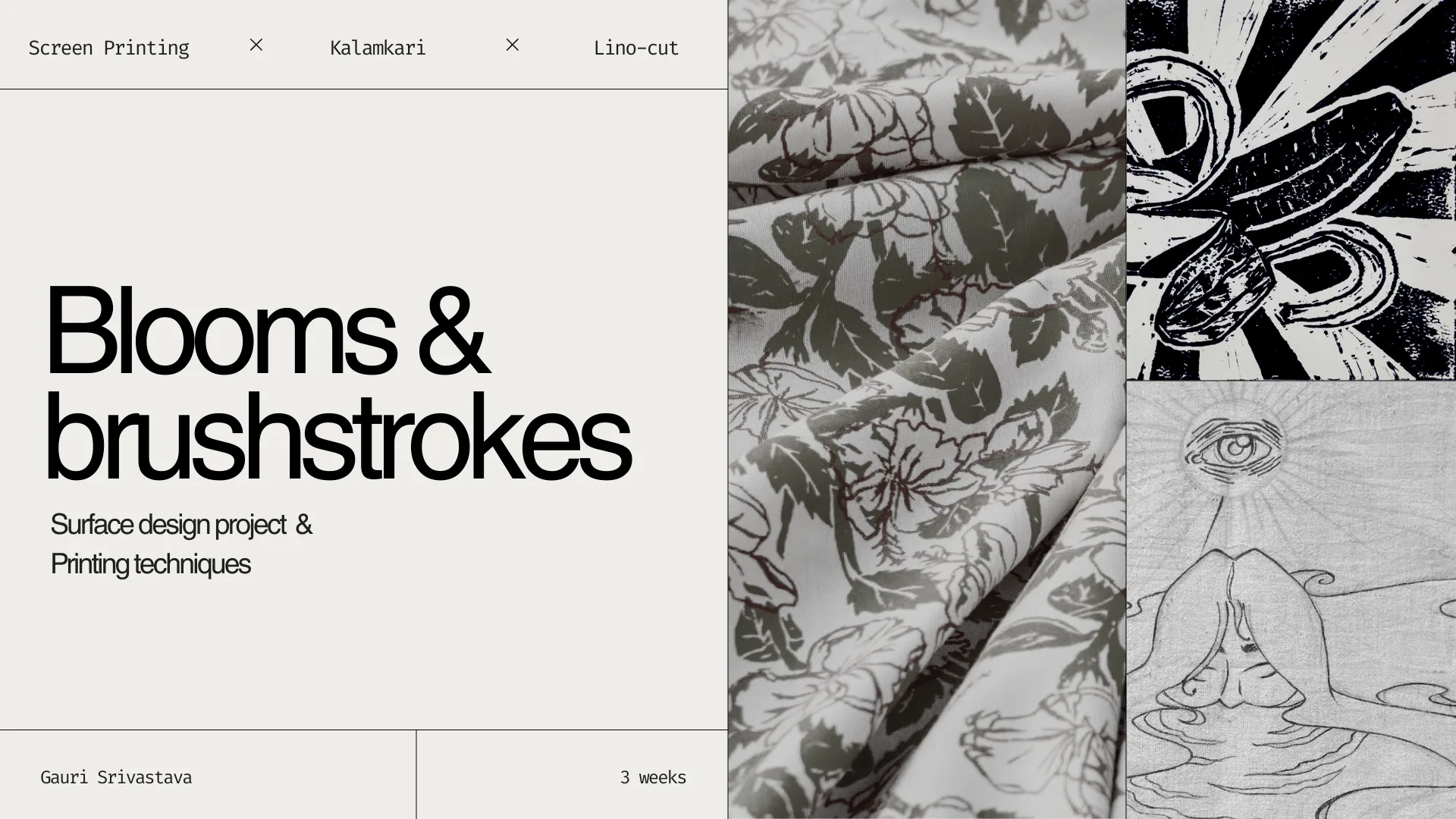
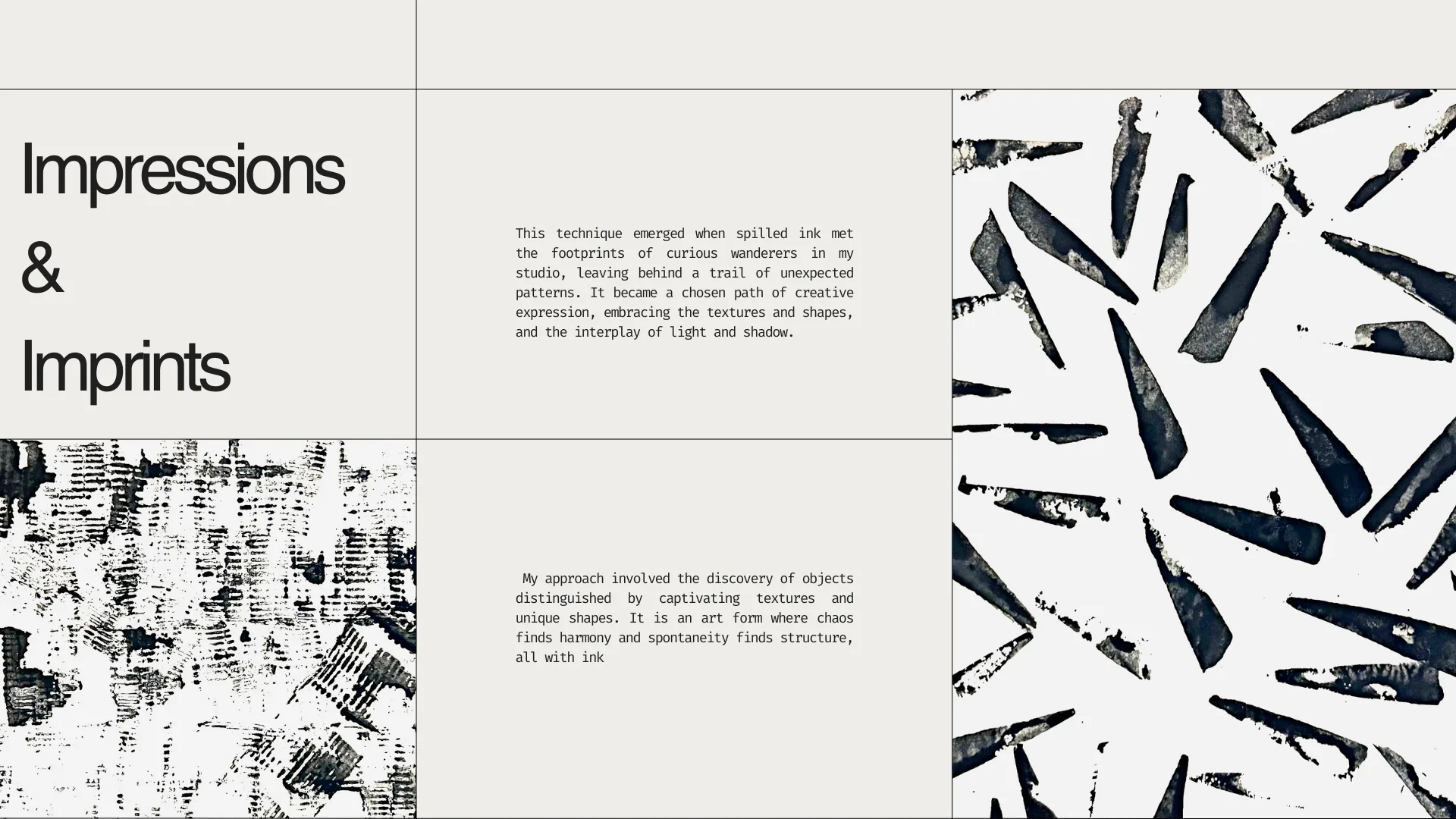
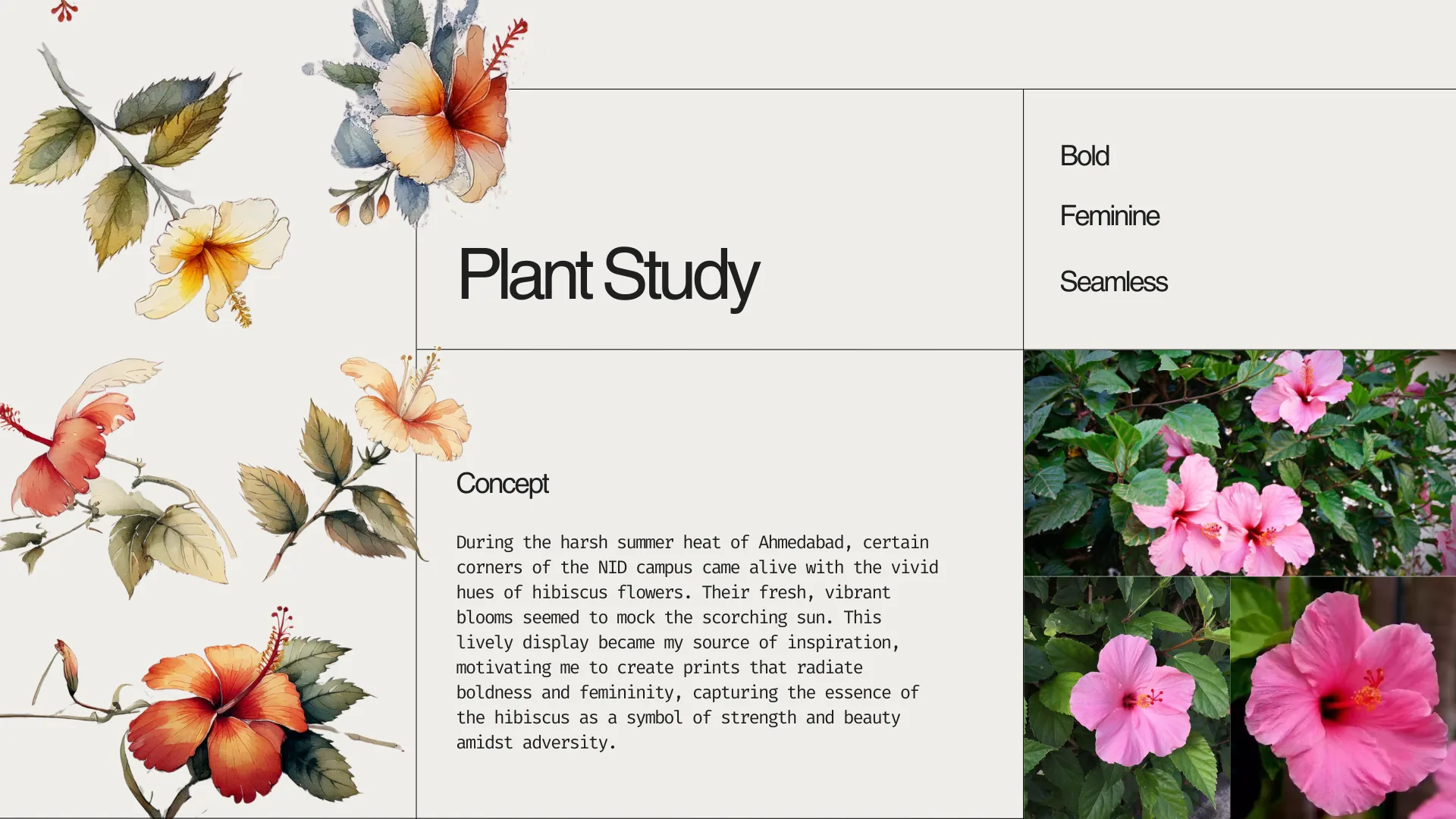
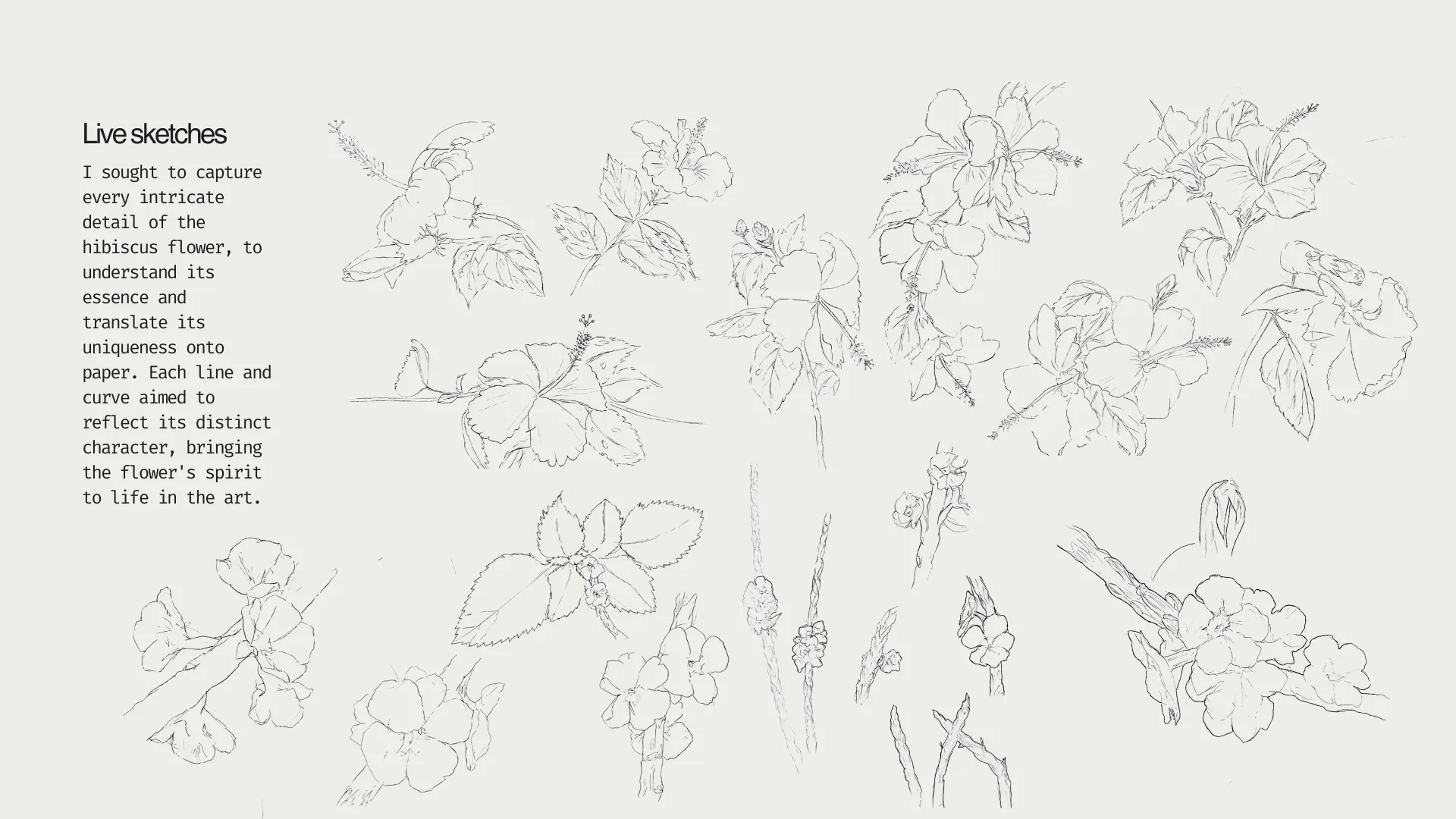
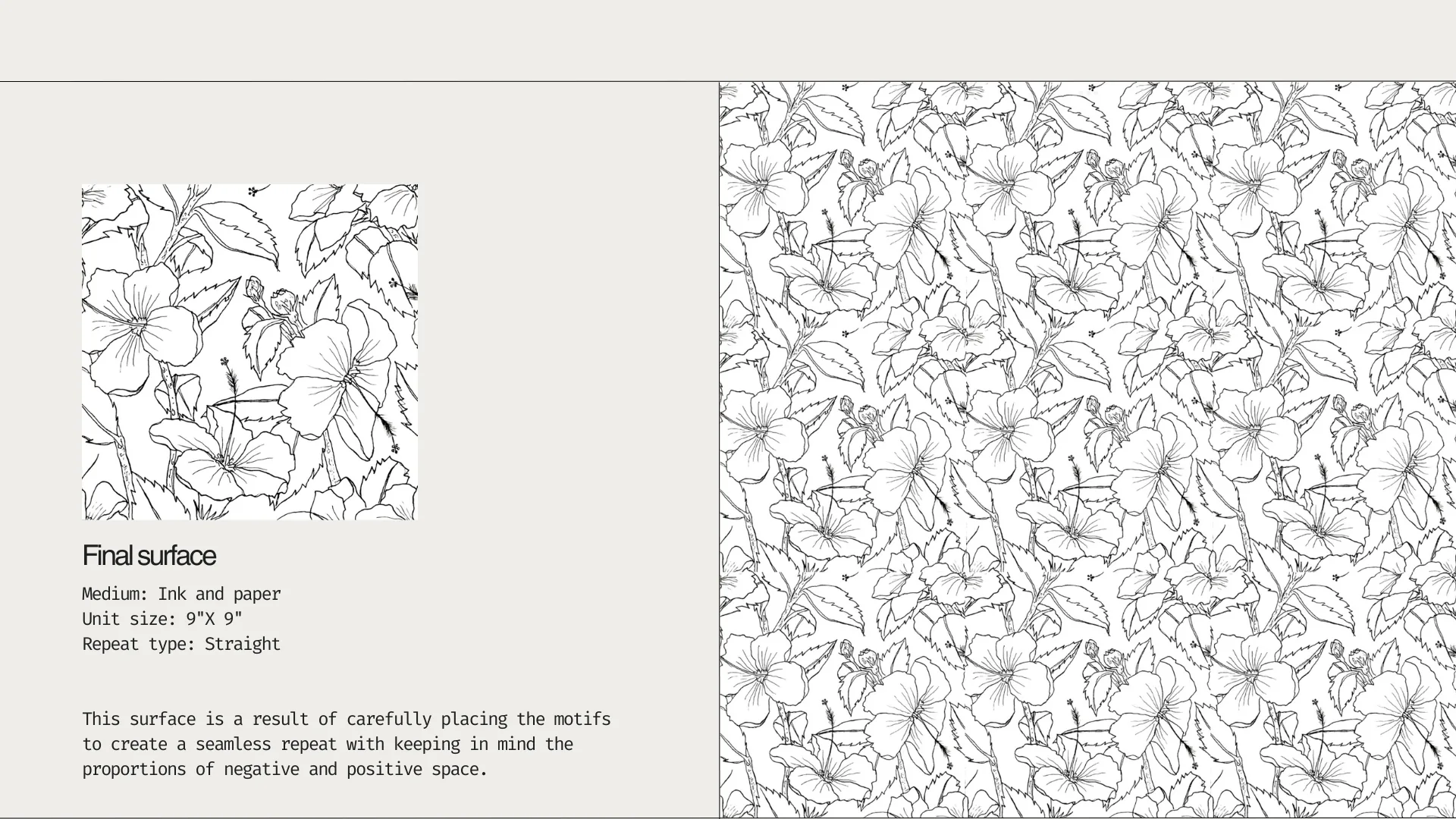
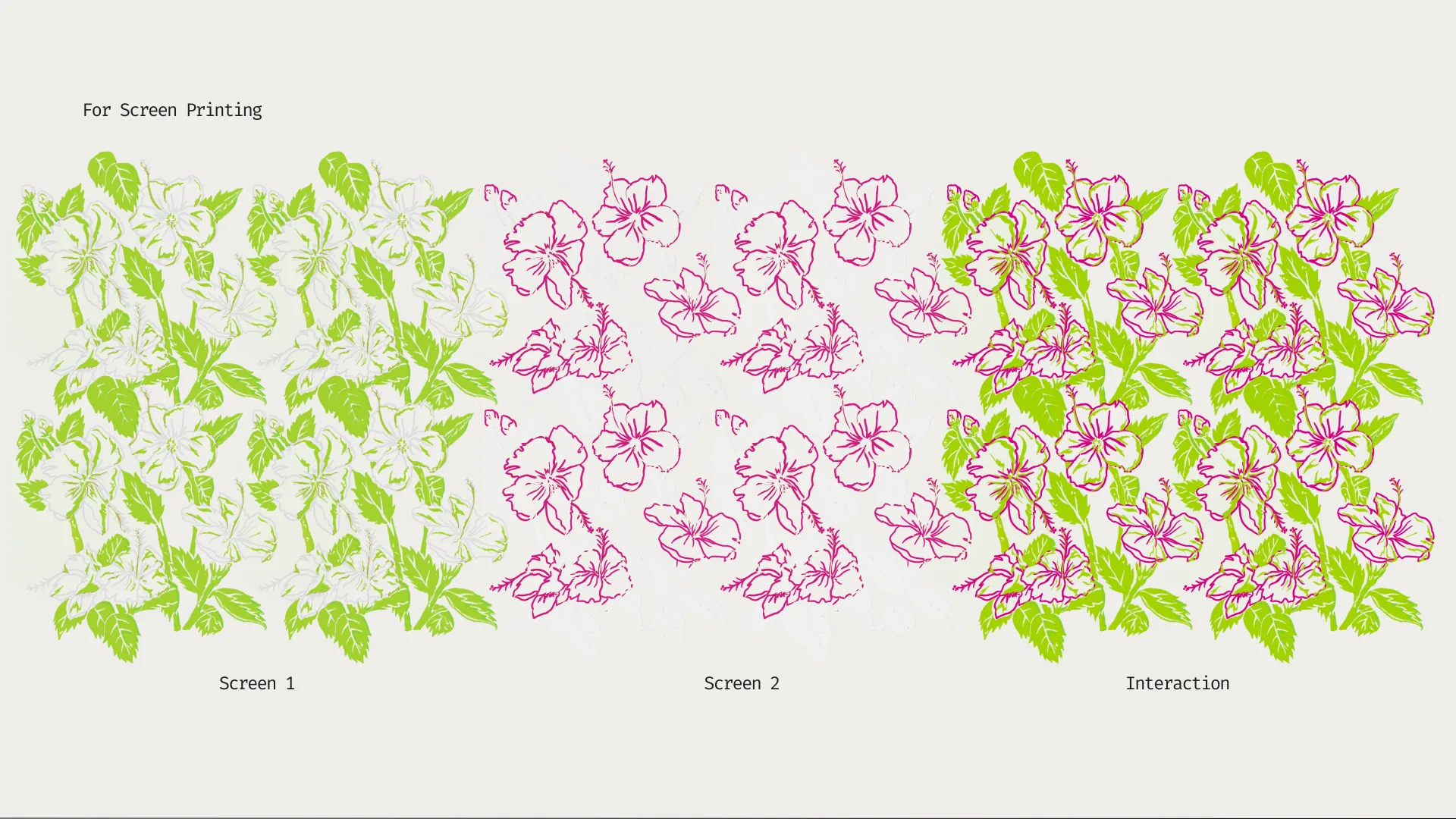
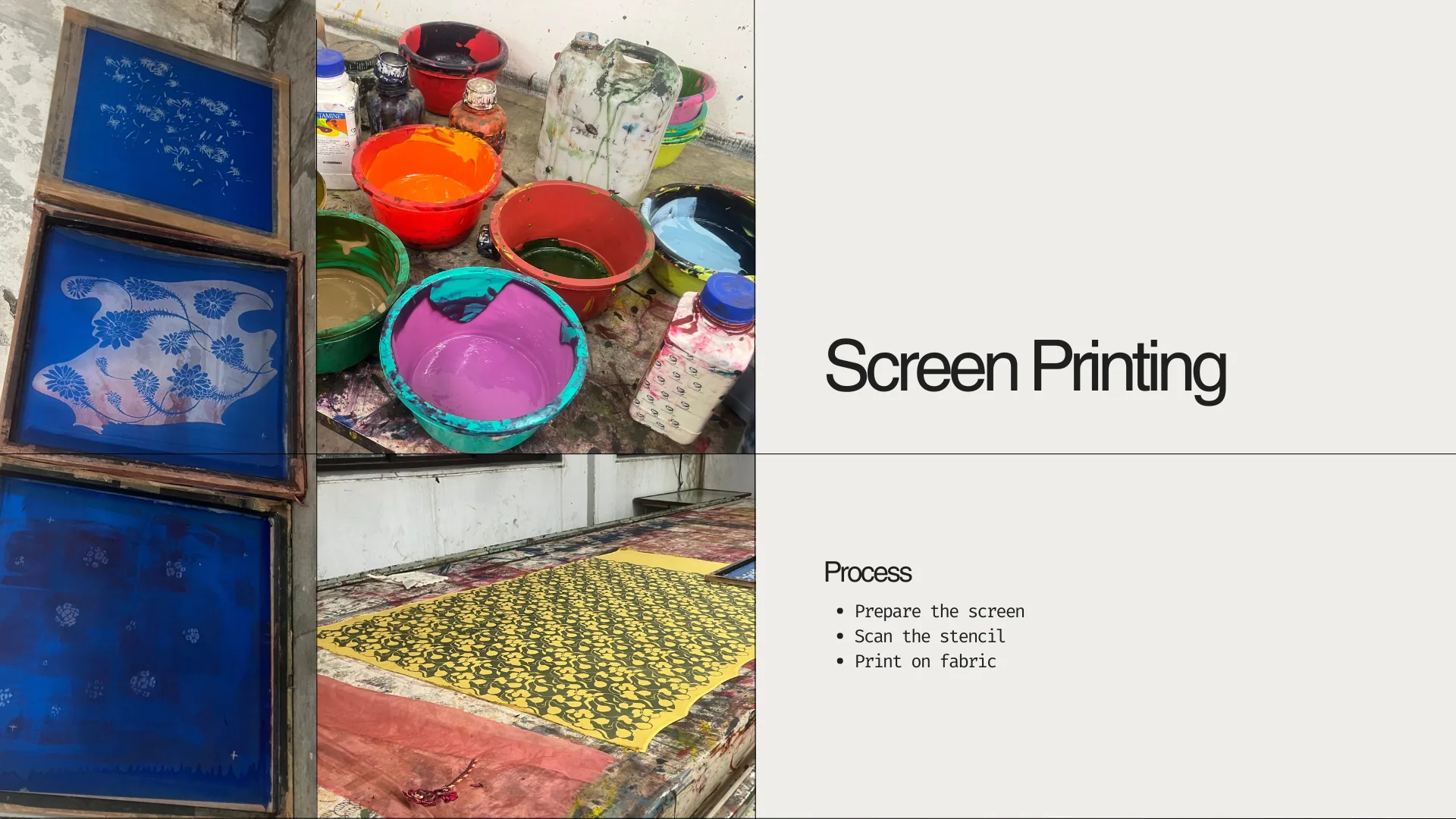
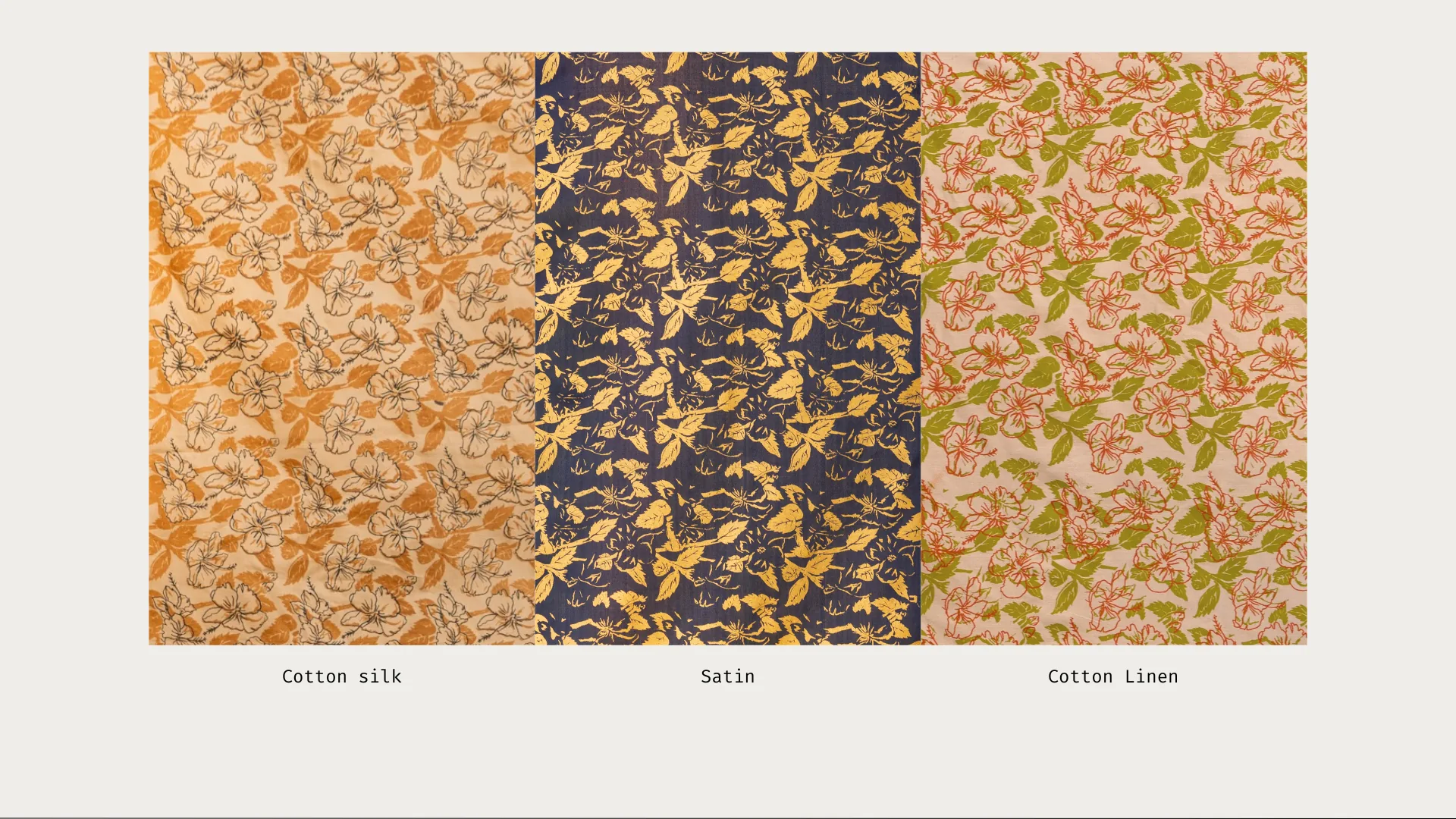
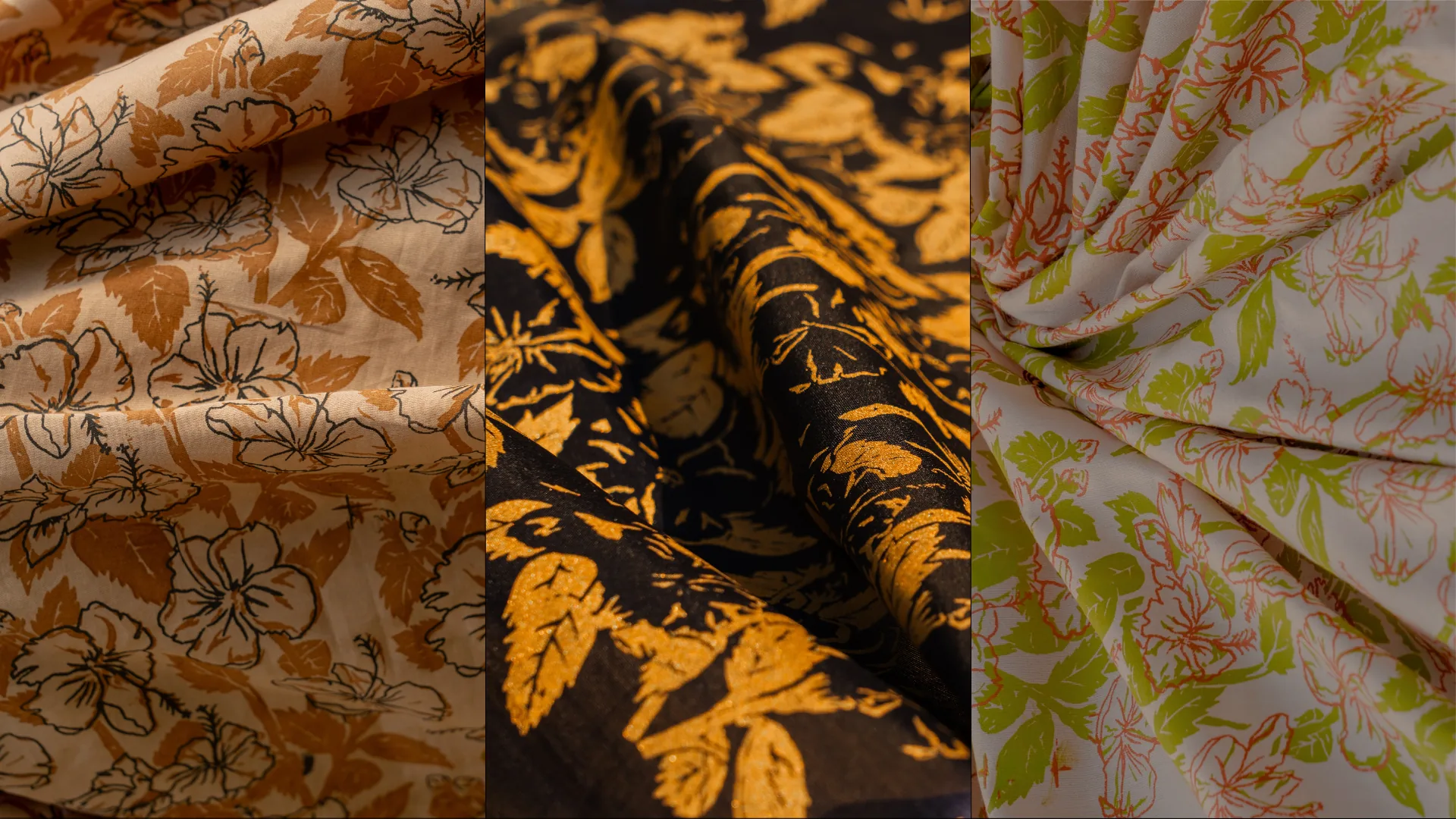
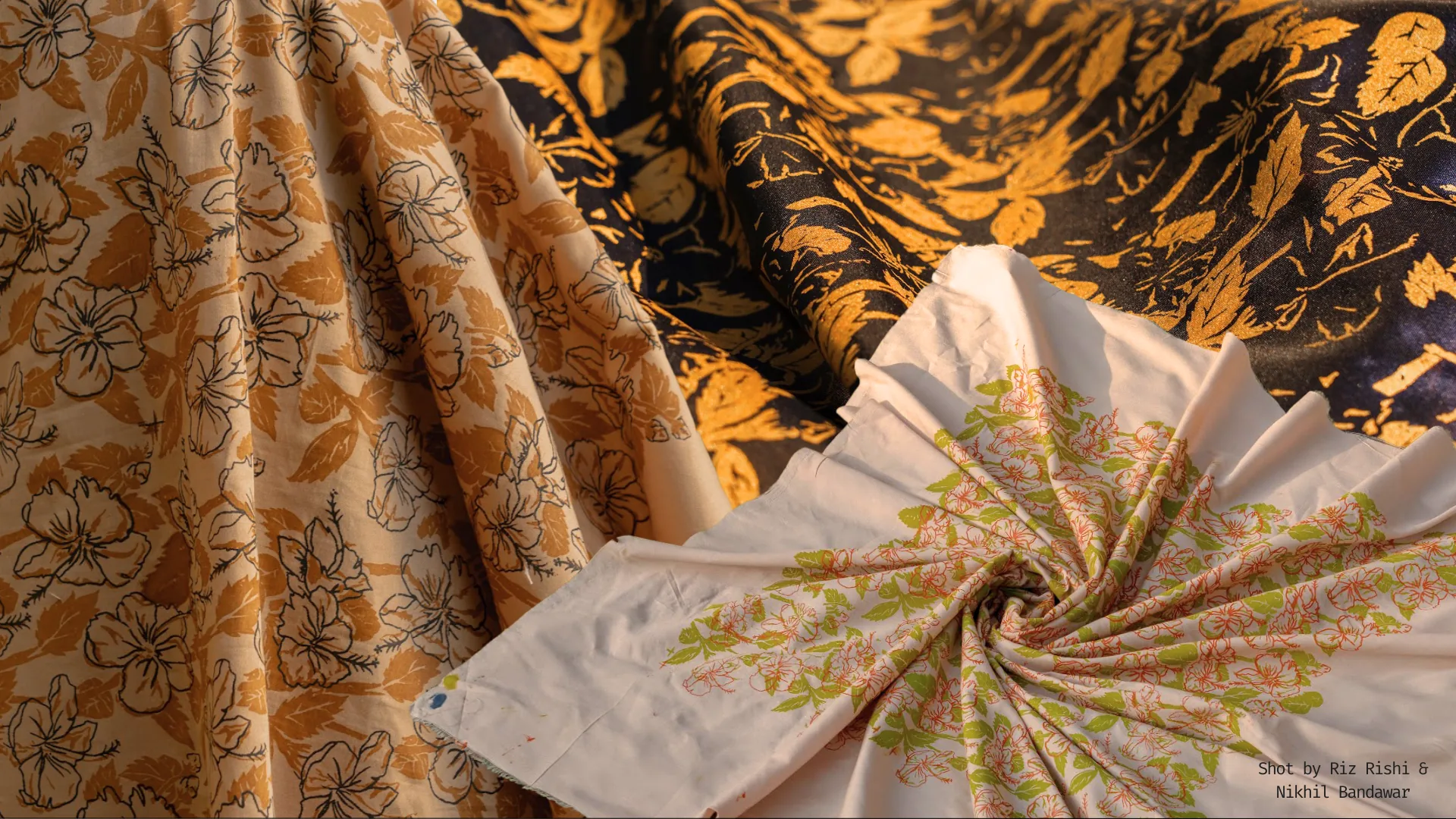
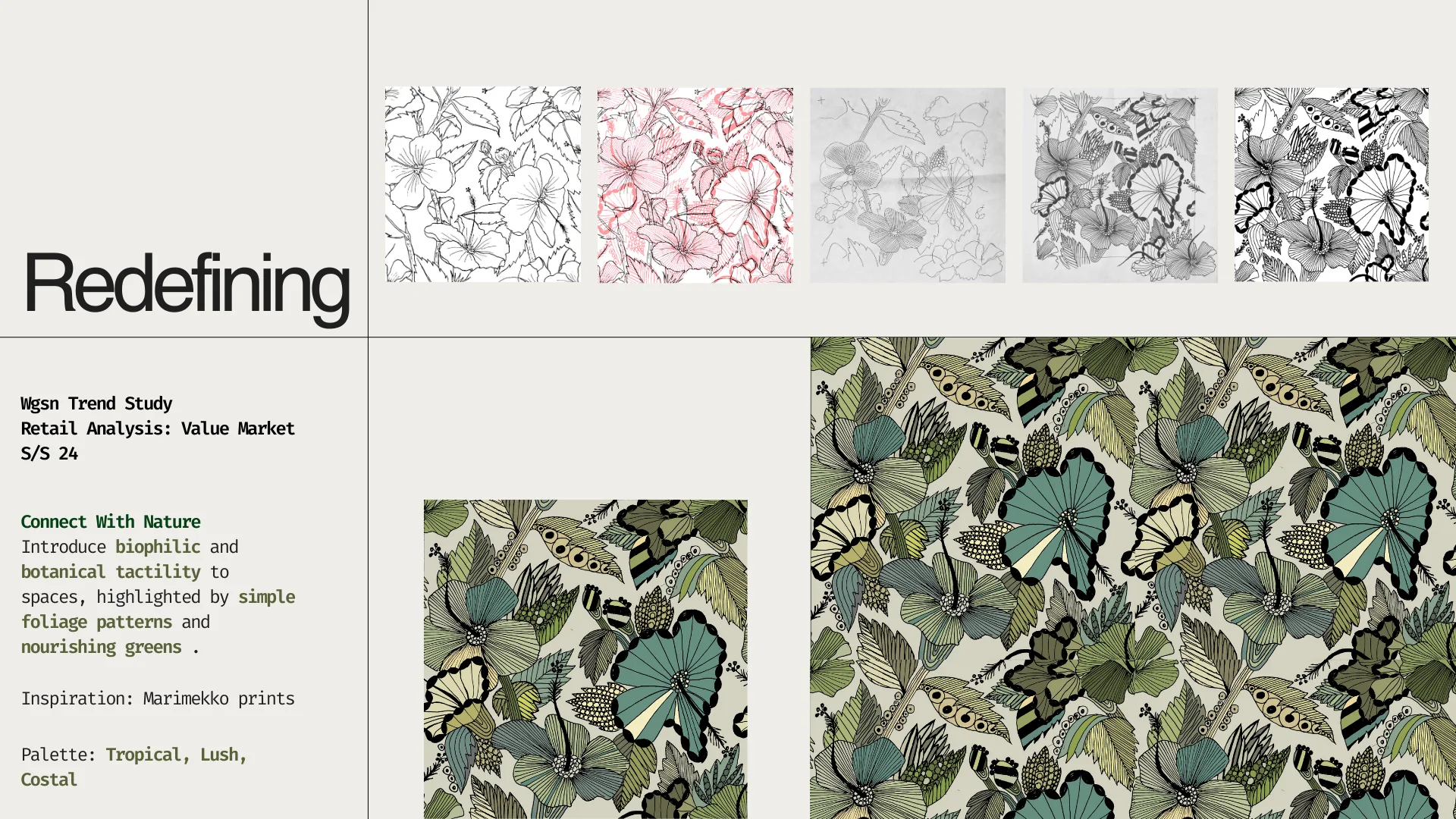
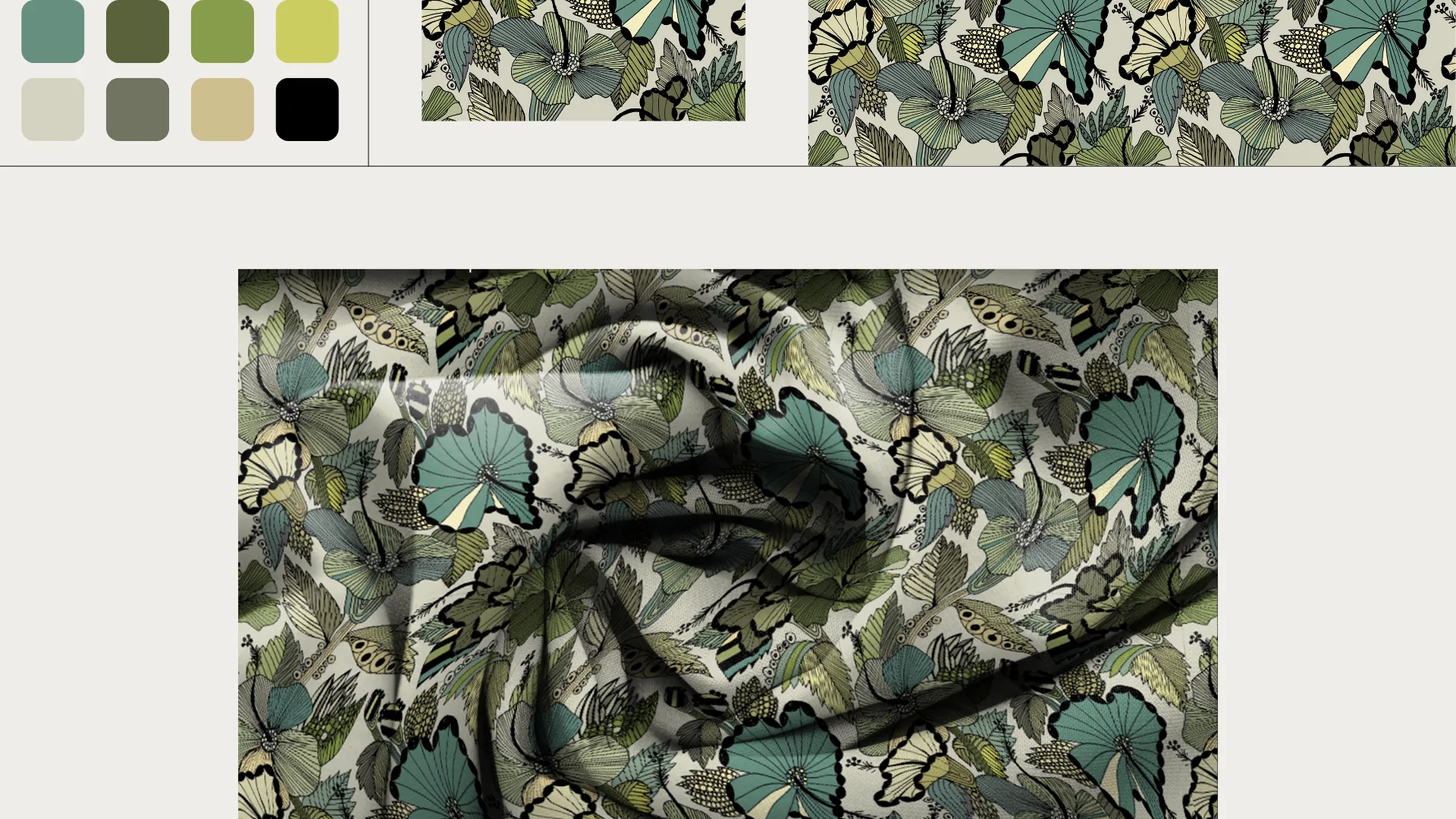
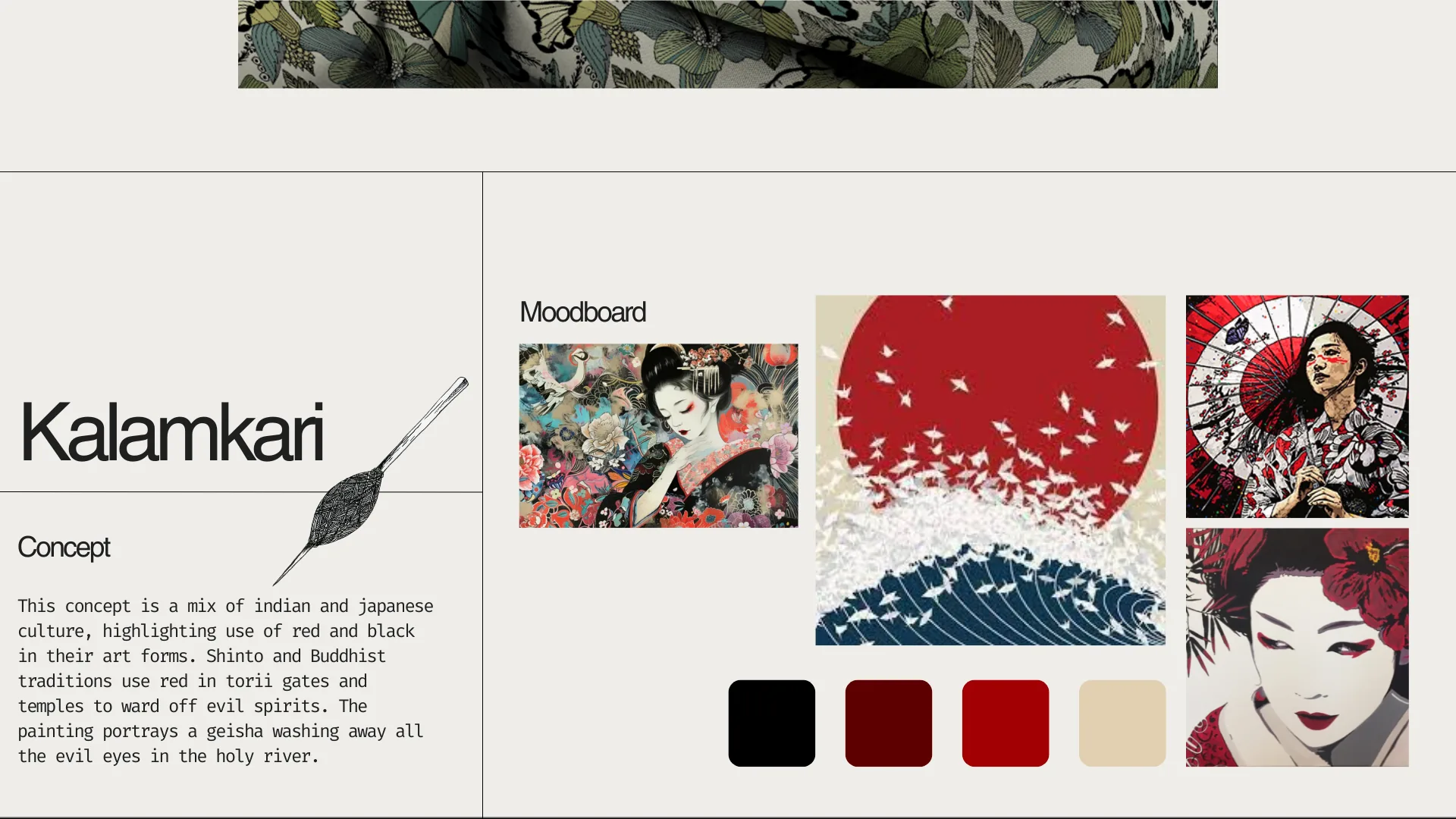
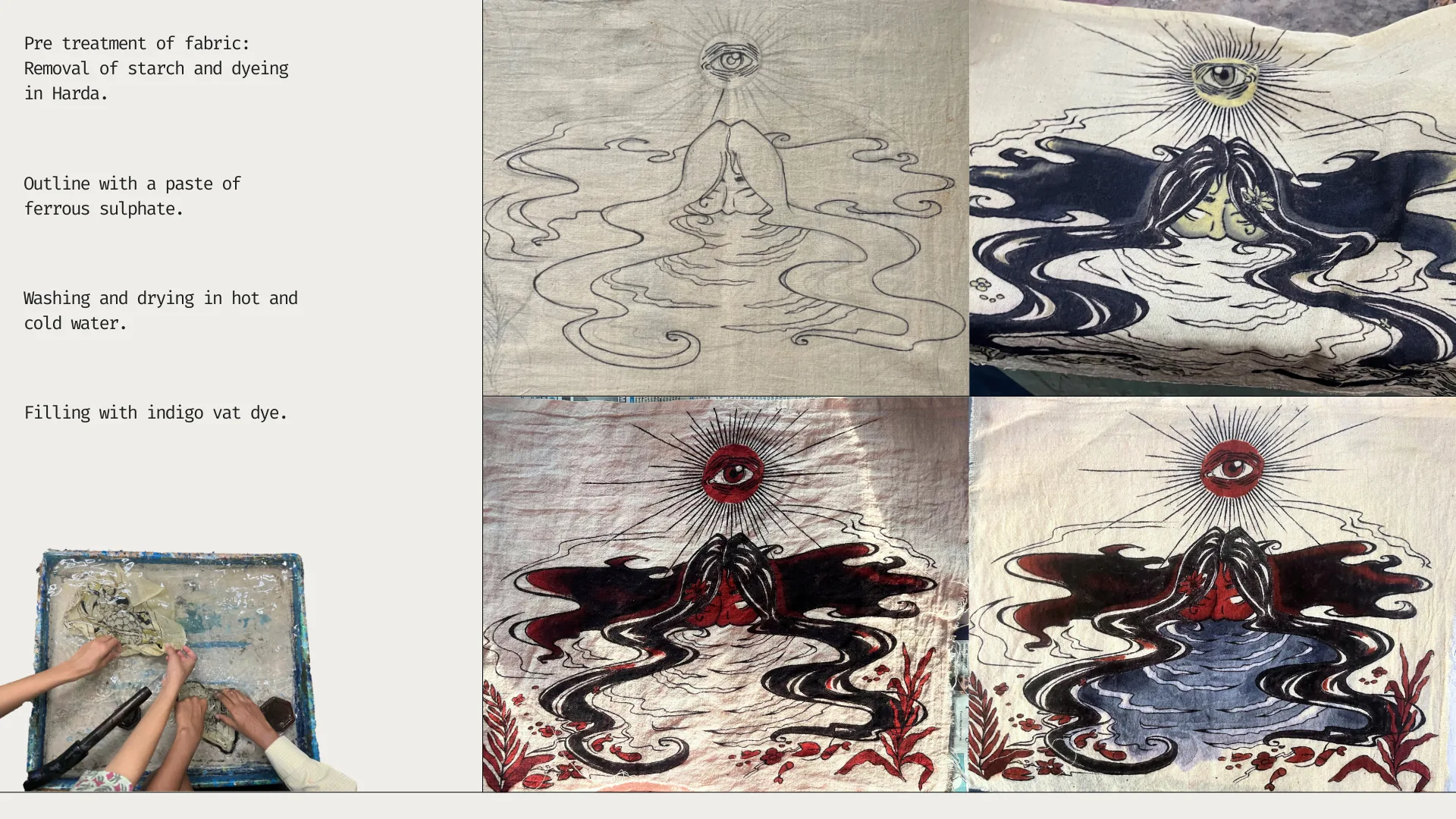
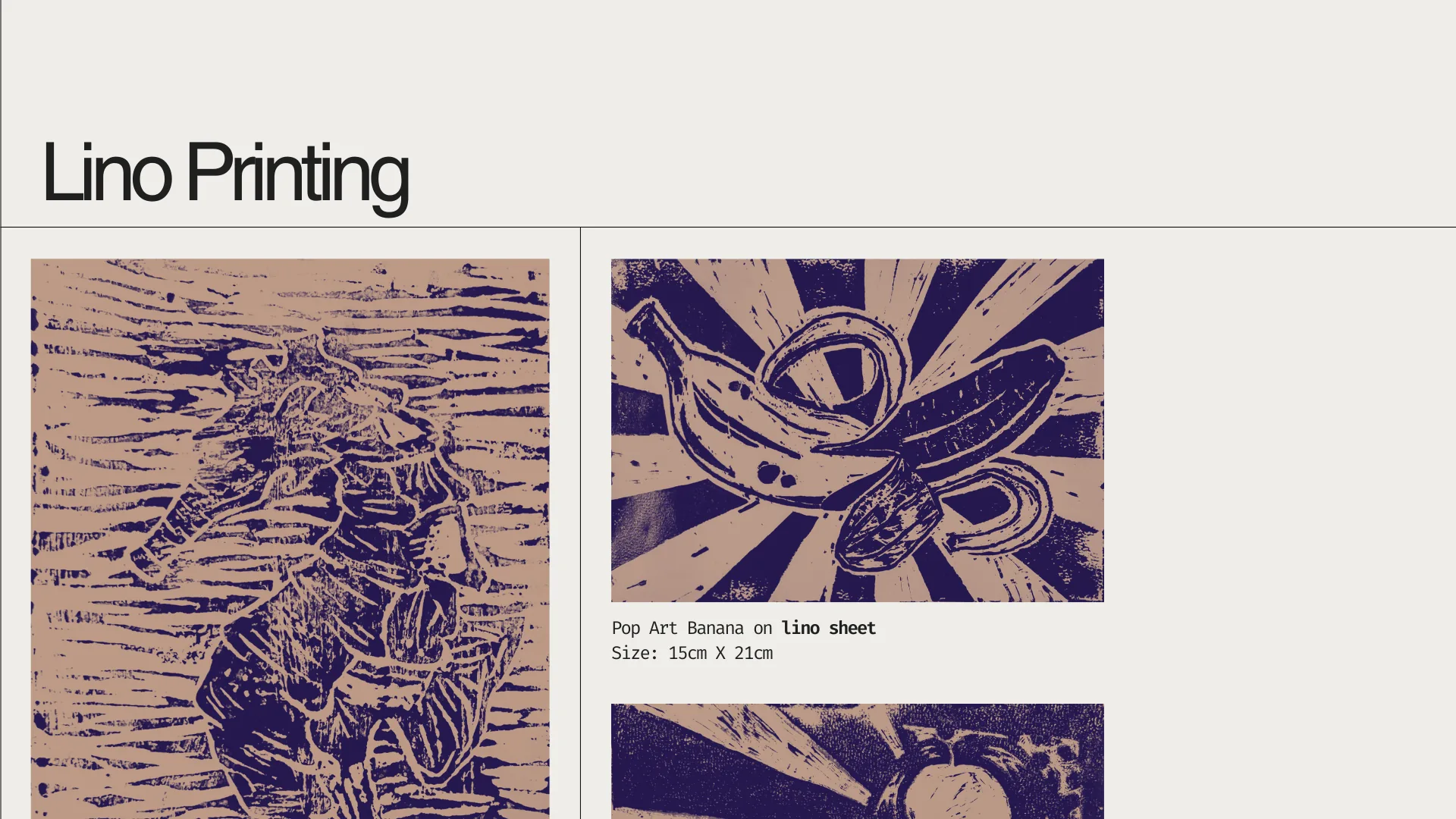
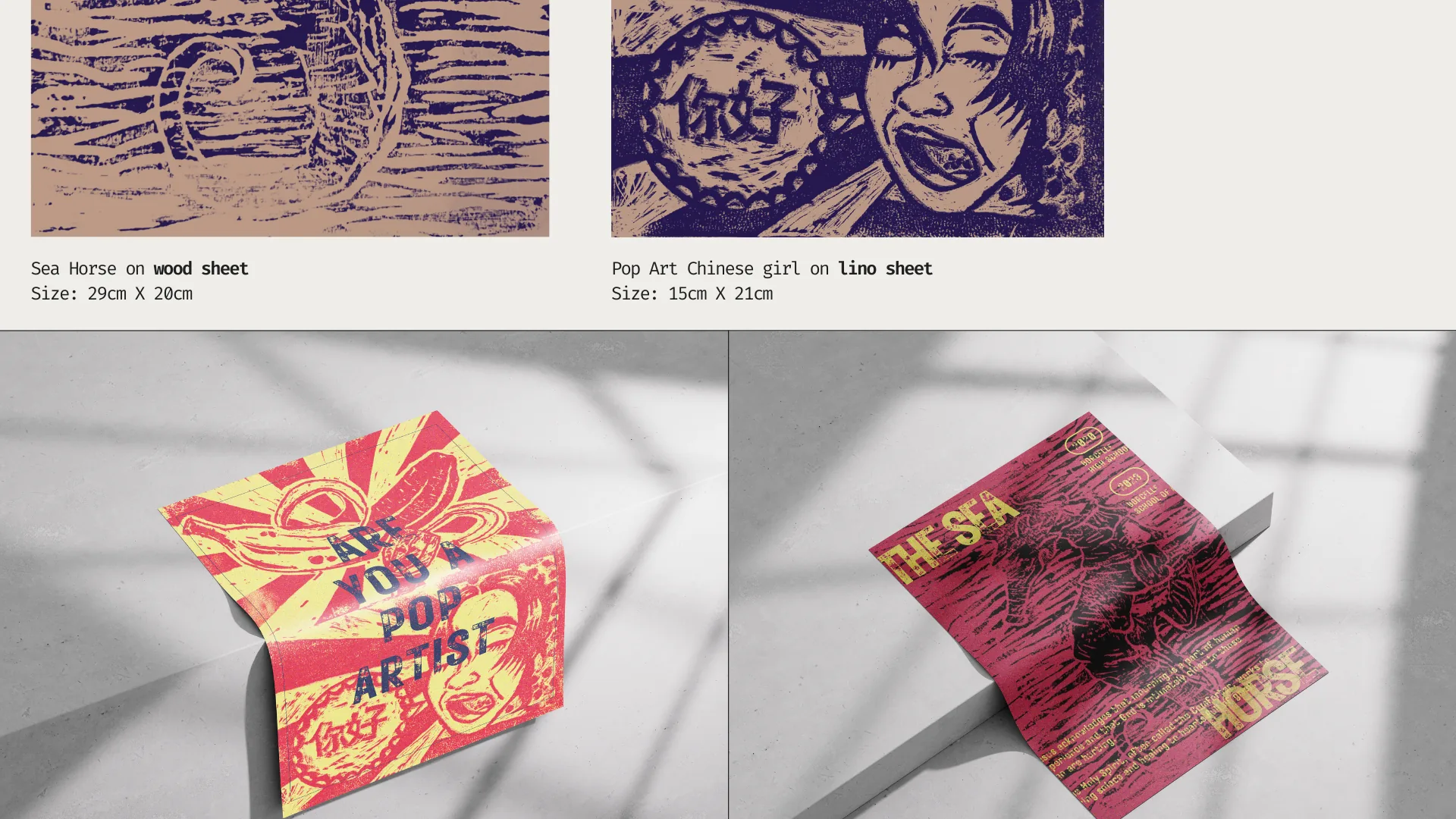
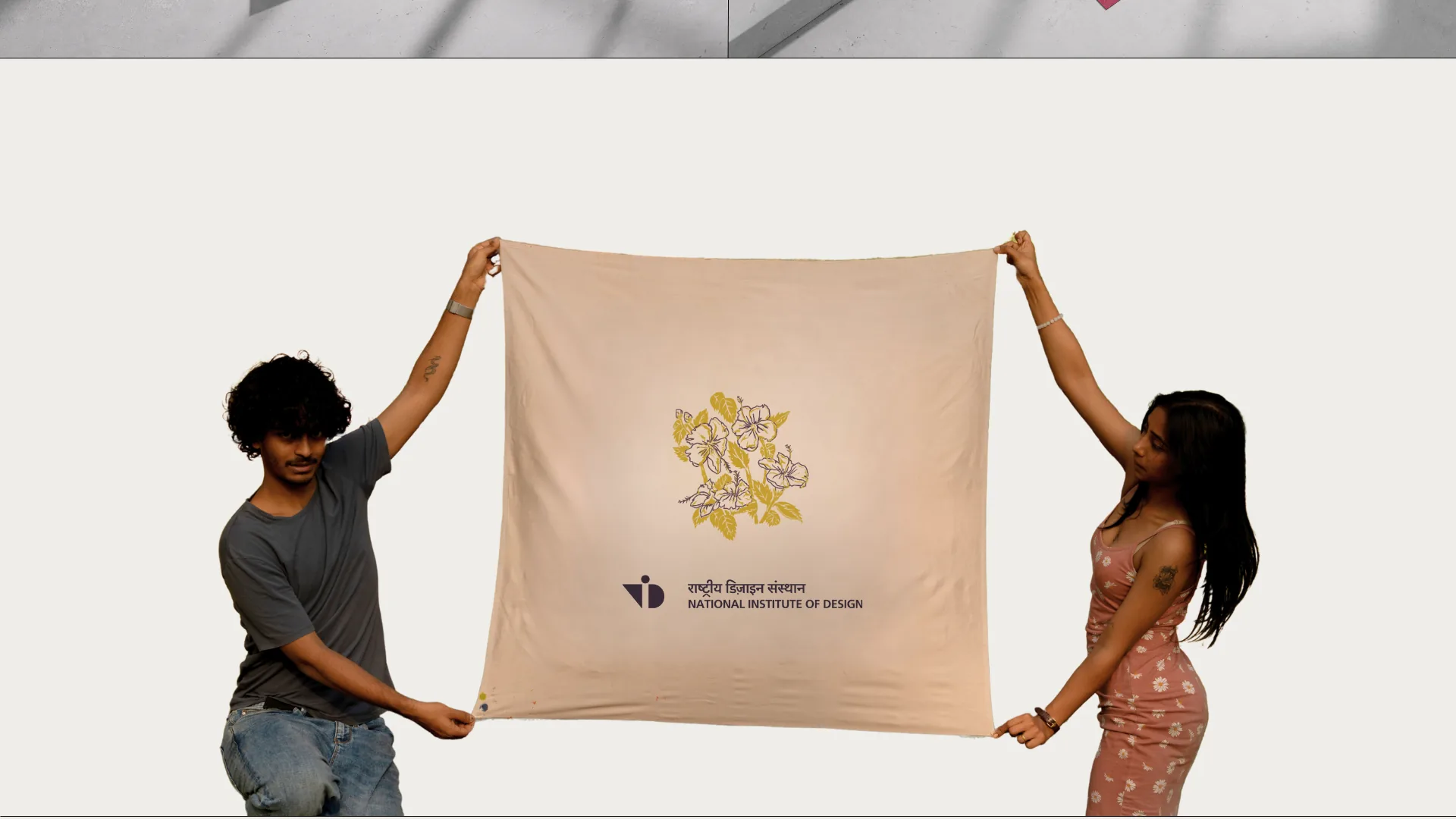
Screen printing, kalamkari and lino-cut
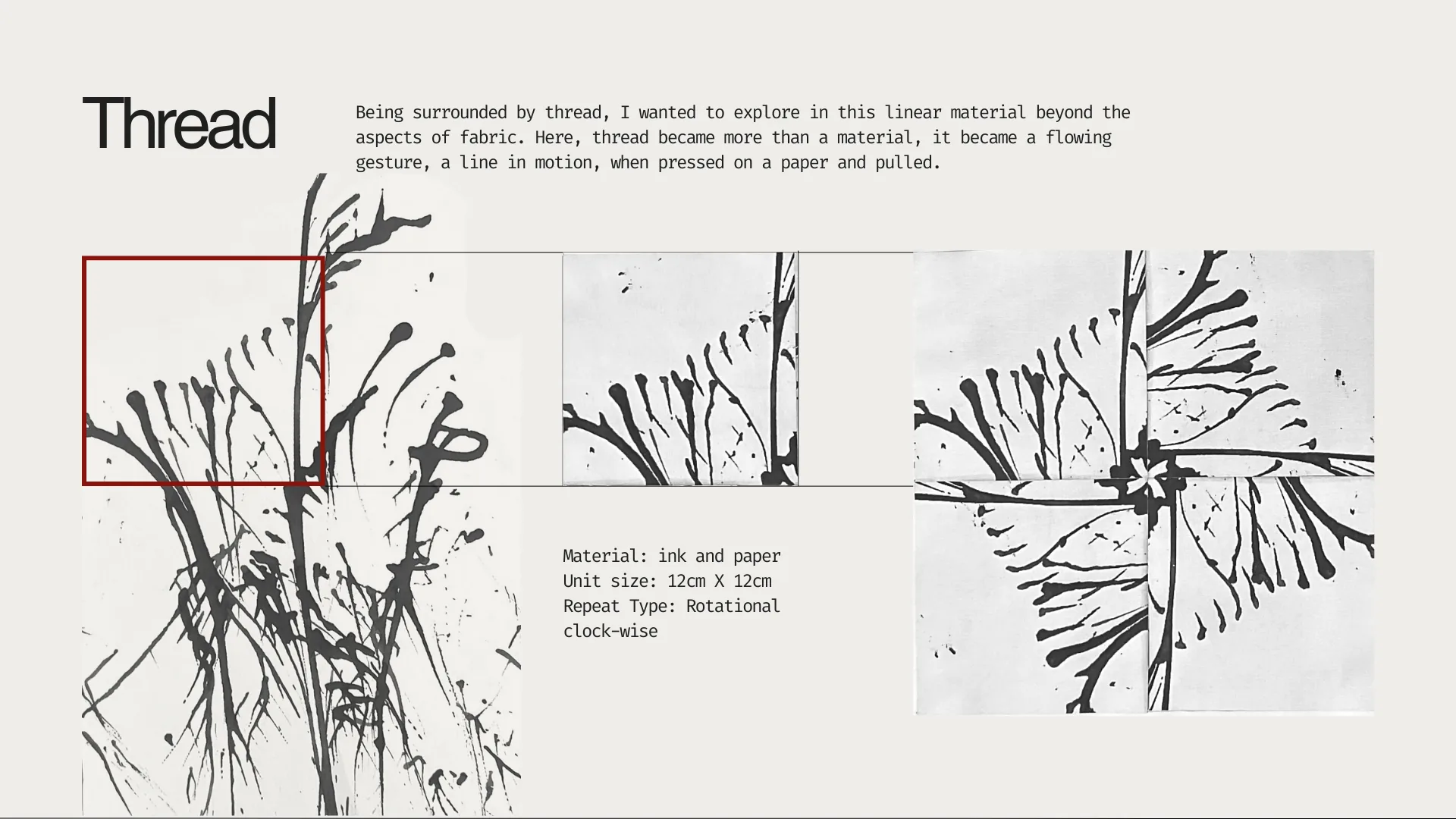
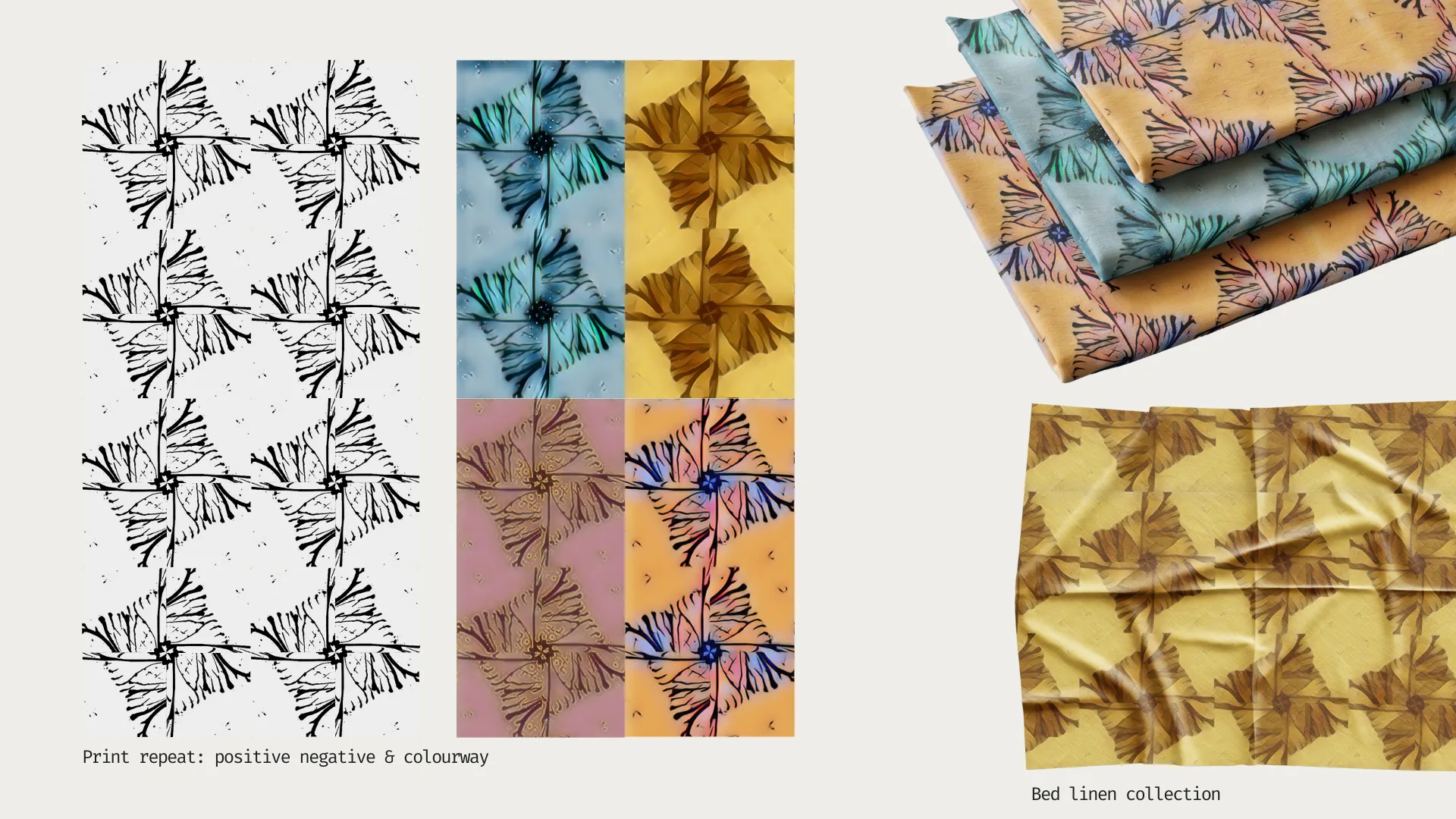
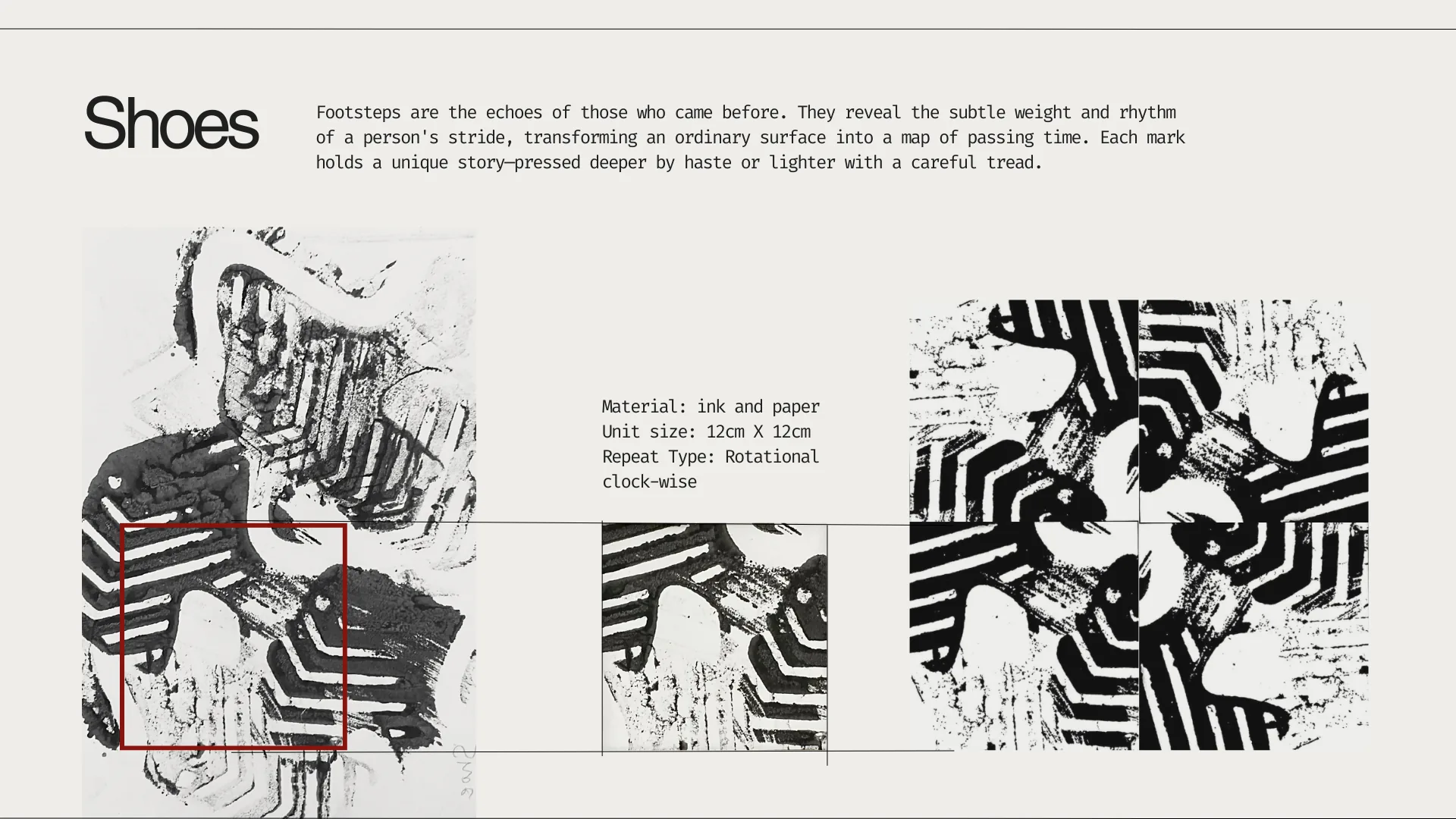
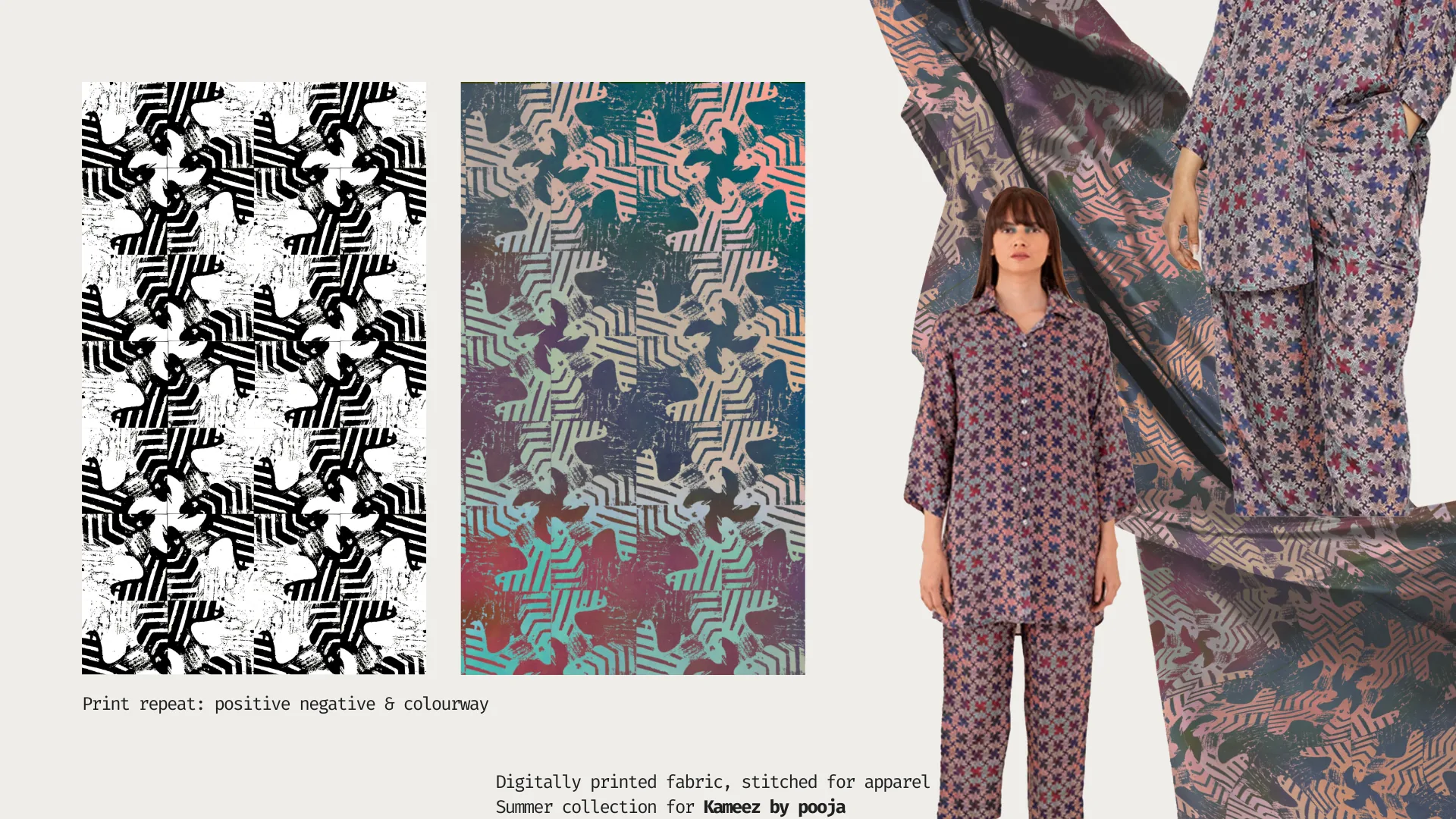
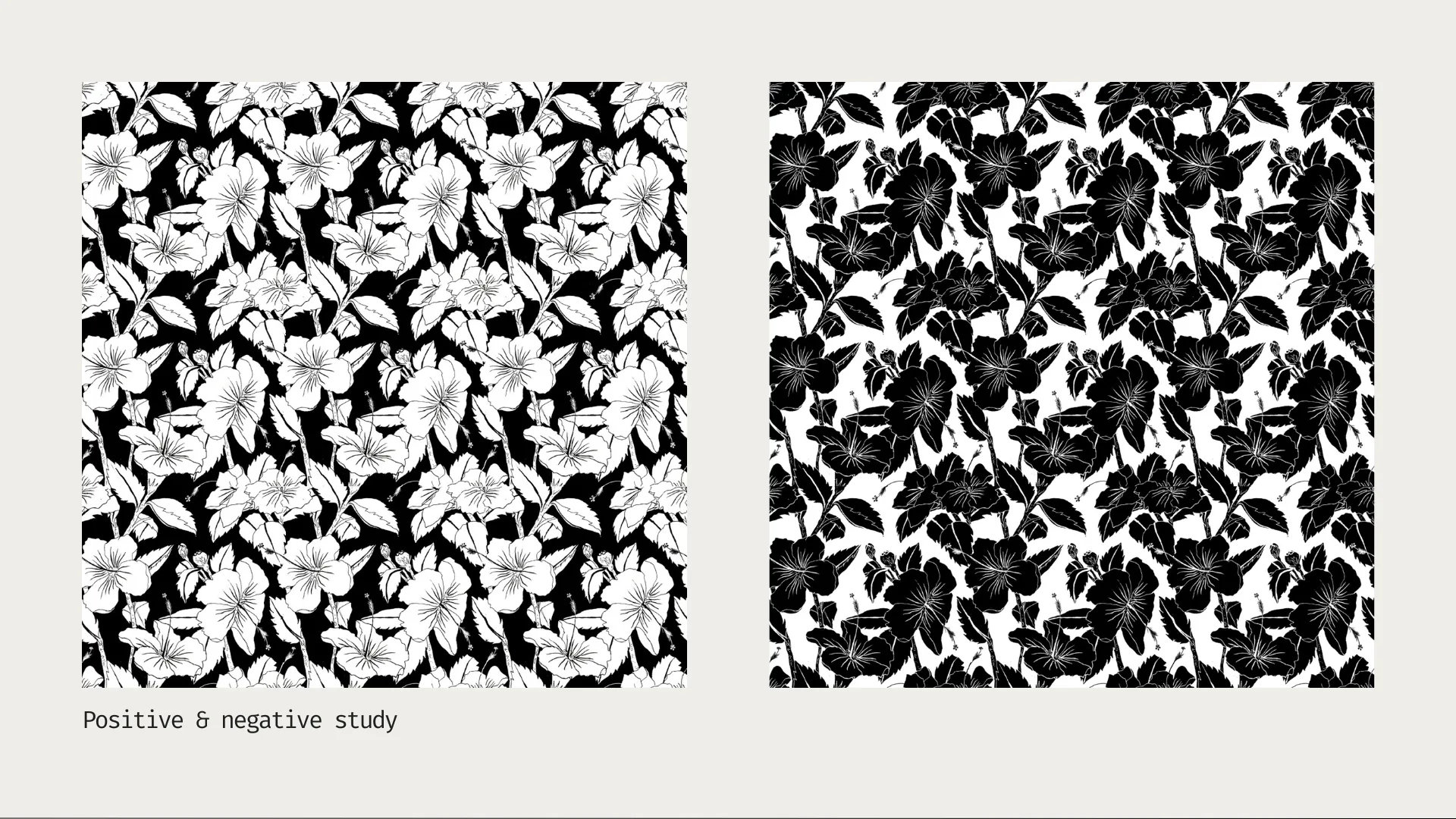
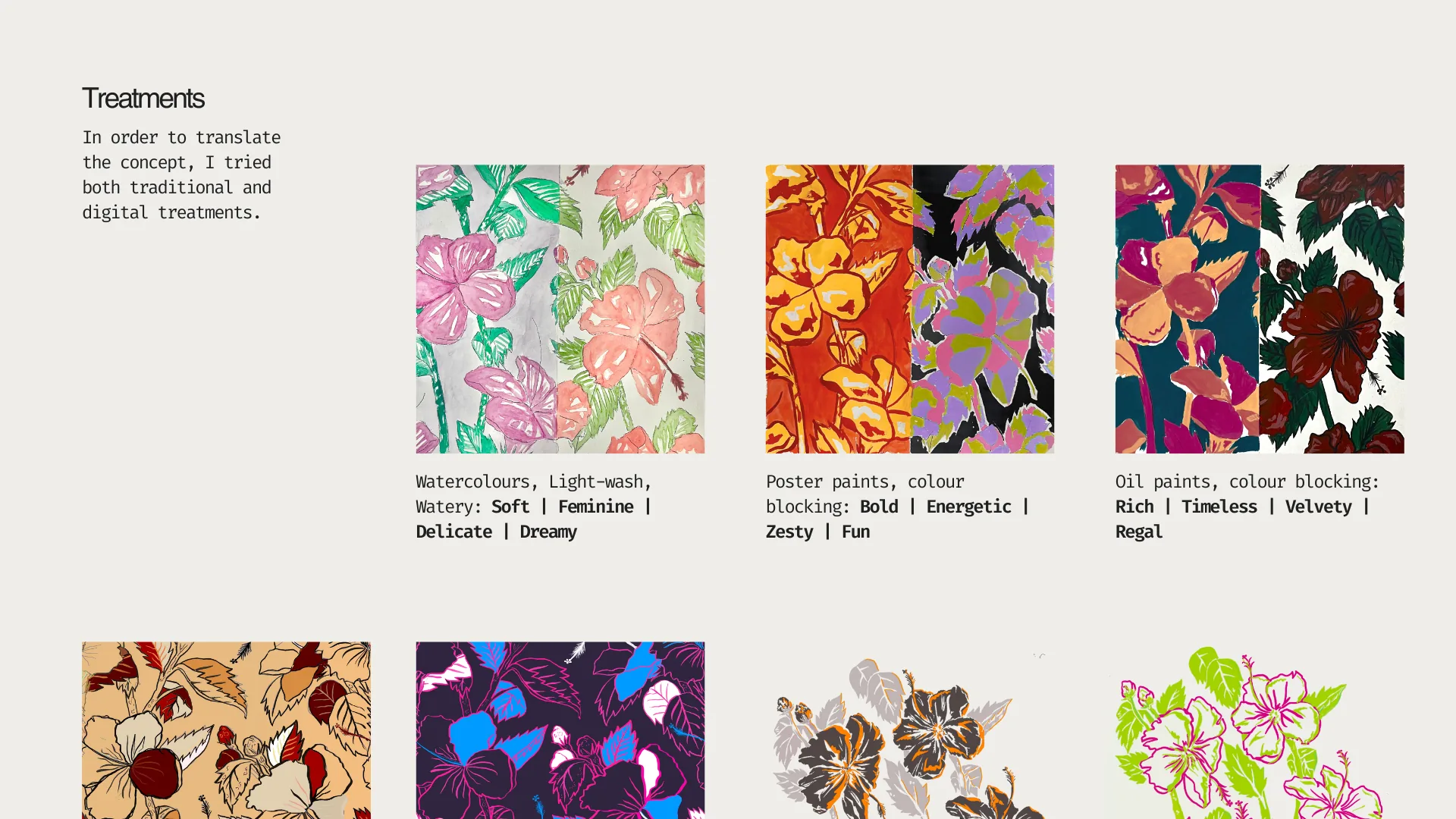
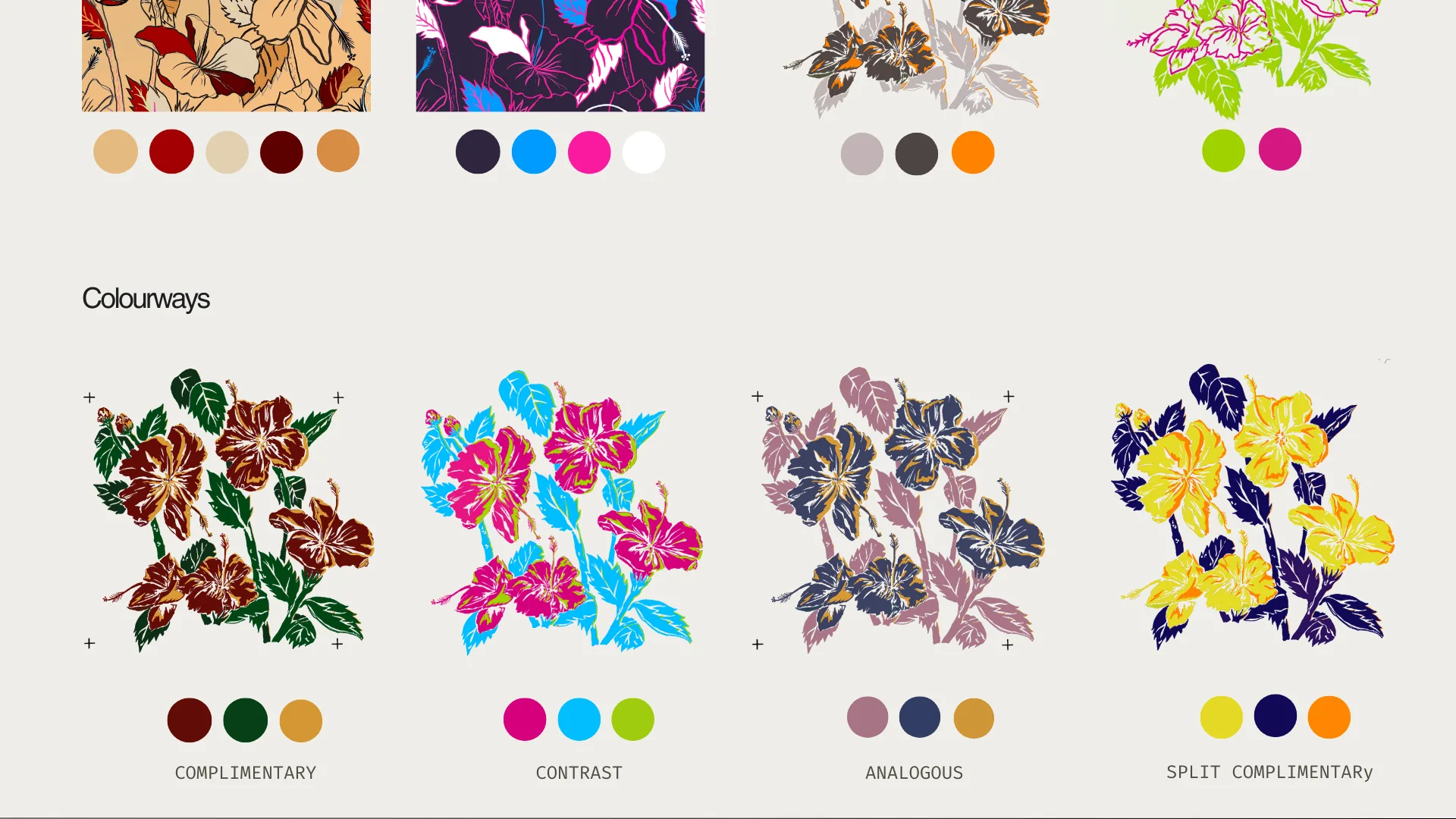
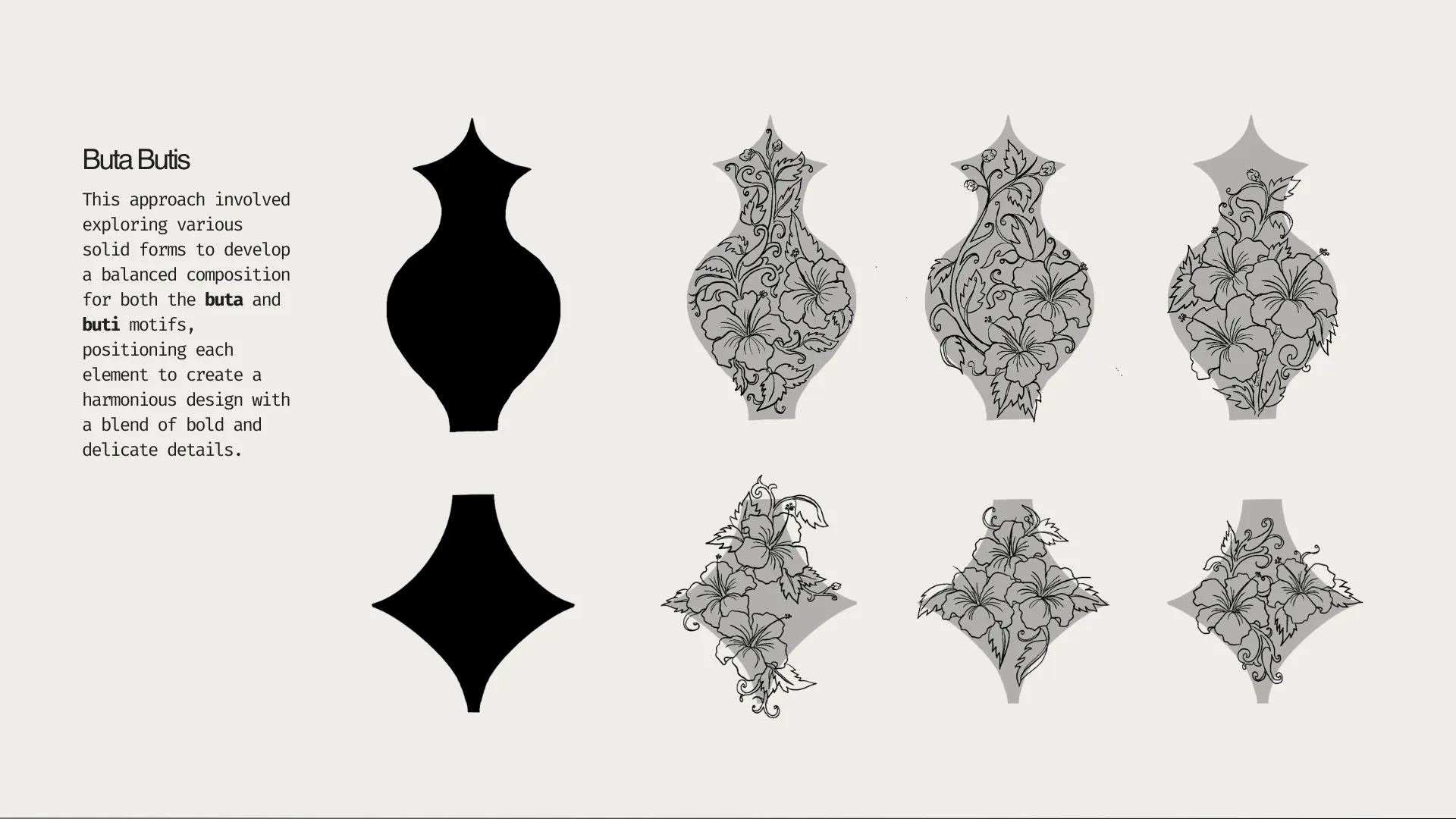
WorkSurface
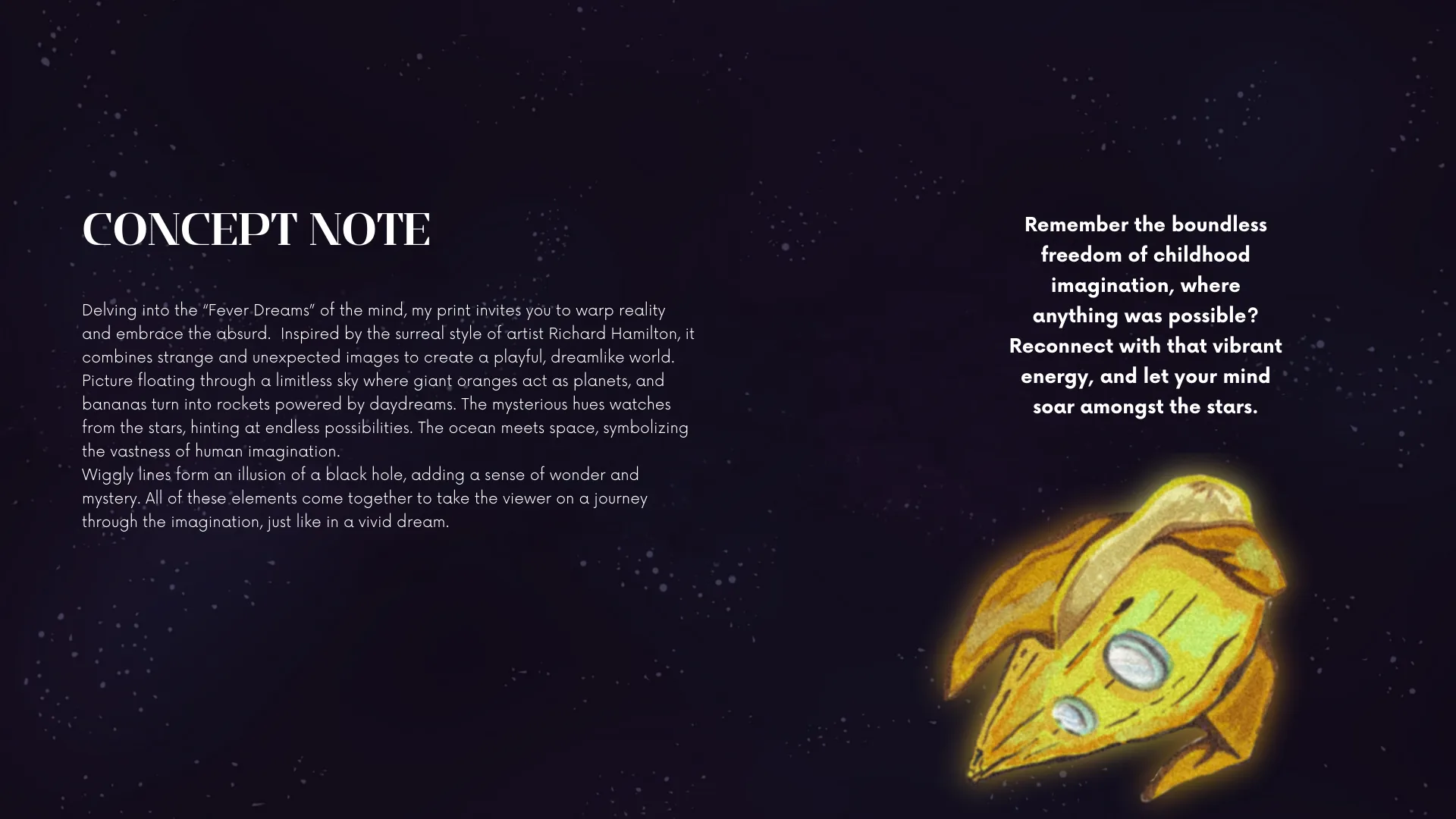
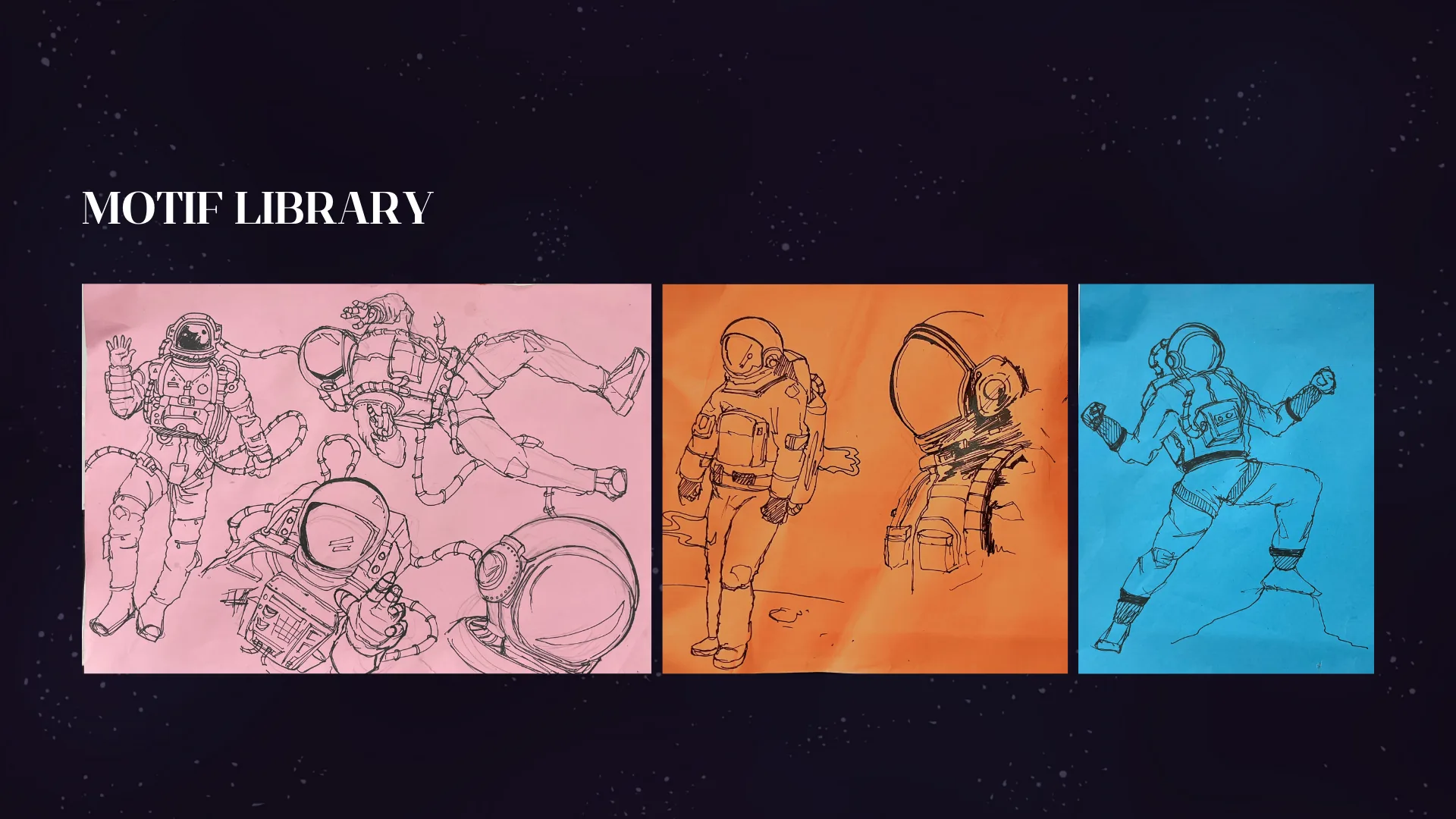
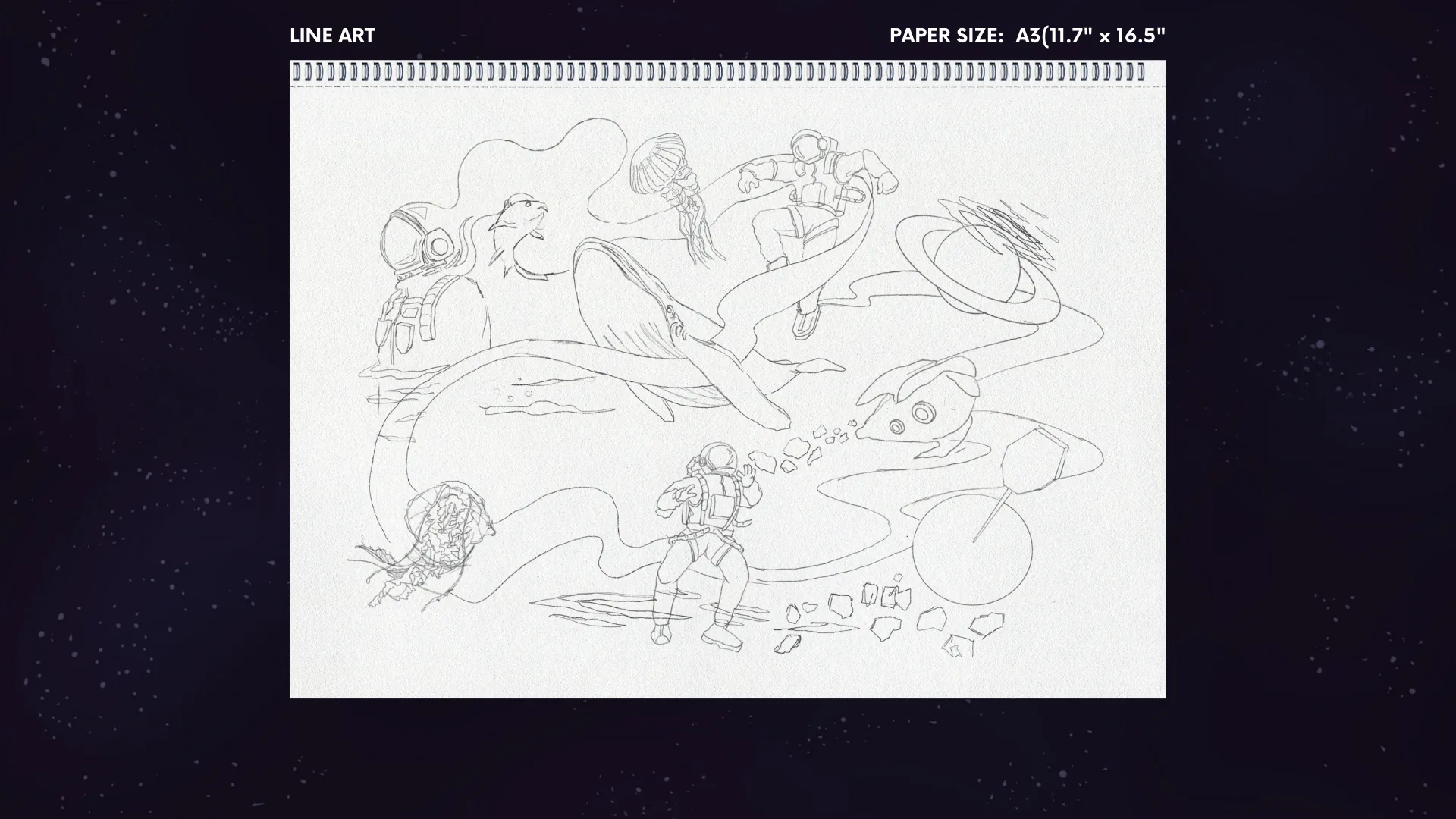
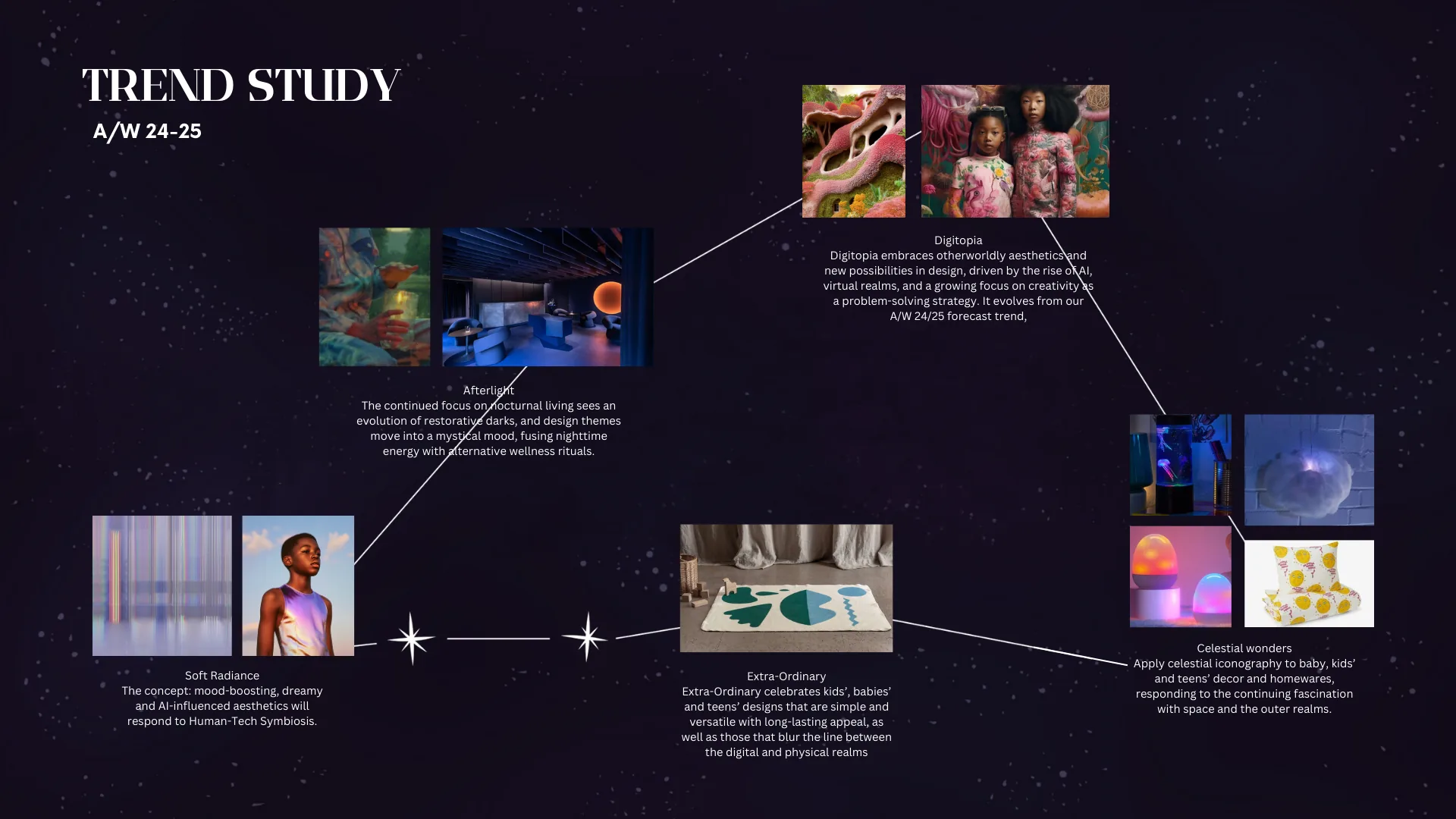
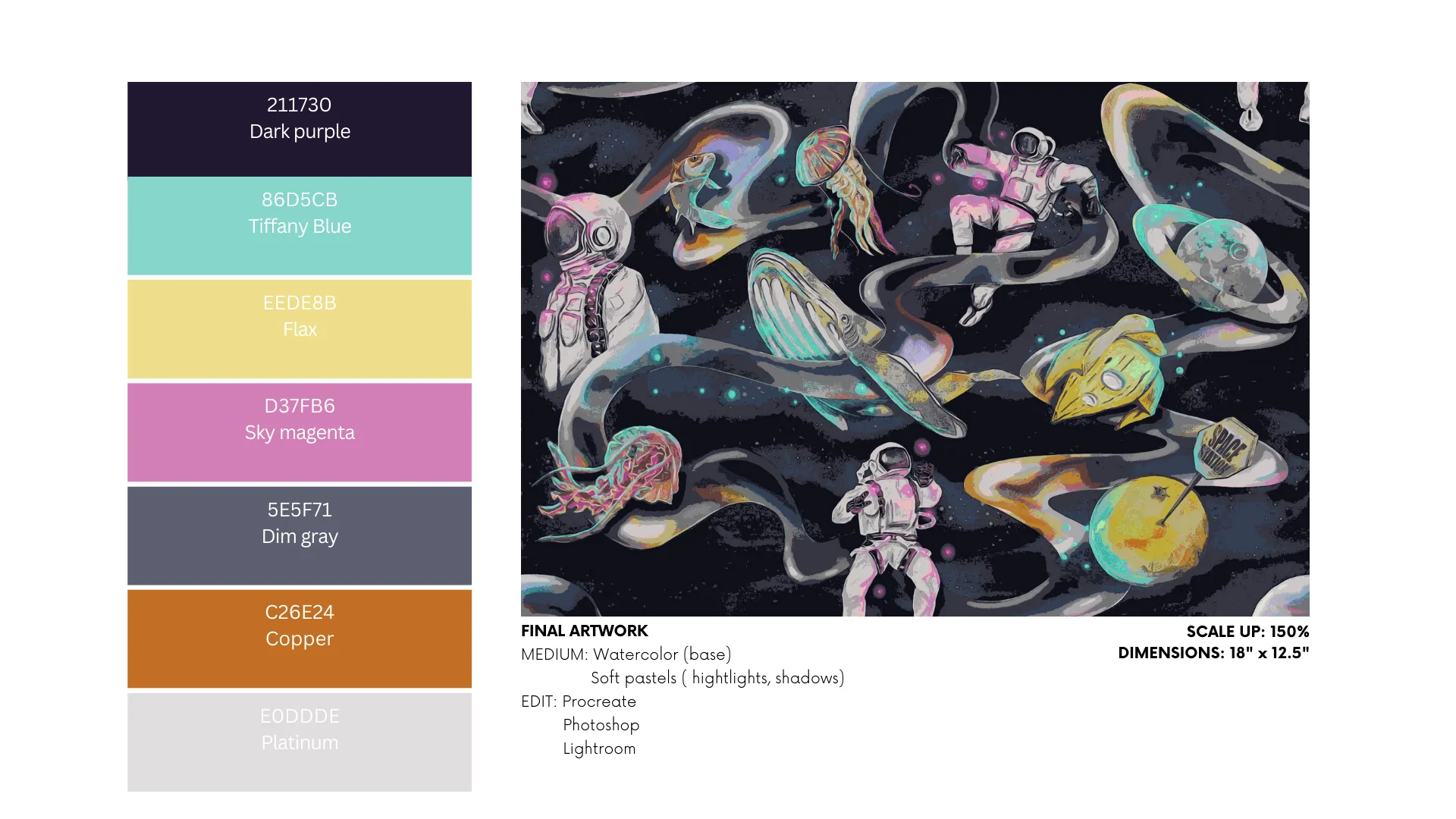
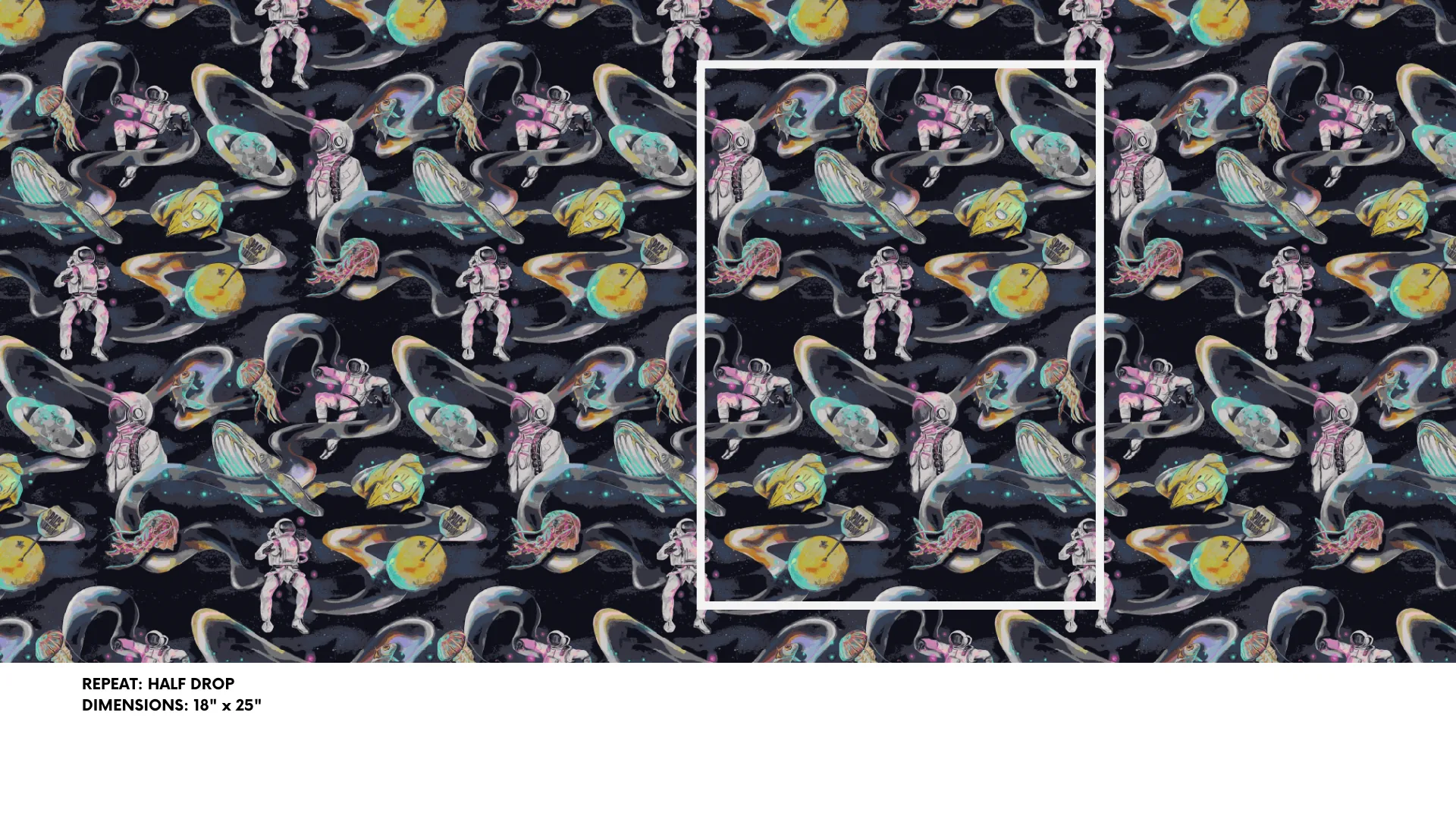
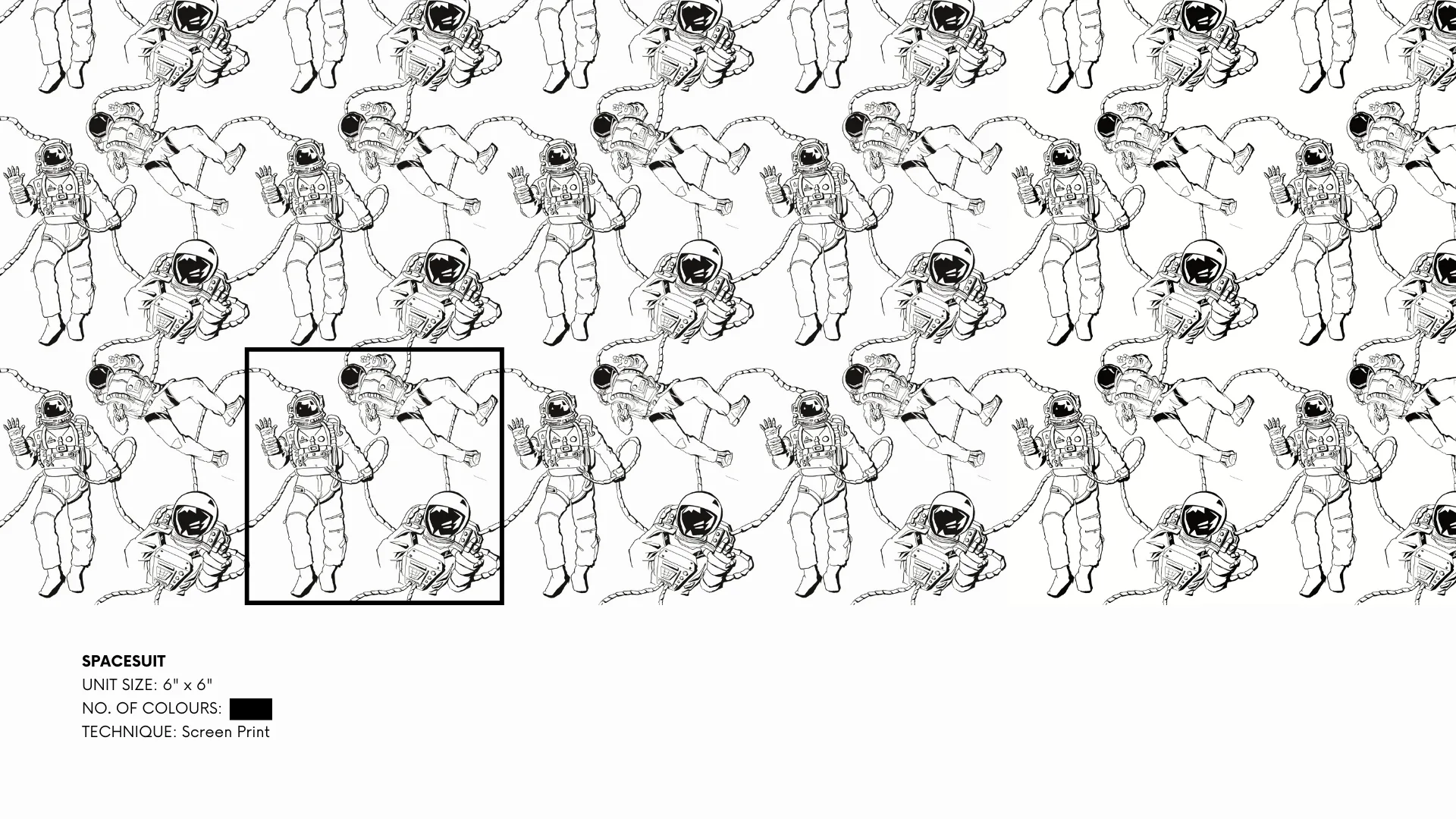
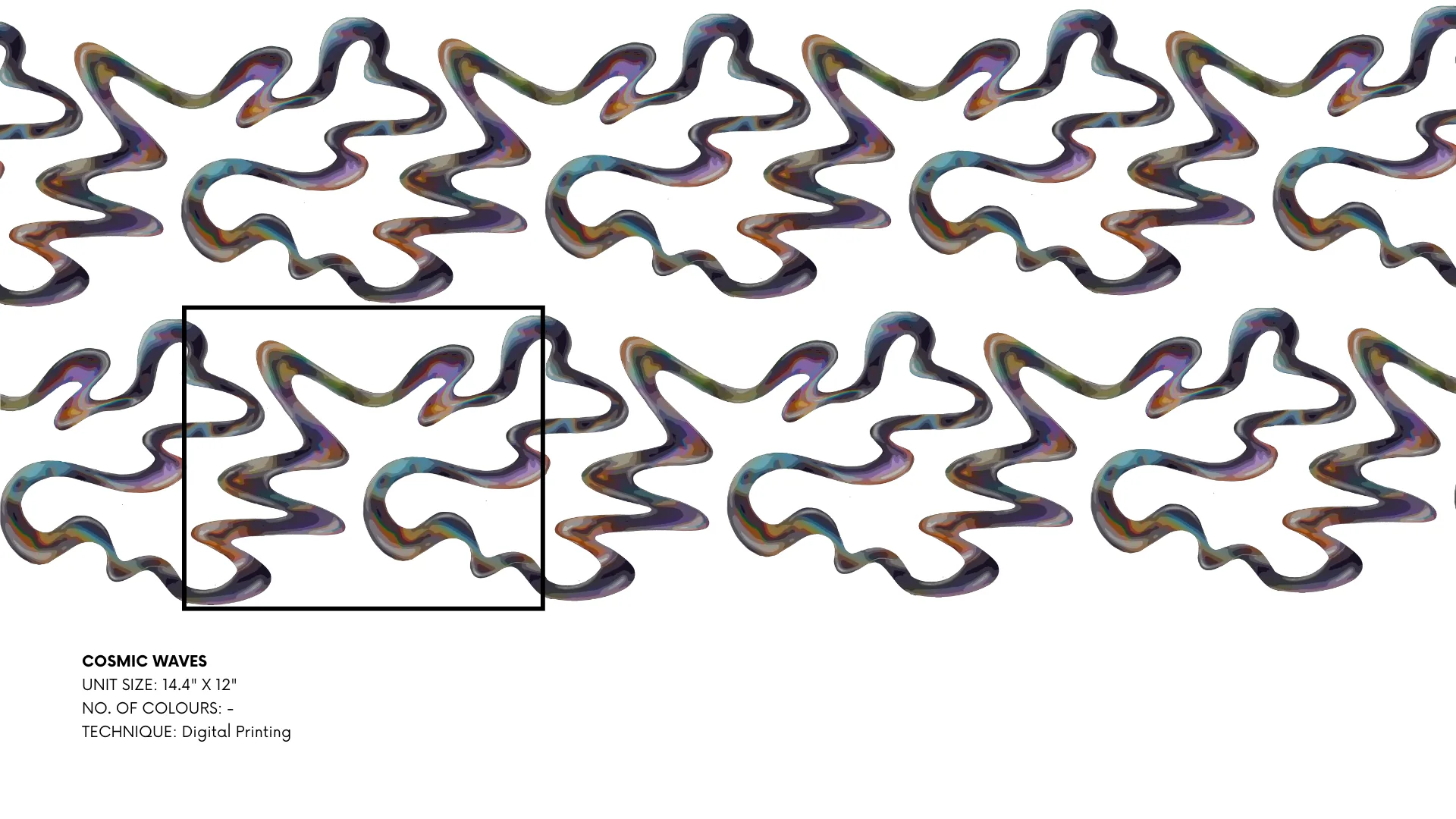
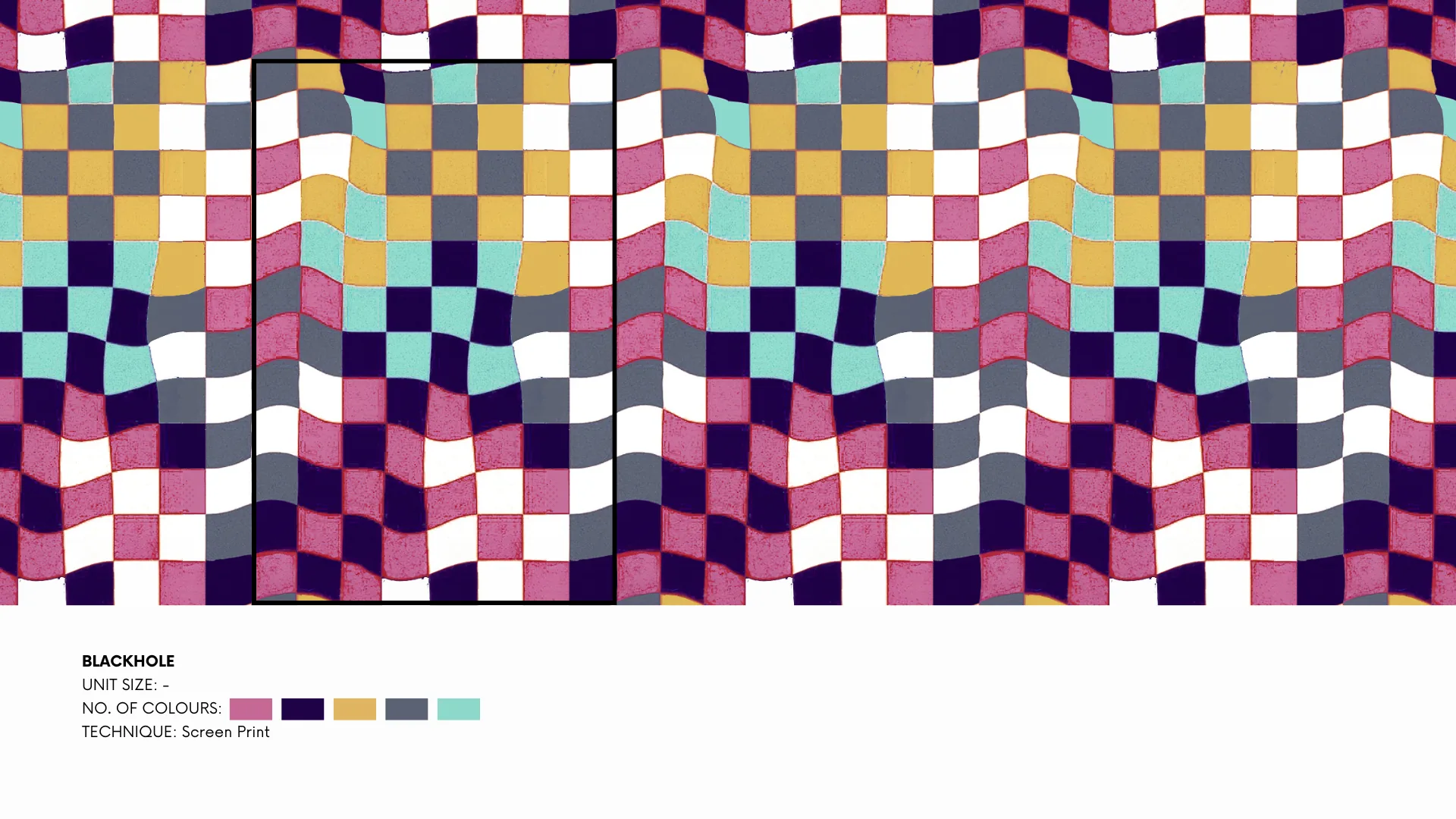
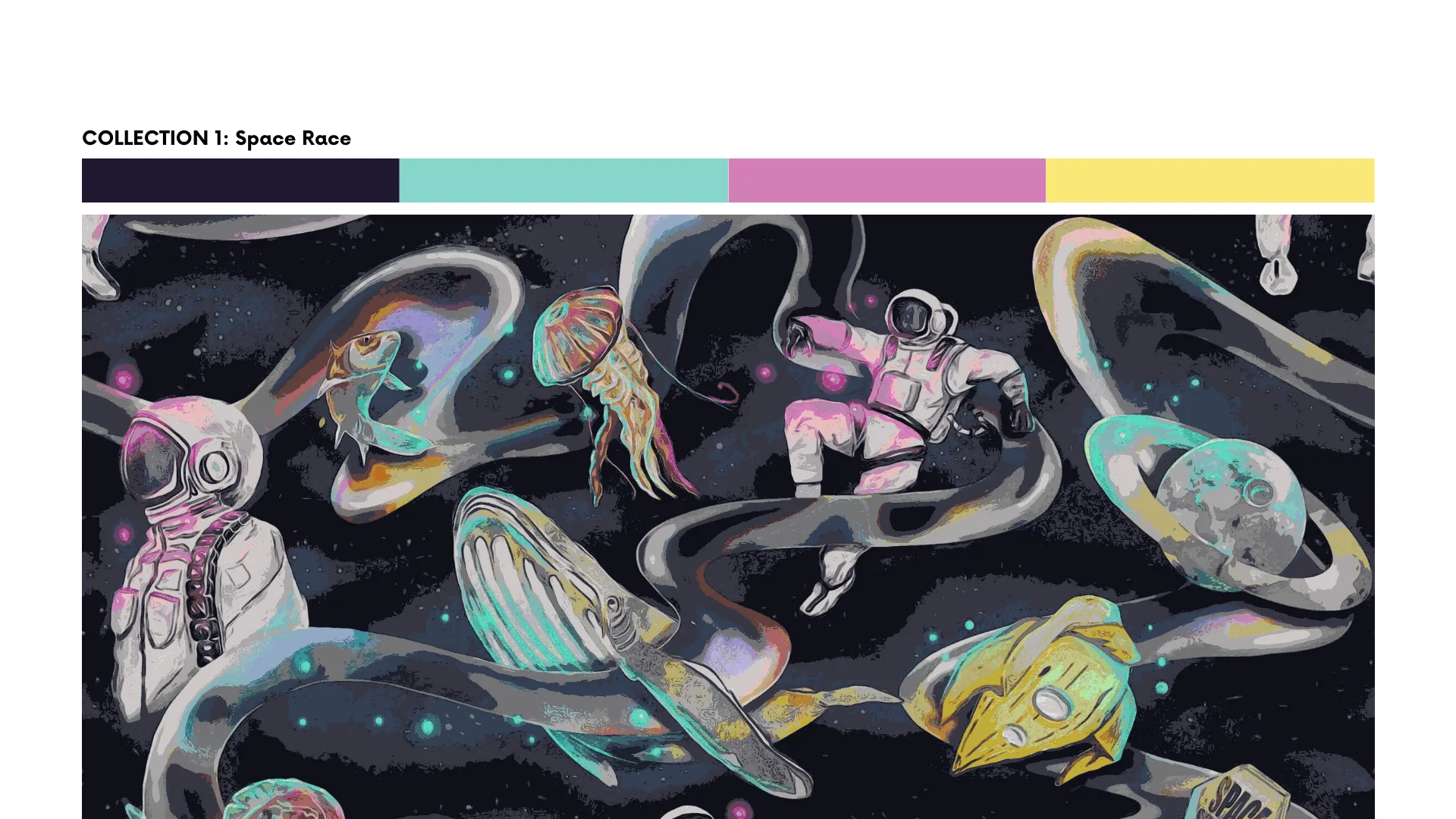
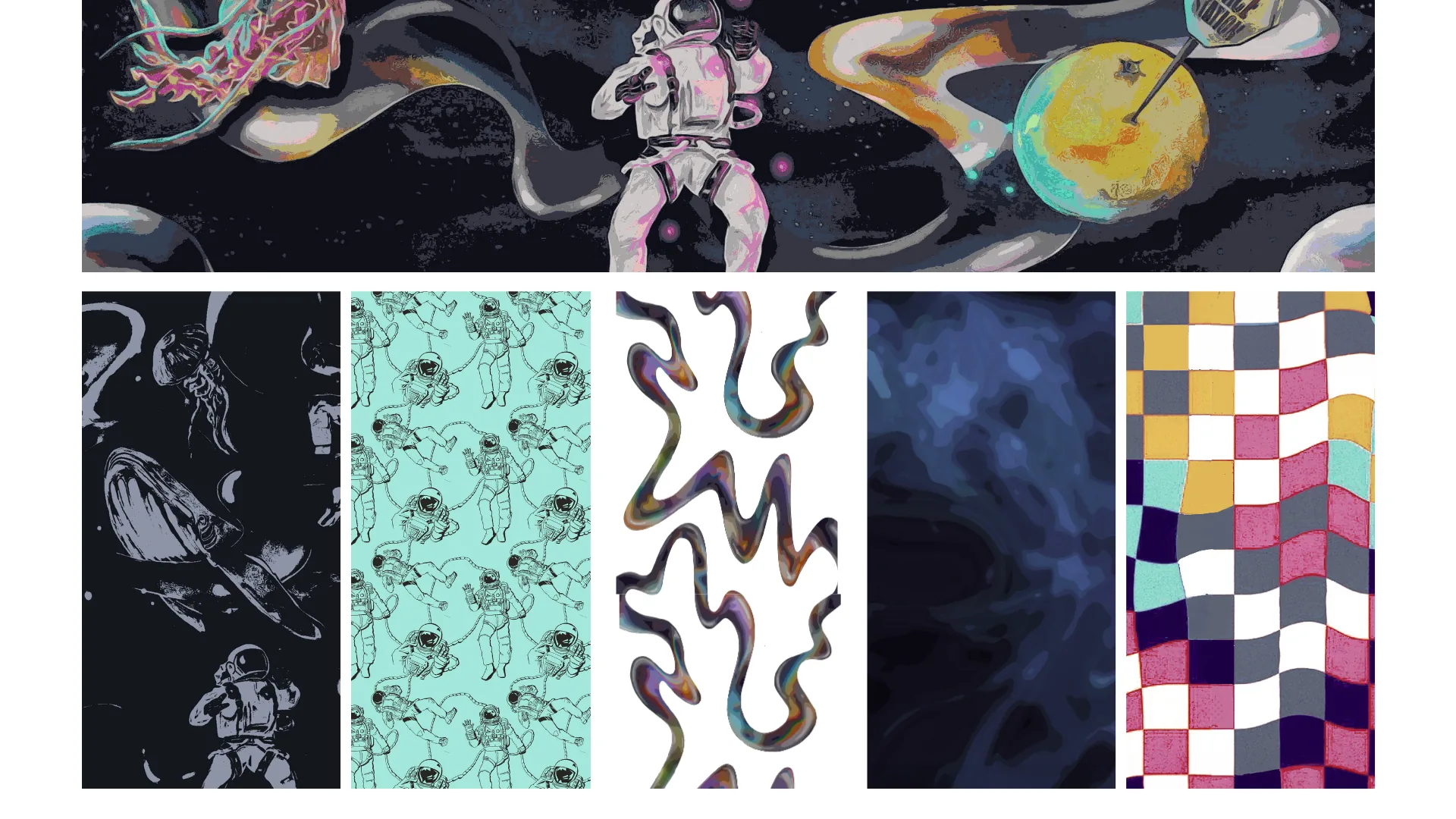
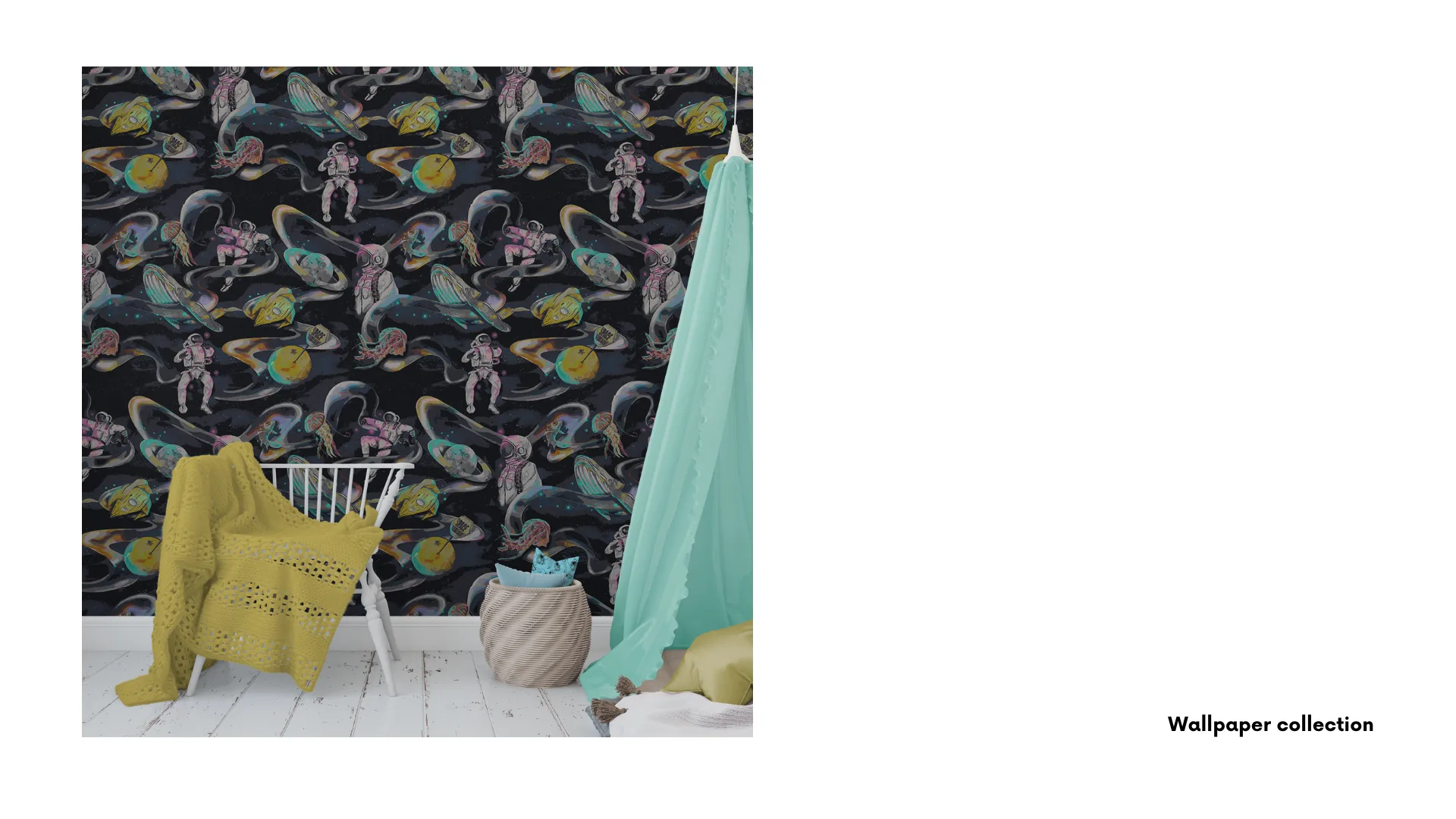
A surreal print and wallpaper collection for pre-teens








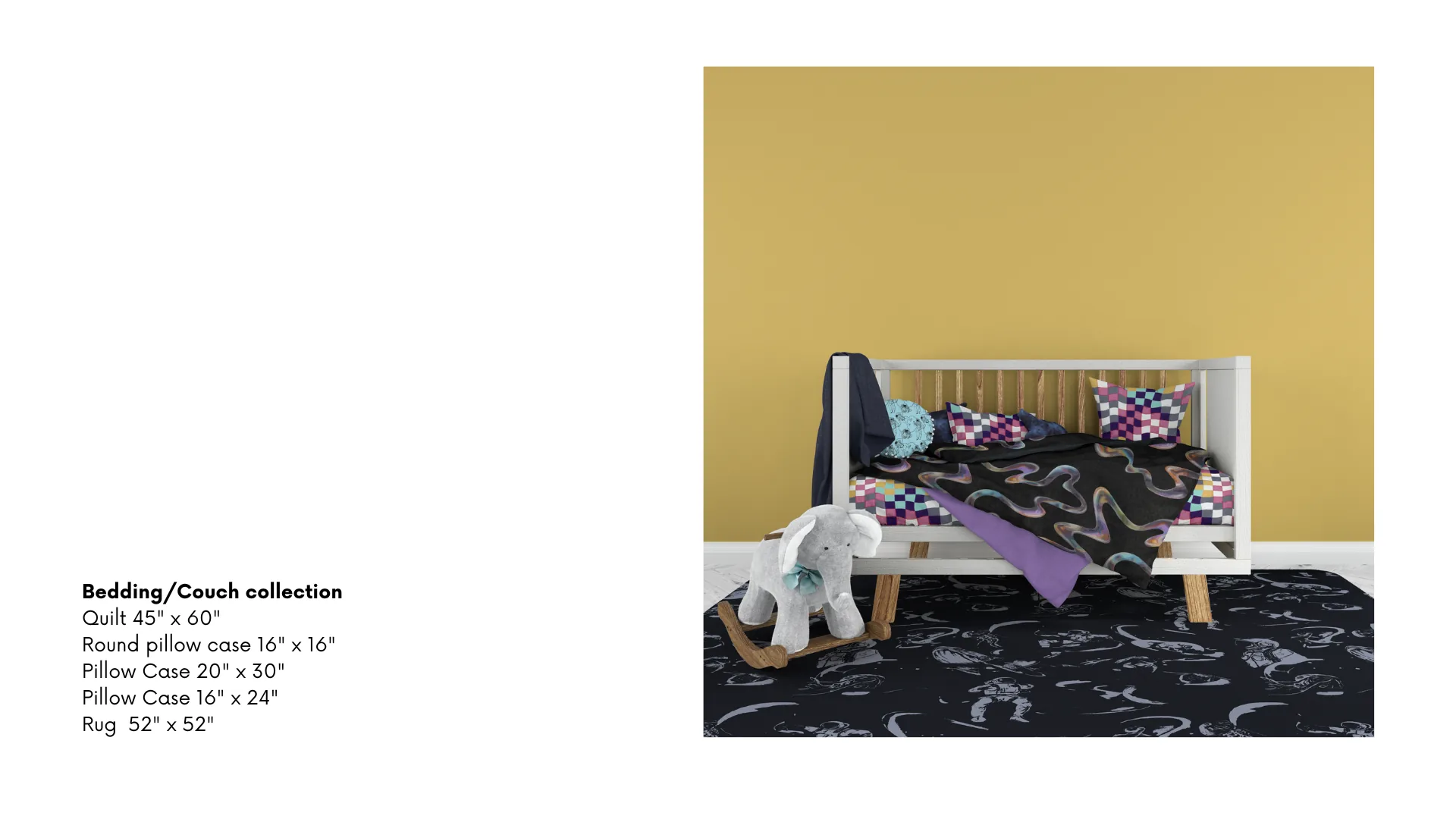
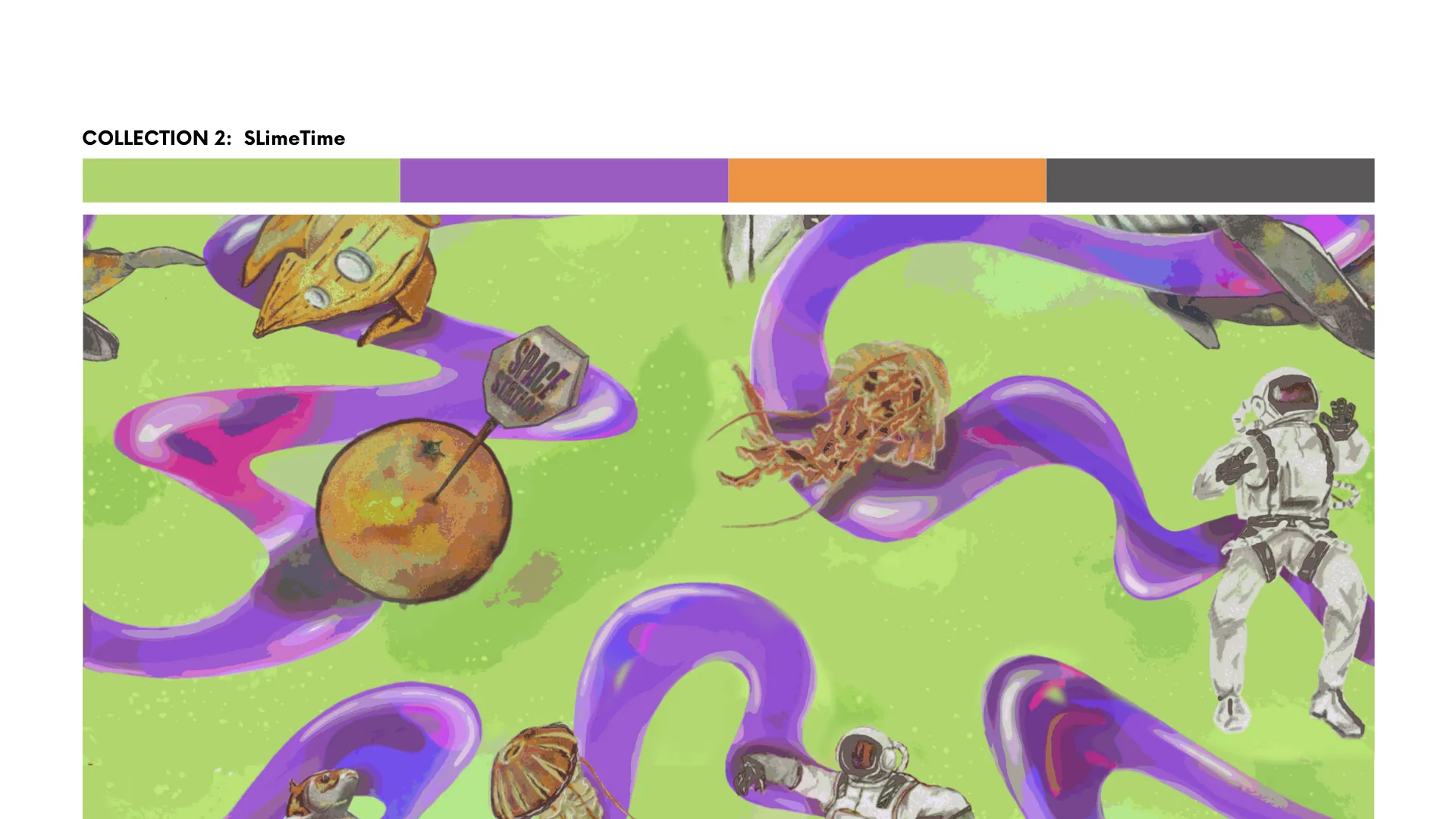
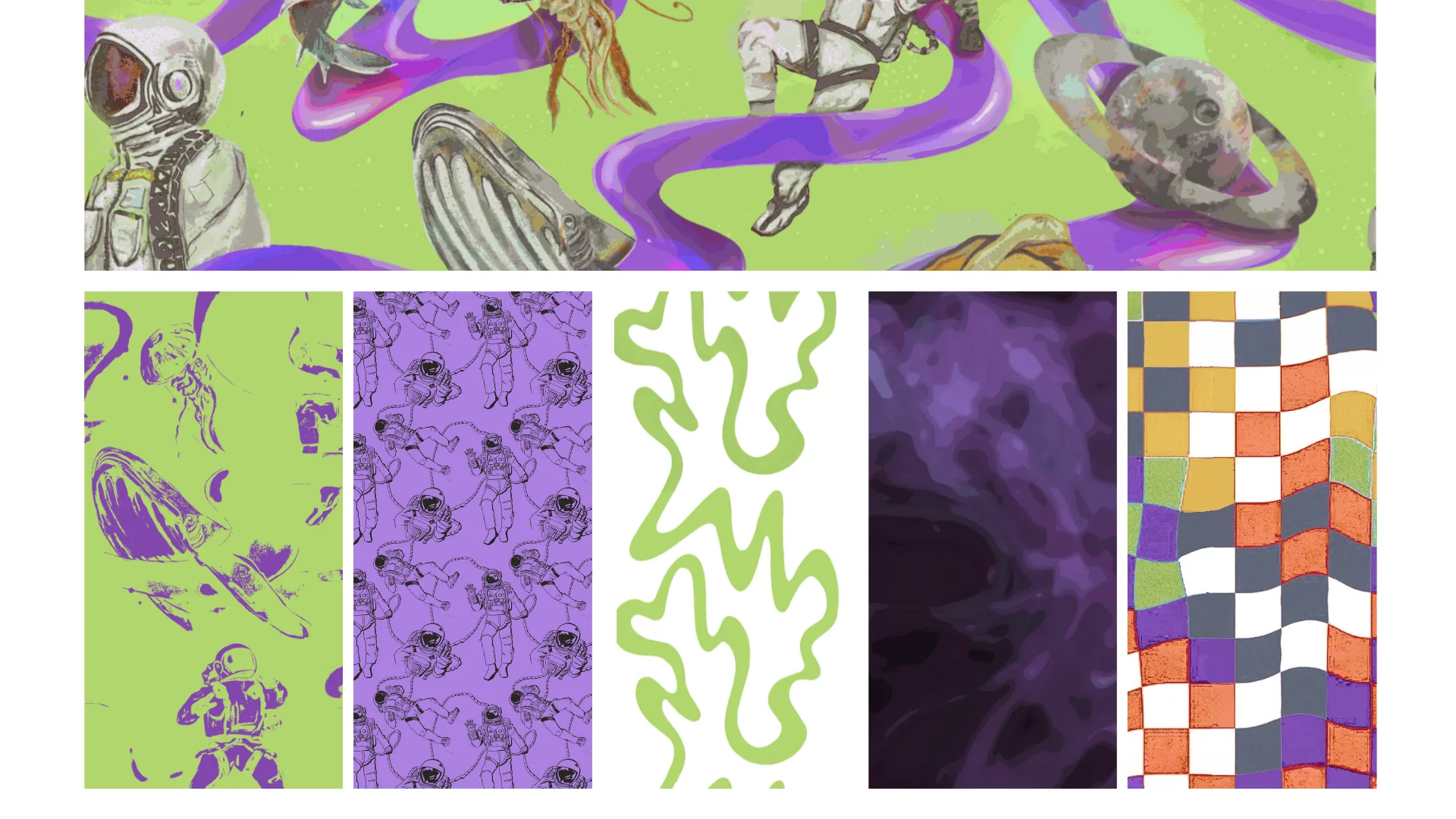
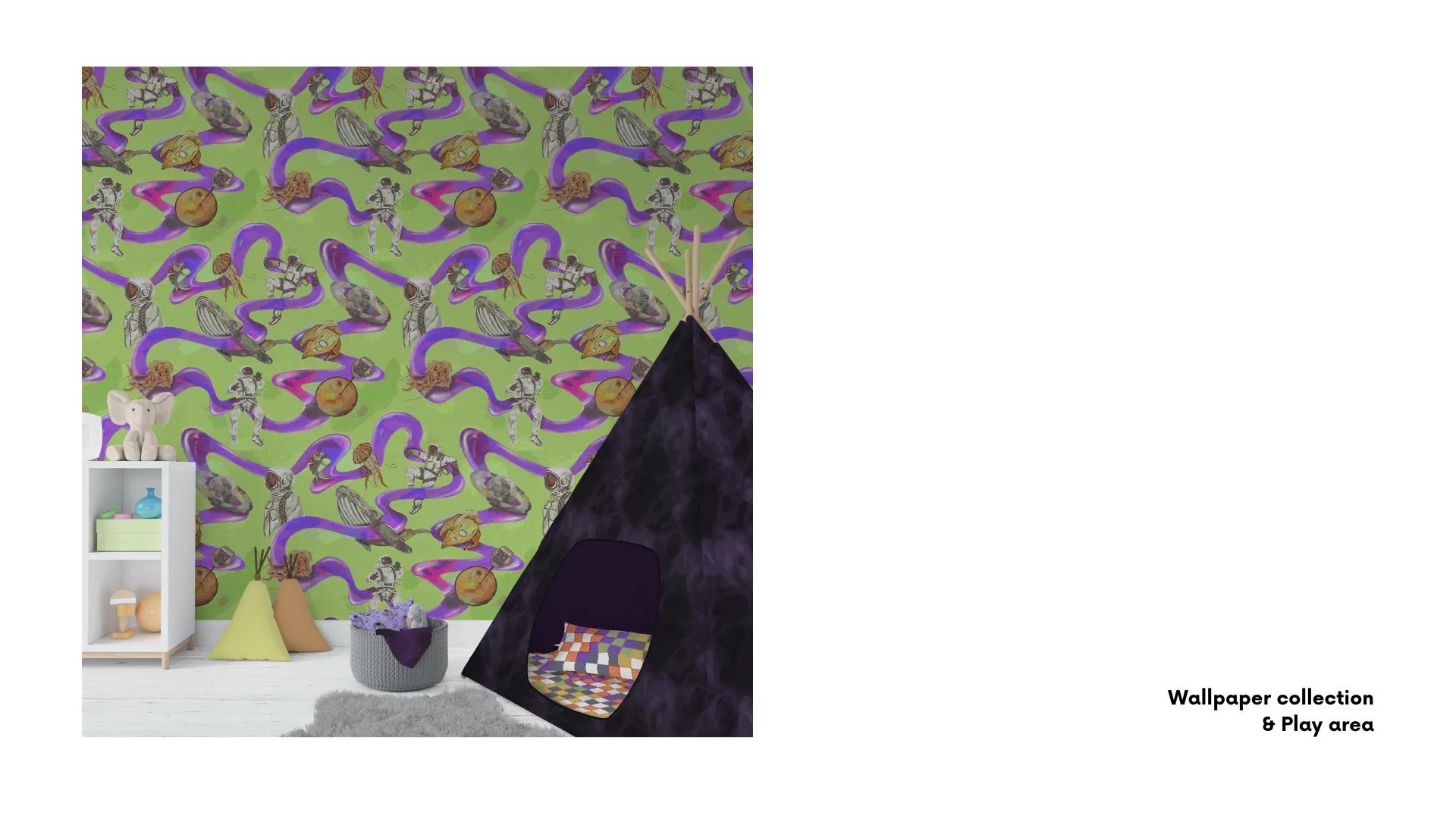
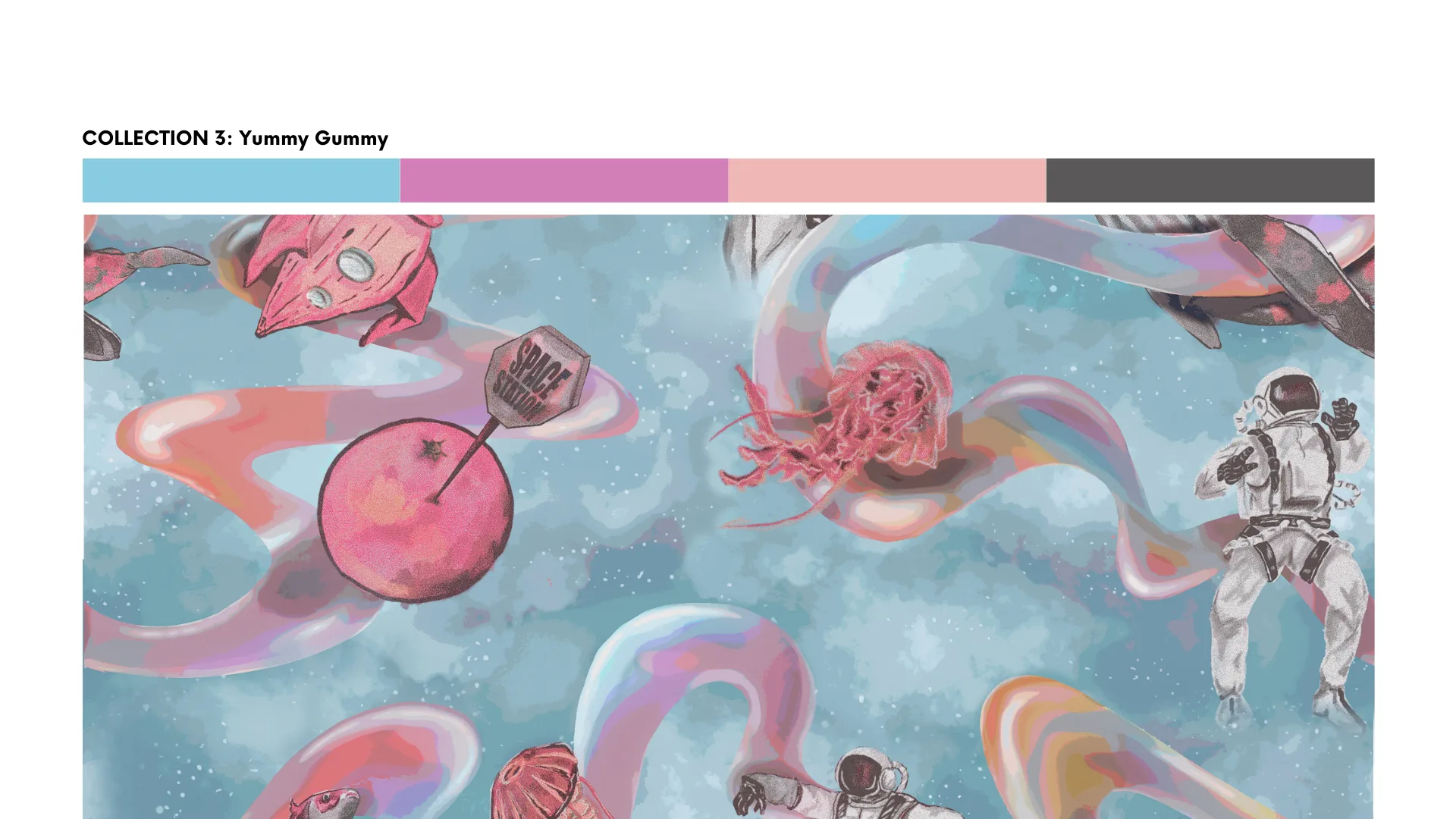
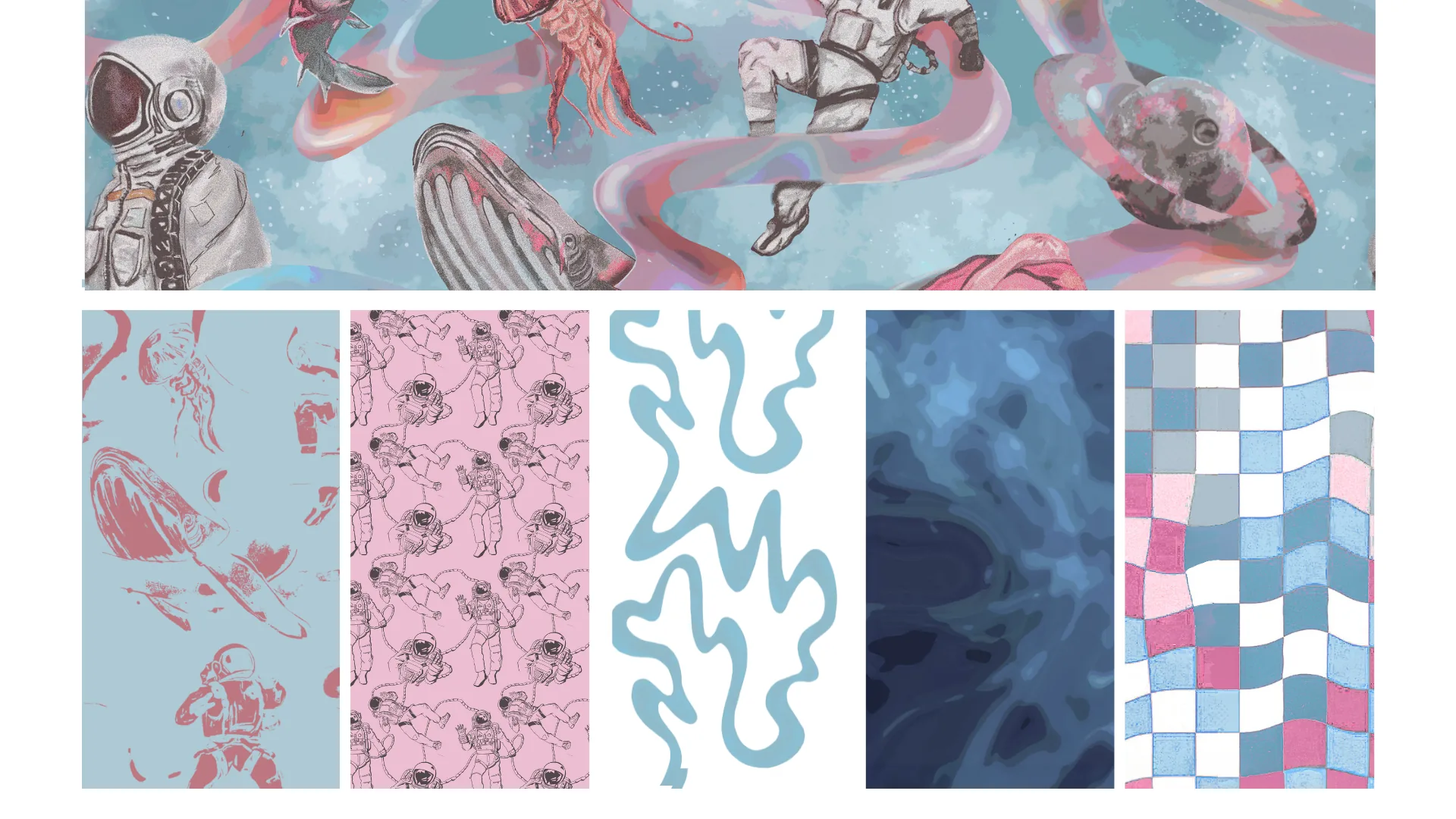
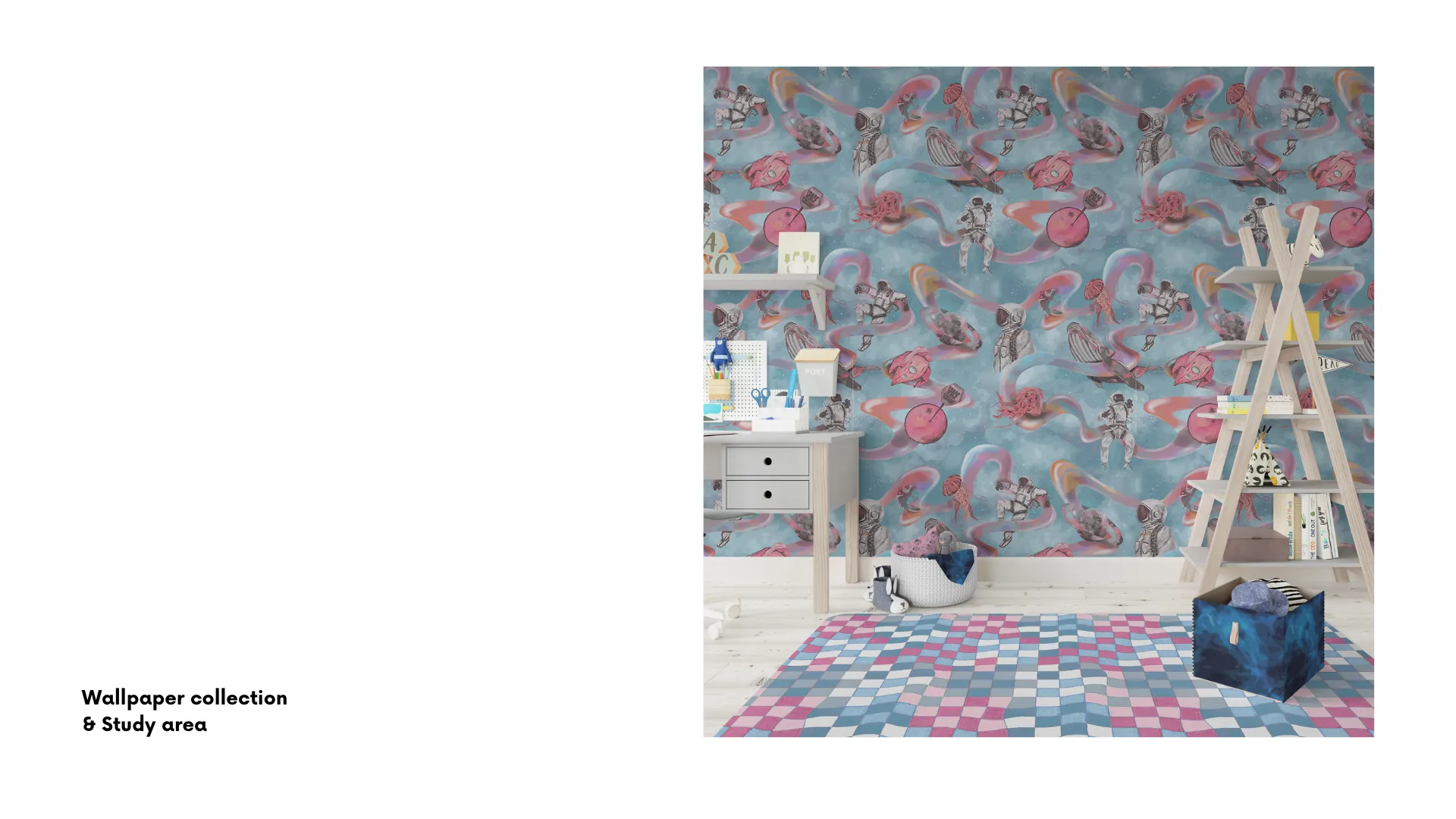

WorkSurface
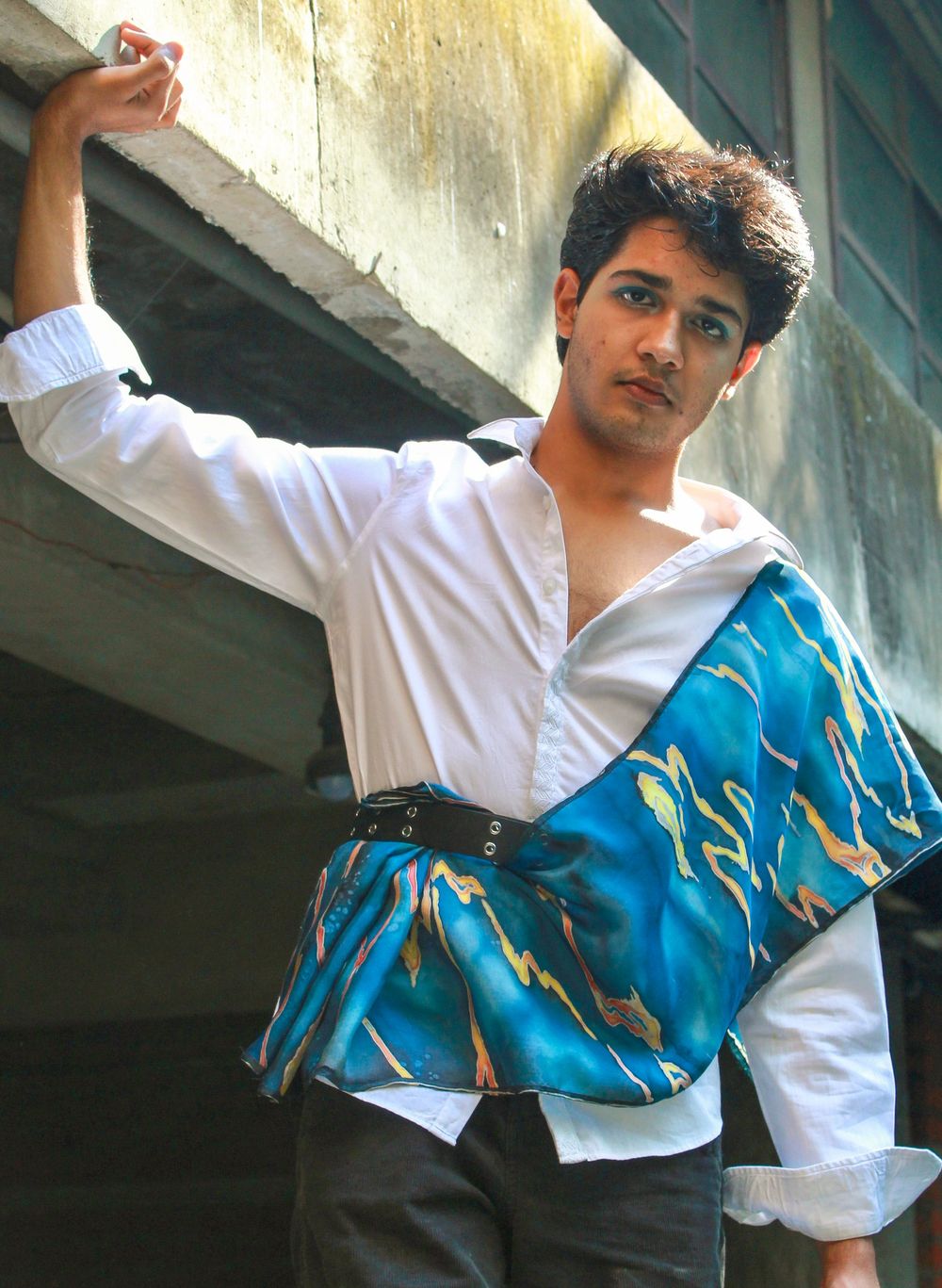
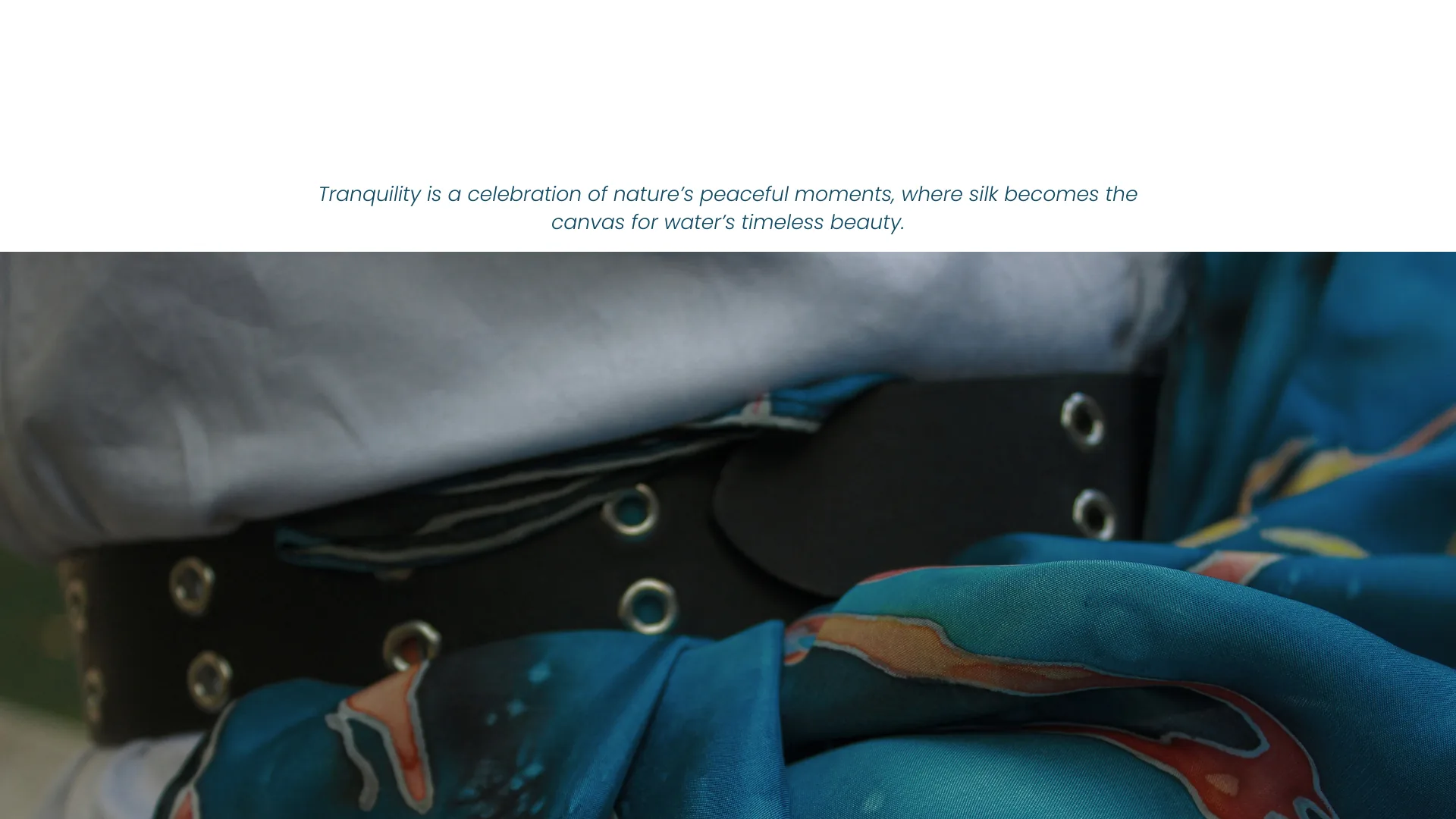
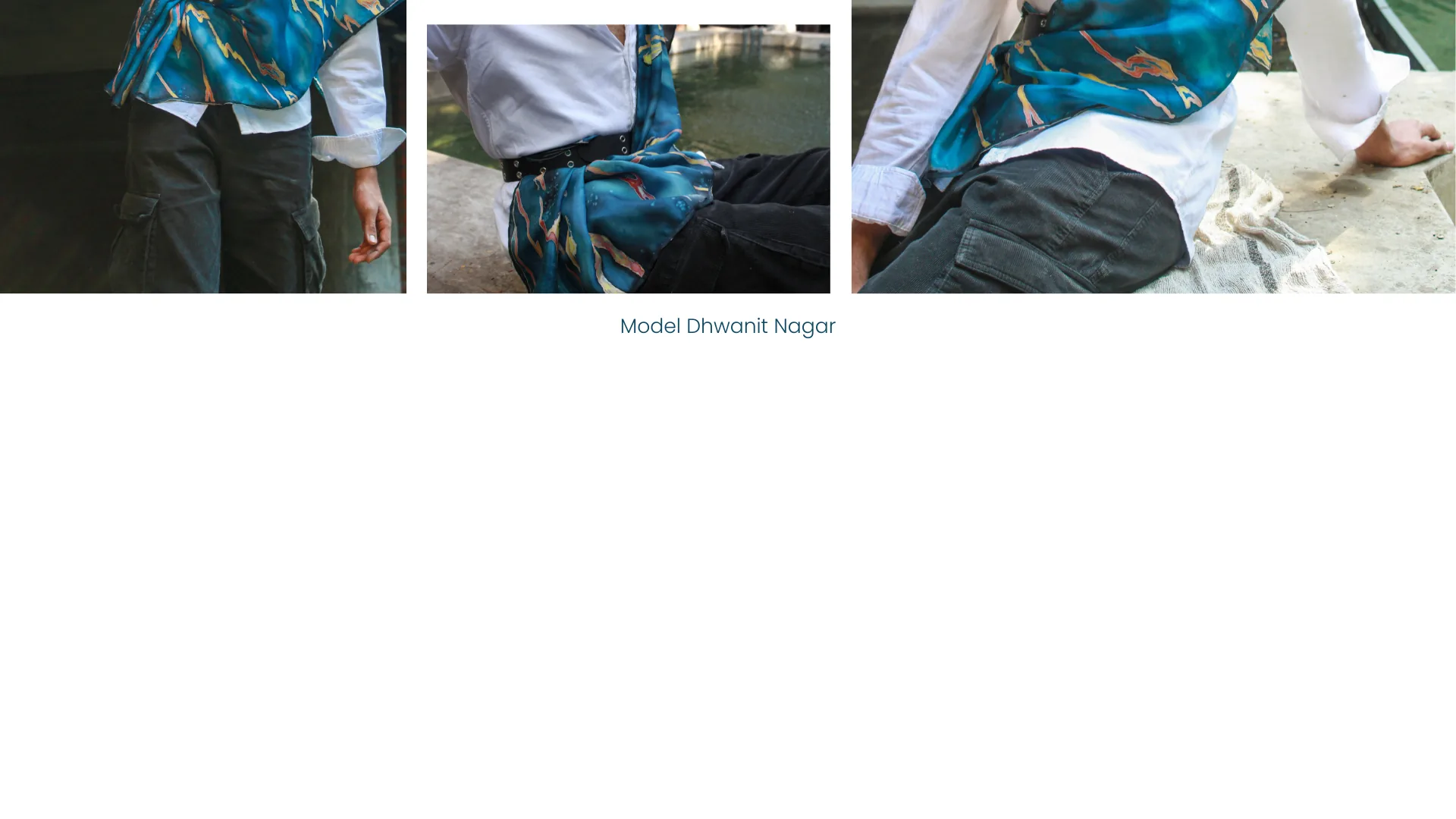
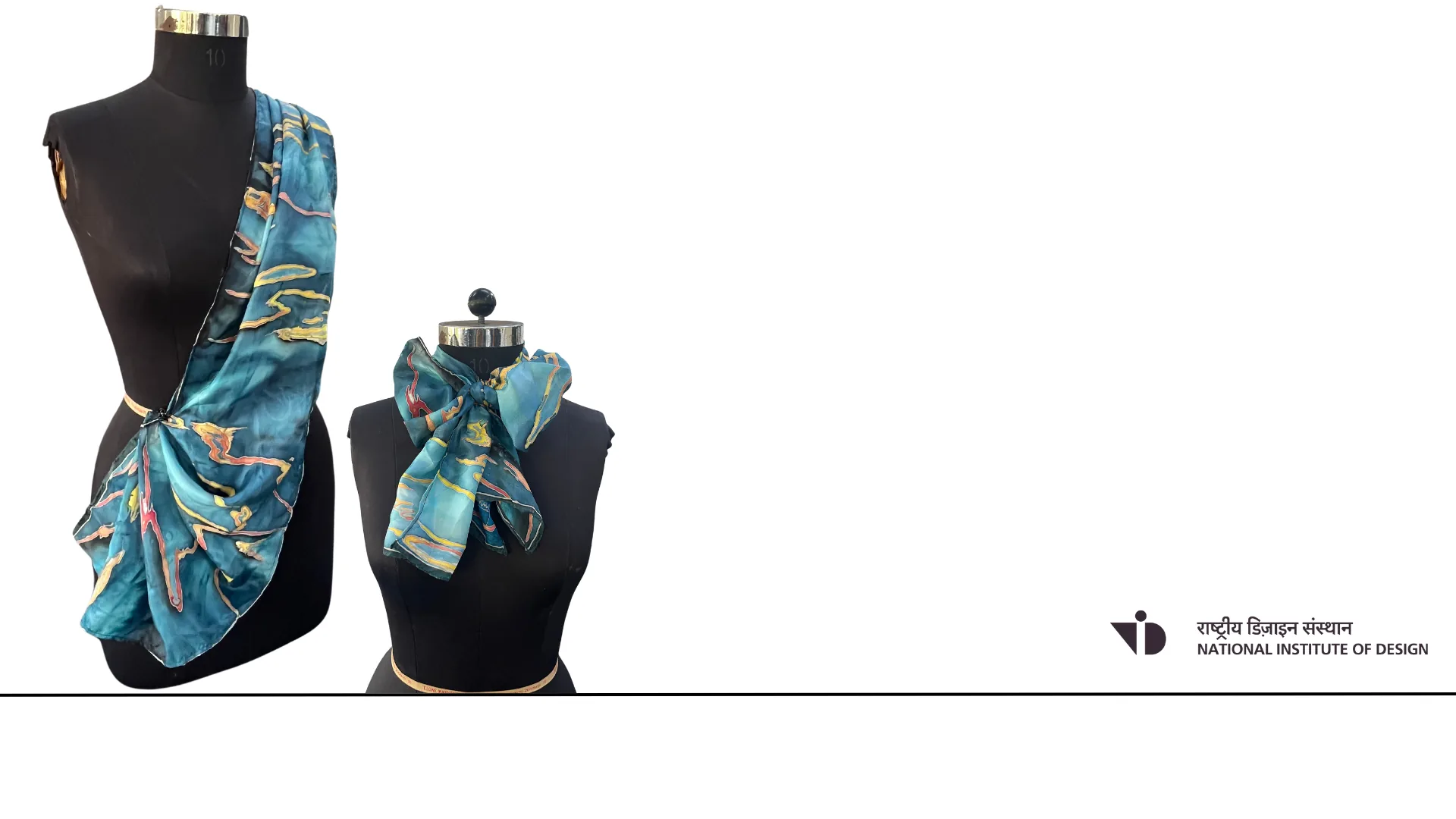
A hand-painted silk scarf

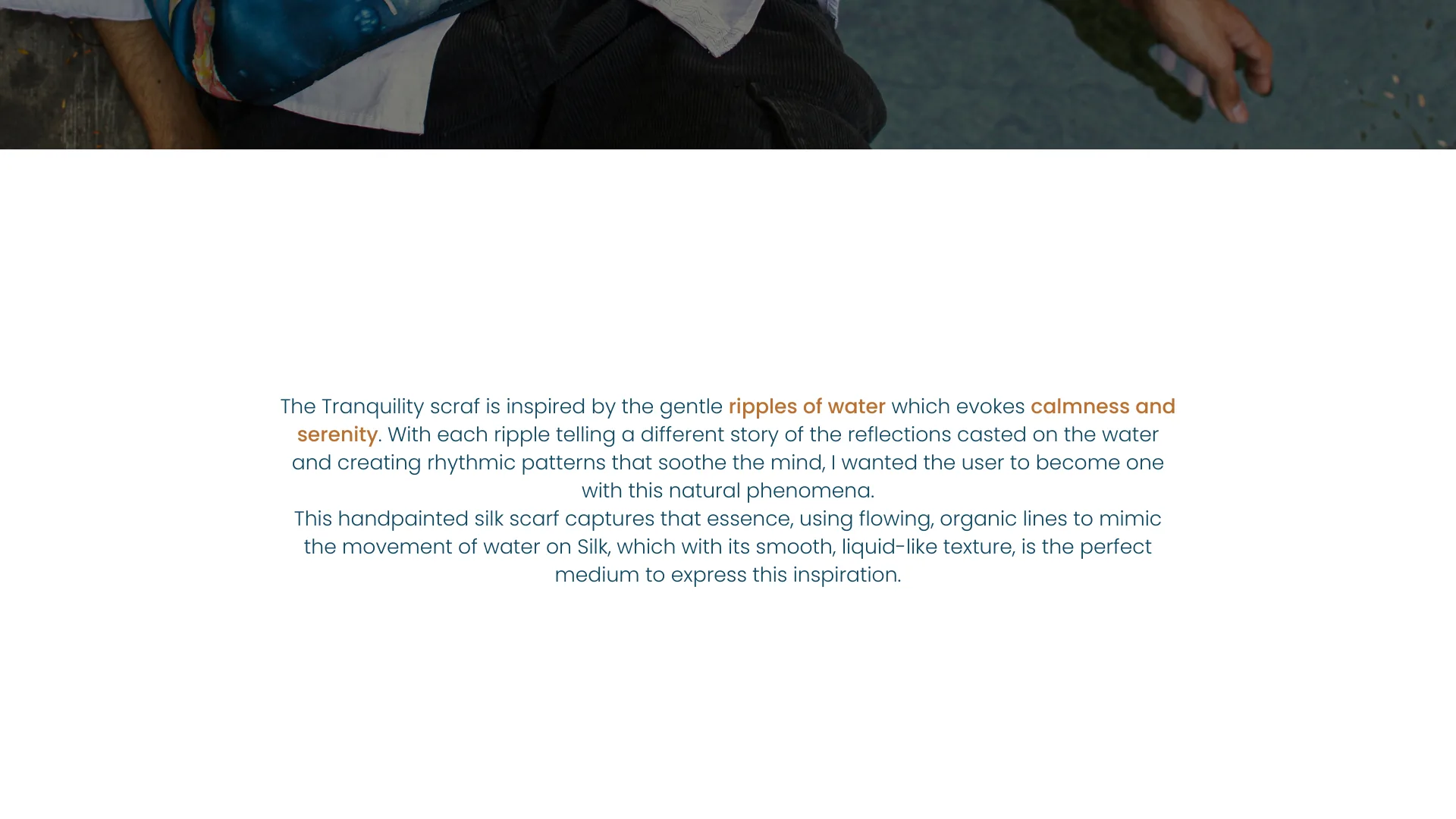


WorkSurface
Colour, material and finish research
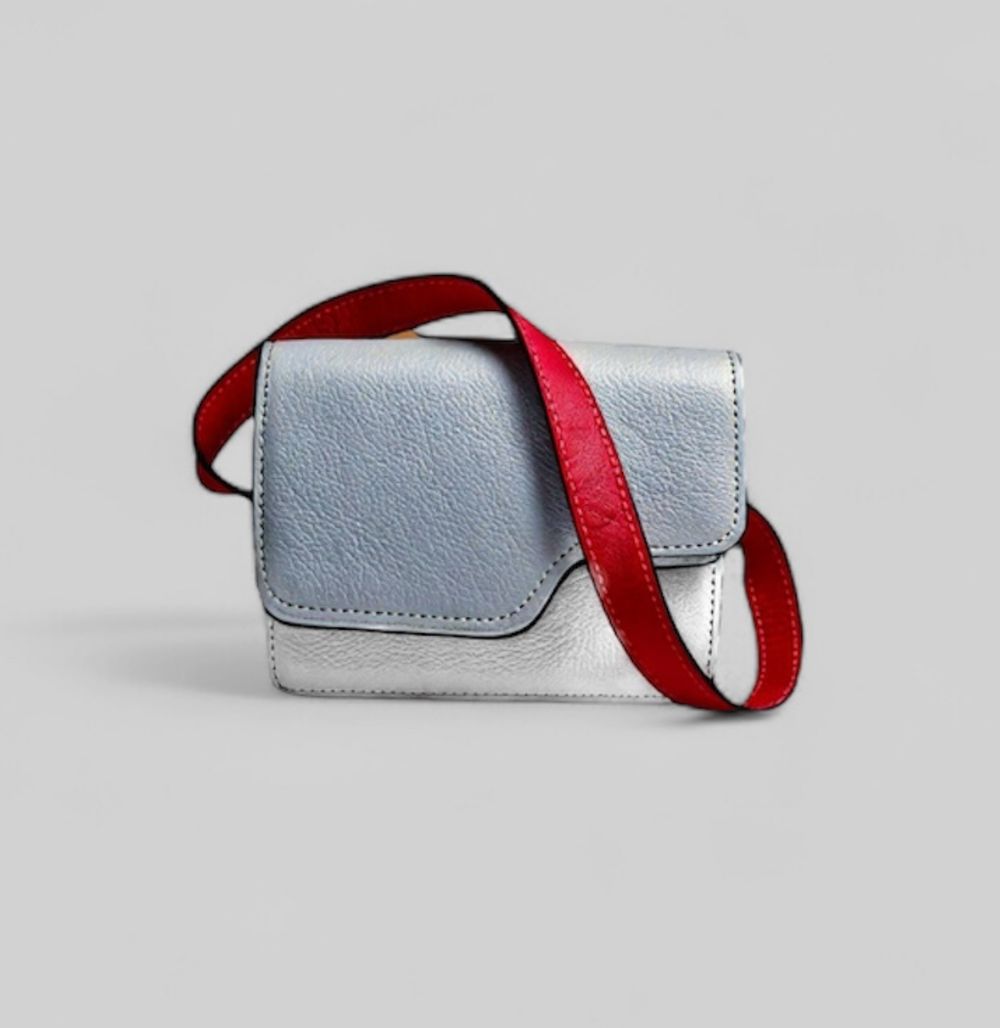
How do colour, material and finish make a product fit one person's life?
The user project started from a real person: a 25-year-old graphic designer in Bangalore. The brief was to redesign her current backpack so she could commute freely through crowded spaces, carry her iPad with daily essentials, look professional for client meetings, and still use it for museum visits, friends and social events.
The colour study began with a personal association. Growing up in Dehradun, I first attach dark moss green to comfort: long walks and the cushion of moss underfoot. It also carries a regret of not exploring enough, a reminder of how much of the world I have not yet seen.
Life, regeneration, tranquility and harmony in Zen culture.
Homes and hiding places of elves, fairies and mystical creatures.
Protection and guidance; moss used in healing ceremonies.
Wisdom of nature and the interconnectedness of living things.
Dark moss green, from memory and association.
Moss green from prehistory and ancient Egypt to biophilic design today.
Her environment, work, problems, goals and challenges.
Redesign her backpack for commuting, client meetings and informal use.
Driven, Restful and Upbeat, each with a material board.
Documentation of communities, crafts and materials.




ArchiveCommunitiesNo. 01
About
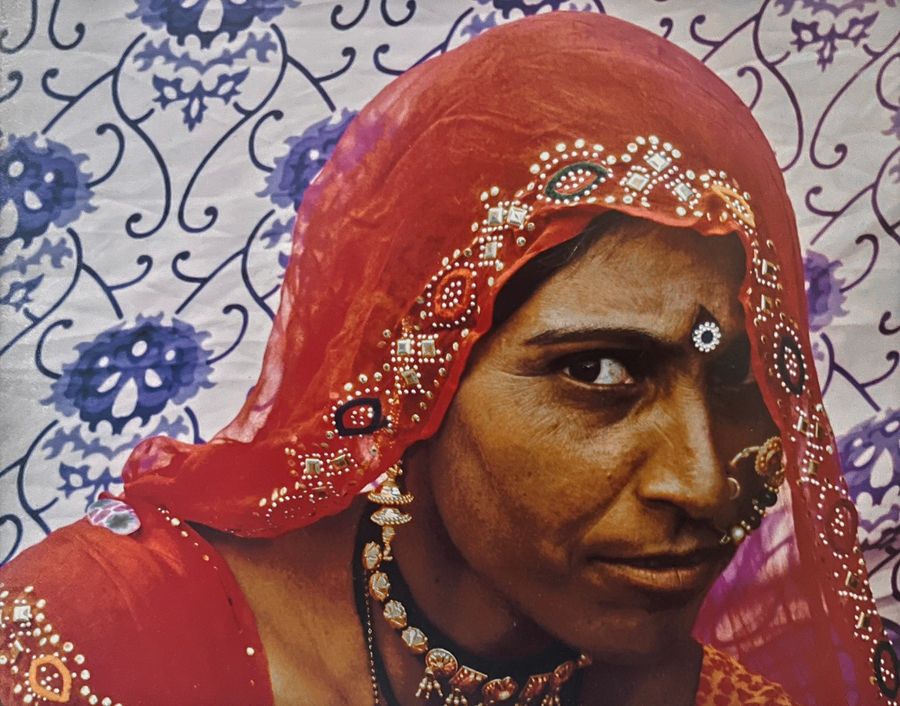
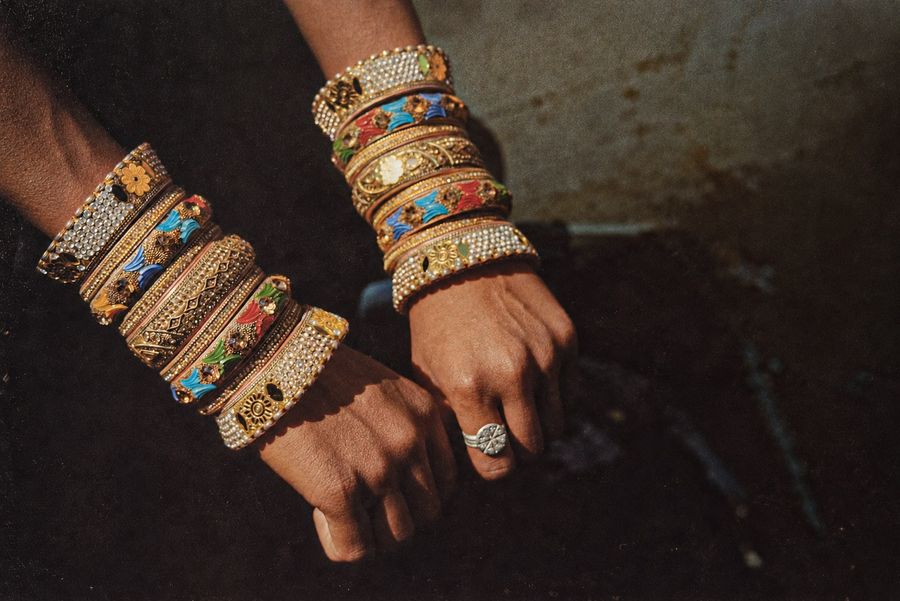
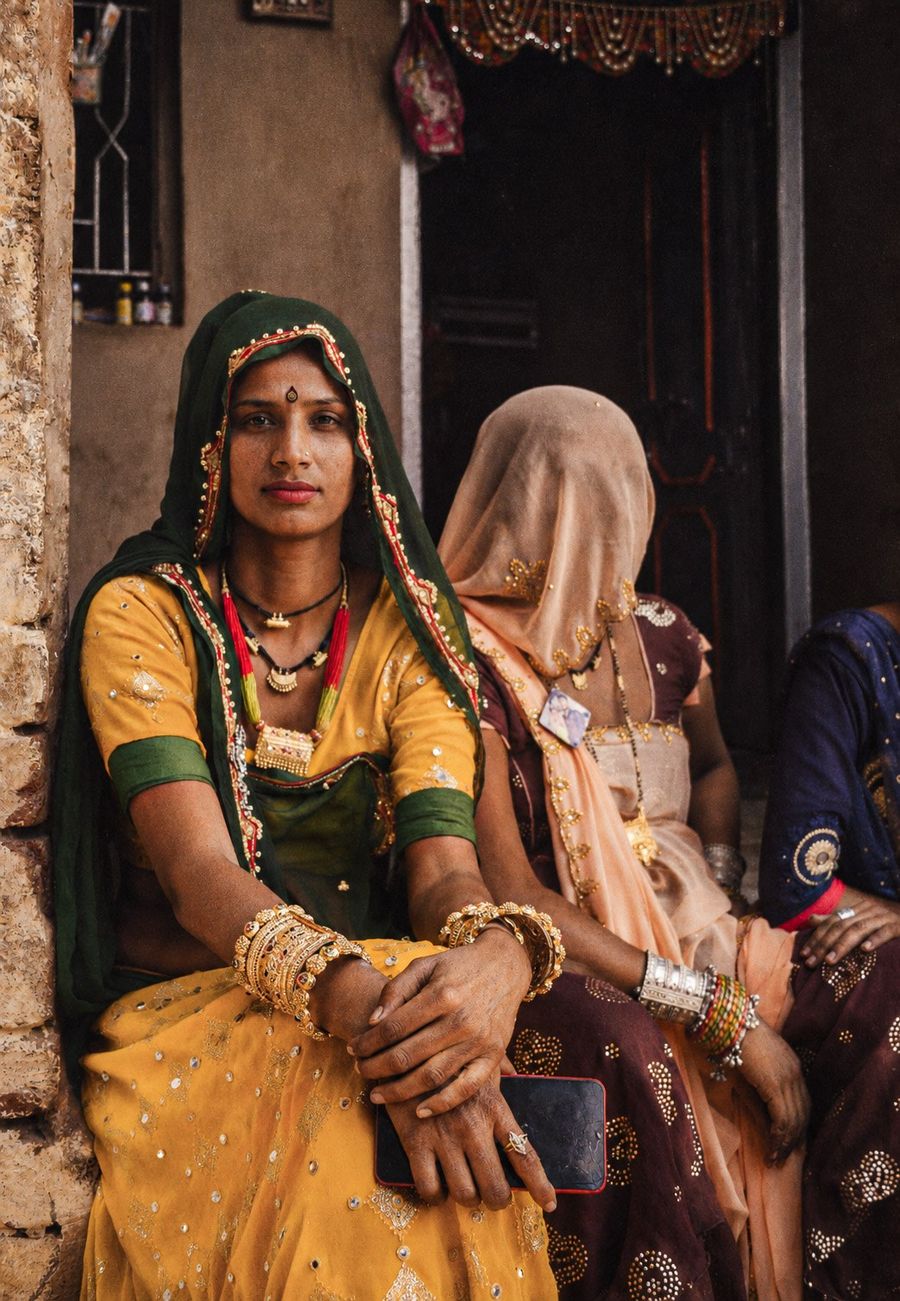
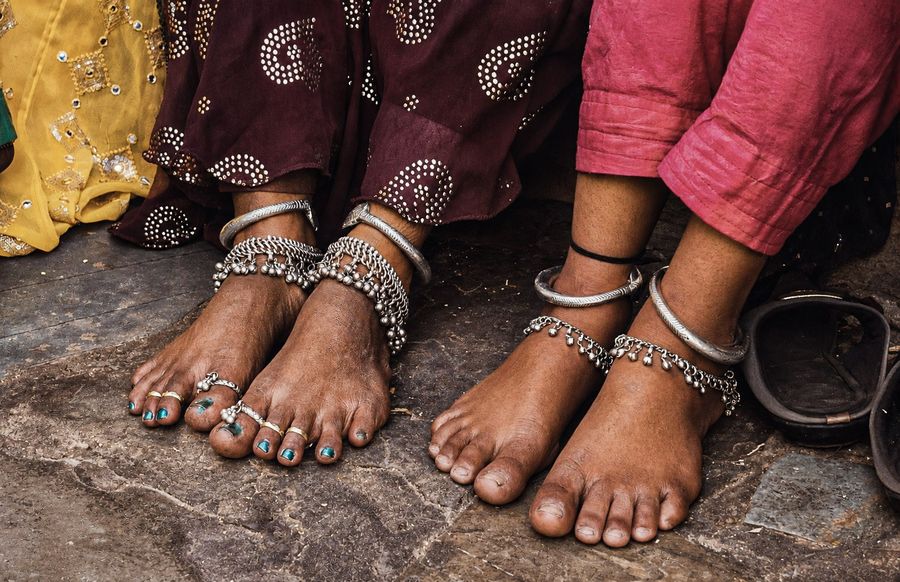
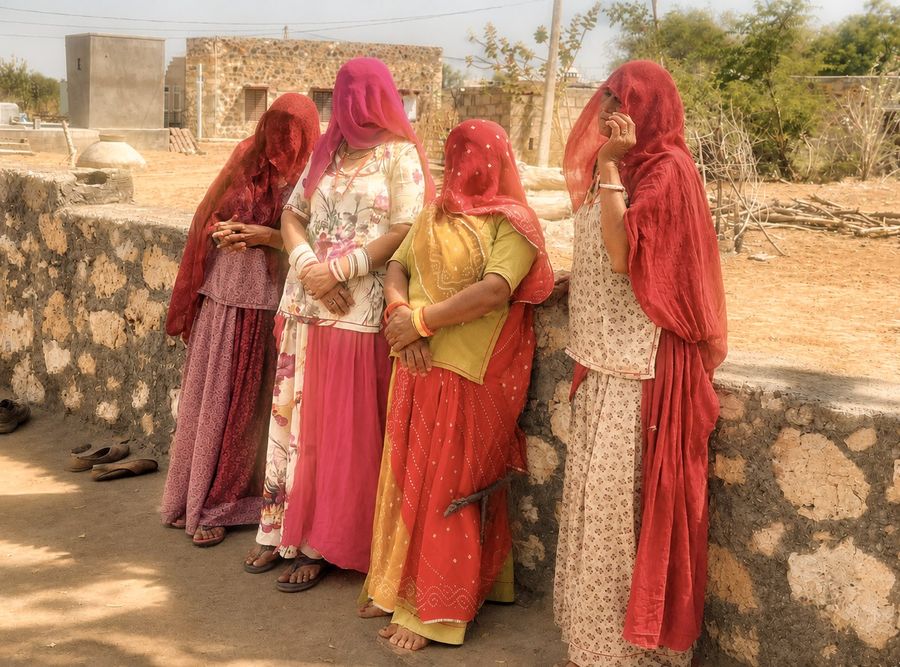
This journey begins in Memnagar, Ahmedabad, India, a locality steadily absorbed into urban expansion. Beneath its new constructions and widening roads, older communities continue to exist with quiet persistence. Moving beyond the visible main streets into the inner neighbourhoods, women from an indigenous community inhabit space on their own terms. South Asian women, especially the rural and indigenous women, are positioned within a violent visual contradiction. They are made hyper-visible as aesthetic spectacle: their jewellery, colour, and textiles extracted and circulated as “heritage.” Simultaneously, they are rendered invisible as labouring bodies within social and economic structures.
My work sits deliberately inside this fracture. In these photographs, the gaze is returned. It is steady, grounded, unsoftened. It does not invite consumption. It questions the viewer’s entitlement to look. Adornment here is not decoration. Gold and Silver is not costume. The body tells labour, in posture and in its stillness. As Memnagar urbanises, rootedness does not dissolve under concrete. If this is not heritage, not spectacle, not anthropology, then what are you really seeing?
ArchiveCommunitiesNo. 02
About
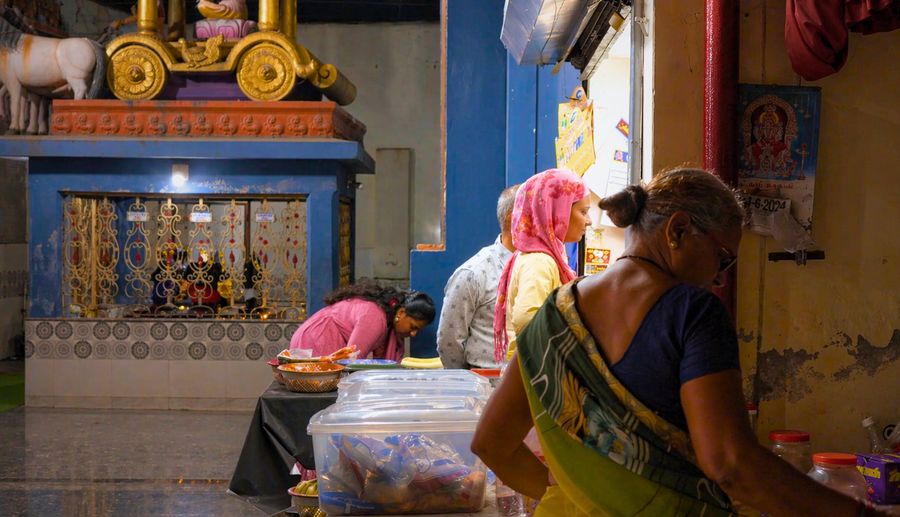
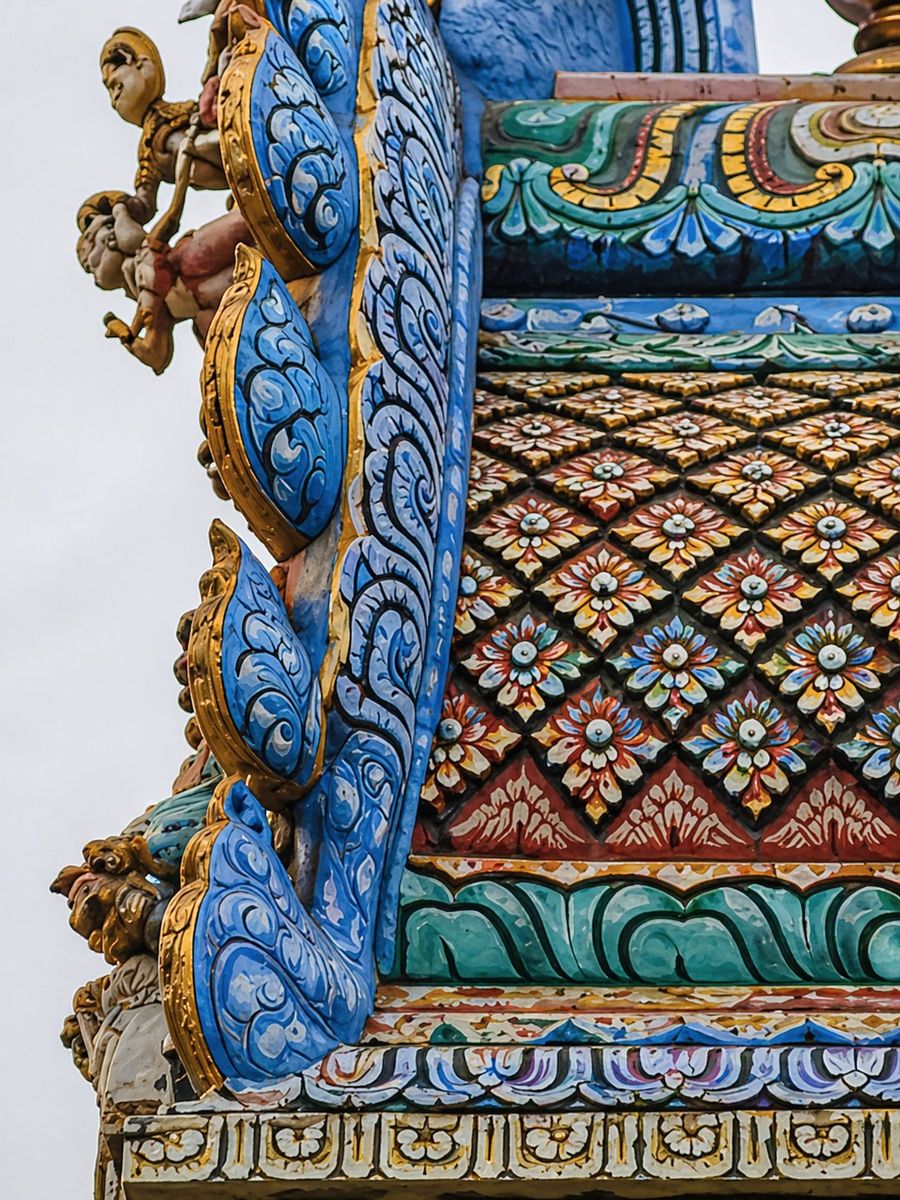
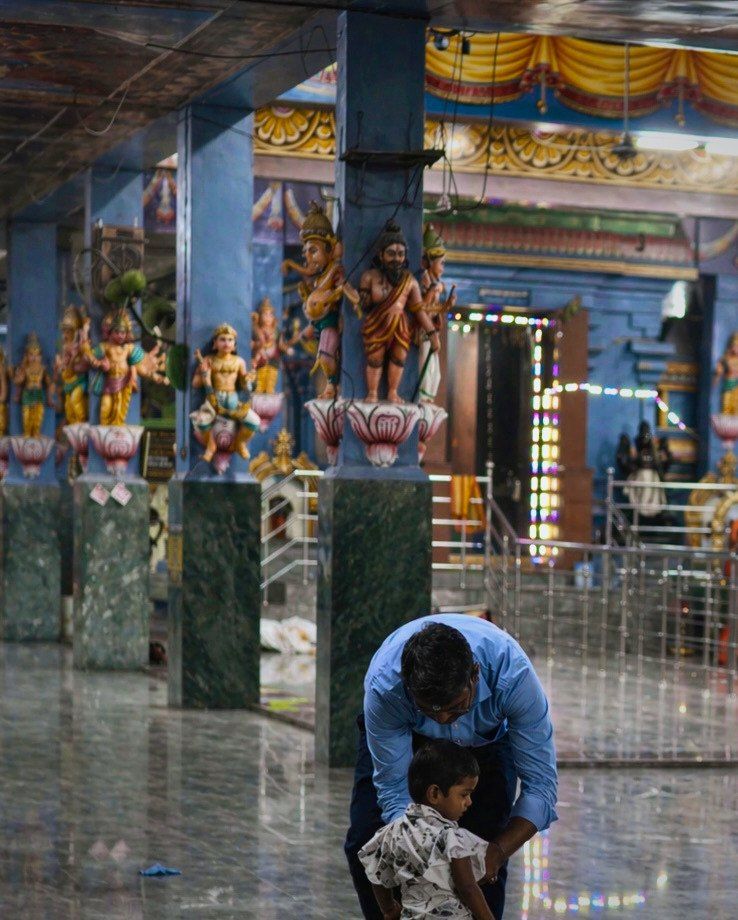
This record began in Maninagar and Hatkeshwar, two neighbourhoods of Ahmedabad where Tamil families have made their lives far from Tamil Nadu. We set out to photograph the community: its homes, its faces, its everyday. Then we walked into Sri Balamurugan Devasthanam, and the project changed direction.
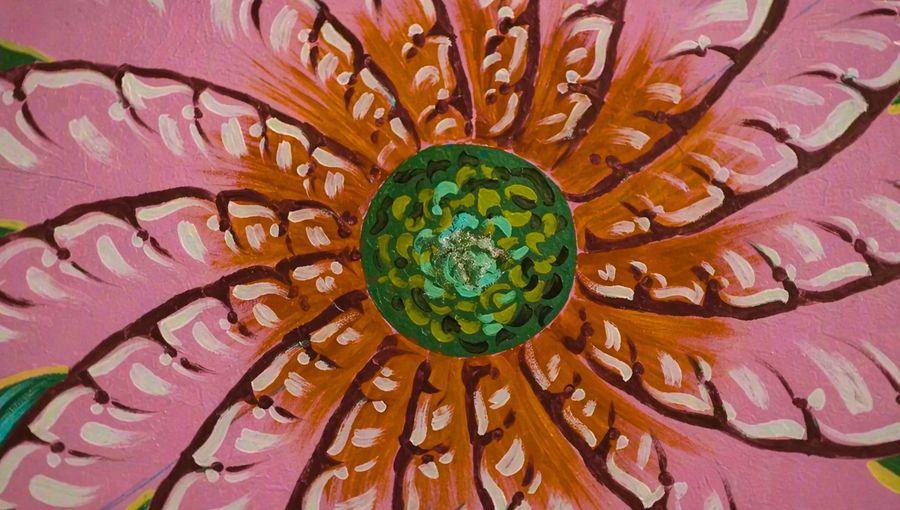
Inside, the city fell away. Painted gods crowded the pillars and ceilings, bells and Tamil chants filled the hall, and families moved through ritual with the ease of people at home. Murugan, the god many Tamils call their own, had travelled with them. The temple was not an escape from the city. It was where the community kept its colour, its language and its children close. We stopped photographing a community from the outside and began following it from within.
When people leave home, they take what cannot be packed. What did this community carry, and what does it ask of the city it now calls home?
This temple later became my source of inspiration for HUM. Its pillars, halls and painted lattices shaped the three woven panels: Mandapam, Stambha and Jaal. See HUM →
ArchiveMaterialsNo. 03
About
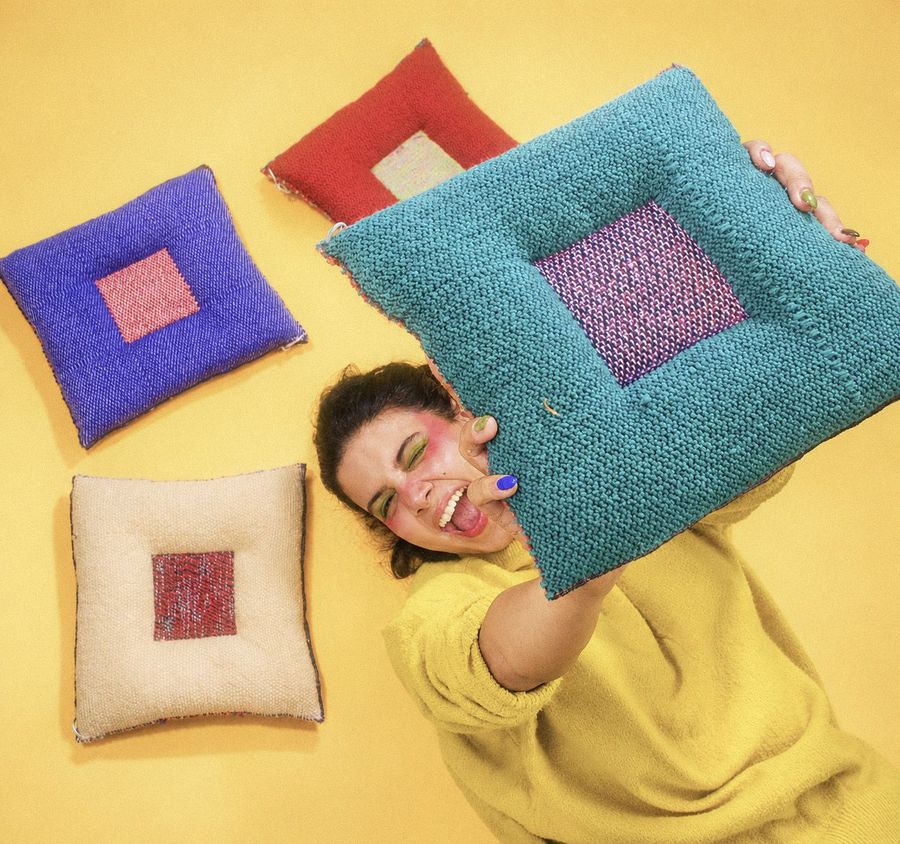
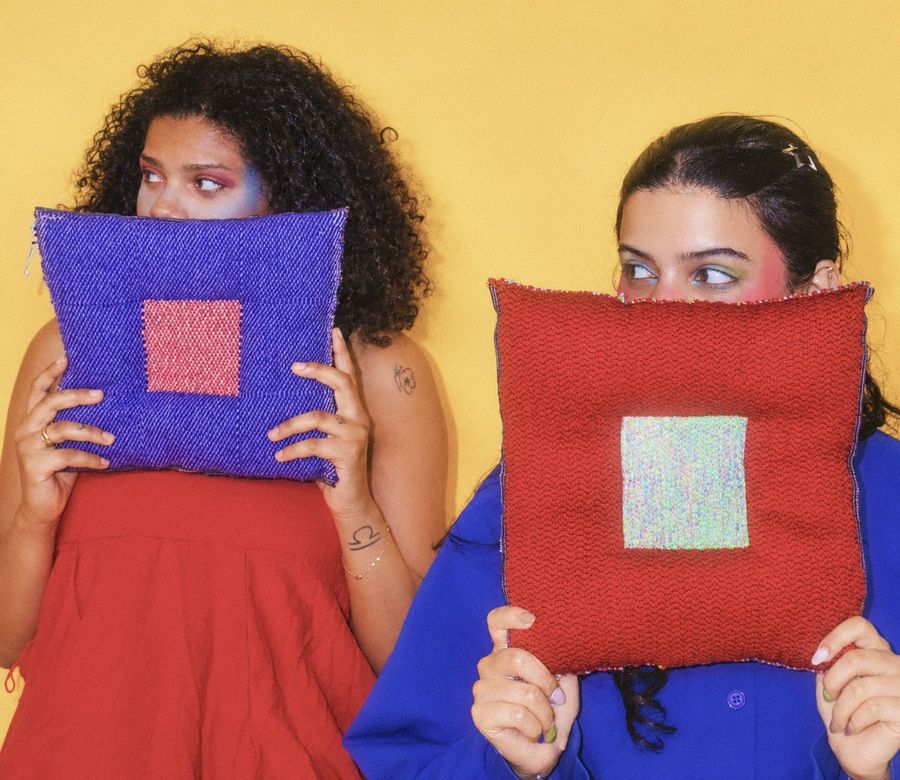
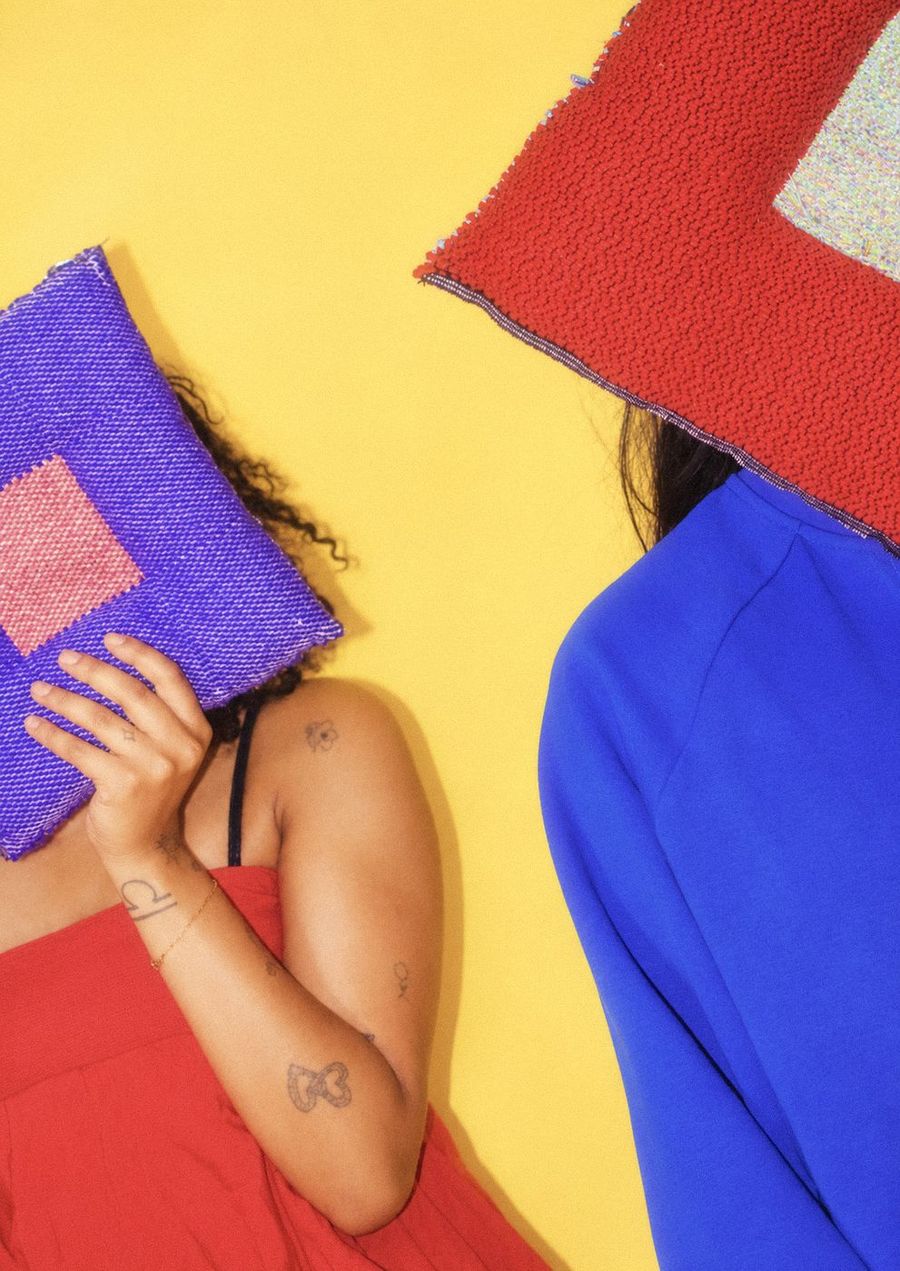
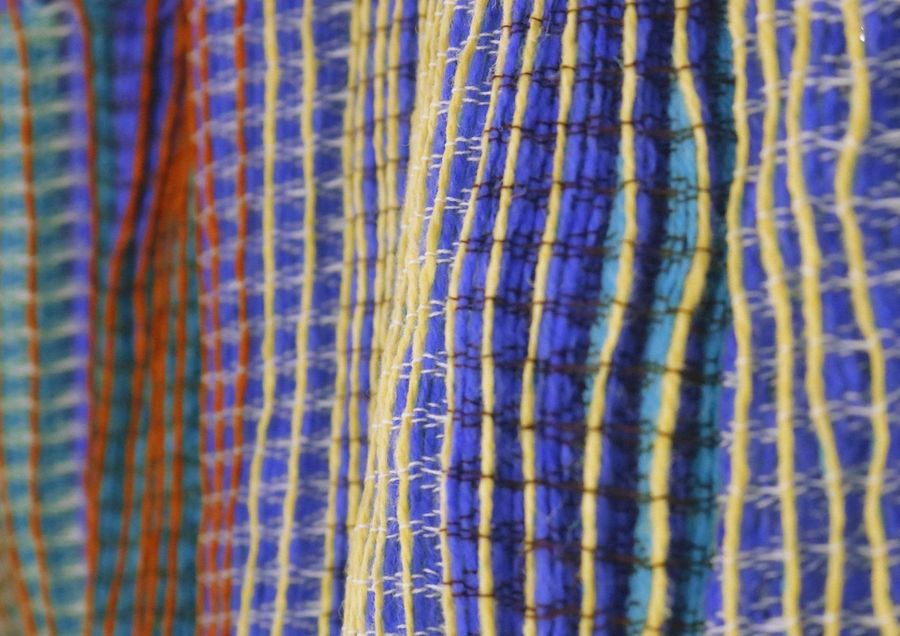
A generation that lives in earbuds and noise-cancelling headphones knows how to shut sound out, but rarely thinks about how a room shapes it. By making soft, sound-absorbing cloth look bold and fun, the shoot puts listening into a language young people already speak: colour, attitude and play.
The woven pieces in this shoot are from HUM, my project on handwoven acoustic textiles made from surplus British wool. See HUM →
ArchiveCommunitiesNo. 04
About
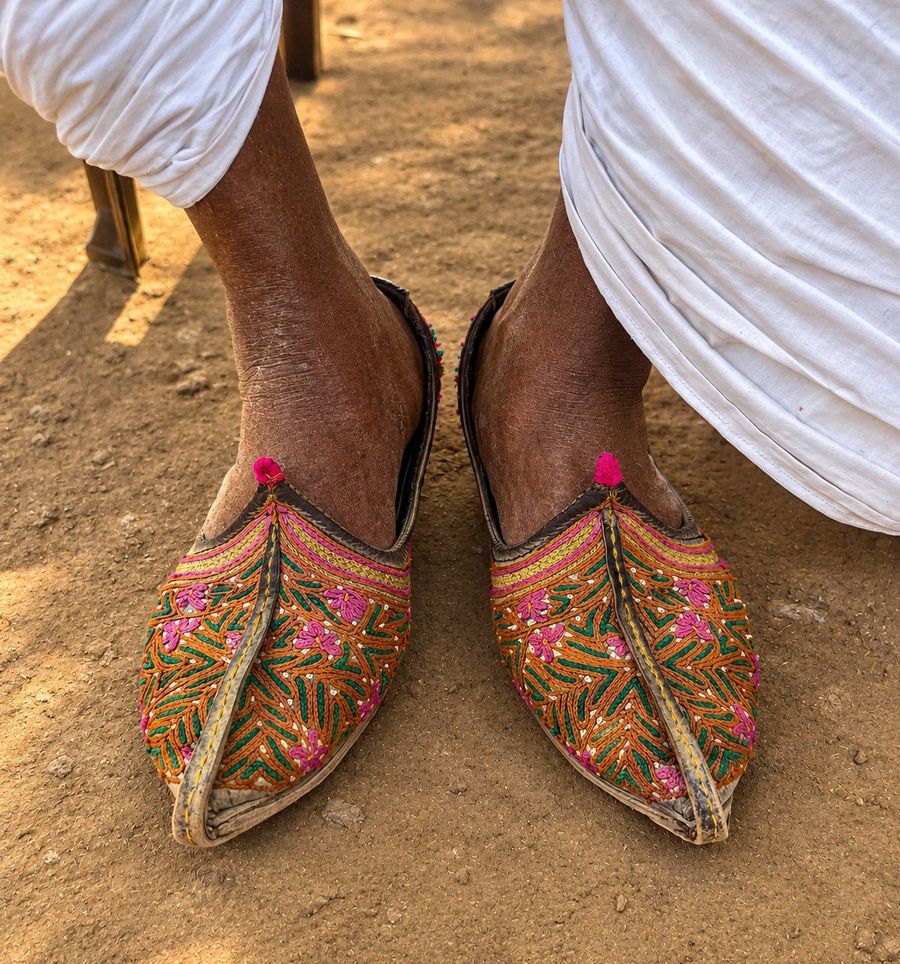
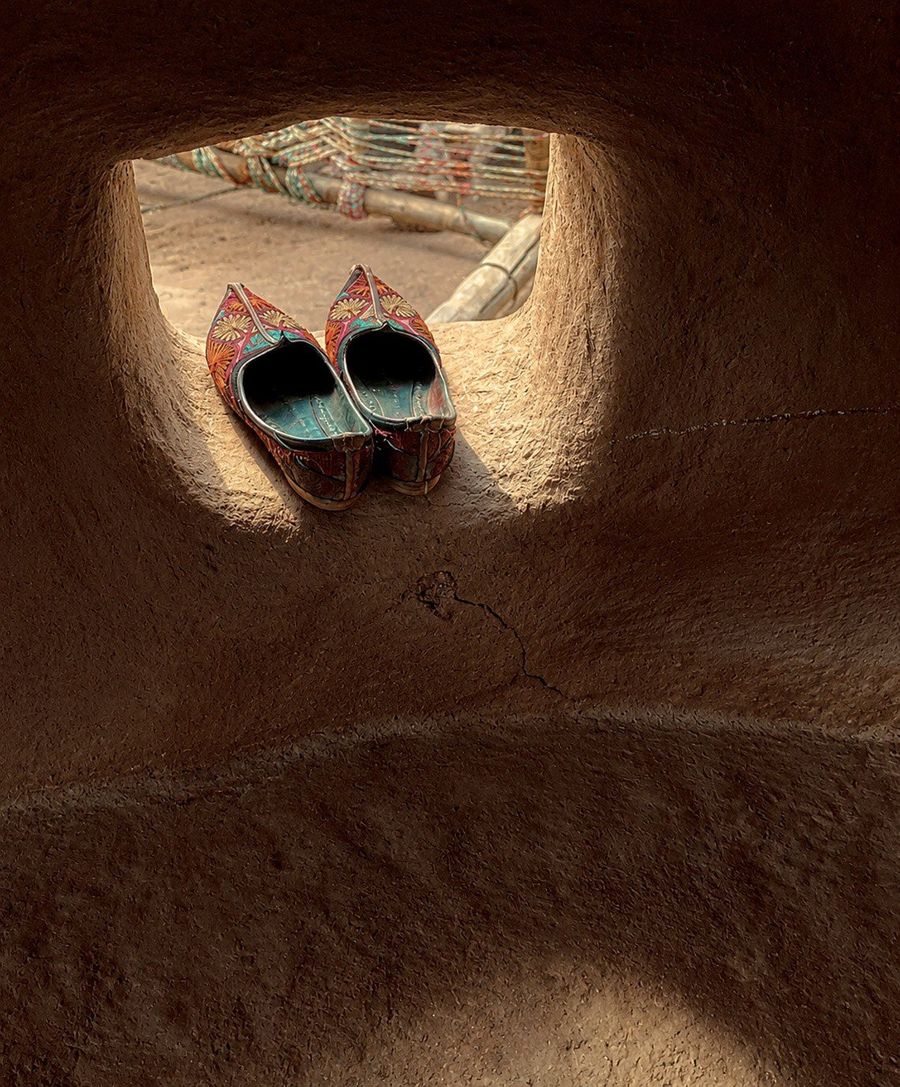
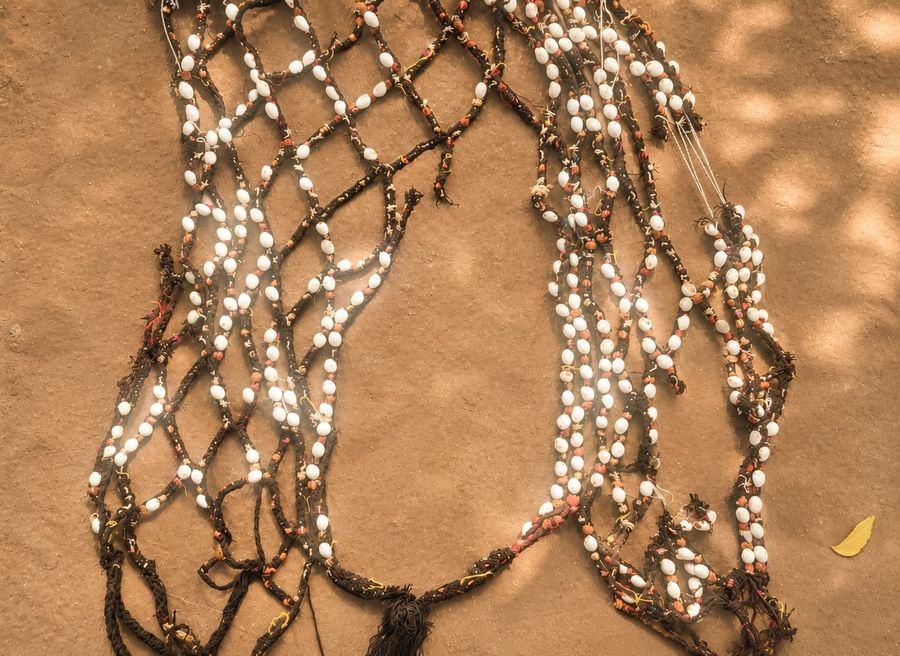
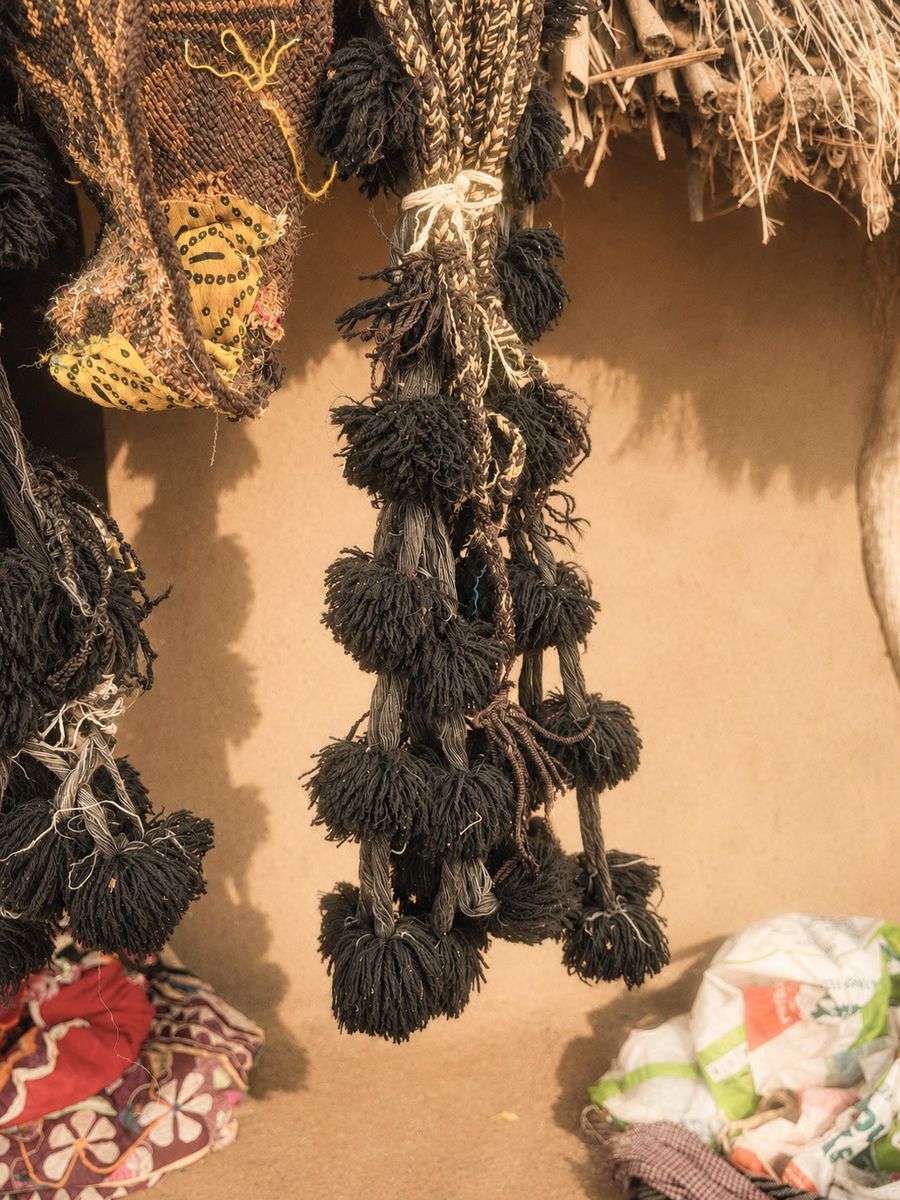
Ghenaramji lives in Mevani ki Dhaani, a cluster of Meghwal homes in the Mahabar dunes, six or seven kilometres from Barmer. His father, Binjaramji, taught him ply-split braiding, and together they made belts and ornaments for camels, braided by hand in the hours between other work.
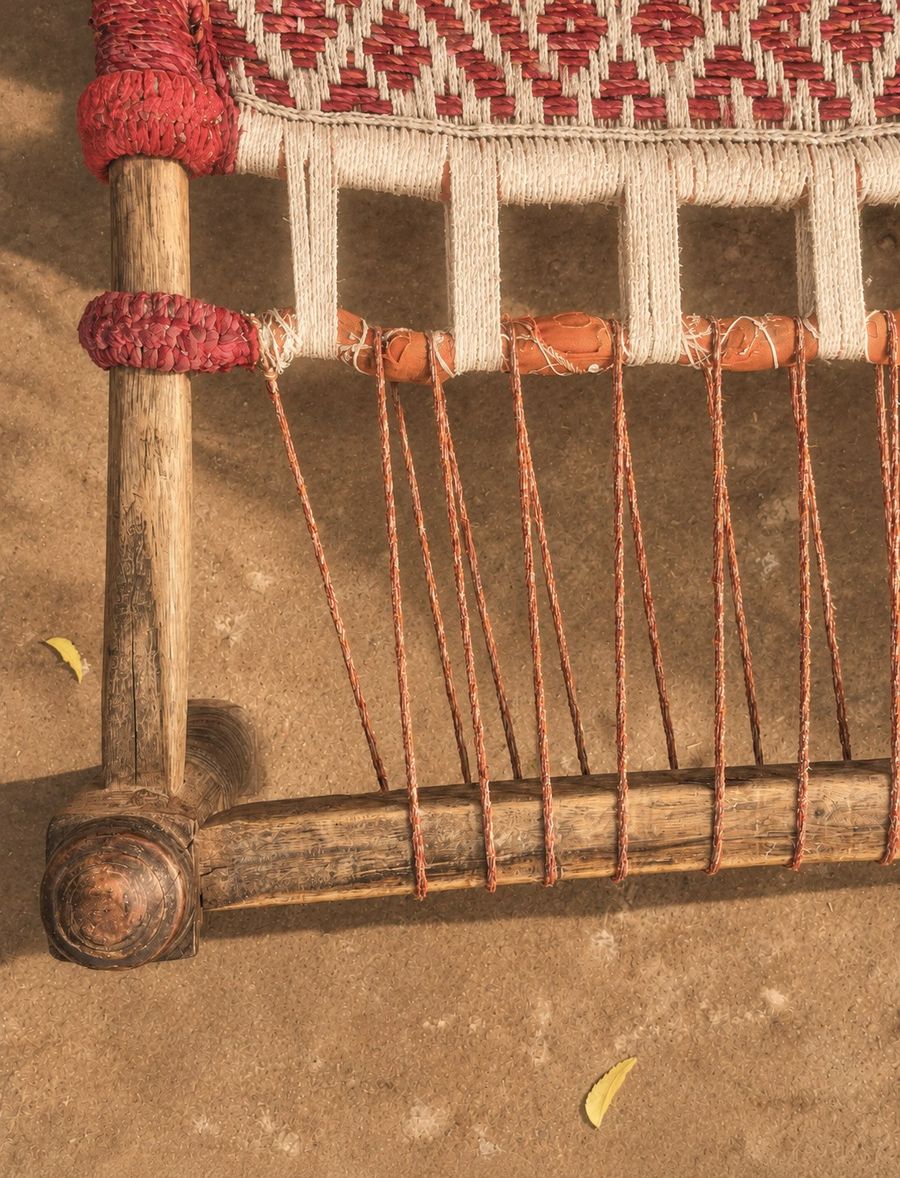
These days, he walks to Barmer to open his kirana shop. There are fewer camels now, and cheaper belts come from elsewhere. The family’s handmade galicha carpets stopped selling too. The braiding lives on at home, in the charpais he makes for his own house.
This series follows his mojaris on that walk: out of the dhaani, across the dunes, towards the town. Behind him the sand holds a clean line of footprints, each one gone as soon as the wind picks up. His craft has worn away the same way, not all at once but step by step, as the camels thinned and the orders stopped. Every morning he walks the route again, and every morning the desert has forgotten it. A footprint lasts only as long as someone keeps walking. So does a craft.
From the same dhaani: Unseen, Seen →
ArchiveCraftsNo. 05
About
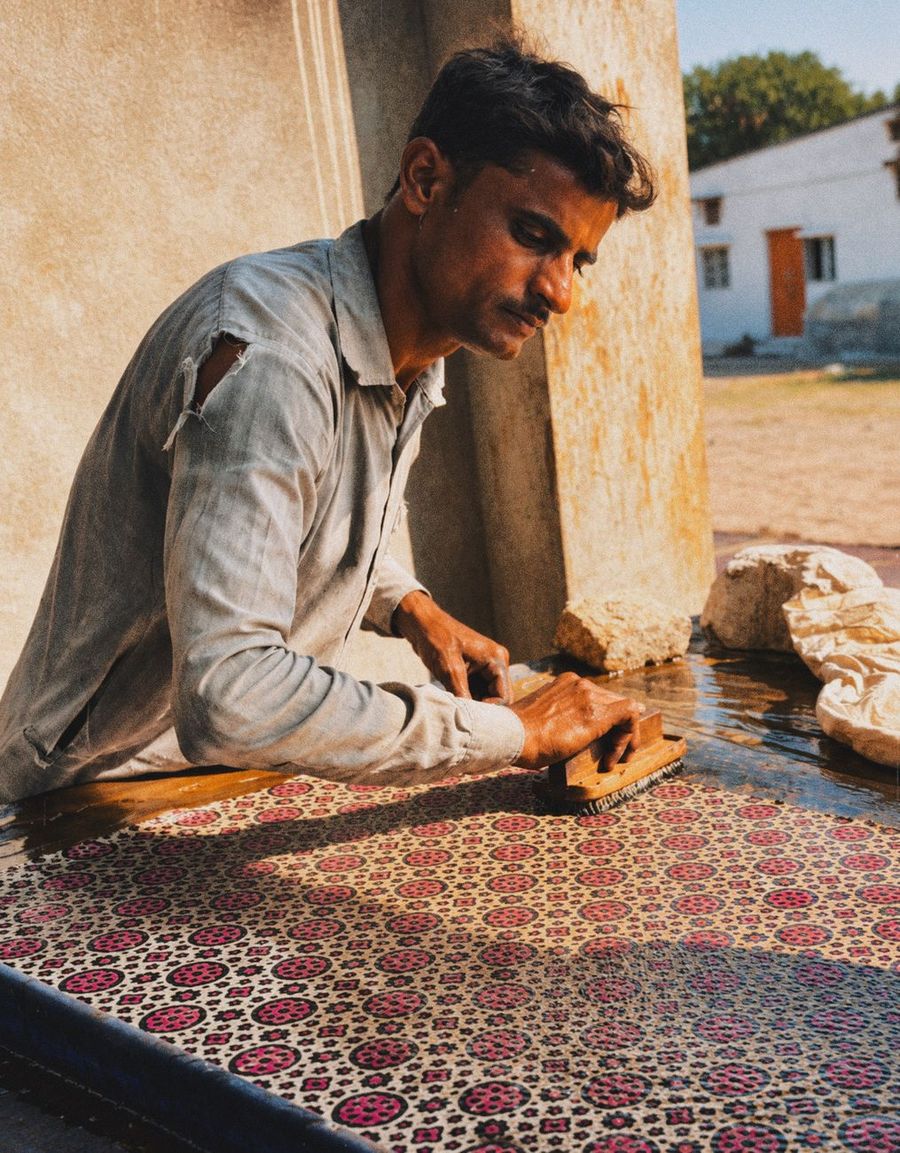
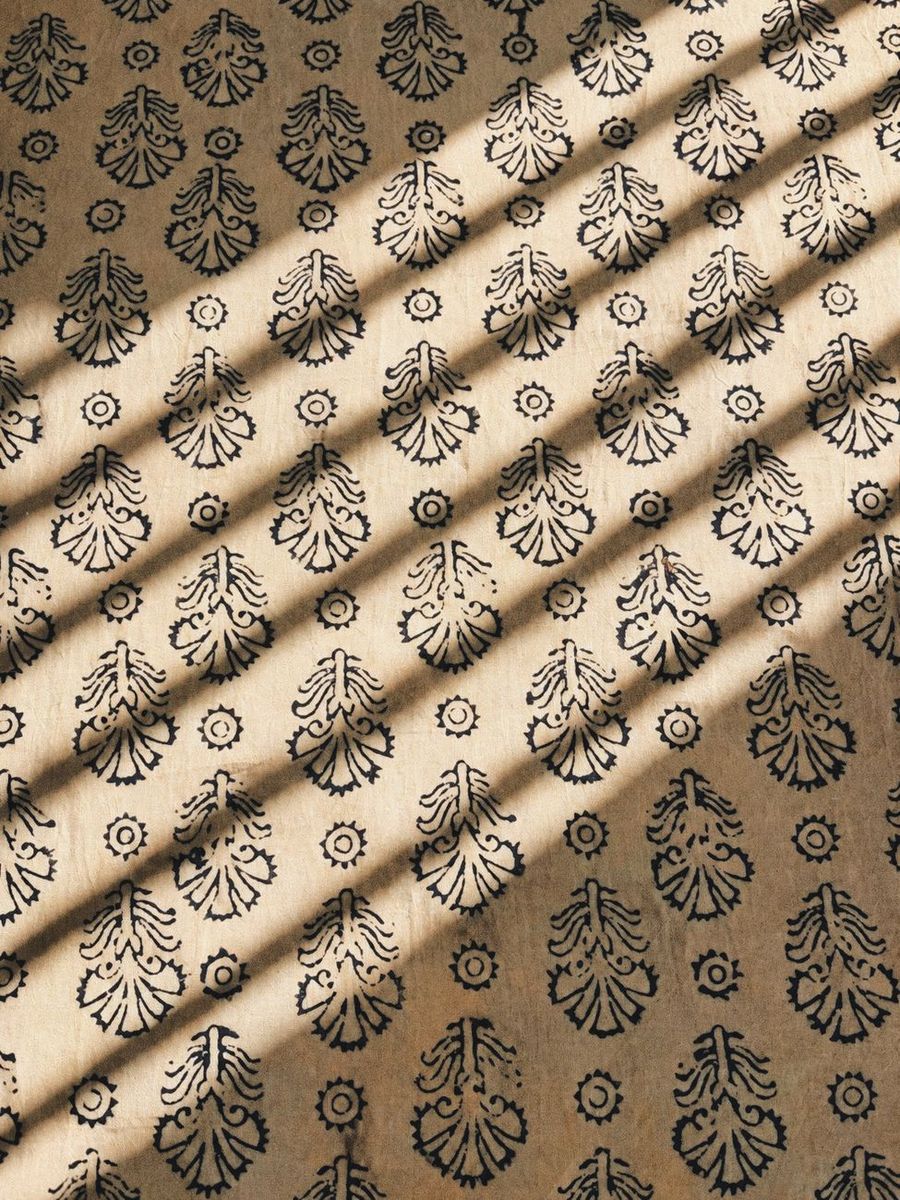
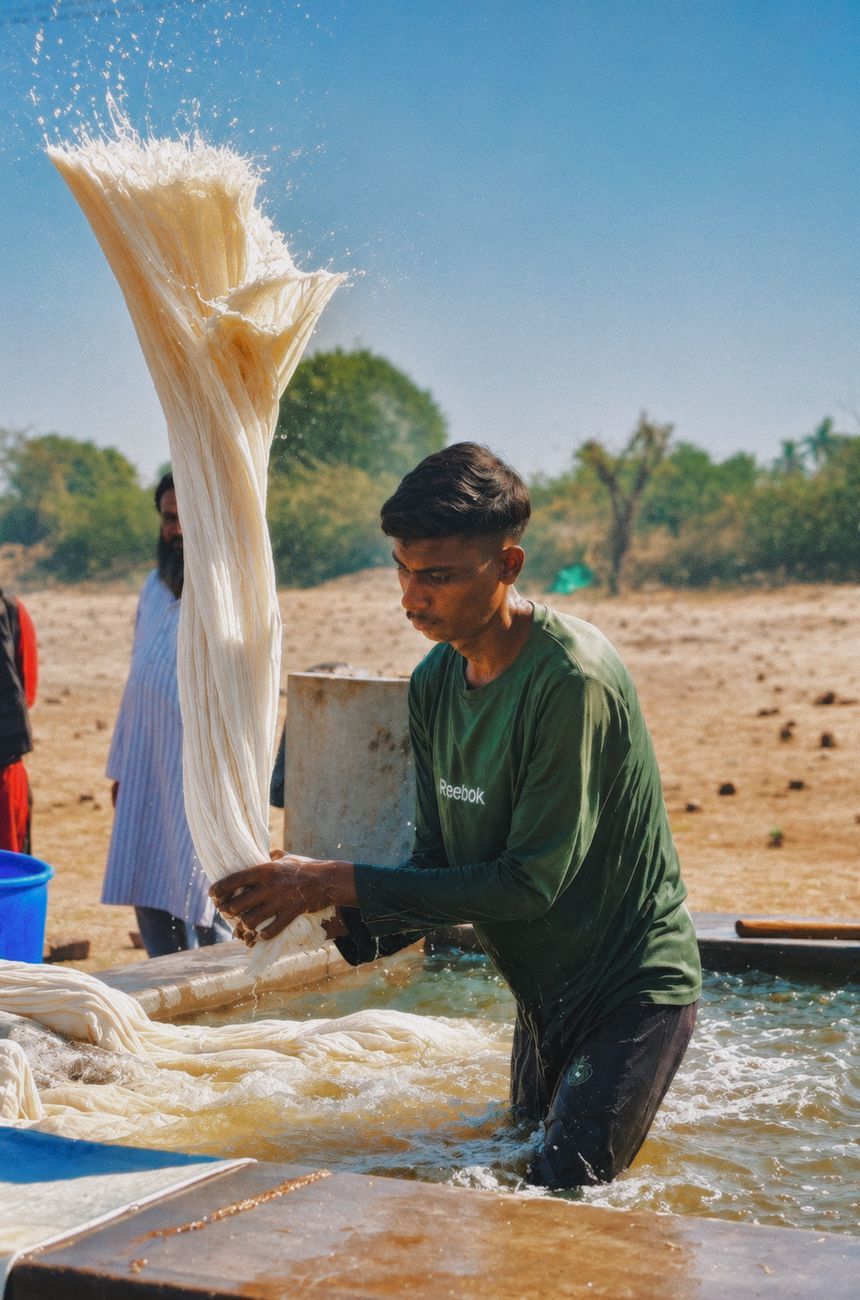
Ajrakh is older than the border that now runs through its homeland. It began in Sindh, in present-day Pakistan, and in the neighbouring districts of Kutch and Barmer, and it is still printed on both sides of that line.
In Kutch, the cloth says who you are. Rabari, Maldhari and Ahir herders and farmers wear it as turbans, lungis and stoles. Jat and Meghwal men wear it as a safa, a shoulder cloth and a lungi. It also says what you can afford. Ekpuri ajrakh is printed on one side. Meenakari, printed on both, costs more, is worn at weddings and is given to bridegrooms on Eid.
The wearer never sees how long it takes. The cloth is washed of its starch in soda ash, camel dung and hot water, then laid out in rows to dry. For the black, jaggery, gram flour and rusted iron sit in drums for ten to fifteen days until the mixture ferments dark. Then come harda paste, alum and indigo, pressed on block by block. Every ajrakh carries two stories, one on each side: the weeks it took to make, and the life of the one who wears it.
ArchiveMaterialsNo. 06
About
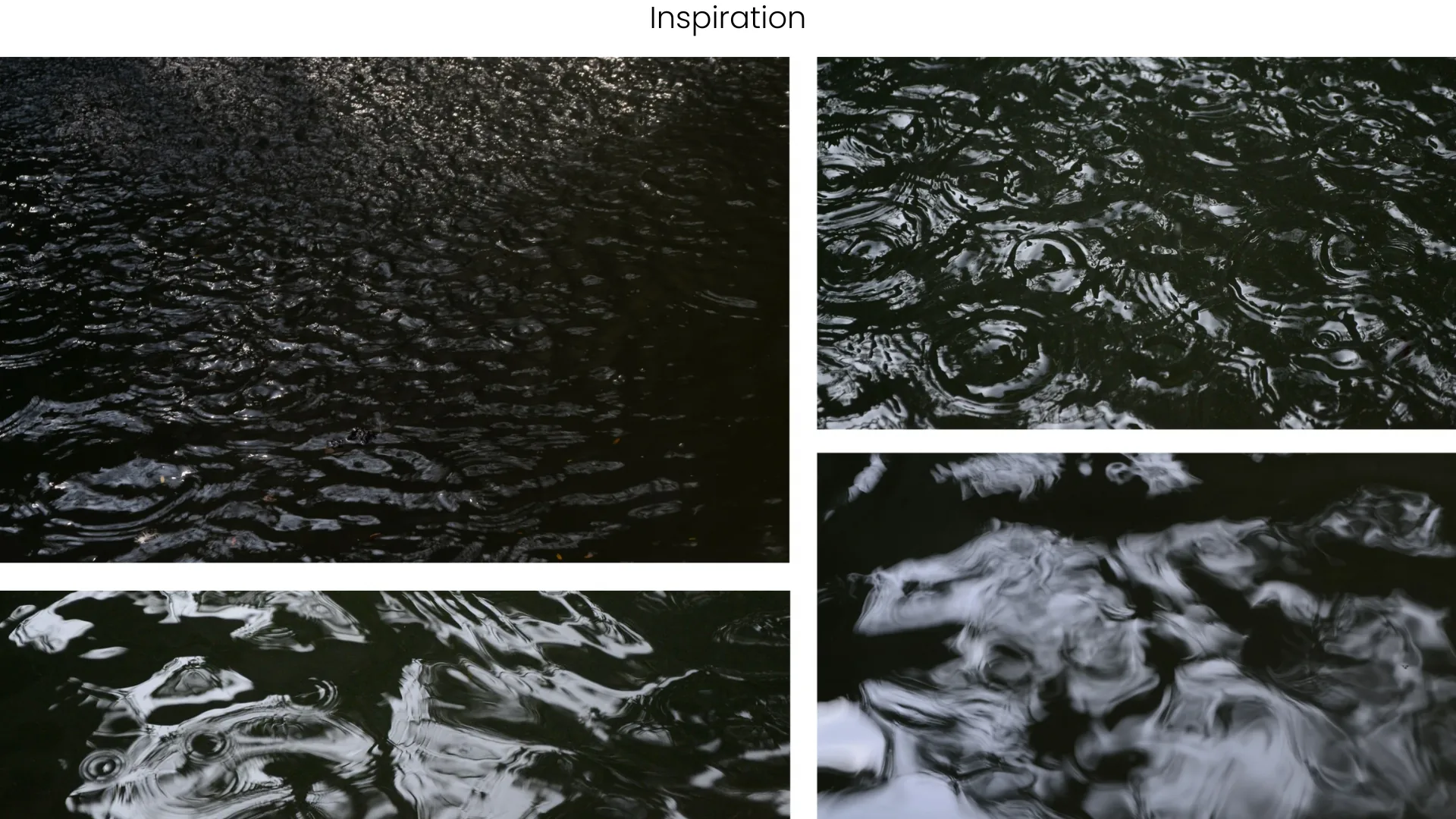
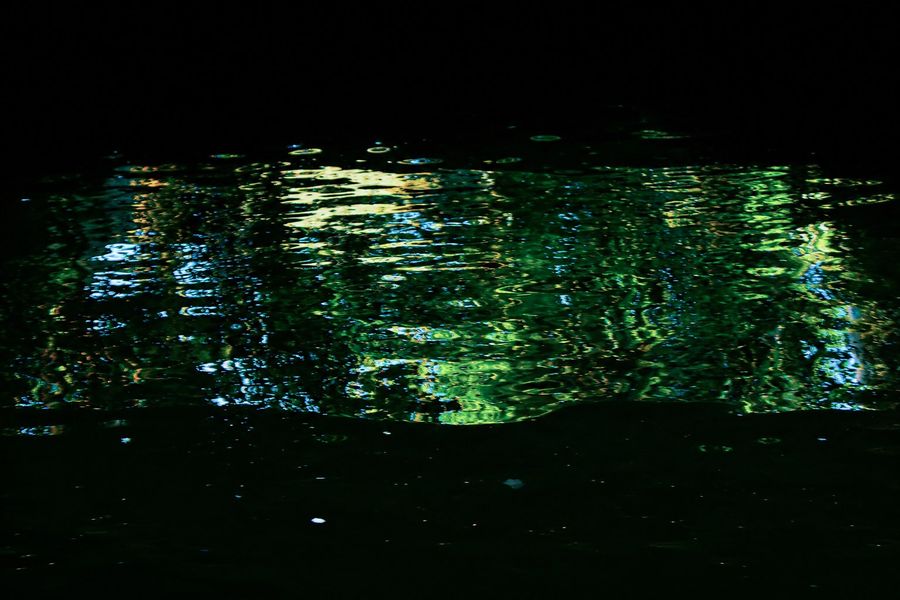
Tranquility began at the fountain on the NID campus in Ahmedabad, watching light break across moving water. I photographed the surface again and again: ripples spreading from a single drop, a band of light stretched across wet stone, spray catching the glow. No two frames held the same pattern, because water never holds still.
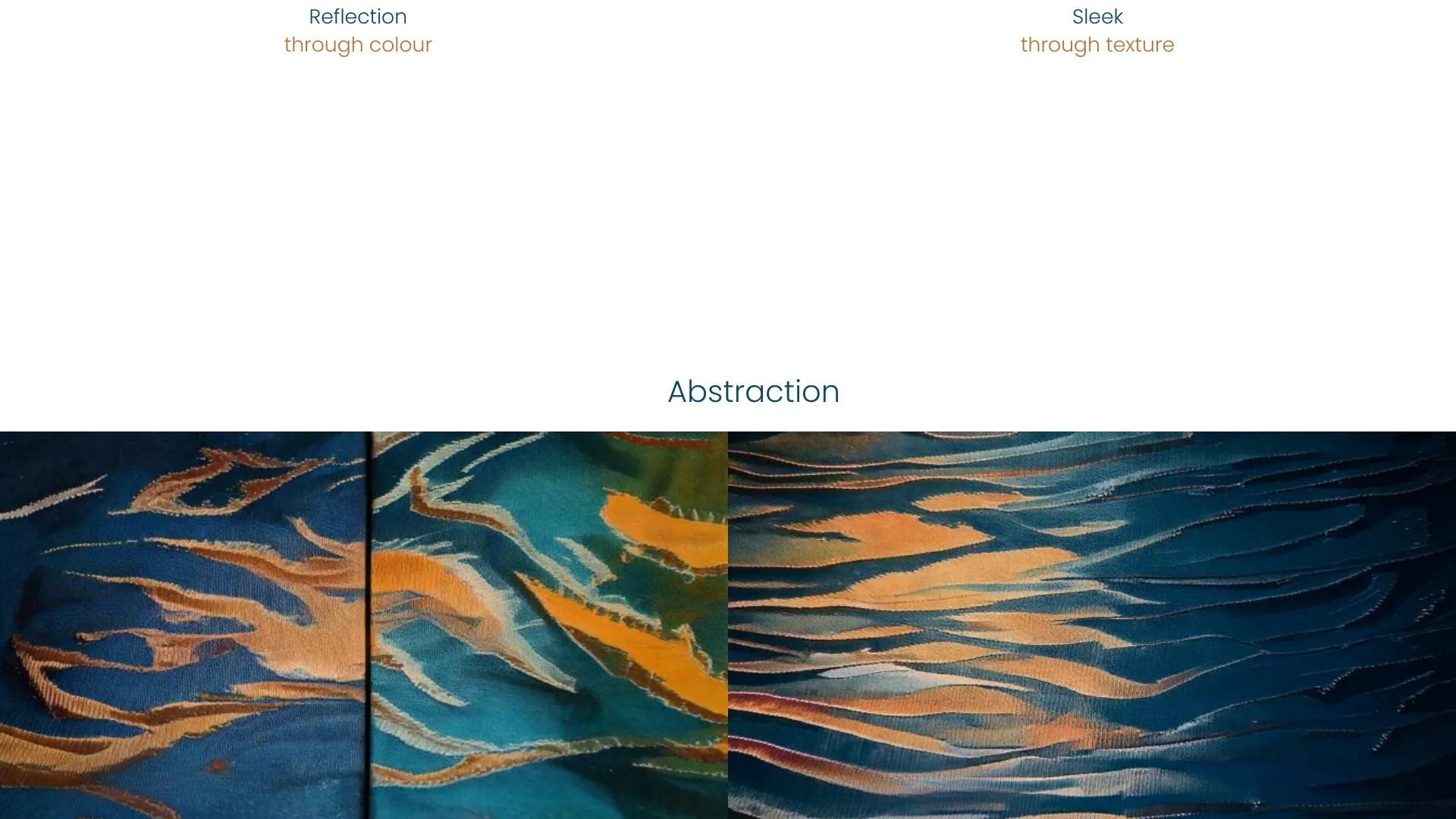
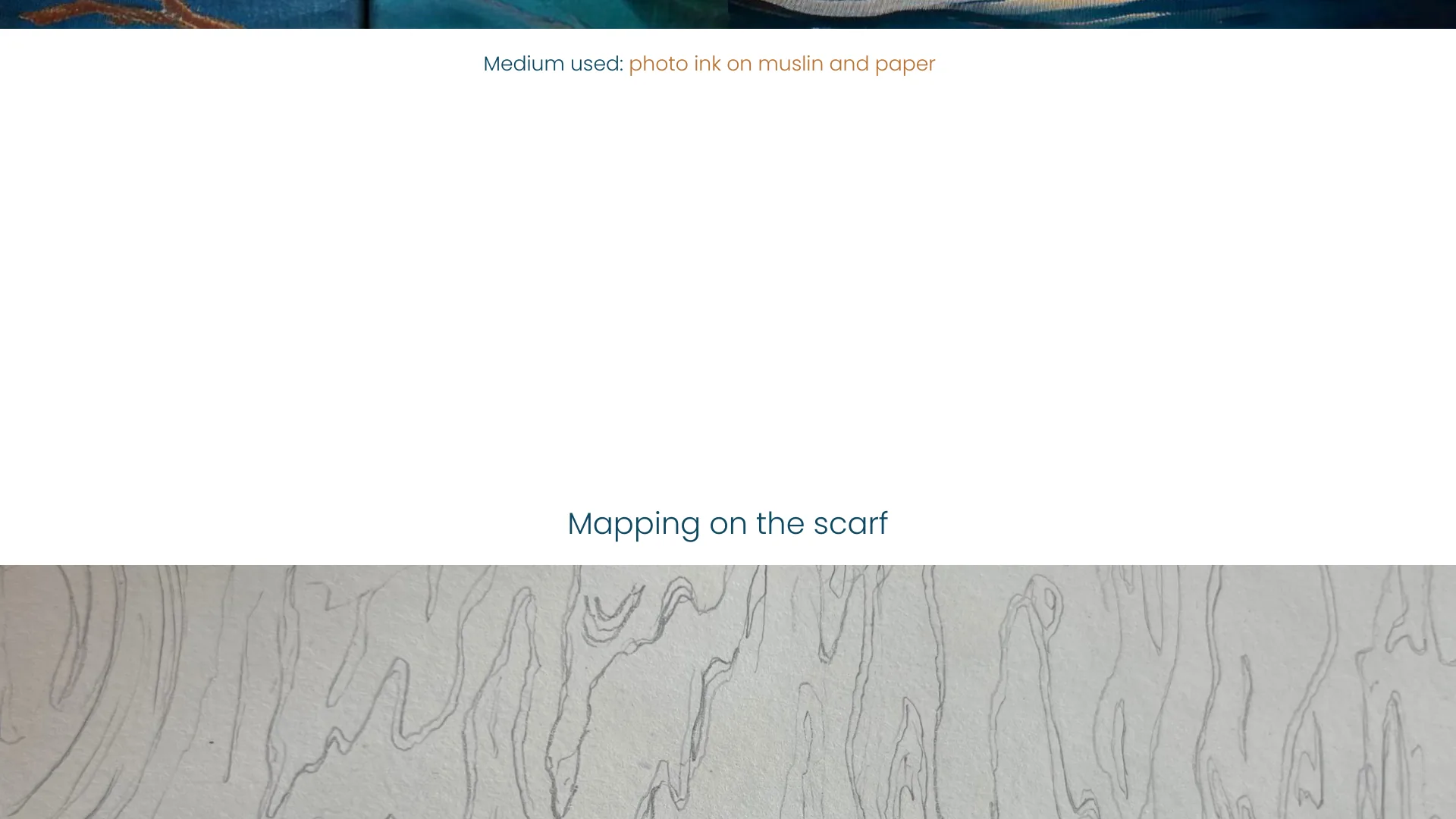
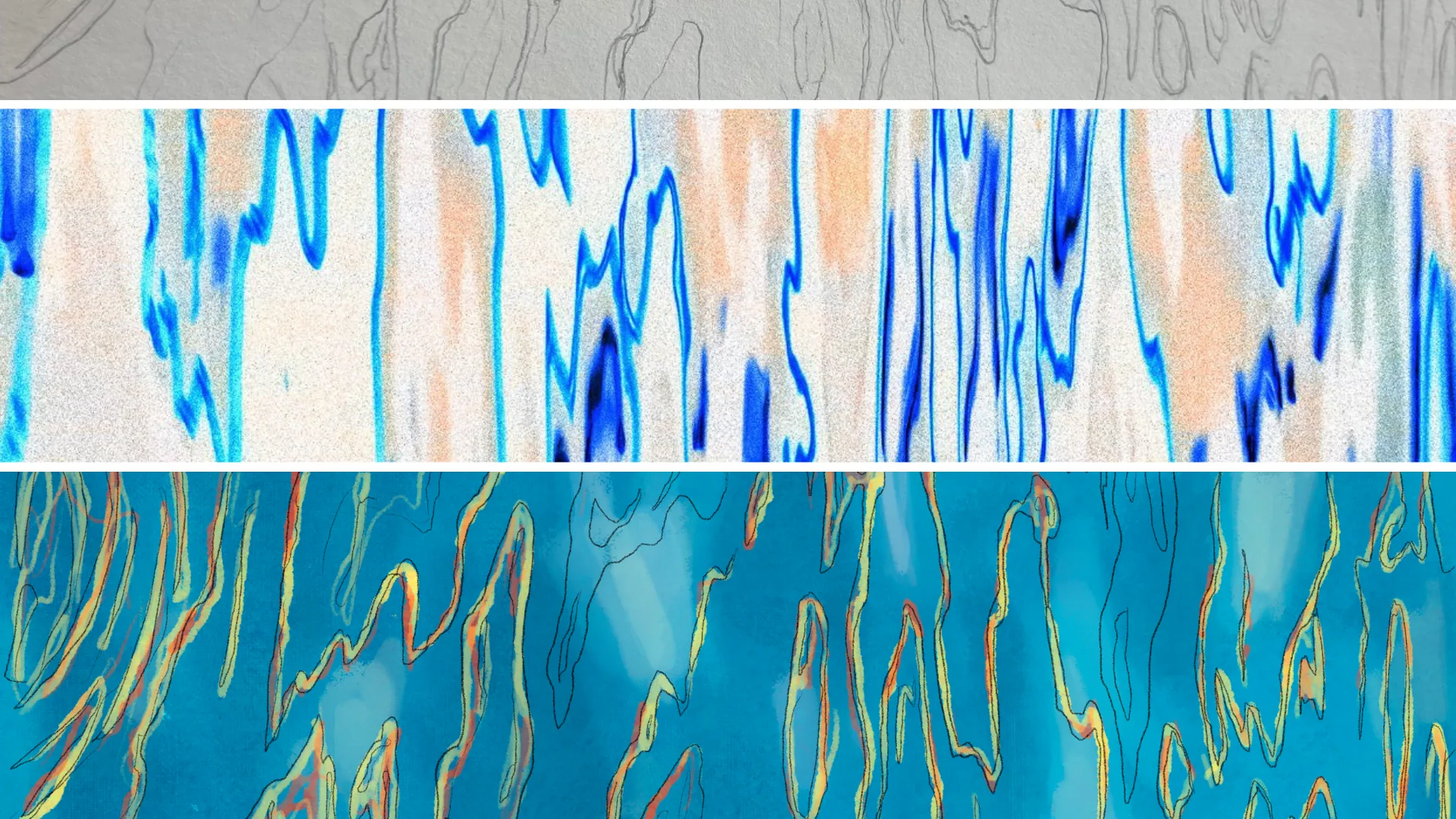
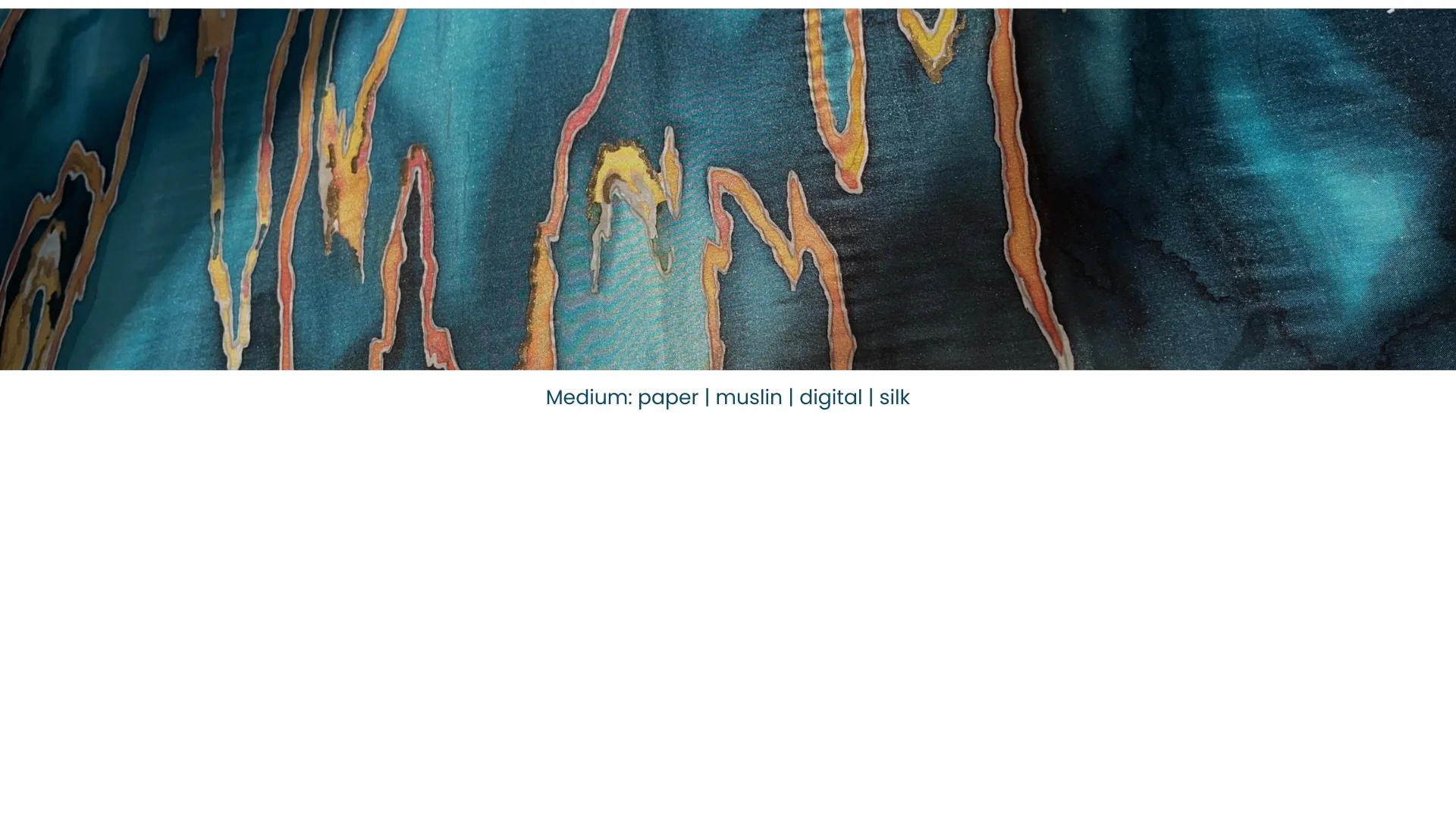
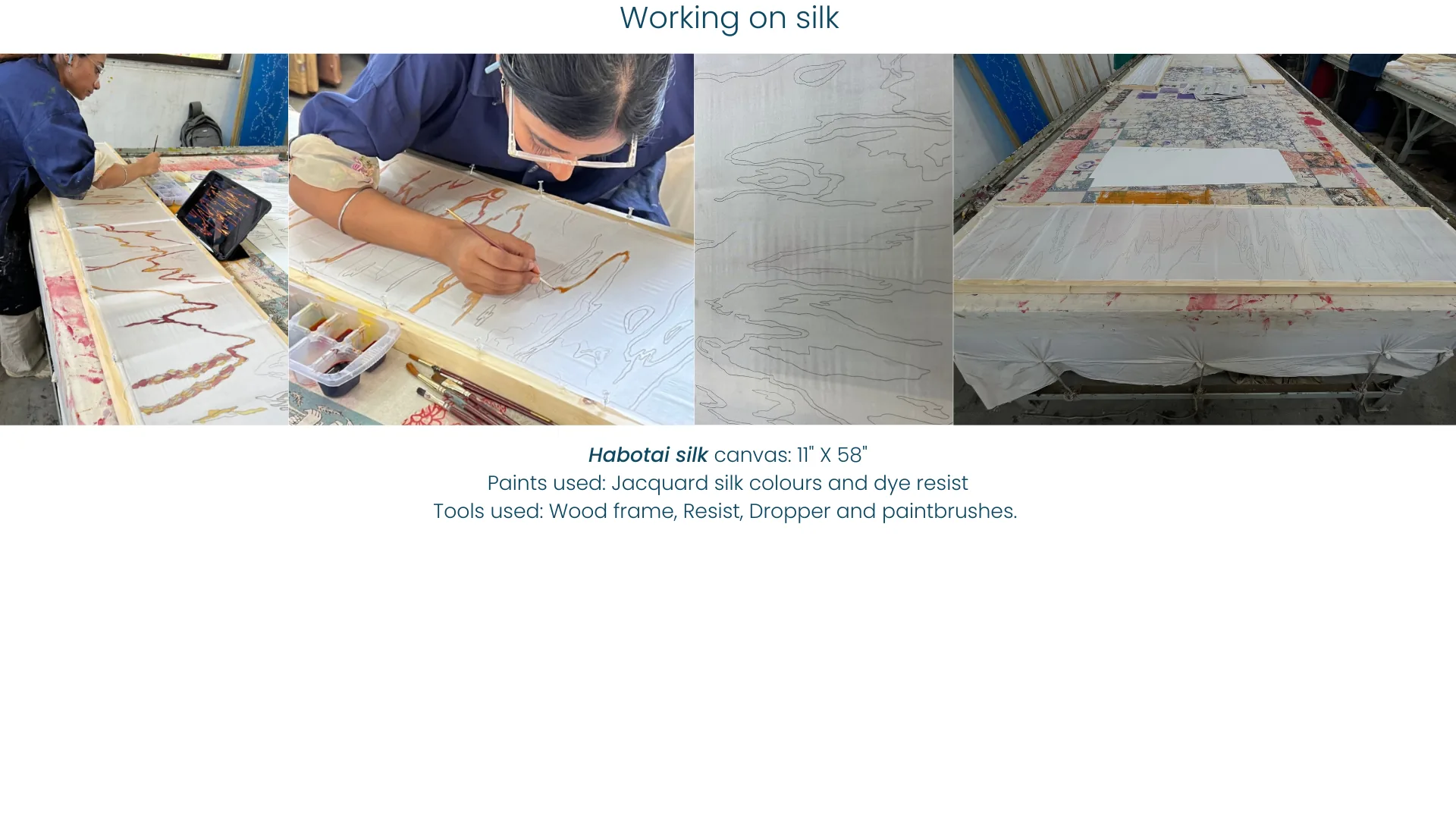
These photographs were my way of slowing it down. From them I traced the flowing lines, abstracted them on paper and muslin, and painted them by hand onto habotai silk, a cloth whose smooth, liquid feel lets the water keep moving. Water never keeps the same pattern twice. A scarf can.
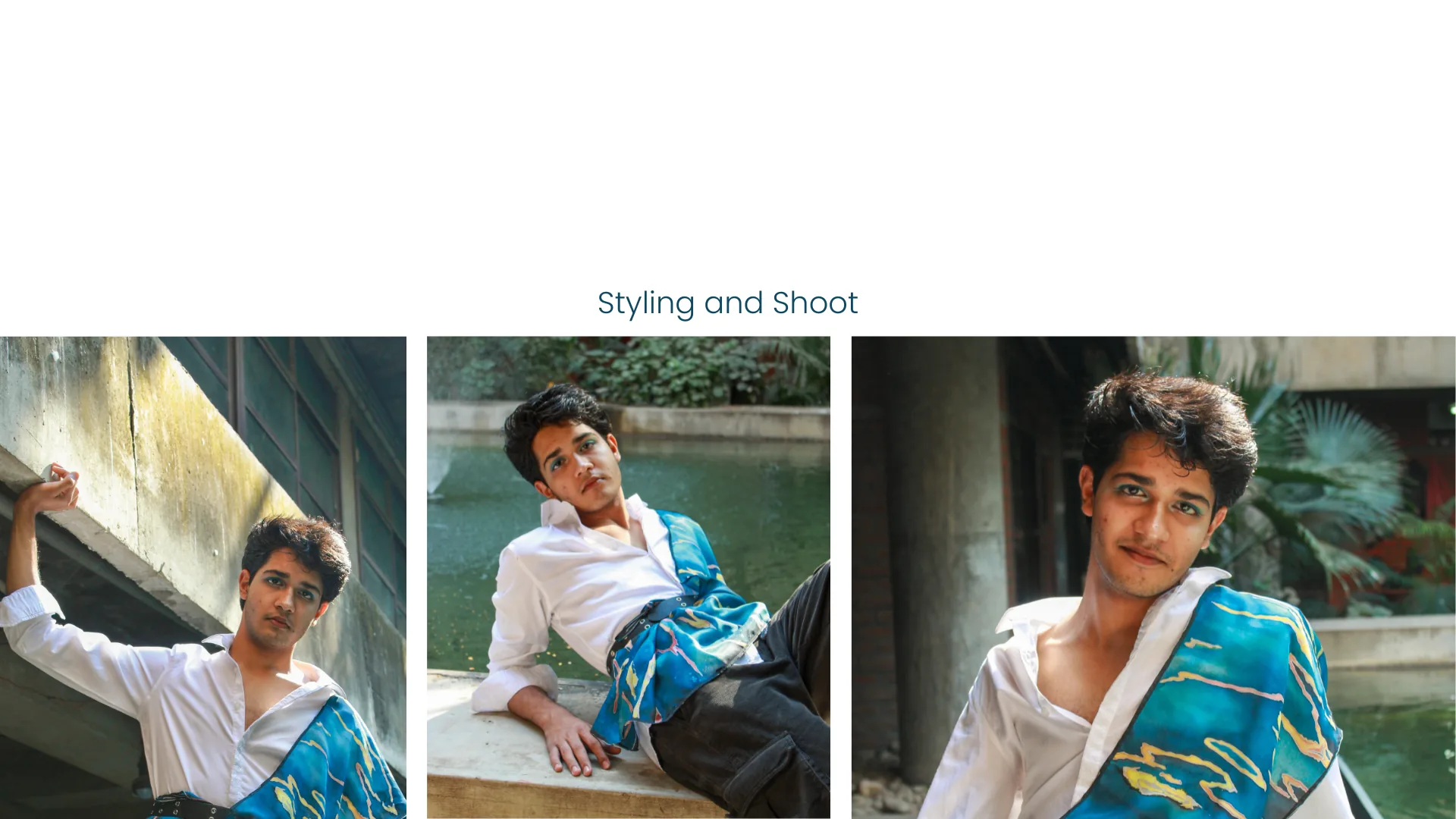
These photographs became the starting point for Tranquility, my hand-painted silk scarf. See Tranquility →
ArchiveCommunitiesNo. 07
About
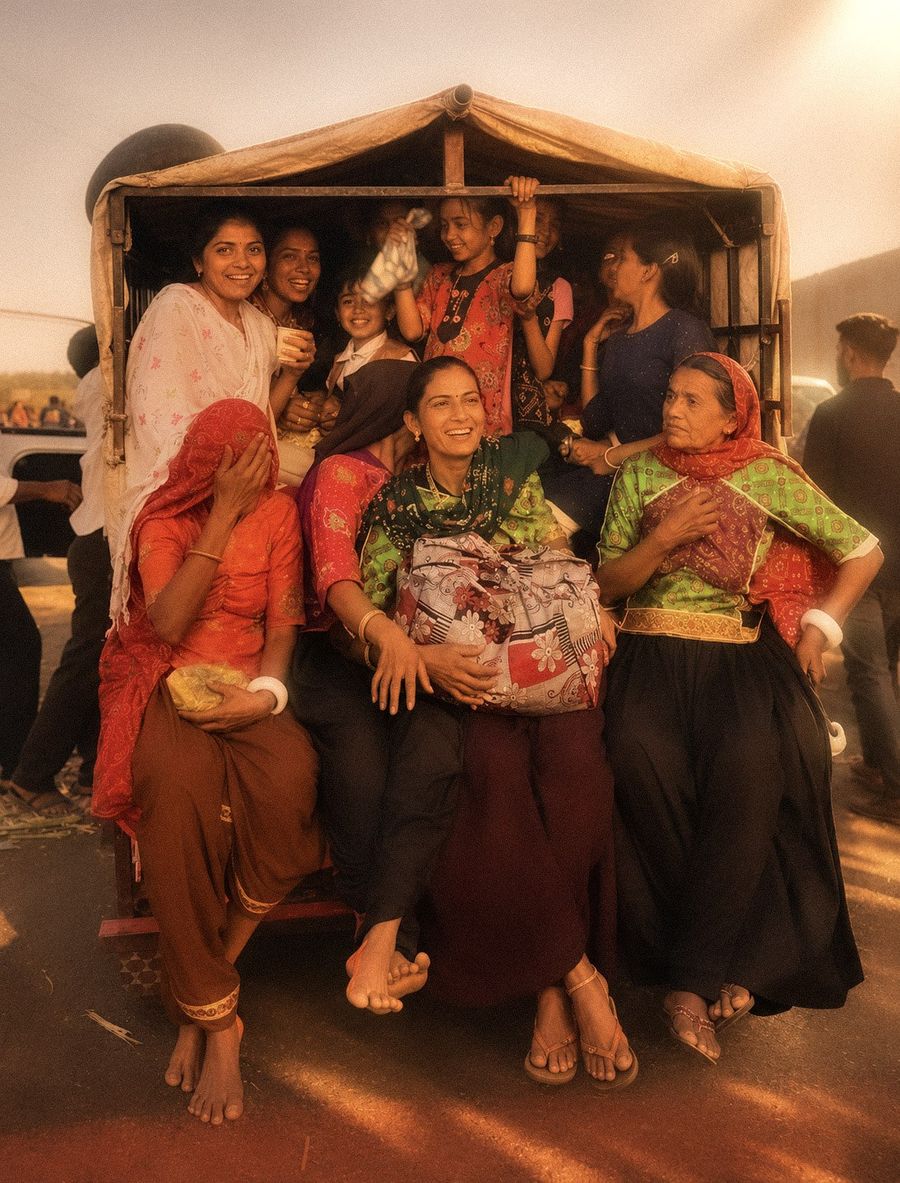
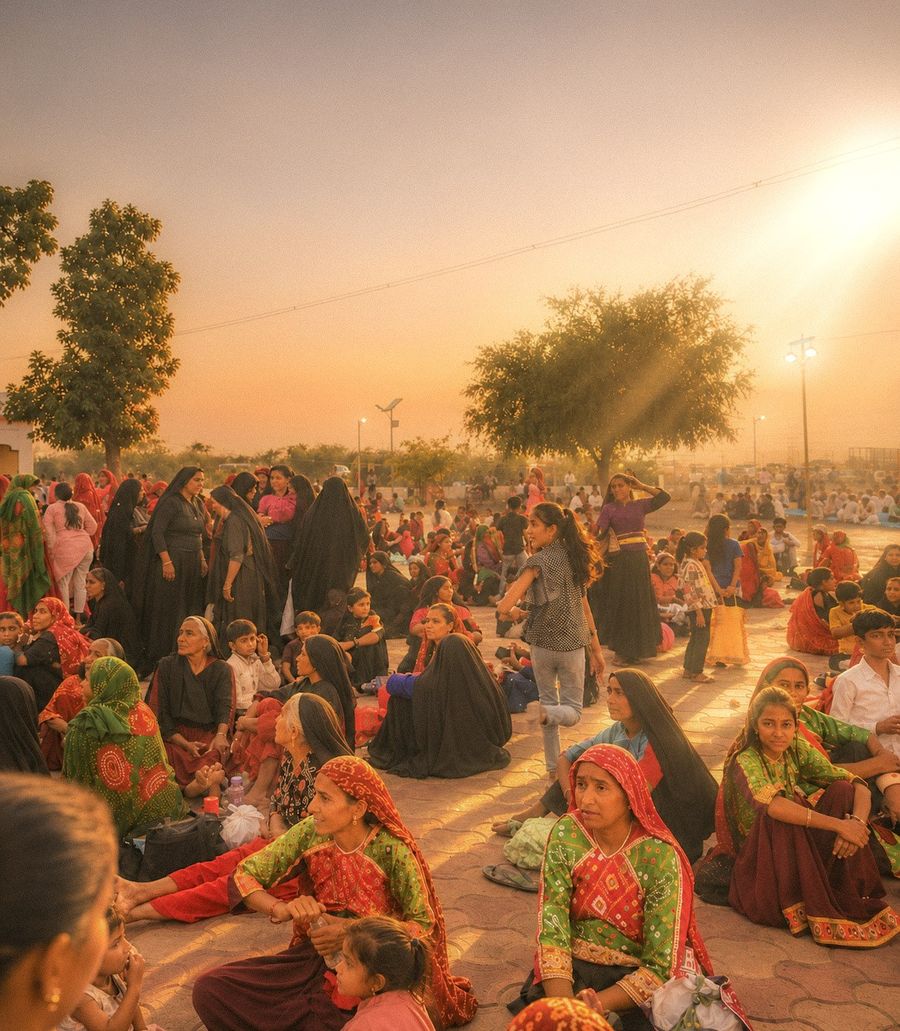
Some days, the Rabari women leave their houses together. This series follows one of those days, from the open ground to the ride home.
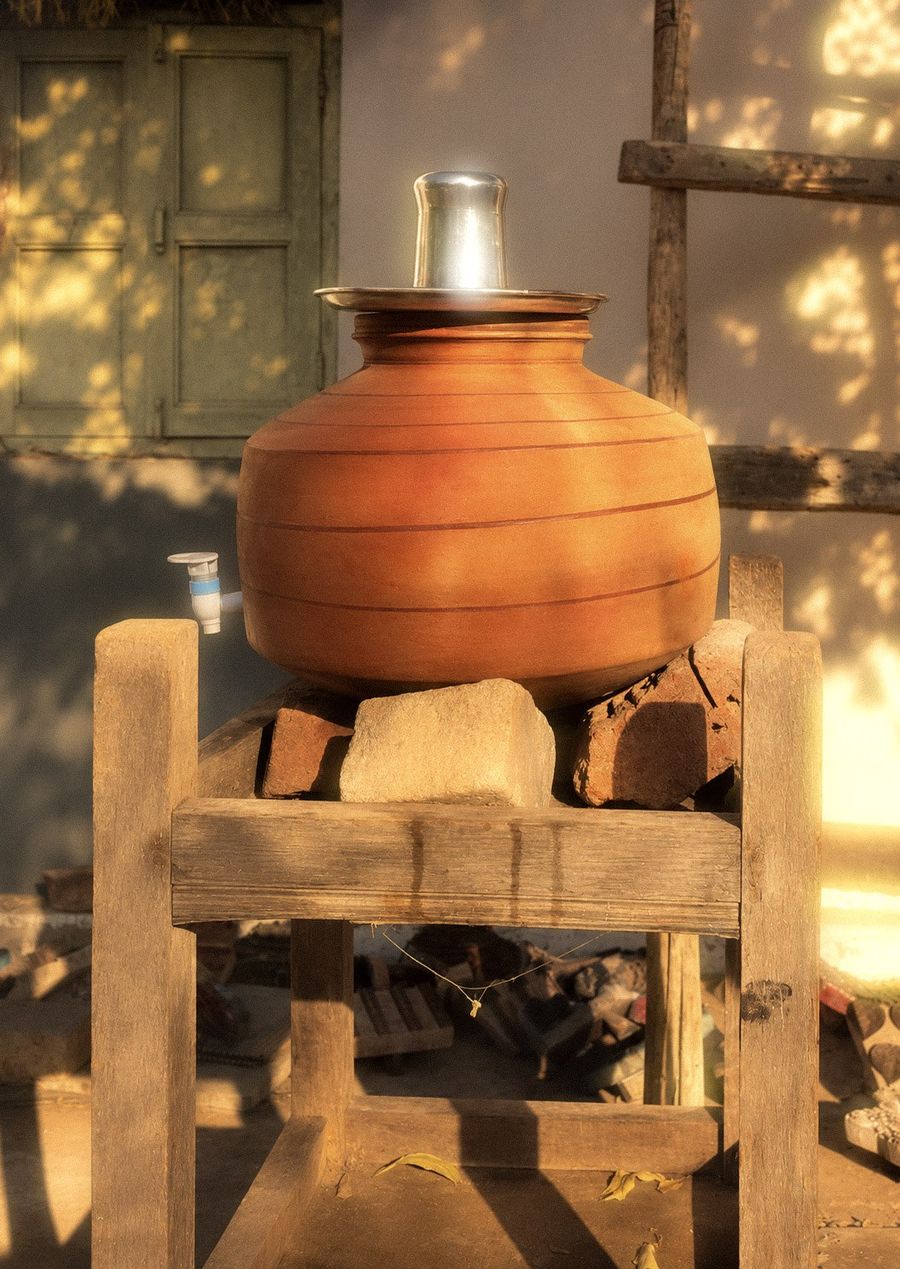
On the open ground, black odhnis and embroidered blouses settle into a crowd. Mothers sit with children in their laps, girls run between them, and no one is in a hurry. When it is time to go, the women pack into the back of a canopied vehicle, bundles on their knees, laughing, one hiding her face behind her hand. At home, the house has waited: a clay pot of water cooling on its stand, a steel tumbler on its mouth, sun moving slowly across the wall.
Tomorrow, the work of the house begins again. Today was theirs.
ArchiveCraftsNo. 08
About
In Mevani ki Dhaani, the women are rarely seen. In front of elders and men, they keep their faces behind the ghoonghat. They take no part in the camel belts the men make, and their embroidery and appliqué is done in spare hours. I met Amiya ben, Thanaramji’s wife, with her daughter-in-law and the children of the family. In Barmer, Piru Khanji and Shanti of the Roshni Foundation work with women like them to make handcrafted products.
Yet the women are seen everywhere in the dhaani. Their old saris and dupattas are cut into strips and spun on a dheriya, a hand spinning tool, into chindi dori, a cord of many colours. That cord is woven into the charpais, which are never sold and never repeat: Ghenaramji’s and Thanaramji’s looked nothing alike.
Their faces stay unseen. What they wore is seen in every home, holding up whoever sits down.
From the same dhaani: What the Wind Takes →
ArchiveMaterialsNo. 09
About
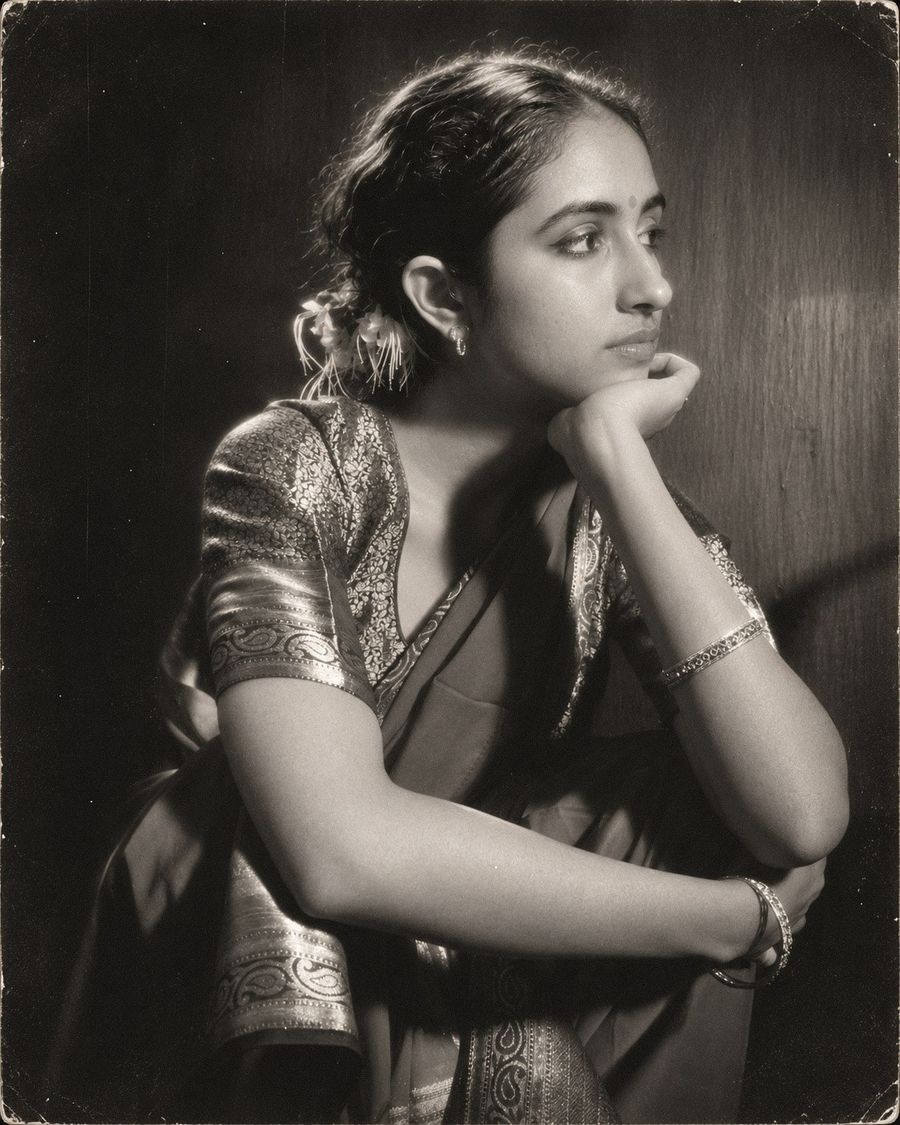
Can I take you out to a movie? Not to a cinema, but into one: the black-and-white years of Indian film.
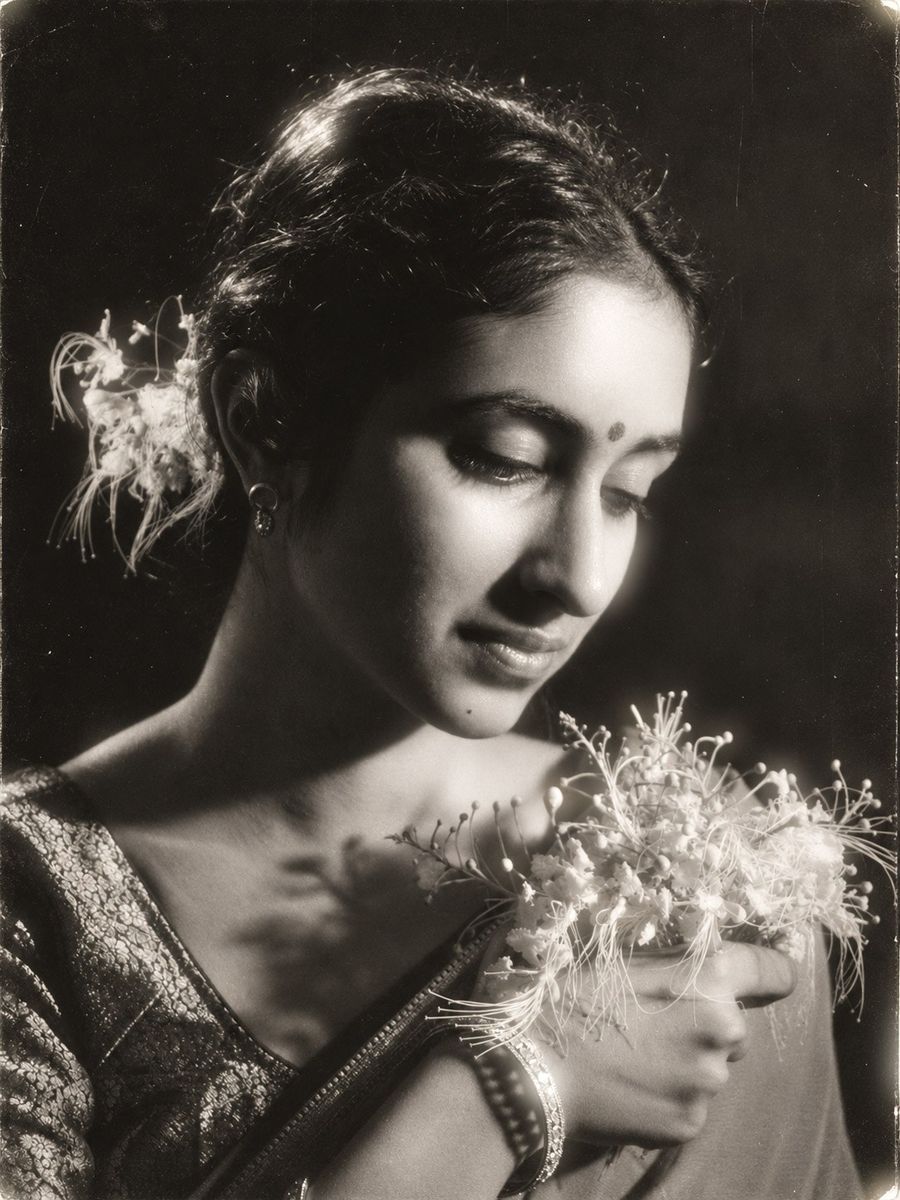
In the photography studio at NID, my batchmate Dipra Arora stepped into that world with me: a hard light glowing at the edges, flowers in her hair, a brocade sari, eyes lowered, then a long look away.
There was no film. Only these stills.
Coming soon


Design strategy & storytelling
Multidisciplinary designer, weaver and artist based in London. Experience in studio administration, budgeting and project management, client-facing commissions, and live creative briefs at a design studio, a law firm and an advertising network. Winner of the Woolmen’s Innovation Award 2026 for Project HUM, which turns waste British wool into acoustic textiles.
October 2026 – Present · 10-week programme
Publicis Groupe × Youth Beyond Borders
August 2026 – Present
Alison Jackson Studio
May – August 2026 · Live project
Reed Smith LLP
November 2025 – July 2026 · Part-time
Chelsea College, UAL
January – July 2025 · Full-time
SPUN, Welspun Living Ltd., Mumbai
May – June 2024 · Full-time
House of Kotwara, Delhi
Master of Arts in Sustainable Textile Design
September 2025 – November 2026
Bachelor of Design (Textile Design)
April 2021 – July 2025